Microsoft Copilot Major Upgrade: The AI Built for Work

Microsoft's new Copilot shifts from answering questions to delivering finished work, deeply embedded in the M365 ecosystem.
Microsoft's new Copilot debuted on Product Hunt as 'the AI built for work,' shifting its core narrative from answering questions to producing ready-to-use work outputs. Leveraging the Microsoft 365 ecosystem via Microsoft Graph, it connects emails, documents, and calendars so AI can generate near-finished deliverables in real business contexts. Strategically, Copilot targets IT departments and enterprise decision-makers as a customizable, scalable AI platform, using a multi-model orchestration approach that integrates OpenAI and proprietary models for flexibility and performance.
Microsoft's newly launched Copilot on Product Hunt has a clear positioning: "the AI built for work." It's no longer just a chatbot that answers questions — it aims to connect the tools, content, and latest AI models that enterprise employees rely on daily, helping deliver "finished work" rather than mere answers. The product listing earned 103 upvotes and ranked 8th for the day, categorized under both Windows and SaaS.
From "Giving Answers" to "Delivering Outcomes"
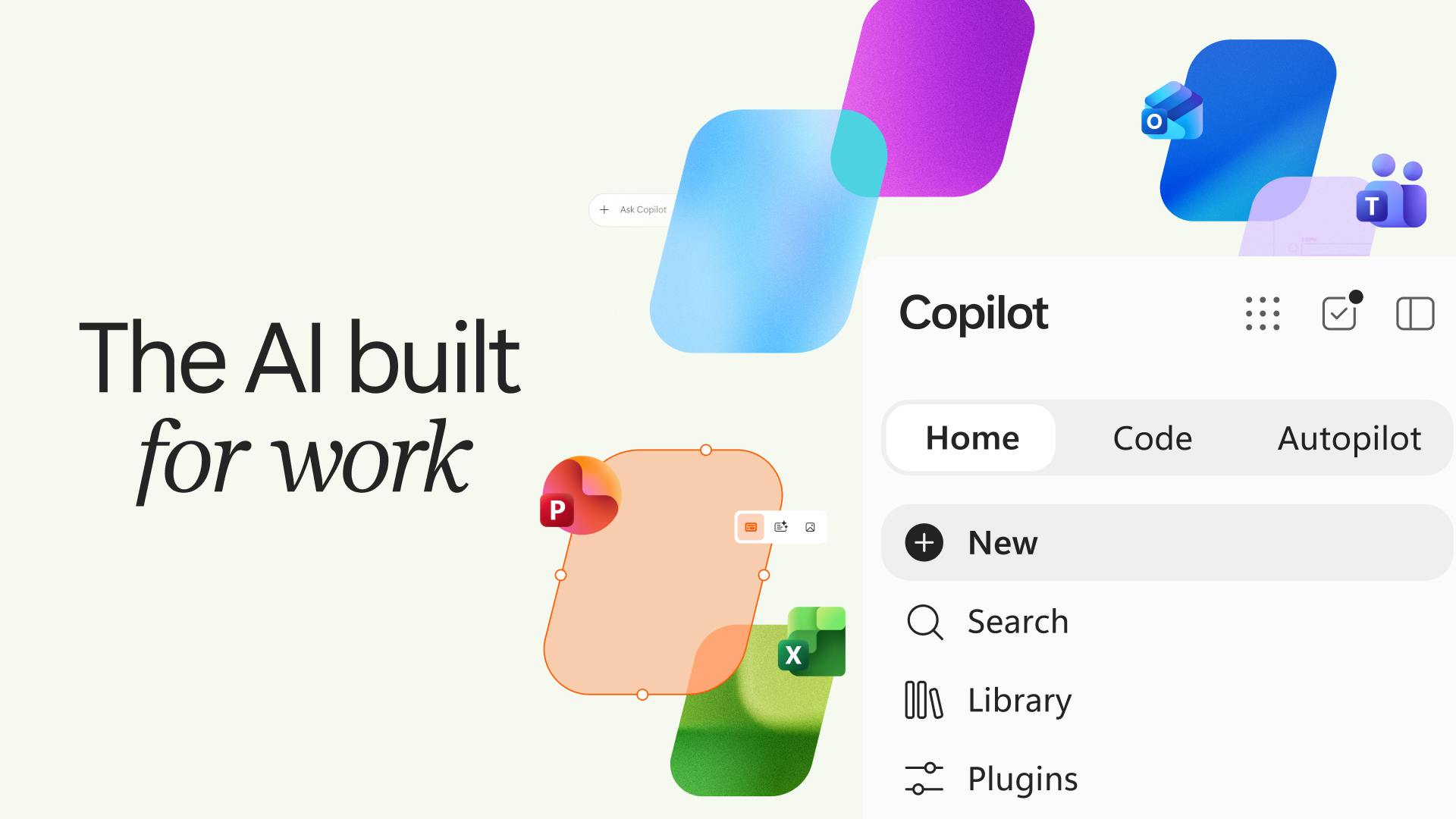
The most fundamental narrative shift in the new Copilot is upgrading its value proposition from "answering questions" to "producing finished, usable work" (create finished work, not just answers). This is a directional change worth paying attention to. Over the past two years, general-purpose large language models have been largely perceived as "ask a question, get an answer" tools — users receive text, code snippets, or suggestions, but turning that content into a report, proposal, or analysis ready for direct submission still requires significant human effort.
This "last mile" problem is exactly what Microsoft is trying to solve. When AI can read your work context and call upon the apps you're already using, it has the opportunity to produce near-finished deliverables directly — a data-backed quarterly summary, a professionally worded email, a properly formatted presentation. This "outcome-oriented" rather than "conversation-oriented" design philosophy is becoming the dominant competitive front in enterprise AI products.
Connecting Work Content with Existing Apps
The official description emphasizes that Copilot "connects with your work content and the apps you already use." For enterprise users, this carries real weight. Standalone AI tools often end up as novelties because they can't access real business data, whereas Copilot, built on the Microsoft 365 ecosystem, naturally has the ability to tap into emails, documents, calendars, meeting notes, and other work content.
This deep integration is Microsoft's greatest moat over independent AI startups. Users don't need to migrate data to a new platform or change existing workflows — AI is embedded directly into everyday tools like Word, Excel, Outlook, and Teams, lowering the barrier to adoption.
Background: Microsoft 365 and Microsoft Graph Microsoft 365 (formerly Office 365) is Microsoft's cloud subscription suite for enterprise and individual users, covering core productivity tools including Word, Excel, PowerPoint, Outlook, Teams, and OneDrive, with over 300 million enterprise users worldwide. Copilot's integration with this ecosystem isn't a simple API connection — it works through Microsoft Graph, Microsoft's unified data access layer, to read structured and unstructured data generated across the 365 ecosystem: emails, documents, meeting notes, calendar events, and more. This means Copilot can be aware of context like "what meetings did you have last week," "what are the historical versions of this contract," or "what is this colleague's area of responsibility" when generating content, rather than producing generic answers in a vacuum. This depth of data-layer integration is the core barrier that independent AI tools struggle to replicate.
Built for Building, Customization, and Scale
Another set of key terms in the product copy is worth noting: build, customize, scale. This signals that Copilot isn't content to be a ready-to-use assistant — it aims to serve as the foundational platform for enterprises to "build, customize, and scale AI deployment" internally.
For large organizations, a general-purpose assistant simply isn't enough. Finance, legal, sales, and R&D teams each have distinct processes and knowledge bases, requiring AI capabilities that can be tailored and extended. Microsoft positioning Copilot as a "customizable platform" means it's targeting IT departments and enterprise decision-makers, not just individual end users. This is also the commercial logic behind its SaaS classification — a long-term subscription model billed per seat or per usage.
Integrating Multiple AI Models
The description notes that Copilot "brings together the latest AI models." This suggests Microsoft is pursuing a multi-model strategy rather than locking in to a single model. Given Microsoft's deep partnership with OpenAI alongside its own model development efforts, Copilot looks more like a model orchestration layer that selects the right underlying capability for different tasks. This architecture ensures cutting-edge performance while leaving flexibility to swap in or layer on new models in the future.
Background: Multi-Model Strategy A multi-model strategy refers to a product backend that simultaneously connects to or dynamically calls upon multiple AI models from different sources and of different scales, rather than relying on a single model for all tasks. In practice, this means lightweight tasks (such as text summarization or format conversion) can be routed to smaller, lower-cost models with shorter latency, while complex reasoning tasks call upon larger, more capable but resource-intensive models. Microsoft's publicly disclosed model resources include OpenAI's GPT-4 series, its own Phi series of small models, and third-party models available through Azure AI Foundry. For enterprise customers, a multi-model architecture also means being able to select models with different deployment configurations based on data compliance requirements, reducing single-vendor risk. This strategy also explains why Microsoft positions Copilot as an "orchestration layer" rather than a frontend interface for any specific model.
Background: Vendor Lock-in In enterprise software, "vendor lock-in" refers to a situation where an organization becomes so deeply dependent on a platform's proprietary features, data formats, or integration capabilities that migrating to a competing product becomes prohibitively costly. Copilot's customization and extension mechanisms — such as Copilot Studio (which allows enterprises to build custom AI agents) and the Microsoft 365 plugin ecosystem — deepen integration while objectively increasing that dependency. For enterprise decision-makers, this is a strategic tradeoff between "integration convenience" and "long-term flexibility": opting for deep customization can quickly yield AI capabilities tightly aligned with existing workflows, but switching platforms later will come with significantly higher migration costs. This is the concrete technical and commercial meaning behind the vendor lock-in concern mentioned here.
An Honest Assessment of This Launch
It's worth being transparent: the information provided in this Product Hunt listing leans toward marketing, lacking specific feature demos, pricing details, and real-world benchmark data. With 103 upvotes and a single comment thread, the scale of community feedback is relatively limited and insufficient to gauge genuine market enthusiasm.
From a trend perspective, Copilot represents a clear direction for enterprise AI products: competition is no longer about who has the largest model parameters, but about who can most seamlessly embed into real workflows and produce deliverable outcomes. For organizations already deeply using Microsoft 365, Copilot's integration advantages are difficult for standalone tools to replicate. However, for teams prioritizing flexibility and concerned about vendor lock-in, whether it's open enough and cost-effective enough still needs to be validated through real-world deployment.
Summary
The new Copilot centers its positioning on being "built for work," aiming to transform AI from an "answerer" into a "collaborator" by connecting work content, integrating existing apps, and bringing together multiple AI models. This path aligns with the evolutionary logic of enterprise AI and makes full use of Microsoft's ecosystem advantages. Whether the actual experience can deliver on the promise of "finished work" still requires validation across more real-world scenarios.
Related articles

Random Pruning of the DPO Computation Graph: 1.4x Training Speedup and Lower Peak Memory
DPO training too slow and memory-hungry? This paper proposes a random pruning framework for the DPO computation graph, sampling independently across position, sequence, and branch dimensions; branch pruning achieves a 1.426x step-time speedup and cuts training time by about 30%, with in-depth attribution of memory and time gains.

Why Does JEPA Underperform MLM in Longitudinal EHR Representation Learning?
New study compares JEPA and MLM for longitudinal EHR representation learning on MIMIC-IV: three JEPA variants train stably without collapse but underperform MLM; target size, not heterogeneity, drives prediction error.

Transfer Learning + Visible Light Communication: A New Approach to Energy-Efficient Indoor Positioning
A study proposes a transfer learning-based visible light communication indoor positioning method, achieving 47% accuracy improvement on the BOSCH factory dataset, 67.5% model efficiency under high noise, and introducing the ME composite metric for energy-efficient positioning in energy-constrained industrial IoT scenarios.