Microsoft Ignite Replit Session: How Agent Orchestration on Azure Triples Engineering Output

Replit to share Azure agent orchestration at Microsoft Ignite: per-person output tripled, incidents flat.
The article previews Replit's session at Microsoft Ignite breakout BRK548, presented by Carl Cortright, on agent orchestration built on Azure. Core results: engineering output per person tripled while production incident rate stayed flat. It covers the sources of output gains, quality gates and canary rollback, and Azure's role in security, governance, and elastic scaling, offering a referenceable sample for teams evaluating agent architectures and AI coding platforms.
Microsoft Ignite has long been a bellwether for enterprise technology adoption. This year's agenda includes a session from Replit worth developers' attention: Carl Cortright will take a deep dive in breakout session BRK548 into Replit's agent orchestration practices on Azure, and share a striking data point — engineering output per person has tripled while the rate of production incidents has remained flat.
Agent Orchestration: From Concept to Engineering Discipline
Agents are not a new concept, but making multi-agent collaboration into a manageable, governable production system is still a threshold that few teams have crossed. The core of what Replit will discuss at Ignite is precisely "orchestration" — how to get multiple agents to divide work, collaborate, and cross-check each other on Azure infrastructure, rather than each independently calling large models.
According to Replit's official tweet, the session will "go under the hood," diving into low-level implementation details rather than staying at the product demo level. For teams evaluating agent architectures, this kind of content is far more valuable than generic trend talks.
Multi-Agent Collaboration and Orchestration: A multi-agent system refers to an architecture in which multiple agents with autonomous decision-making capabilities work together to complete tasks. Each agent typically encapsulates a specific role (such as code generation, code review, or test execution) and collaborates through message passing or shared state. Agent orchestration adds scheduling, routing, conflict resolution, and lifecycle management on top of this, making multi-agent behavior predictable, observable, and rollback-capable. Unlike simply chaining multiple LLM calls in sequence, the orchestration layer must handle task decomposition, context passing, failure retries, and permission boundaries — it is the key engineering layer for enterprise adoption.
Triple Output with Flat Incident Rate: A Set of Metrics Worth Dissecting
"Tripled output per engineer while keeping incidents flat" — this is the core results statement Replit provides. It should be emphasized that tripling output does not equal tripling lines of code, and a flat incident rate does not mean zero risk. What is truly worth examining is the engineering implications behind these metrics:
- Where the output gains come from: Agent orchestration automates repetitive code generation, test completion, and review assistance, allowing engineers to focus on design and decision-making;
- Why a flat incident rate is difficult: When throughput increases substantially, if defect density does not rise, it means quality gates, canary releases, and rollback mechanisms have kept pace;
- Azure's role: Security, governance, and elastic scaling are hard constraints for enterprise adoption. Replit's choice to build this system on Azure signals that it targets enterprise customers with compliance requirements.
The tweet specifically mentions "with security, governance, and scale in mind" — these three words essentially define the three thresholds for enterprise adoption of agent technology.
Defect Density and Quality Gates: Defect density refers to the number of defects found per unit of code, and is a core metric for determining whether throughput gains come at the expense of quality. When engineering output rises sharply, if defect density remains unchanged, it means the proportion of defects in the new output has not increased. A quality gate is an automated checkpoint set before code merge or release, such as static analysis, unit test coverage thresholds, or security scanning; canary releases and rollback mechanisms limit the blast radius of defects. Together, these three form the technical precondition for "higher throughput with a flat incident rate."
Why This Session Matters to Enterprise Developers
Most current discussion of AI coding centers on the experience of individual tools — whether completions are accurate or conversations are fluent. What Replit shares at Ignite addresses a different layer of questions: when agents become part of team collaboration, how do you govern their permissions, audit their behavior, and keep the system stable as it scales?
Carl Cortright's session focuses on agent orchestration on Azure, offering enterprises using the Microsoft technology stack a directly referenceable implementation sample. For technical leaders planning their AI coding platform selection, BRK548 deserves a spot on the calendar.
Agent Governance and Auditing: When agents participate in production systems, governance questions arise: which code repositories can agents access, can they submit changes directly, and how is their behavior traced. Auditing requires recording each agent's inputs, decision rationale, and outputs so that the chain of responsibility can be reconstructed when incidents occur. Least-privilege permissions, operation logs, and human approval checkpoints are common governance measures. On enterprise clouds such as Azure, these capabilities must be combined with identity management, compliance policies, and elastic scaling — which is why "security, governance, and scale" are the three thresholds for enterprise adoption of agents.
Session Information
Replit will host a dedicated session at Microsoft Ignite, breakout session BRK548, presented by Carl Cortright. The official tweet provides a registration link; those interested can search for this session on the Ignite website to register.
It should be noted that the currently available public information is only a tweet-level event preview. Specific architecture details, technology stack choices, and metric definitions are subject to the content shared at the event. This article does not speculate on undisclosed implementation approaches.
One-line Summary
Replit will share its Azure agent orchestration practices at Microsoft Ignite, with per-person output tripled and incident rate flat.
Paragraph Summary
The article previews Replit's session at Microsoft Ignite breakout session BRK548, where Carl Cortright will present the agent orchestration practices Replit has built on Azure. The core results: engineering output per person has tripled while the rate of production incidents has remained flat. The article notes that behind these metrics lie the sources of output gains, quality gates and canary rollback mechanisms, and Azure's supporting role in security, governance, and elastic scaling. The session will dive into low-level implementation details rather than product demos, targeting enterprise customers with compliance requirements and offering a referenceable implementation sample for technical leaders evaluating agent architectures and AI coding platform selection.
Related articles

Eclipse Aerospace Simplifies Flight Data Ingestion with Databricks
Eclipse Aerospace uses Databricks to simplify flight data ingestion, offering a practical reference for platform-based data engineering in data-intensive industries like aerospace.

Jensen Huang's 60 Direct Reports: The Truth Behind Nvidia's Org Structure
Nvidia's Jensen Huang reportedly has 36–60 direct reports and reads 1,000 emails a day. A YouTube creator breaks down the truth: missions, pilots in command, and whether it survives without him.
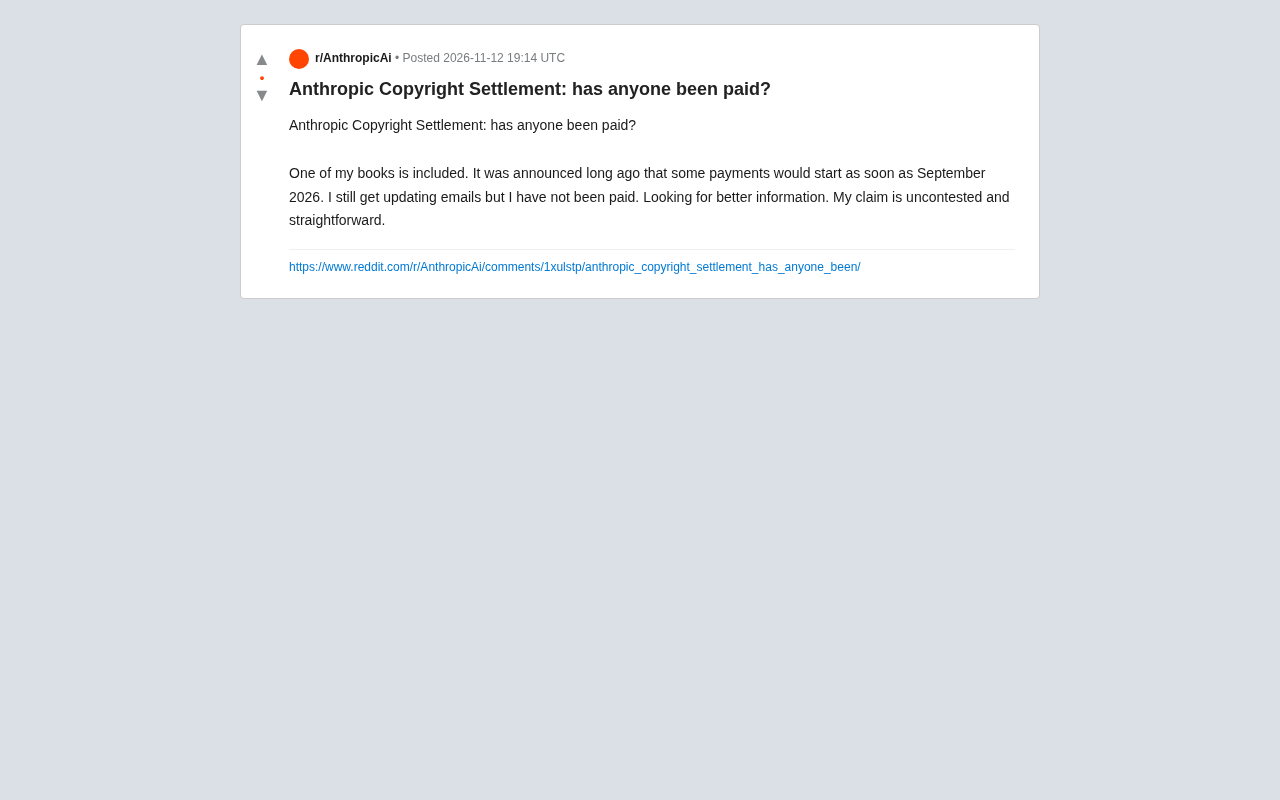
Anthropic Copyright Settlement Payouts: Have Authors Actually Received Their Money?
In the Anthropic copyright settlement, some authors report not yet receiving payment, though notices say some funds may be distributed as early as September 2026. This article covers the payout process, community feedback, and follow-up tips for creators.