Microsoft Launches MAI-Thinking-1: Strategic Significance of Its First Built-from-Scratch Reasoning Model
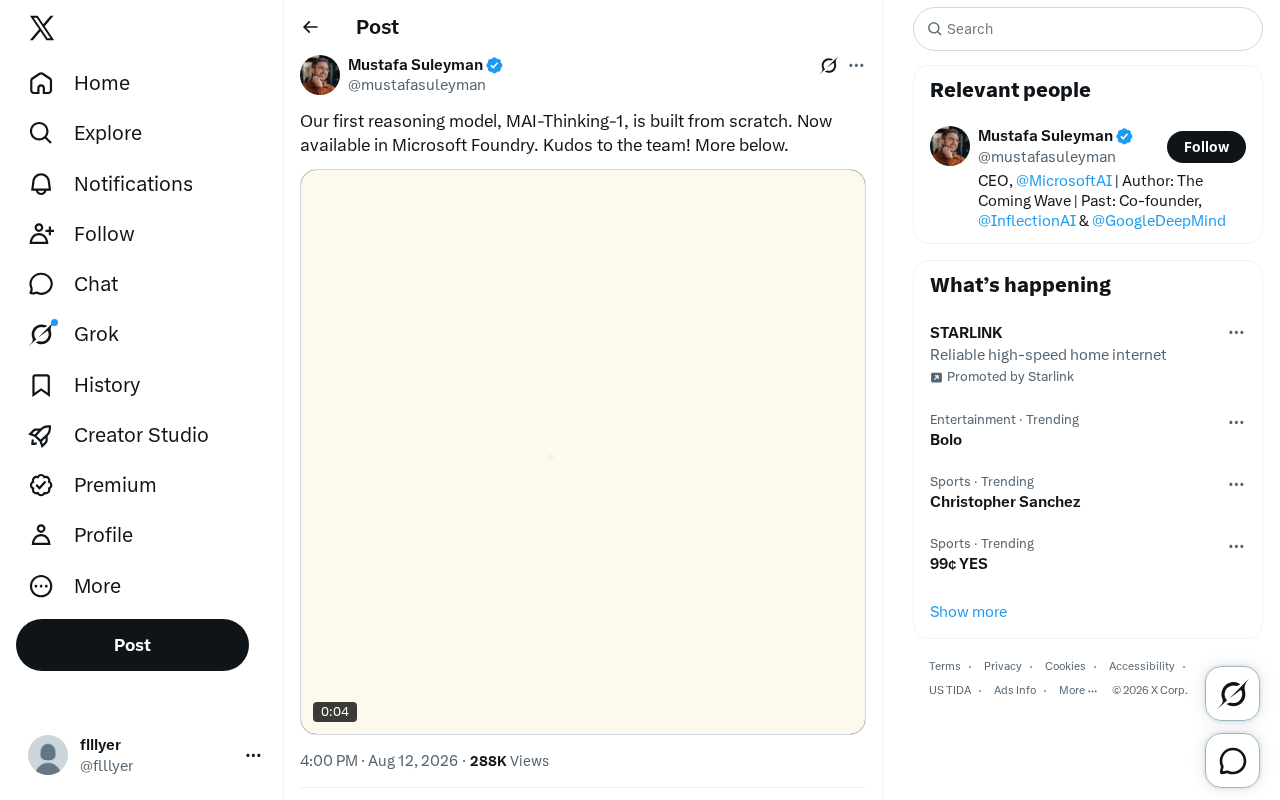
Microsoft launches MAI-Thinking-1, its first self-built reasoning model, marking strategic shift toward AI independence
Microsoft has officially released MAI-Thinking-1, its first reasoning model built from scratch, now available on the Microsoft Foundry platform. This marks a strategic pivot from relying on OpenAI toward developing autonomous AI capabilities. As reasoning models become standard among tech giants, Microsoft's multi-model portfolio strategy balances different scenarios while maintaining strategic flexibility.
Microsoft Unveils Its First Self-Developed Reasoning Model MAI-Thinking-1
Microsoft recently announced on its social media channels the official launch of MAI-Thinking-1, its first reasoning model built from scratch, now available on the Microsoft Foundry platform. This announcement marks a pivotal step for Microsoft in self-developed large language models—shifting from heavy reliance on OpenAI's technology stack toward building its own reasoning capabilities.
For those who closely follow the AI industry landscape, this release is not surprising, but its symbolic significance warrants deeper examination. MAI stands for Microsoft AI, and the team has previously launched the MAI-1 and MAI-Voice-1 foundation model series. MAI-Thinking-1 is the first to focus on "reasoning"—currently the most fiercely contested capability dimension in large model competition.
What Are Reasoning Models: The Leap from Generation to Deep Thinking
Core Mechanisms of Reasoning Models
Reasoning models refer to models capable of engaging in Chain-of-Thought-style deep thinking before producing final answers. Representative examples include OpenAI's o1/o3 series, DeepSeek-R1, and Google's Gemini Thinking series. Their core characteristic is investing more computational resources during the reasoning phase, solving complex problems in mathematics, programming, and science through multi-step logical expansion.
Unlike traditional conversational generation models, reasoning models emphasize "slow thinking." They typically generate numerous intermediate reasoning steps internally before synthesizing conclusions. The industry calls this paradigm "test-time scaling"—a new pathway for improving large model capabilities beyond "pre-training scale expansion."
Why Microsoft Built a Reasoning Model from Scratch
Over recent years, Microsoft's AI capabilities have largely been built on deep collaboration with OpenAI. Products like Copilot and Azure OpenAI Service are all powered by OpenAI models. However, as the relationship between the two companies has become more nuanced, and as the industry's demand for model autonomy has risen, Microsoft's motivation to build an independent technology stack has grown stronger.
MAI-Thinking-1 emphasizes being built "from scratch"—this phrasing itself is a strategic declaration. Microsoft wants to demonstrate to the market that it is not merely an application user and distributor of models, but possesses top-tier model development capabilities.
The Strategic Role of the Microsoft Foundry Platform
MAI-Thinking-1 launched directly on Microsoft Foundry rather than serving solely as a consumer product backend. Microsoft Foundry is a platform for developers and enterprises to develop and deploy AI models, integrating capabilities like model hosting, fine-tuning, evaluation, and agent building.
Placing its first self-developed reasoning model on Foundry signals Microsoft's intent to enable developers to directly call, test, and integrate this model into their applications. This aligns perfectly with Microsoft's consistent "platform-first" strategy—providing not just finished applications, but the underlying infrastructure for building AI applications. For enterprise customers, having another reasoning model option helps reduce dependency risk on a single vendor.
MAI-Thinking-1's Deeper Impact on the Industry Landscape
Self-Developed Reasoning Models Have Become Standard for Tech Giants
From OpenAI's o series, Google's Gemini Thinking, Anthropic's extended thinking mode, to the open-source impact of DeepSeek-R1, and now Microsoft's MAI-Thinking-1, reasoning models have evolved from exclusive capabilities of a few frontier labs into "standard equipment" for mainstream tech giants.
This reflects an industry consensus: the marginal returns of simply scaling parameters and data are diminishing, while computational investment at reasoning time opens new capability ceilings. Whoever finds the optimal balance between reasoning efficiency and effectiveness may gain the upper hand in the next competitive phase.
Microsoft's Multi-Model Portfolio Strategy
Interestingly, Microsoft has not chosen to "bet on a single model," but instead built a model portfolio including MAI-1, MAI-Voice-1, and MAI-Thinking-1. This multi-model, multi-capability layout covers different application scenarios while hedging against technical uncertainty. By developing self-research capabilities while maintaining collaboration with OpenAI, Microsoft has effectively preserved substantial strategic flexibility.
Key Questions About MAI-Thinking-1 Awaiting Verification
Currently, information officially released by Microsoft remains relatively limited. Specific details about MAI-Thinking-1's parameter scale, training data, and benchmark test scores (such as performance on reasoning benchmarks like AIME, GPQA, and programming competitions) have not been disclosed. Its actual gap compared to mainstream reasoning models like OpenAI's o series and DeepSeek-R1 still requires more independent evaluations and real-world usage feedback for verification.
Additionally, how MAI-Thinking-1 addresses the "high reasoning costs and response latency" issues common to reasoning models is a key concern for developers. After all, for production environments, cost and speed beyond effectiveness are equally critical considerations.
Conclusion
The release of MAI-Thinking-1 is an important milestone in Microsoft's construction of an autonomous AI technology stack. The signal it sends is clear and explicit: Microsoft is working to transform from an AI application "distributor" into a "producer" with core model capabilities. While the model's true strength awaits market validation, the strategic value of this step cannot be underestimated. As reasoning models increasingly become the competitive focus, Microsoft's entry will undoubtedly add more intrigue to the already intense large model race.
Related articles
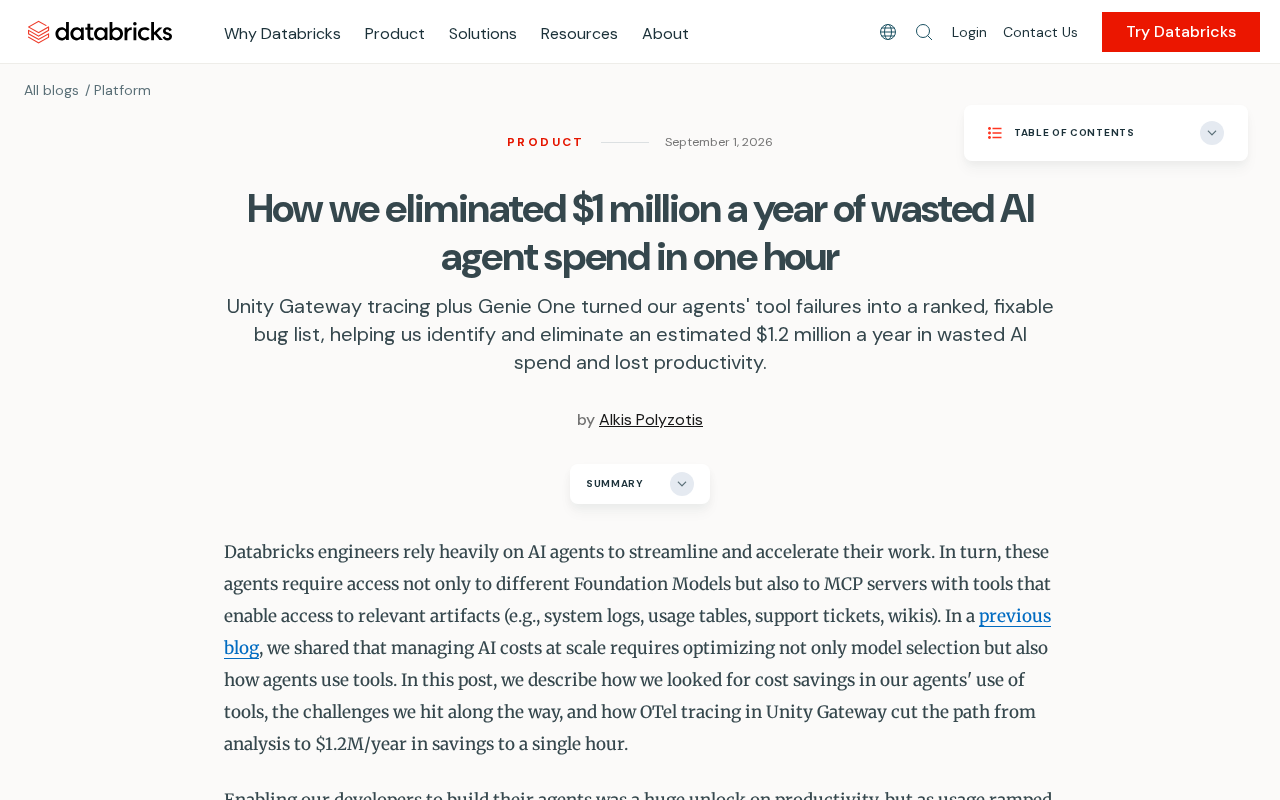
AI Agent Cost Optimization in Practice: Engineering Wisdom That Saved $1 Million in One Hour
Databricks eliminated $1M/year in wasted AI Agent spend in just one hour. Learn the root causes of Agent cost overruns and key strategies like model tiering, context pruning, and caching.
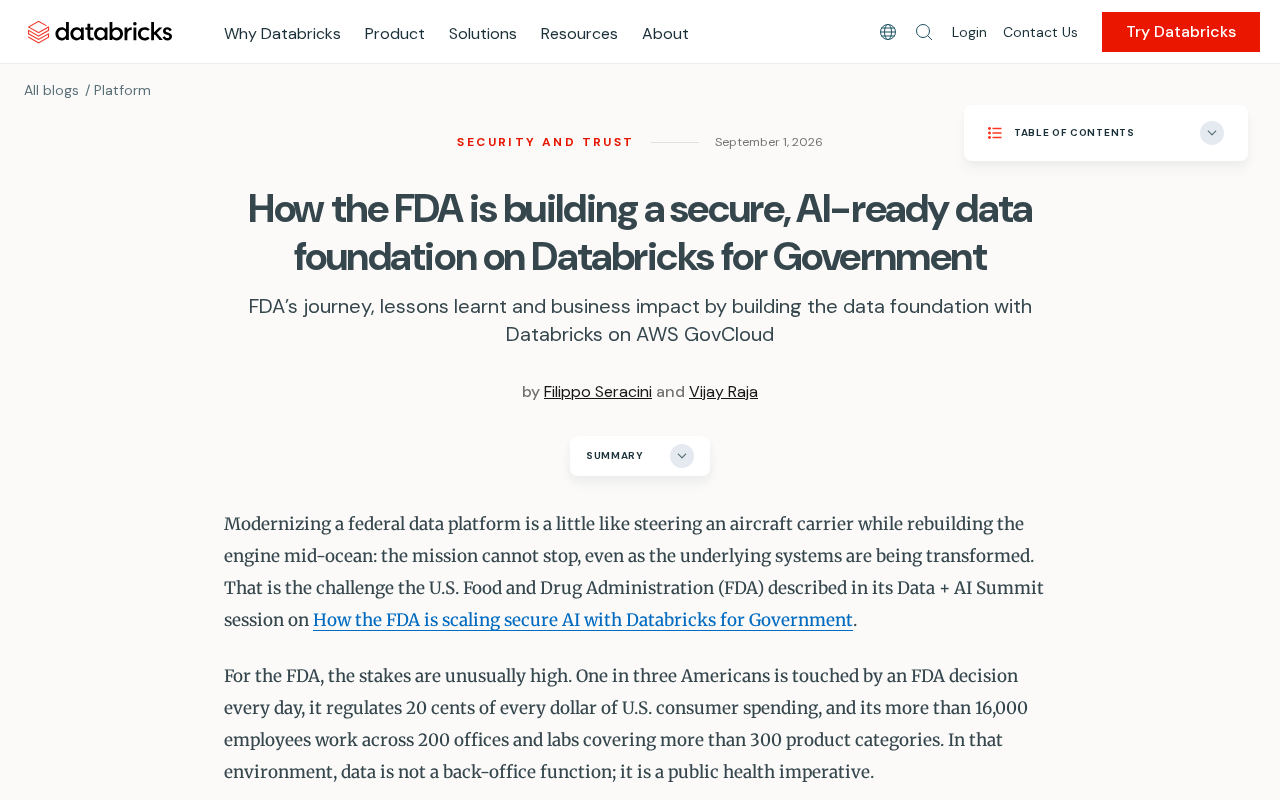
How the FDA Is Building an AI-Ready Data Foundation on Databricks
Explore how the FDA leverages Databricks for Government to build a unified Lakehouse architecture and AI-ready data foundation while meeting federal security and compliance standards.
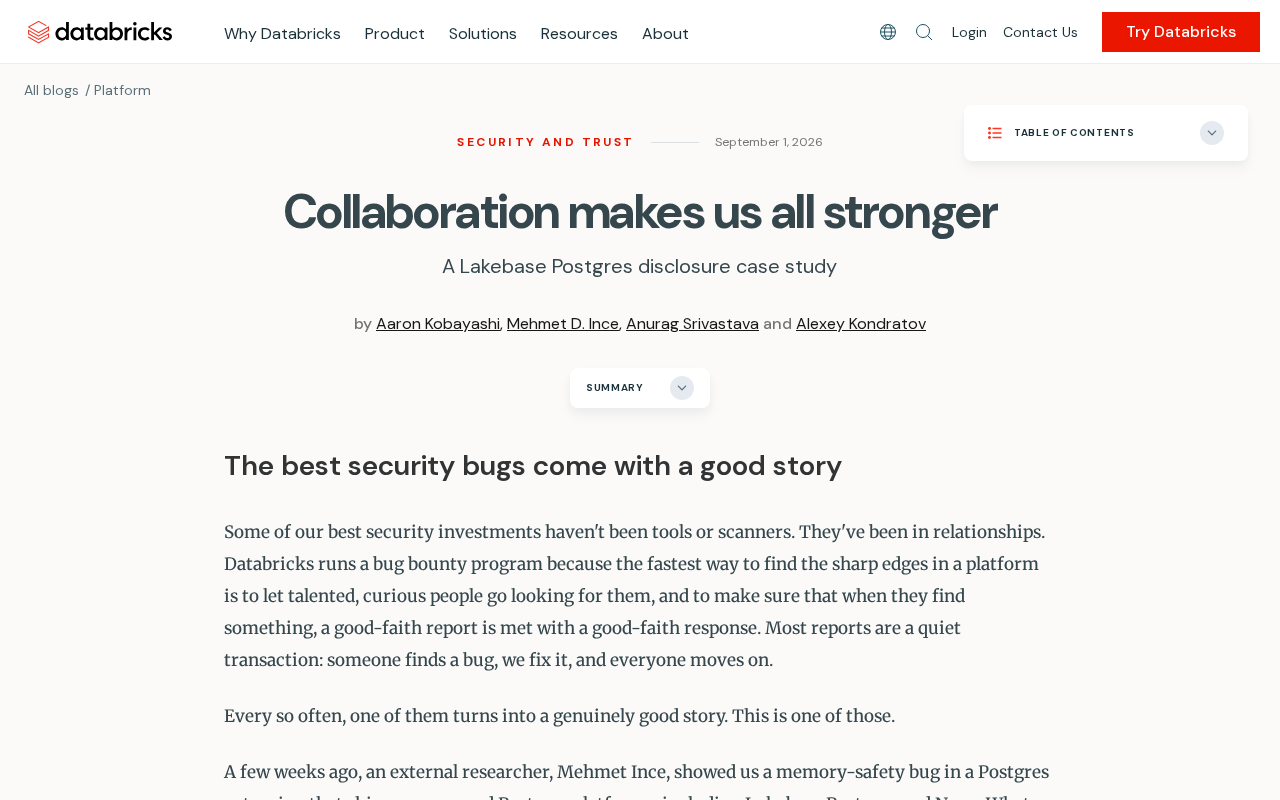
The Power of Security Collaboration: Why Vulnerability Discovery Cannot Do Without Human Intelligence
Explore how security collaboration outperforms tool dependency, the value of vulnerability stories, cross-team knowledge sharing practices, and building stronger defenses by investing in people and collaboration.