Microsoft Outlook Email Service Outage Again: Cause Unknown

Microsoft Outlook email suffers another outage; cause and scope of impact undisclosed.
Microsoft's Outlook email service has recently experienced another outage, with many users unable to access their mailboxes, but Microsoft has not yet announced the cause, duration, or affected regions. The article notes that email outages directly impact enterprise users who rely on Outlook for work, causing inability to send or receive emails, login anomalies, or sync failures. Since this is not Outlook's first outage, the incident has once again sparked discussion about cloud service resilience, enterprise single-point dependency, and SLA fulfillment and compensation. Before official statements are released, users can monitor Microsoft's service status page and enable backup communication channels, while IT administrators should review email disaster recovery strategies and alternative notification channels. Follow-up items worth tracking include the root cause, scope of impact, and whether Microsoft will release a post-mortem report.
Microsoft's Outlook email service has recently suffered another outage, with a large number of users unable to access their mailboxes normally. According to available information, Microsoft has not yet provided a specific cause for the failure, and the scope of affected users remains unclear.
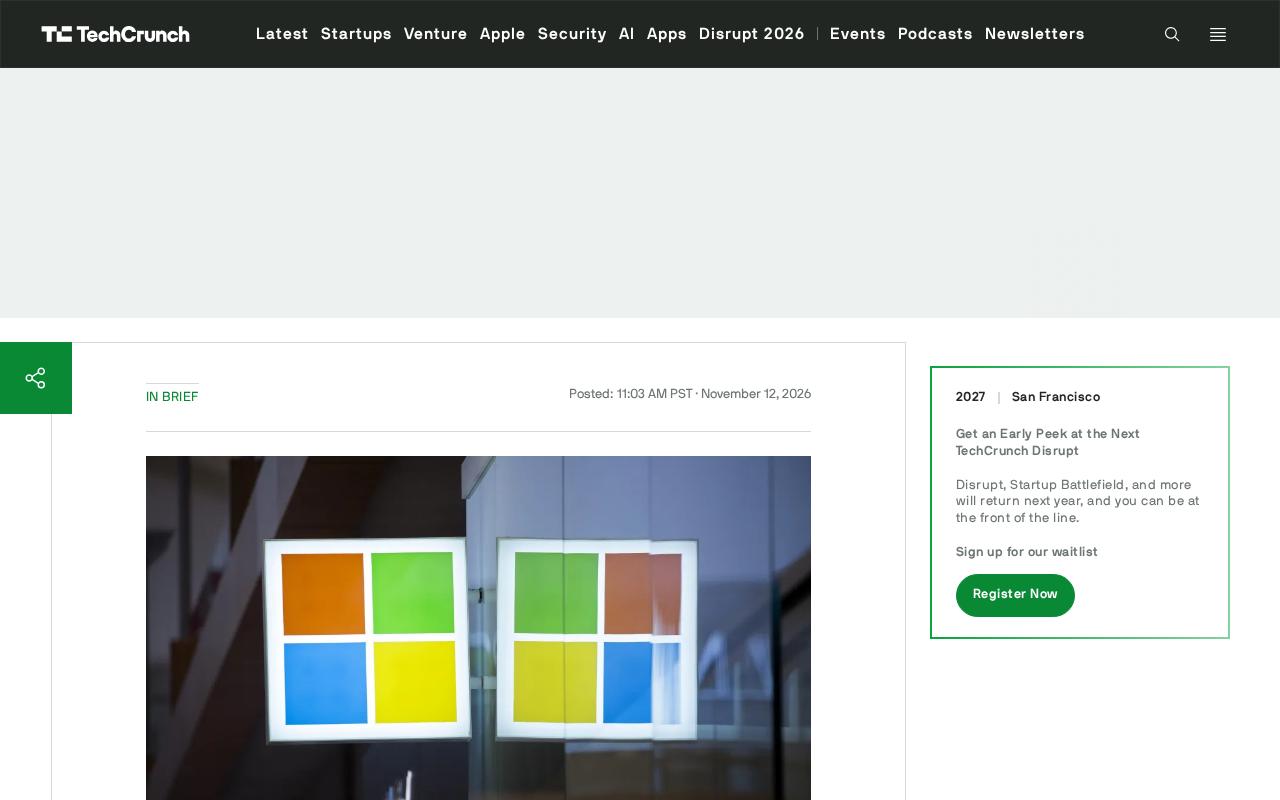
Outage Overview: Scope of Impact and Official Response
Core information about this Outlook email outage remains quite limited. What can be confirmed is that this is an outage affecting Outlook email users, and Microsoft has not yet announced the cause. For a tech giant operating a global-scale email service, the company would typically publish an initial statement on its status page after an outage and continuously update repair progress—but the available material does not include these details.
From the user side, an email service outage means the inability to send or receive emails, login anomalies, or sync failures—with particularly direct impact on enterprise users who rely on Outlook for daily work. Due to the lack of official Microsoft statements, the duration of this outage, the affected regions, and whether it is linked to failures in other Microsoft services (such as Teams or Exchange Online) cannot currently be determined.
Microsoft's official service health status page (Microsoft 365 Service health status) is the primary source of first-hand information for judging such outages. The page lists current health status by service (such as Exchange Online, Outlook, and Teams), distinguishes between status labels like "Service degradation," "Outage," and "Restoring service," and notes affected regions and the latest update time. Exchange Online is the cloud email backend behind Outlook mailboxes; the Outlook client or web version is merely the front-end entry point. Therefore, the status of Exchange Online on the status page often reflects the actual availability of email sending and receiving better than the Outlook entry. During outages, Microsoft typically publishes an event number (such as one starting with EX) and an initial statement on this page, and supplements it with a root cause analysis (RCA) after repair. For users and enterprise IT, subscribing to the page's RSS or receiving notifications through the "Service health" panel in the admin center is more timely than waiting for media reports.
Frequent Outages Expose Concerns About Cloud Service Resilience
This is not the first service outage for Outlook. As an important part of Microsoft's productivity suite, Outlook email carries a large volume of enterprise communication traffic, and its stability directly affects users' business continuity. In recent years, large cloud service providers have frequently experienced regional or even global outages, which has become an industry-wide issue.
Every such incident raises the same question: when enterprises entrust their core communication capabilities entirely to a single cloud vendor, are redundancy and fallback plans sufficient? For Outlook users, whether basic communication can be maintained through other channels during an outage, and how Microsoft's outage compensation and SLA fulfillment are handled, are aspects worthy of ongoing attention.
An SLA (Service Level Agreement) is a cloud provider's formal commitment to availability. For Microsoft 365, for example, enterprise agreements typically promise monthly availability of no less than 99.9%, and provide tiered Service Credits based on the degree of shortfall—rather than cash compensation. This means that even if an outage lasts several hours, the compensation users can actually obtain is often limited, and they must apply for it proactively. On the other hand, the risk of "single-point dependency" does not come only from vendor failures: DNS resolution, identity authentication (such as Entra ID/ADFS), and network egress can also become single points of failure. Common industry mitigation measures include multi-region deployment, email flow redundancy (such as bypassing through third-party email security gateways), and migrating critical notifications from email to collaboration tools with multi-channel capabilities. Understanding the boundaries of SLAs helps enterprises more rationally assess the actual risk exposure of "entrusting all communications to a single cloud vendor."
User Recommendations Amid the Information Vacuum
Before Microsoft announces the cause of the outage, what users can do is relatively limited. More practical approaches include: following updates on Microsoft's official service status page, switching to backup communication channels for urgent matters during the outage, and conducting a stress test of internal email-dependent processes.
For IT administrators, such incidents are also an opportunity to review their own disaster recovery strategies—whether single-point dependency on email services is too high, and whether critical business notifications have alternative channels, are worth planning ahead of time outside of outage windows.
Follow-up Points
The full picture of this Outlook outage remains to be disclosed by Microsoft. The cause of the failure—whether a configuration change, infrastructure issue, or other factor—how large the scope of impact actually is, and whether Microsoft will release a post-mortem report are all information worth tracking. Before official statements are provided, any speculation about the root cause lacks a basis.
This article is compiled based on currently available public information; relevant details may be updated as Microsoft releases further statements.
One-line Summary
Microsoft Outlook email suffers another outage, with neither the cause nor the scope of impact disclosed.
Paragraph Summary
Microsoft's Outlook email service has recently experienced another outage, with a large number of users unable to access their mailboxes normally, but Microsoft has not yet announced the cause, duration, or affected regions. The article notes that email outages directly impact enterprise users who rely on Outlook for work, causing inability to send or receive emails, login anomalies, or sync failures. Since this is not Outlook's first outage, the incident has once again sparked discussion about cloud service resilience, enterprise single-point dependency, and SLA fulfillment and compensation. Before official statements are released, users can monitor Microsoft's service status page and enable backup communication channels, while IT administrators should use this opportunity to review email disaster recovery strategies and alternative notification channels. Follow-up items worth tracking include the root cause, scope of impact, and whether Microsoft will release a post-mortem report.
Related articles

Former Inmate Reveals Psychopath Ratio in Prison: About 200 Out of Every 880
Former inmate Larry Lawton shares on Lex Fridman's podcast that about 200 of 880 life-sentence inmates are psychopaths—a 23% ratio. He explores the blurred line between good and evil, social dynamics in prison, and wisdom from dark experiences.

Getting Started with Local AI: A Practical Guide to Inkling, Qwen, and Unsloth
A beginner's guide to local AI, explaining the roles of Inkling, Qwen, and Unsloth in local LLM deployment and fine-tuning, covering model selection, quantized inference, lightweight fine-tuning workflows, and trade-offs between local and cloud solutions.
Open Social Web Alliance Launched: A New Starting Point for Decentralized Social
The Open Social Web Alliance has emerged, sparking heated discussion on Hacker News. This article outlines its positioning, the core disagreements in community discussion, and the real-world challenges facing the open social web in interoperability, content governance, and identity migration.