Microsoft Releases 9B Decision Model Decision-1: A Specialized Reasoning Breakthrough Built on Qwen
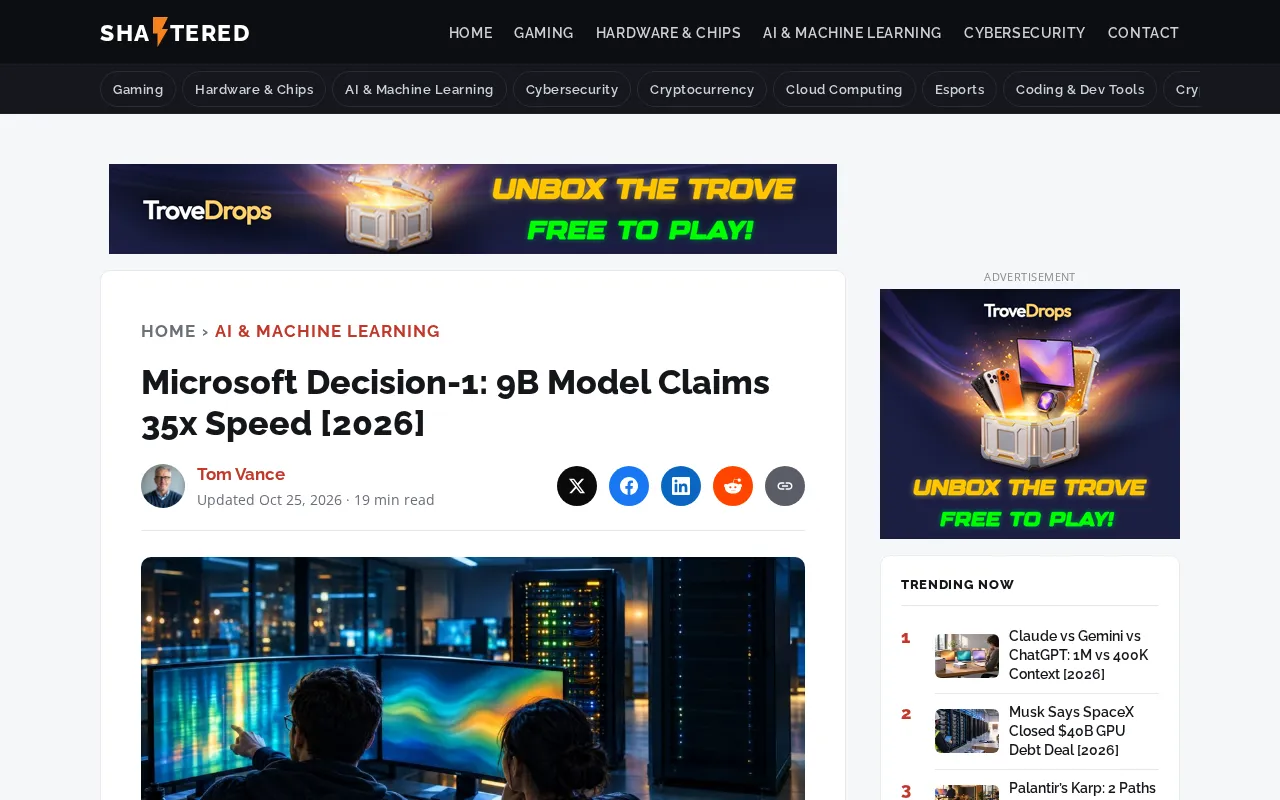
Microsoft launches Decision-1, a 9B specialized decision model built on Qwen, exploring vertical specialization for small models.
Microsoft released Decision-1, a 9B-parameter model purpose-built for decision tasks on the Qwen architecture. The 9B scale balances capability and deployment cost, running on a single consumer GPU or edge device for high-frequency decisions, while Qwen's mature fine-tuning and quantization toolchain lowers development costs. Decision tasks require specialized paradigms like preference-based RL and chain-of-thought distillation plus scarce decision-trajectory data. It offers developers a low-cost local path but brings new engineering challenges around policy updates, edge-case monitoring, and rule-system integration.
Microsoft recently launched a 9B-parameter model called Decision-1, purpose-built for decision-making tasks and built on the Qwen architecture. The release sparked discussion on Hacker News—though without much fanfare (12 points, 3 comments), its technical direction is worth noting: it marks the start of major vendors "distilling" general-purpose LLM capabilities into specialized small models for vertical scenarios.
Why 9B? The Trade-offs Behind Parameter Scale
9B parameters looks restrained in today's model race, where models routinely reach hundreds of billions or trillions of parameters. But from a deployment-cost perspective, a 9B model can run on a single consumer-grade GPU or edge device, with low inference latency, making it well suited to high-frequency decision scenarios. Microsoft likely chose this scale to strike a balance between "capable enough" and "cost-controllable."
The maturity of the Qwen architecture provides the foundation for this choice. Alibaba's Tongyi Qianwen series has built up a rich toolchain for fine-tuning and quantization in the open-source community. By building on Qwen, Microsoft can skip a great deal of low-level engineering work and focus its efforts on training data and reward modeling for decision tasks.
Knowledge Distillation refers to using a more capable large model (the teacher model) to guide the training of a smaller model (the student model), so that the small model approximates the large model's output distribution on specific tasks. Common approaches include: using the teacher model to generate large amounts of high-quality labeled data for supervised learning of the student model, or directly aligning the two models' output probability distributions (logits distillation). In vertical scenarios, the value of distillation lies in "compressing" the reasoning capabilities of a general-purpose LLM into a small model that can be deployed locally, while retaining the capabilities most critical within the domain. The cost is that the student model tends to inherit the teacher model's biases, and its generalization degrades faster on inputs outside the training distribution—so distilled models typically require dedicated evaluation for the target scenario.
The Essential Difference Between Decision Models and General-Purpose Models
General-purpose LLMs excel at generating text and answering questions, but "making decisions" is another matter. Decision tasks require the model to weigh trade-offs among multiple options, assess risk, and provide explainable justifications. This calls for specialized training paradigms, such as reinforcement learning on preference data, chain-of-thought distillation, or incorporating external tools for simulated reasoning.
Microsoft positioning Decision-1 as a specialized model implies that it likely made extensive use of decision-trajectory data during training—such as logs from business rule engines or records of human experts' choices. Such data is extremely scarce in general pre-training corpora, yet it is the core source of decision-making capability.
Reinforcement learning on preference data (such as RLHF and DPO) differs from ordinary supervised fine-tuning chiefly in the form of the training signal. Supervised fine-tuning tells the model "what the correct answer is," whereas preference learning only tells the model "between outputs A and B, which one do humans prefer." This relative-comparison signal is better suited to decision tasks—because in real business contexts, there is often no single correct solution, only better choices. In practice, teams first build paired preference samples from expert annotations or historical logs, then train a policy model using a reward model or a direct preference optimization objective. The challenges are that preference data is costly to collect, annotation consistency is hard to guarantee, and reward models are prone to being gamed (reward hacking), which needs to be mitigated through KL constraints, data diversity controls, and similar measures.
Chain-of-Thought Distillation uses the intermediate steps a large model generates during reasoning (not just the final answer) as training data, teaching the small model to "think step by step." For decision tasks this is especially important: the model must not only give a choice but also provide a traceable rationale. By distilling the teacher model's reasoning trajectories, the small model can learn fixed patterns for decomposing problems, comparing options, and assessing risk. But this approach has limitations—the small model's capacity is limited, and overly long reasoning chains significantly increase inference latency and memory usage, so the teacher's outputs usually need pruning or structured compression, keeping only the reasoning steps that are truly critical to the decision.
Practical Implications for Developers and Enterprises
For teams building systems such as intelligent customer-service routing, risk-control approvals, and resource scheduling, Decision-1 offers a low-cost path: no need to train from scratch or call expensive LLM APIs—instead, deploy a 9B specialized model locally to handle high-frequency decisions.
Of course, specialized models also bring new engineering challenges: how to continuously update decision policies, how to monitor model behavior in edge cases, and how to integrate with existing rule systems. These problems don't disappear just because the model is smaller—they in fact call for a more systematic evaluation framework.
The Industry Trend Toward Specialization of Small Models
Microsoft's Decision-1 is not an isolated case. From the Phi series to various vertically fine-tuned models, major vendors are breaking "LLM capabilities" down into composable specialized components. This trend benefits developers—more locally deployable options, lower inference costs, and clearer scenario boundaries.
But it's also worth noting that the real-world performance of a 9B decision model still needs validation in real scenarios. The limited discussion on Hacker News suggests the community is still watching. Whether specialized models can outperform general-purpose LLMs in complex, open-ended decision scenarios depends on the coverage of training data and the rigor of evaluation methods.
One-line Summary
Microsoft launches Decision-1, a 9B specialized decision model built on the Qwen architecture, exploring the vertical-specialization path for small models.
Paragraph Summary
Microsoft released a 9B-parameter model called Decision-1, purpose-built for decision-making tasks and built on the Qwen architecture. The article analyzes the technical logic behind the release: the 9B scale balances capability and deployment cost, can run on a single consumer-grade GPU or edge device, and suits high-frequency decision scenarios; Qwen's mature fine-tuning and quantization toolchain lowers secondary-development costs. Decision tasks differ fundamentally from general generation tasks, requiring specialized training paradigms such as preference-data reinforcement learning and chain-of-thought distillation, along with scarce decision-trajectory data such as business rule logs and expert choice records. For developers, this offers a low-cost path that avoids expensive API calls and can be deployed locally, but it also brings new engineering challenges around policy updates, edge-case monitoring, and rule-system integration. The article also notes that this release is a microcosm of the industry trend of "decomposing LLM capabilities into specialized components"; real-world performance still needs validation, and the community remains in a wait-and-see mode.
Related articles
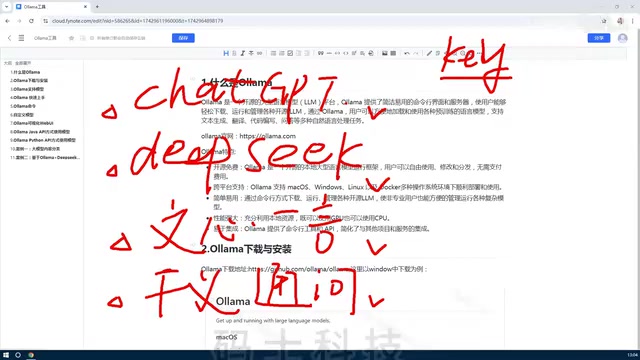
Ollama Local Deployment Guide: Run Open-Source LLMs with Zero Experience
Ollama local deployment tutorial: what Ollama is, why choose it, how to download, install, and run open-source LLMs, and use its API for custom development. Beginner-friendly.
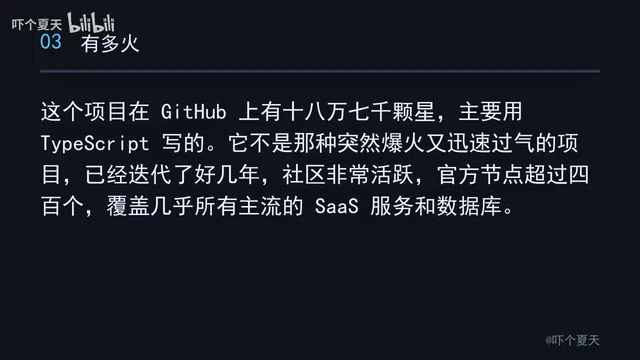
n8n: The 187K-Star Open-Source Automation Powerhouse That Turns Repetitive Work into Workflows
n8n is a 187K-star open-source visual workflow automation engine with 400+ nodes, Webhook/schedule/polling triggers, self-hosting for data security, and AI Agent support. Here's a guide to its core concepts, use cases, and pitfalls.
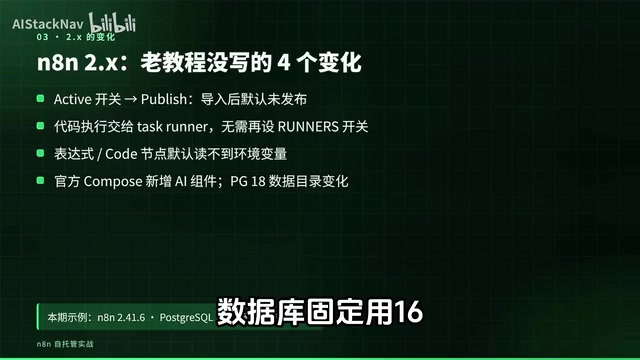
Self-Hosting n8n in Practice: Docker + PostgreSQL + Caddy Deployment Guide
A step-by-step guide to deploying a self-hosted n8n instance with Docker Compose, PostgreSQL, and Caddy automatic HTTPS, including env var pitfalls, Feishu alerting, and backup/upgrade/rollback tips.