Mike Schur: In the Streaming Era, the First Five Minutes Decide a Show's Fate
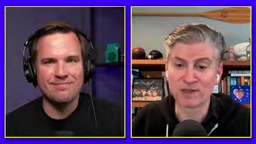
In the streaming era, creators must hook viewers within two minutes, and algorithms are reshaping content production.
In a Vergecast interview, comedy producer Mike Schur noted that roughly 75% of streaming platforms' notes on first episodes focus on the first five minutes, with completion rate now the core renewal metric. Content overload has made viewers deeply impatient, forcing creators to use cold opens and trailer-style editing to compete for attention. Schur cites slot machine economics to explain why episode counts settled at 8–12, and criticizes algorithms for reversing the flow of creative energy and pushing content toward a broad mean. Despite his criticism of AI and algorithms, he sees signs of a backlash toward authentic experience and believes carefully crafted work will ultimately be discovered.
Streaming has pushed audiences' patience to the limit. In the latest episode of The Vergecast, veteran comedy producer Mike Schur sat down with host David Pierce for an in-depth conversation about the state of the comedy industry. Schur, who worked on The Office, created Parks and Recreation and A Man on the Inside, and whose new series Dig has launched on Peacock, summed up the situation for today's creators in one line: you have to grab the audience by the throat within two minutes.
Why the First Episode Matters More Than Ever
Schur offered a blunt assessment: in the streaming era, roughly 75% of the notes platforms give about a first episode focus on the first five minutes. There are two reasons why.
First, viewers' habits have been reshaped. Platforms keep instilling in users the mindset that "there's more content than you could ever watch," which leaves people with almost no tolerance for a new show—if the first few minutes don't land, one swipe and they're on to the next thing. Second, the platform's most important measure of success is completion rate: how many people who start a show watch it all the way to the end. That number directly determines whether a show gets renewed. With both factors combined, creators have almost no room for trial and error.
"We're playing a game by the rules, and the rules are: if you don't do something earth-shattering at the start, you probably won't be around at all."
Completion Rate is one of the core metrics streaming platforms use to measure content performance, typically referring to the proportion of users who watch a given series or video in full. Unlike traditional ratings, completion rate reflects audience retention in finer detail—especially in the on-demand model, where users have complete freedom of choice. Platform algorithms tend to prioritize recommending content with high completion rates, because it signals that users are satisfied and willing to keep investing time. For a series, the first episode's completion rate is especially critical: it determines whether viewers will keep following subsequent episodes, which in turn affects the whole season's completion performance and renewal decisions. That's why creators must quickly establish appeal in the first few minutes of a first episode to reduce the risk of viewers abandoning the show midway.
Cold Opens, Trailer-Style Editing, and the "Best Six Seconds"
Schur observed that this logic has seeped into every content format. Podcasts and YouTube videos habitually cut the most exciting 30 seconds to the front as a cold open; movie trailers even give you a six-second "highlight reel" before the feature itself. In essence, everyone is competing for the same scarce resource: the consumer's attention.
He pointed out that this isn't inevitable—it's more like a deliberate choice by Netflix and its imitators: by training users to believe "there's endless content here," they've bought themselves extremely impatient users. And that impatience ultimately comes back to bite the content itself.

The Bet Behind A Man on the Inside: You Don't Need a Car Crash to Hook People
Not every show opens with a high-stakes plot. Schur recalled that the first two minutes of A Man on the Inside have almost no dialogue: Ted Danson wakes up alone, half the bed is empty, half the sink is empty, half the closet is empty—silent images hinting at the grief of losing a wife. Netflix's feedback was that it was "a little slow, a little sad."
Schur's response: compelling doesn't mean action-packed. "There is no version of this show that opens with a high-speed car chase—that's just not what I have to offer the audience." He bet that viewers would be drawn in by this restrained approach.
The Lesson of The White Lotus: One Corpse Solves Everything
When it comes to "mystery box" storytelling, Schur sees Mike White as the best model. White excels at dissecting characters' psychology with microscope-like precision, but in the streaming era he too has to confront the same attention problem. His solution: a corpse washes up at the beginning.
Schur asserts that what White himself cares least about is precisely "who died"—that might be casually decided in episode seven. What he really cares about is the complex relationships among three women, how they talk about each other when someone isn't present. The corpse is just a hook to keep viewers willing to stay.
Mystery Box storytelling is a narrative structure popularized by J.J. Abrams, whose core is to throw out an intriguing mystery or suspense at the start of a story without rushing to provide answers, instead sustaining viewers' curiosity by continually adding new questions. This mode is especially popular in the streaming era because it effectively counters audience distraction, prompting them to keep watching in order to unravel the mystery. However, mystery boxes are also often criticized, because if the reveal lacks sufficient weight or logical support, viewers feel deceived. Schur uses The White Lotus as an example to show how Mike White uses a corpse as the mystery box's hook, but what he really focuses on is character relationships and psychology, thereby balancing suspense with depth.
The Plight of Workplace Comedies: There's No 23-Episode Second Season Anymore
Traditional workplace comedies rely on the accumulation of time. Schur cites Frasier, Seinfeld, and The Office as examples: these shows' first seasons were often unremarkable, and the real chemistry grew in the second season, through the磨合 of dozens of episodes. But today, a show's entire lifespan might not even reach 30 episodes.
So even workplace comedies have to stuff in some kind of propulsive element—a mystery, a suspense—to push viewers from one episode to the next. Schur specifically mentions FX's Adult as a rare exception; according to him, the show's next season will have 16 episodes, stemming from an agreement between John Landgraf and the creators to return to the old way of making shows. But such cases are extremely rare.
Slot Machine Economics: Why Episode Counts Settled at 8 to 12
Schur cited an article about slot machines to explain the episode-count logic of streaming. Casinos once kept shortening the spin time to increase the number of spins per minute, but when they shortened it to the extreme, revenue actually fell—players felt they "hadn't gotten their money's worth." Eventually they found a sweet spot: spins long enough to convince people there's real randomness, yet short enough to maximize the number of spins.
Streaming works exactly the same way: 22 episodes became 13, then 10, 8, 6, and now it has stabilized back in the 8-to-12 range. Platforms are looking for that balance point where users feel they've watched enough of a season to justify renewing their subscription. If 8 to 10 episodes can retain users, why spend twice the cost to make 22?
Schur also pointed out the "mid-level success" trap: shows too small aren't worth renewing, shows too big blow the budget, and shows in the middle are the most likely to be canceled and replaced—like swapping a 12th-ranked veteran for a rookie quarterback. The old model of simultaneous broadcast could still recoup costs by selling rights after nearing 100 episodes, whereas streaming shows sign near-permanent buyouts of rights; when you do the math, canceling a show midway becomes the more "rational" choice.
Algorithms Are Reversing the Flow of Creative Energy
This is Schur's sharpest criticism in the interview. He believes algorithms have reversed the direction of creative energy: in the past, people made things, put them out into the world, and got feedback; now algorithms first tell writers what genres are working, then let creators adjust their internal settings to cater to the predictions.
"It's an absolutely terrible recipe for creation. It relentlessly pushes everything toward a broad mean, smoothing away all the rough edges."
He listed a batch of classics that would struggle to survive under algorithmic logic: The Sopranos is about people's real-time existential crises—gloomy, dark, weird; Mad Men is the same; Breaking Bad is a brutal examination of the human monster; Seinfeld is "the four most unlikable people on Earth." If they were made today, these shows would likely be nipped in the bud.
Algorithmic recommendation systems are the technical mechanisms streaming platforms and social media use to predict user preferences and push content, typically based on collaborative filtering, content features, and user behavior data. They aim to maximize user engagement (such as watch time and click-through rate), but this also leads content production to gradually tilt toward the genres and formulas algorithms favor. What Schur criticizes is precisely this reverse influence: creators no longer start from personal expression, but first analyze algorithmic data, then adjust their creative direction to cater to predictions. This model easily leads to content homogenization, weakening the uniqueness and adventurous spirit of works, because algorithms tend to promote proven success formulas rather than support marginal or experimental works.
Reasons for Optimism: Authenticity Is Making a Comeback
In the latter half of the interview, Schur expressed cautious optimism. He mentioned several signals: Best Buy is stocking Blu-rays again; his 18-year-old son, raised on TikTok and Snapchat, suddenly invited him to play chess; his daughter collects vinyl records; young people are starting to think it's cool not to have the latest iPhone.
He also stated bluntly what he thinks of the current AI wave—"everything about AI so far has been terrible." He observed that a great deal of AI-generated content has been explicitly rejected by a considerable number of people. This backlash against "authenticity" may eventually be reflected in the entertainment people consume.
The premise of Dig happens to echo this sentiment: a group of people crouch at an archaeological site in Greece, brushing dirt off ancient pottery. They have iPhones but don't stare at them all day. They play board games, play cards, chat, drink lemonade—like summer camp. Both Schur and Amy Poehler feel that this kind of communal, authentic experience is being valued again.
His ultimate belief is simple: work made with care, with ideas, with craft will eventually be found by audiences and passed along by word of mouth. It's just that in this era of extreme content saturation, that path has become harder to walk.
Editor's Commentary
Schur's observations touch on a structural contradiction in the streaming industry: platforms create content overload to retain users, content overload trains users to be impatient, and impatience in turn squeezes creative space. The slot machine metaphor and the critique of algorithms are the two most penetrating insights in this conversation—they reveal not only the problems of the film and television industry, but also the common dilemma of all content platforms that rely on recommendation algorithms.
One-line Summary
In the streaming era, creators must hook viewers within two minutes, and algorithms are reshaping the logic of content production.
Paragraph Summary
In a Vergecast interview, comedy producer Mike Schur pointed out that roughly 75% of streaming platforms' notes on first episodes focus on the first five minutes, with completion rate becoming the core metric for renewal. Viewers, made extremely impatient by content overload, force creators to use cold opens, trailer-style editing, and other techniques to compete for attention. Schur uses A Man on the Inside and The White Lotus as examples to show that a high-stakes opening isn't the only solution, but workplace comedies struggle to rely on long-term chemistry as episode counts shrink. He cites slot machine economics to explain the industry logic behind episodes stabilizing at 8–12, and criticizes algorithms for reversing the flow of creative energy and pushing content toward a broad mean. Despite his critical stance on AI and algorithms, Schur sees signs of a backlash toward authentic experience—the Blu-ray revival, young people playing chess—and believes that work made with care will ultimately be discovered.
Related articles

ChatGPT Plus Subscription Pitfall Guide: Go/Plus/Pro Tier Comparison and Quick Activation
A complete ChatGPT Plus subscription guide based on a Bilibili tutorial: from registering an account, comparing Go/Plus/Pro tiers, to the practical steps for quickly completing your subscription.

GPT-6.2 Sol/Astra Released! A Step-by-Step ChatGPT Plus Subscription Guide and Tier Comparison
GPT-6.2 Sol/Astra is out—here's a ChatGPT Plus subscription guide: register an account, compare Go/Plus/Pro tiers, and subscribe in a minute.

Comparing Three Channels for Subscribing to GPT Plus in China: Is Website Top-Up the Easiest?
How to subscribe to GPT Plus in China? This article compares website top-up, credit card, and mobile top-up channels—process, cost, and risk—with steps and tips to help you choose wisely.