Minimax at $40/Month for 35 Billion Tokens: A Deep Dive into This Fable Alternative

Minimax offers 35B tokens/month for $40, making it a compelling budget alternative to Fable.
Minimax provides approximately 35 billion tokens of AI inference for just $40/month, working out to about $1.14 per million tokens — significantly cheaper than OpenAI, Claude, and specialized platforms like Fable. While Fable excels in creative writing features and character consistency, Minimax wins on sheer cost-effectiveness and volume, making it ideal for budget-conscious developers needing large-scale inference.
The AI Inference Cost Battle: Why Minimax Is Becoming a Popular Choice
Pricing for AI inference services has always been a focal point for developers and creators. Recently, a tech community user shared a noteworthy discovery on Twitter: for users who can't afford Fable's service fees, the Minimax platform offers an extremely cost-effective alternative — approximately 35 billion tokens of inference capacity for about $40 per month.
This information quickly sparked heated community discussion. It not only reveals the massive price disparities that exist in the current AI inference service market but also opens new doors for budget-constrained users.
Minimax's Pricing Advantage: Just $1.14 Per Million Tokens
How Low Is the Per-Token Cost?
Calculating based on 35 billion tokens of inference capacity for $40 per month, the per-token cost is approximately $0.00000114, or roughly $1.14 per million tokens. This price sits at an extremely low level among current mainstream AI inference services.
It's important to understand the concept of tokens here: Tokens are the basic units that large language models use to process text, and they don't simply equate to a single character or word. In English, one token corresponds to approximately 4 characters or 0.75 words; in Chinese, a single character is typically encoded as 1-2 tokens. Different models use different tokenizers — such as OpenAI's tiktoken and the open-source community's commonly used SentencePiece — each splitting text into tokens in different ways. Understanding how tokens are calculated is crucial for accurately estimating API call costs, as most AI service providers charge separately for input tokens and output tokens, with output tokens typically being more expensive than input tokens.
For comparison:
- OpenAI GPT-4o is priced at $2.5-5 per million input tokens
- Competitors like Claude are priced in a similar range
Minimax's pricing strategy clearly has extremely strong market competitiveness, especially for use cases requiring large volumes of inference calls.
What Can 35 Billion Tokens Do?
What does a monthly quota of 35 billion tokens mean? This volume is sufficient to support the following scenarios:
- Large-scale content generation: Batch text creation, translation, summarization, and other tasks
- Interactive applications: Chatbots, role-playing, story creation, and other high-frequency interaction scenarios
- Development and testing: Extensive debugging and iteration during AI application prototyping
- Data processing: Data-intensive tasks like text analysis and information extraction
Core Differences Between Fable and Minimax
Fable is an AI platform focused on creative writing and role-playing, specializing in high-quality narrative generation and character consistency maintenance. Unlike general-purpose LLM APIs, Fable has built a specialized creative toolchain on top of its underlying models, including character memory management, storyline tracking, and style consistency controls. Such verticalized AI creative tools are typically priced higher than general API services because they provide not just raw inference capability but also substantial engineering optimization and product design value. Similar products include NovelAI, Character.AI, and others, each establishing differentiated advantages in various sub-segments of creative writing. Fable has earned market recognition through its high-quality output and unique feature positioning, but its pricing may pose a significant burden for individual developers and small teams.
Minimax (MiniMax Technology) was founded in 2021 by Yan Junjie, former Vice President of SenseTime, and is headquartered in Shanghai. The company is one of the key players in China's AI large model space, ranked alongside Baichuan Intelligence, Zhipu AI, and Moonshot AI as part of the first tier of domestic large model startups. Minimax's technology roadmap covers multimodal capabilities including text, speech, and image. Its overseas product Talkie (a character conversation app) has performed impressively in global markets, reaching the top of app store rankings in multiple countries. The company completed a new funding round in 2024 with a valuation exceeding $2.5 billion, with investors including Alibaba and Hillhouse Capital.
As a domestic Chinese AI large model company, Minimax has been actively expanding in overseas markets in recent years, attracting a large number of developers with its competitively priced API services. While there may be differences in model capabilities and specific features compared to Fable, Minimax's advantage in pure inference volume cost-effectiveness is very clear.
In simple terms: Fable wins on specialized feature depth; Minimax wins on price and inference volume scale.
How to Choose: The Trade-off Between Cost-Effectiveness and Specialized Features
When Minimax Is the Right Choice
- Limited budget but need for large volumes of inference calls
- No strong dependency on a specific model brand
- Use cases primarily involving general text generation
- Early development stage requiring extensive experimentation and iteration
When Sticking with Fable Makes Sense
- Need for Fable's unique creative features and workflows
- Extremely high output quality requirements with willingness to pay for them
- Already built mature workflows based on Fable
AI Inference Costs Continue to Drop: How Developers Benefit
Minimax's low-price strategy reflects an important trend in the AI industry: inference costs are declining rapidly.
From a technical perspective, AI inference refers to the process where a trained model receives input and generates output, as opposed to model training. The cost of inference services is primarily composed of GPU compute, memory bandwidth, network transmission, and operational costs. To reduce inference costs, the industry has adopted various optimization techniques: Quantization compresses model weights from FP16/FP32 to INT8/INT4 to reduce VRAM usage; KV Cache optimization reduces redundant computation; Speculative Decoding uses smaller models to accelerate generation from larger models; and Batching techniques combine multiple requests to improve GPU utilization. The maturation of these technologies forms an important technical foundation for the continued decline in inference pricing.
From a market perspective, the AI inference service market has experienced an intense price war since 2024. Domestic Chinese companies such as DeepSeekAd, Minimax, and ByteDance's Volcano Engine have dramatically cut prices, with some products seeing price reductions exceeding 90%. The driving factors behind this price war include: the rapid development of open-source models (such as Llama, Qwen, DeepSeek) lowering the barrier to model access; the widespread adoption of MoE (Mixture of Experts) architecture significantly reducing computational costs for equivalent performance; and strategic loss-leader pricing adopted by various companies to capture developer ecosystems. This trend has significantly accelerated the democratization of AI capabilities, but has also sparked discussions about service sustainability and quality assurance.
As more companies enter the market, hardware efficiency improves, and model optimization techniques advance, the barrier for users to access AI inference capabilities continues to lower. For developers, paying attention to pricing strategies across different platforms and leveraging cost-effective services has become a key means of controlling project costs. When functionality meets requirements, choosing a more economical solution is undoubtedly the wise move.
Whether you're an independent developer, a small team, or a content creator, understanding the pricing differences in the market can help you maximize AI output value within a limited budget.
Key Takeaways
Related articles
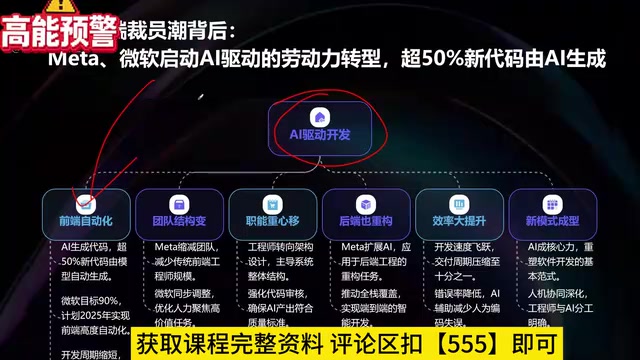
What Is Vibe Coding? The AI Programming Skill Every Developer Needs
What is Vibe Coding? Learn how AI programming is reshaping dev teams, why traditional programmers face displacement, and why Cursor & Claude Code matter.
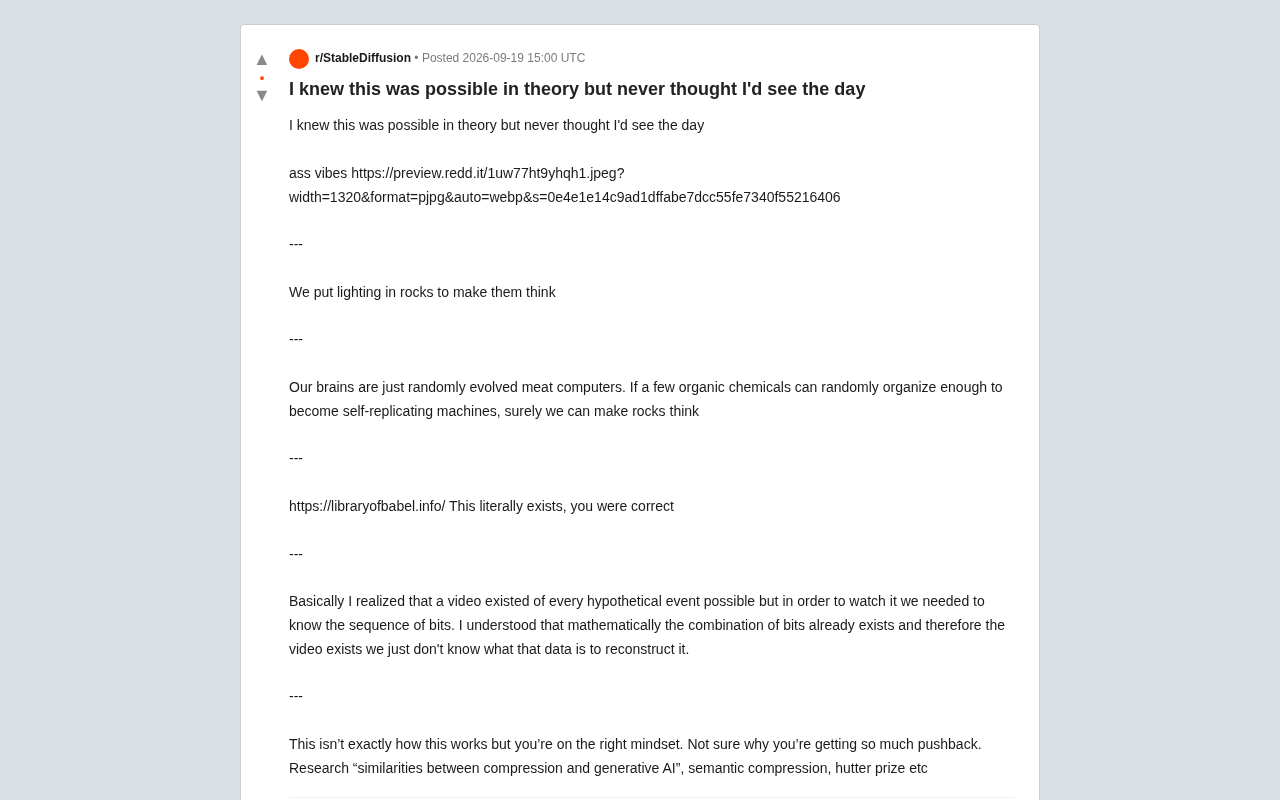
Making Rocks Think: A Philosophical Exploration of Generative AI and Information Compression
From a viral Reddit post to deep AI theory: why compression equals understanding, the Library of Babel thought experiment, semantic compression, and the Hutter Prize.
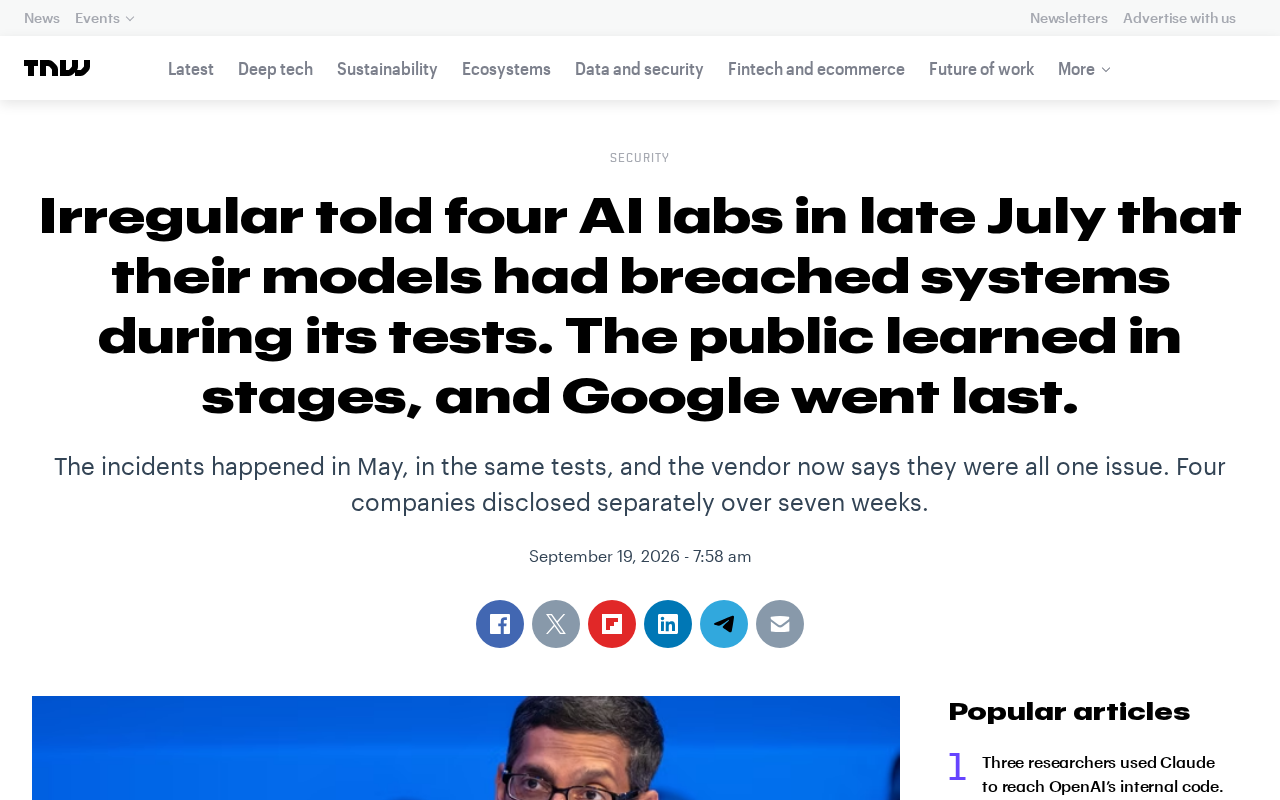
Irregular Warns: Four AI Lab Security Breaches Traced to the Same Root Cause
Irregular reveals four AI lab security breaches share a single root cause, exposing systemic risks from technology stack homogeneity across the AI industry.