MiniMax + ComfyUI in Practice: A Detailed Guide to the Inpainting Image Restoration Workflow

A practical guide to combining MiniMax models with Inpainting workflows in ComfyUI for AI image creation.
This article explores how creators are using ComfyUI's node-based workflow system to integrate MiniMax models with Inpainting image restoration techniques. It covers ComfyUI's modular architecture, custom node development, the technical principles behind Inpainting, and the generation-plus-refinement workflow methodology that professional AI creators use to achieve high-quality results through iterative optimization.
An Experiment in AI Creative Workflows
Recently, a Reddit post titled "Denzel explains why he uses AI" caught the attention of the creator community. On the surface, it's a somewhat tongue-in-cheek title, but underneath it points to a technically impressive experiment — the author used custom nodes to run a MiniMax model in ComfyUI, combined with Inpainting image restoration methods to complete the creative work.
Although small in scale, experiments like these reflect an important trend in the AI image generation community: more and more creators are no longer satisfied with simply calling ready-made image generation tools. Instead, they're diving deep into the underlying workflow, using node-based orchestration and model combinations to achieve more refined and controllable creative results.
ComfyUI: The Core Platform for Modular AI Creation
Why Choose ComfyUI
ComfyUI has become one of the most popular open-source workflow tools in the AI image generation space. Unlike traditional "one-click generation" interfaces, ComfyUI uses a node-based visual orchestration approach, allowing users to break down every step — from model loading, sampling, and conditional control to post-processing — into independent functional modules that can be freely combined through connections.
Deep Dive into ComfyUI's Technical Architecture
ComfyUI is built with Python, using PyQt as its GUI framework and relying on PyTorch for model inference under the hood. Its core innovation lies in fully deconstructing the generation pipeline of diffusion models like Stable Diffusion: while traditional UIs package "text-to-image" behind a single button, ComfyUI exposes the Sampler, Scheduler, CLIP Text Encode, VAE Decoder, and other components as independently configurable nodes. This design draws from the Blueprint systems commonly used in game engines — users define data flow by dragging nodes and connecting input/output ports. Each node is essentially a Python class that processes specific types of tensor data. This architecture not only improves transparency but, more importantly, allows users to inject custom logic at any stage — such as dynamically adjusting guidance coefficients during sampling or injecting custom latent space operations before VAE decoding.
This design brings two core advantages:
- Extreme flexibility: Creators can precisely control every step of the generation process, from noise scheduling to VAE decoding, with every parameter independently adjustable.
- Reproducibility: Entire workflows can be saved as files for easy sharing and reuse, making team collaboration especially efficient.
It's precisely this modular nature that makes ComfyUI the ideal platform for technically-oriented creators conducting AI image experiments.
The Ecosystem Value of Custom Nodes
In this experiment, the author specifically mentioned using "my nodes" — custom nodes they developed themselves. One of ComfyUI's greatest strengths is its open plugin ecosystem — developers can write their own nodes to integrate new models, implement specific algorithms, or optimize workflows.
This means that when a new model (such as MiniMax) is released, the community can quickly build compatible nodes without waiting for official support. This decentralized development model dramatically accelerates the transition of new technologies from research papers to practically usable tools.
Integrating the MiniMax Model in ComfyUI
Model Capabilities and Use Cases
MiniMax Model Technical Background
MiniMax is a large-scale multimodal foundation model series developed by Chinese AI company MiniMax Inc. The series includes text generation models (such as the abab series) and image generation models, with a technical approach combining Transformer architecture with Diffusion Models. Compared to mainstream models like Stable Diffusion and DALL-E, MiniMax has notable advantages in Chinese language understanding and generating Asian cultural elements, thanks to its training data containing a large volume of Chinese-language corpora and Eastern aesthetic materials. Technically, MiniMax adopts a multi-stage generation strategy similar to SDXL: first generating a low-resolution image with a base model, then enhancing details through a Refiner model. Integrating it into ComfyUI requires solving technical challenges like model weight format conversion and inference interface adaptation — exactly the work that custom nodes are designed to handle.
As an AI model series that has garnered significant attention in recent years, MiniMax's capabilities in image and multimodal generation are gradually being explored by the community. Bringing MiniMax into the ComfyUI workflow is essentially about testing the model's performance potential in an open creative environment.
For creators, the significance of such experiments extends beyond validating a single model's output — it's about exploring the collaborative potential between different models. Through node-based composition, creators can assign MiniMax to specific generation tasks while pairing it with other tools for refinement, leveraging each model's strengths while compensating for its weaknesses.
Practical Application of Inpainting Image Restoration
The Basic Principles of Inpainting
Inpainting (image restoration/partial repaint) is a core technique in AI image generation. It allows users to select specific regions within an image and regenerate only those areas while keeping the rest unchanged. Common use cases include:
- Removing imperfections or unwanted elements from an image
- Replacing content in specific areas
- Correcting facial expressions, hand details, and other parts that are difficult to get right in a single generation pass
Technical Deep Dive into Inpainting
Inpainting in AI image generation is based on the conditional generation mechanism of diffusion models. Specifically, after the user marks the area to be repainted with a Mask, the system executes the following process: first, the original image is encoded into Latent Space — a low-dimensional abstract representation; then noise is added only to the latent vectors within the masked region for denoising and sampling, while keeping the latent vectors outside the mask unchanged; during denoising, the model references contextual information at the mask edges to ensure the newly generated content maintains consistency with surrounding areas in terms of lighting, style, and perspective. There are two mainstream technical implementations: one uses specially trained Inpainting models (such as Stable Diffusion Inpainting), which are specifically trained to learn mask conditions; the other uses noise blending techniques to enable regular models to perform partial repainting. While the latter produces slightly inferior results, it offers greater flexibility and can be used with any model.
In actual creative work, Inpainting is often the critical step for achieving high-quality final results. Pure "text-to-image" generation rarely produces perfect results on the first try. Through partial repainting, creators can work like retouching artists, iteratively refining every detail in the image and gradually approaching their ideal outcome.
The Generation + Refinement Combo Workflow
This experiment's combination of the MiniMax model with Inpainting methods is a classic example of the "generation + refinement" approach. The specific process can be summarized as:
- Base generation stage: Use the MiniMax model to generate the initial image based on prompts.
- Problem identification stage: Review the generated result and mark areas that need adjustment.
- Partial repaint stage: Use Inpainting to iteratively optimize the marked areas, processing only small regions at a time.
- Iterative refinement: Repeat the above process until the overall image quality meets satisfactory standards.
Sampling and Scheduling Mechanisms in Diffusion Models
The core of diffusion models is a gradual denoising process: starting from pure noise, the model iterates through dozens to hundreds of steps to progressively restore a clear image. This process is jointly controlled by the Sampler and Scheduler. The Sampler defines the mathematical method for denoising at each step — common options include over a dozen algorithms such as DDIM (fast but slightly lower quality), DPM++ (high quality but slower), and Euler a (good for creative exploration), each with different trade-offs in convergence speed, result diversity, and computational cost. The Scheduler determines the noise decay timeline — whether it's linear or nonlinear — which directly affects generation quality. In ComfyUI, users can try different Sampler-Scheduler combinations for the same prompt and observe the differences. Advanced users may even switch parameters mid-sampling — for example, using high CFG (Classifier-Free Guidance) values in the first half to ensure accuracy, then lowering CFG in the second half to increase detail richness. This kind of fine-grained control is precisely where node-based workflows shine.
This step-by-step, controllable workflow represents the methodology widely adopted by professional AI creators today, offering significantly higher success rates and quality ceilings compared to one-shot generation.
Looking Ahead: The Direction of AI Creation
This seemingly simple Reddit post actually encapsulates several important trends in the AI image creation community.
Balancing technical barriers with creative freedom. Tools like ComfyUI have steep learning curves, but the payoff is control far exceeding that of ordinary tools. This is precisely why many serious creators are willing to invest the learning cost — greater freedom means a larger creative canvas.
Rapid iteration in the open-source ecosystem. From custom node development to rapid integration of new models, the entire community demonstrates a powerful capacity for self-evolution. When any new technology appears, it's often absorbed by the community and put into practical use within an extremely short timeframe.
The deepening adoption of workflow thinking. Modern AI creation increasingly emphasizes breaking complex tasks into controllable steps and using model combinations, partial repainting, and other techniques to progressively approach ideal results.
The Engineering Philosophy of Node-Based Workflows
Node-based workflows represent a paradigm shift in AI creation: from 'black-box tools' to 'composable functional units.' This design philosophy stems from the Unix pipe philosophy — each program does one thing well, and complex functionality is achieved through composition. In ComfyUI, a complete image generation pipeline might involve 20-30 nodes covering text encoding, noise initialization, iterative sampling, latent space decoding, post-processing, and more. This decomposition brings three core advantages: first, debugging friendliness — you can preview intermediate results after any node to quickly locate issues; second, parameter reuse — the same set of CLIP encoding results can be shared by multiple samplers, avoiding redundant computation; third, version control — workflows are saved in JSON format and can be version-managed and collaboratively developed just like code. For professional creators, mastering node-based workflows is like upgrading from 'using Photoshop filters' to 'writing Photoshop action scripts.'
This engineering-oriented creative mindset is redefining the role of "AI creator" — they are both artists and workflow engineers.
Summary and Practical Recommendations
Although this was just a "quick experiment," the spirit of exploration and technical approach it represents are precisely what drives the AI creation field forward. For creators looking to go deeper into AI image generation, the following areas deserve focused attention:
- Master ComfyUI's node-based workflows — understand the function and parameters of each node.
- Learn partial refinement techniques like Inpainting — this is often the key differentiator in output quality.
- Stay attuned to new models — promptly test how emerging models like MiniMax perform across different tasks.
- Engage with the community — learn and share custom nodes and workflow configurations.
As the capabilities of models like MiniMax continue to strengthen and the ComfyUI ecosystem continues to mature, there's every reason to expect more imaginative creative experiments to emerge.
Related articles
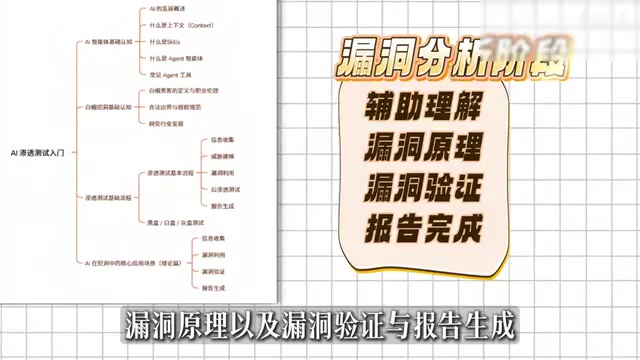
AI Penetration Testing Learning Roadmap: Four Stages from Beginner to Advanced
A systematic breakdown of the four-stage AI penetration testing roadmap covering AI-assisted vulnerability discovery, automated asset collection, enterprise security integration, and intelligent Agent development.

AI Ghostwriting Government Reports Triggers Trust Crisis: A Deep Dive into the Wellington City Council Incident
Wellington City Council's Deloitte report exposed as heavily AI-generated, sparking debate on consulting transparency, government procurement, and AI accountability.
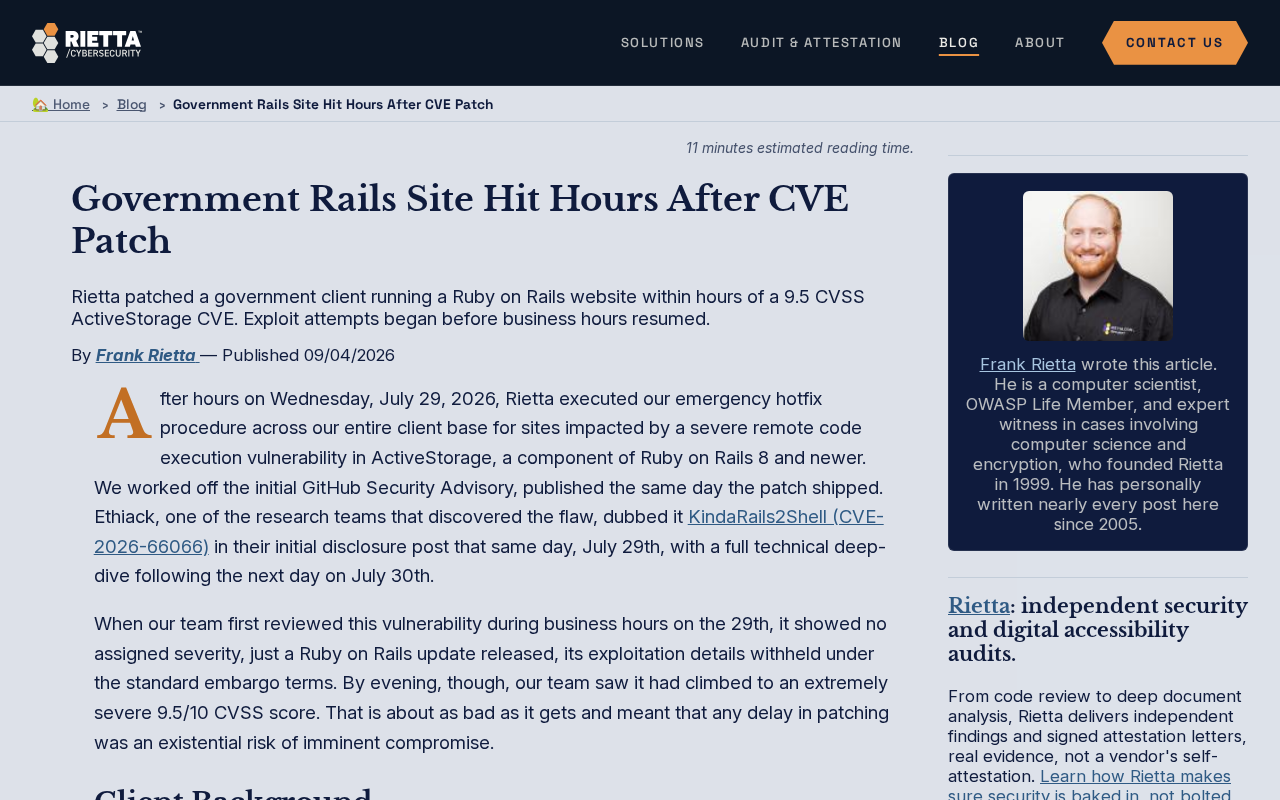
Government Rails Site Breached Hours After Patch Release: A Wake-Up Call on n-day Vulnerability Threats
A government Rails site was breached hours after a CVE patch release. Deep analysis of patch racing, n-day threats, and defense strategies for developers.