MiniMax H3 3-Step Acceleration LoRA: The Battle Between Blazing Speed and Image Quality
MiniMax H3's 3-step LoRA sparks debate: community tests suggest staged multi-LoRA workflows beat chasing minimum steps.
MiniMax H3 3 Step LoRA compresses video generation inference to just 3 steps, dividing Reddit's AI video community. Supporters value the extreme speed; skeptics argue too few steps sacrifice image quality. Real-world tests show the 3-step approach performs poorly on ref2va tasks, with strength 0.7 at 8 steps proving more viable — raising the pointed question of what value a "3-step" LoRA offers if you still need 8 steps in practice. The emerging consensus: it's best used as a refinement tool in staged multi-LoRA workflows, not as a standalone solution.
In Reddit's AI video generation community, a model called "MiniMax H3 3 Step LoRA" has sparked heated debate. It compresses the inference steps required for video generation down to just 3, delivering remarkable speed — but community reactions are sharply divided. Some are drawn to its extreme efficiency, while others worry it trades image quality for raw speed.
How Far Has the Steps Race Gone?
From diffusion sampling that once required dozens of steps, to today's Turbo and Lightning series of accelerated LoRAs, inference step counts for video generation models have been pushed lower and lower. MiniMax H3's 3-step approach takes this "steps race" to a new extreme.
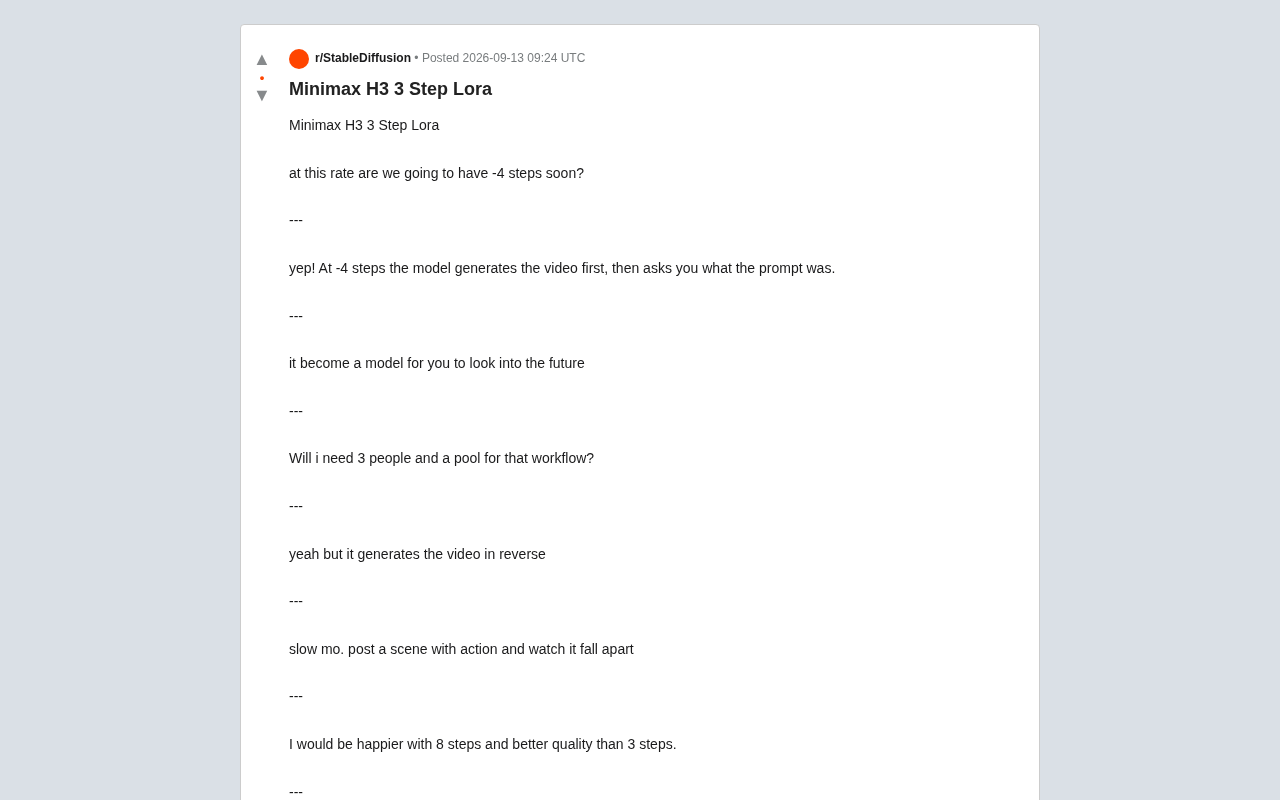
The community's jokes were spot-on: "At this rate, are we going to see -4 steps soon?" Someone replied, "At -4 steps, the model would generate the video first, then ask you what your prompt was." Others joked it would "become a model that lets you glimpse the future." Behind the humor lies a real industry trend — the marginal gains from acceleration technology are approaching physical and algorithmic limits. Compressing steps further often doesn't yield speed improvements so much as quality collapse.
Speed Isn't the Only KPI
Not everyone is sold on maximum speed. One user put it bluntly: "I'd rather use 8 steps for better quality than 3 steps." This reflects the position of a significant portion of creators — in real production environments, stable output quality matters more than saving a few seconds, especially when the output is intended for professional content.
The ability to drastically reduce inference steps in diffusion models relies on specialized distillation techniques. Traditional diffusion models (like DDPM) require hundreds of steps of iterative denoising; improved samplers like DDIM brought that down to dozens. Turbo and Lightning-style acceleration methods introduce techniques like Consistency Distillation or Adversarial Diffusion Distillation: a pre-trained "teacher model" supervises a "student model," allowing the student to leap toward a near-final output in very few steps. LoRA (Low-Rank Adaptation) itself is a lightweight adapter that modifies model behavior by training only a small number of parameters, so an acceleration LoRA achieves the distillation effect described above via a small add-on adapter, without modifying the base model weights. The physical limit of step compression comes down to this: each denoising step handles the elimination of noise at specific frequencies. With too few steps, low-frequency structure (overall composition) and high-frequency detail (texture, motion) can't both be preserved simultaneously, ultimately causing visual breakdown or incoherent motion.
Where the 3-Step LoRA Actually Shines
Interestingly, the community discussion gradually shifted from "is it fast enough?" to "how do you use it cleverly?" One user offered a genuinely constructive perspective: the image quality from this LoRA is actually quite good compared to other Turbo models, and it's better suited for use in the refinement stage of video generation.
His specific proposal: use an 8-step LoRA for the first 6 steps of primary generation, then hand off to the 3-step LoRA for the final 2 steps, or experiment with other combinations. This "multi-stage, multi-LoRA" workflow essentially splits the advantages of different acceleration models — using the higher-step model to ensure structural and semantic correctness, then applying the quality-focused fast LoRA for final visual polish. This is far more pragmatic than simply chasing "the fewest possible steps in one pass."
Slow Motion Is the Acid Test
A classic quality test for acceleration models also came up: "Send it a slow-motion scene with motion and see how it falls apart." Slow-motion and high-speed action sequences demand extremely high temporal coherence, and they're often the first place low-step-count models start to fail. This is a reminder that evaluating an acceleration LoRA can't stop at static images — motion smoothness and inter-frame consistency are the real benchmarks.
The "multi-stage, multi-LoRA" workflow relies technically on the phase-based division of labor inherent in the diffusion process. Diffusion model denoising can be roughly divided into two phases: early steps determine the global structure, subject layout, and semantic content of the frame, while later steps handle detail filling, texture sharpening, and stylistic finishing. This is precisely why using a higher-step LoRA (like 8 steps) for early-stage structural generation, then switching to a 3-step LoRA with stronger quality-refinement capabilities for the final few steps, can theoretically achieve both structural accuracy and fine detail. There's precedent for this in image generation — for example, generating an initial image with a base model, then applying Hires Fix or img2img refinement. In video generation, however, inter-frame temporal consistency is an additional constraint. When switching LoRAs, you need to ensure that both models share a compatible understanding of the motion trajectory; otherwise, the refinement stage can introduce new flickering or discontinuities. That's the real technical challenge of this workflow.
Real-World Testing: Parameters Are the Key Variable
A user who claimed to be part of a "ref team" shared practical test results from a ref2va (reference image to video/audio) use case, providing concrete data points for the discussion:
- Strength 0.7 + 8 steps: Good visual quality; audio effects couldn't be evaluated yet;
- Strength 1.0: Image completely "burned" — overexposed and broken;
- 3 steps + ref2va: Very poor results, essentially unusable.
His conclusion was "needs more testing, but the overall feel is positive." This data shows that LoRA performance is highly dependent on the strength parameter and the specific use case — in ref2va tasks, 3 steps is clearly insufficient, and only pulling strength back to 0.7 with 8 steps produced usable results.
A Contradiction That Demanded an Answer
Interestingly, his test immediately drew a sharp follow-up: "If you're running 8 steps anyway, why not just use the 8-step LoRA?" This question cuts right to the heart of the confusion around using acceleration LoRAs — if a model marketed as "3-step" still needs to run at 8 steps to produce viable output in practice, what's its advantage over a native 8-step solution?
This isn't nitpicking — it's the core question that must be answered when any acceleration technology hits real-world deployment. The answer may lie in the "hybrid workflow" mentioned earlier: the 3-step LoRA's value may not be in independently completing the full generation pipeline, but in serving as a quality-refinement component. Whether that added complexity is worth it for users who just want to generate video directly is still a personal judgment call.
ref2va (Reference to Video/Audio) is a class of tasks that use a static reference image as a conditioning constraint to generate video, requiring the output to closely match the reference in terms of subject appearance, scene style, and motion pose. This type of task places far greater demands on a model's "condition-following ability" than ordinary text-driven generation, since the model must adhere to visual constraints from the reference image while also generating coherent motion across time. The "strength" parameter controls how aggressively the LoRA intervenes in the base model's behavior: too low and the LoRA barely has any effect; too high and it disrupts the knowledge the base model originally learned, causing visual distortion, overexposure, or semantic breakdown (what the user described as "burned"). In a ref2va context, the 3-step LoRA likely underperforms because the extremely limited step count, combined with strong reference image constraints, forces the model to simultaneously execute a rapid denoising jump and forcibly align to the reference image features — the two objectives compete, causing output quality to deteriorate sharply.
Closing Thoughts
The community discussion around MiniMax H3 3 Step LoRA reflects a maturing understanding in the AI video generation field: while aggressively compressing step counts makes for an eye-catching headline, real productivity gains come from intelligently combining different tools, not from blindly chasing "the fewest steps."
For users who want to try it out, the community's practical advice boils down to a few points: don't fixate on the advertised step count — always test against your specific task (especially complex ones like ref2va); pay close attention to the strength parameter, since too-high values easily cause visual breakdown; and consider multi-LoRA staged workflows to preserve image quality while capturing efficiency gains. The battle between speed and quality won't have a single answer anytime soon.
Related articles
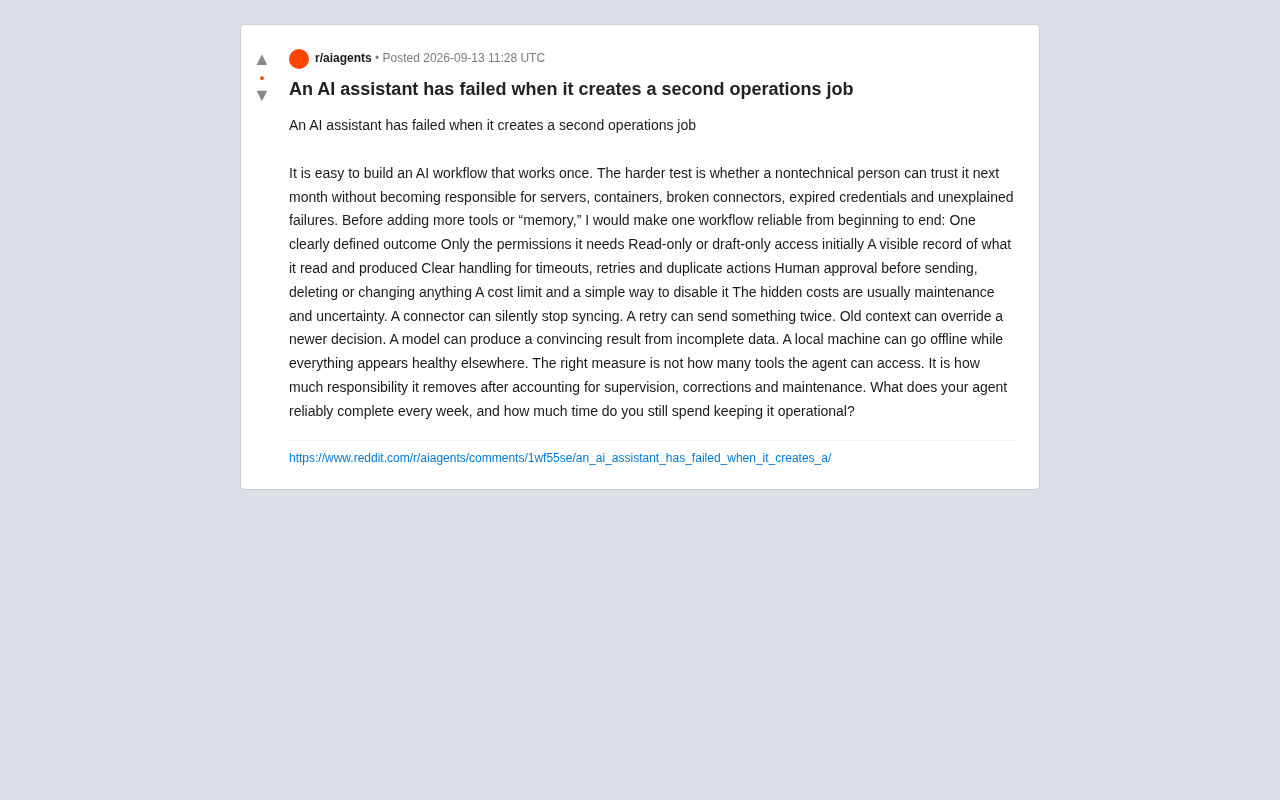
The True Failure of an AI Assistant: When It Creates a Second Operations Job
A Reddit user reframes how to judge AI assistants: they fail when they create a second ops job. Learn how to build end-to-end reliable workflows and measure Agent value by net benefit, not tool count.

AI Agent Permission Management: Is Writing Roles Manually the New Hidden Tax?
As AI Agent counts grow, manually defining permission roles is becoming a hidden operational burden. This article explores scalability challenges, auto-generated roles, and the security risk of prompt injection bypassing permission checks.
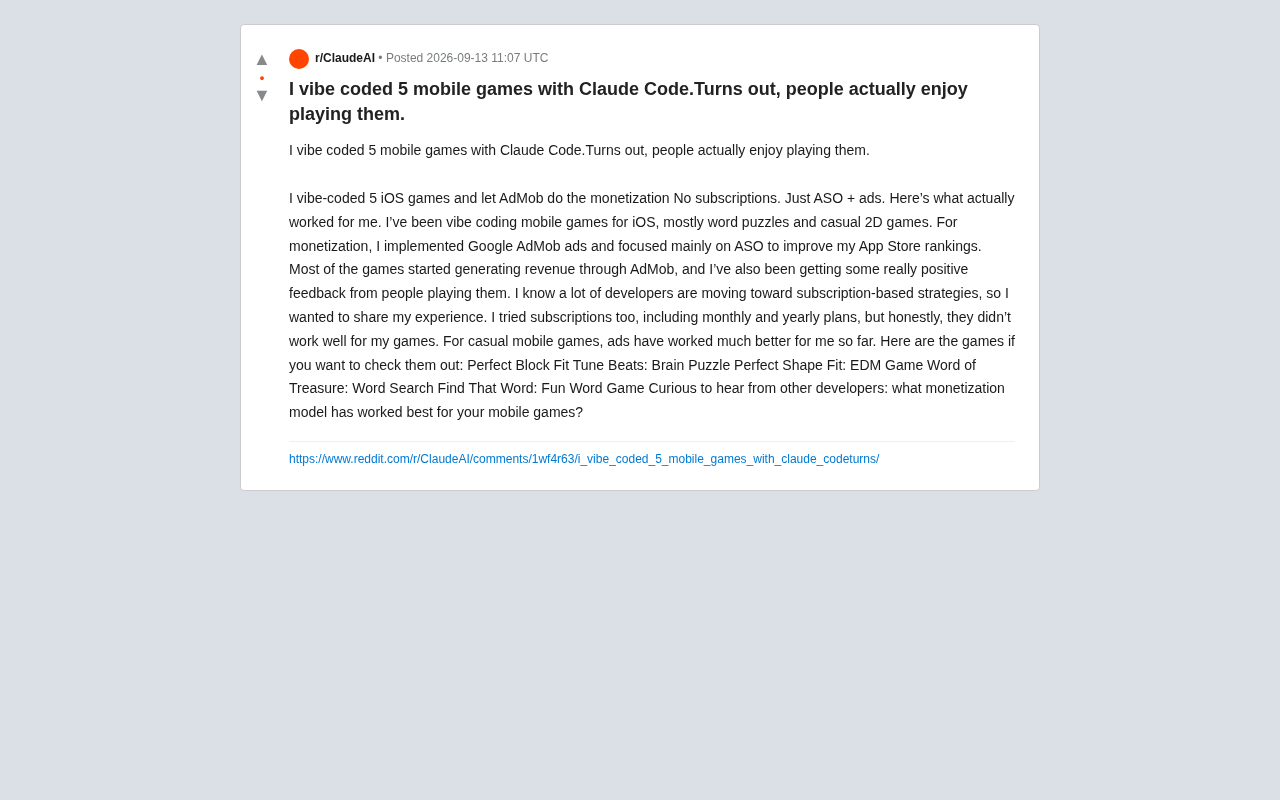
Vibe Coding 5 Mobile Games with Claude Code: Ad Monetization Beats Subscriptions
An indie dev built 5 iOS casual games with Claude Code vibe coding. His verdict: AdMob ads plus ASO optimization outperform subscriptions for casual games.