MiniMax-H3 in Practice: Cinematic Realism, Combat Scenes, and Continuity
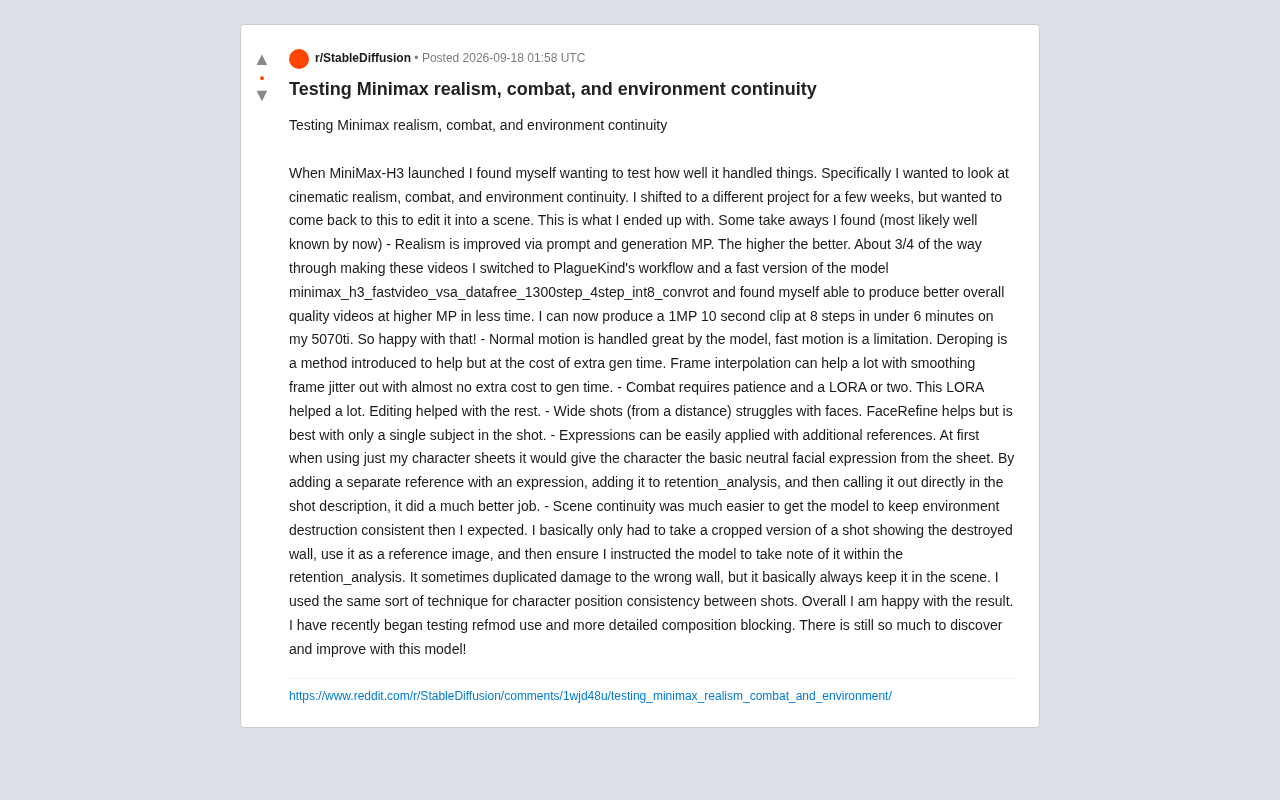
Hands-on MiniMax-H3 testing reveals a practical methodology covering resolution, fast models, frame interpolation, LoRA, and reference injection.
A creator spent weeks systematically testing MiniMax-H3 across cinematic realism, combat action, and scene continuity. Key findings: resolution directly impacts realism; PlagueKind's fast distilled workflow generates 1MP/10s clips in under 6 minutes on a 5070 Ti; frame interpolation smooths jitter at near-zero cost; combat scenes require specialized LoRA plus editing; FaceRefine helps with distant face degradation; and retention_analysis with cropped reference images reliably maintains environmental and character continuity across shots.
MiniMax-H3 in Practice: Cinematic Realism, Combat Scenes, and Continuity
After MiniMax-H3's release, one creator spent several weeks specifically testing its performance in three areas: cinematic realism, combat action, and environmental continuity — then edited the results into complete scenes. This hands-on report from the Reddit community offers a wealth of reusable insights for anyone looking to create AI video with local models.
The Key to Realism: Resolution and Workflow
One of the creator's core findings is that realism correlates strongly with the megapixel (MP) scale at generation time — the higher the resolution, the more photorealistic the output. While this isn't a new observation, it's especially critical in local deployment scenarios, where it directly determines the sweet spot between hardware investment and output quality.
The real efficiency breakthrough came from switching workflows. About three-quarters of the way through production, the creator switched to a workflow by community user PlagueKind, paired with a fast model (minimax_h3_fastvideo_vsa_datafree_1300step_4step_int8_convrot). The results were impressive: on a single 5070 Ti GPU, generating a 1MP, 10-second clip took just 8 steps and under 6 minutes, while overall quality actually improved. This demonstrates that fast distilled models are already genuinely productive on consumer-grade hardware.
Motion Handling: Slow Motion Is Solid, Fast Action Is a Weakness
The model handles standard motion quite well, but fast movement remains a clear limitation. The creator mentioned two approaches for dealing with this: first, Deroping, which mitigates issues caused by rapid motion at the cost of extra generation time; and second, Frame Interpolation, which dramatically smooths out frame jitter at almost no additional generation cost.
By comparison, frame interpolation is clearly the better value — it consumes no generation resources yet addresses the most common jitter artifacts in AI video. For efficiency-minded creators, it's worth enabling as a default post-processing step.
Frame Interpolation is a technique that generates intermediate frames between existing ones using algorithms, improving video smoothness. Common tools include RIFE (Real-Time Intermediate Flow Estimation) and DAIN, which use optical flow estimation to predict motion trajectories between adjacent frames and synthesize natural transition frames. For AI-generated video, since models typically output at lower frame rates (e.g., 8fps or 16fps), frame interpolation can bring video up to 24fps or even 60fps without regenerating anything, significantly reducing ghosting and frame-skip artifacts. Its computational cost is far lower than regenerating a video clip — typically completing in seconds to tens of seconds on a standard GPU — making it a standard step in AI video post-processing.
Deroping is a targeted fix for the "roping" deformation that occurs in AI video when subjects move too quickly. Roping refers to fast-moving objects (such as punches or sword swings) being rendered as distorted, streaky bands — a characteristic flaw in diffusion models when handling high-speed motion. Deroping typically requires additional inference steps or a post-processing model, and therefore increases overall generation time.
Combat Scenes: LoRA and Patience Required
Fight action is a widely acknowledged pain point. The creator admits that producing decent combat footage requires both patience and repeated iteration, along with one or two specialized LoRAs. They noted that a particular LoRA was very helpful, while remaining shortcomings were addressed through editing.
This reflects the current reality of AI video for complex dynamic scenes: the base model alone rarely gets you there. You need LoRAs trained on relevant motion priors, combined with manual editing to pick the best takes. Expecting high-quality combat shots from prompts alone simply isn't realistic yet.
LoRA (Low-Rank Adaptation) is a parameter-efficient fine-tuning technique that injects new "prior knowledge" into a model by adding low-rank matrices alongside the original weights, without retraining the entire model. In video generation, LoRAs trained on specific action styles (such as combat or dance) can inject the temporal patterns of those movements into the model, compensating for insufficient training data for those scenarios in the base model. LoRA files are typically only tens to hundreds of megabytes, can be stacked, and are currently one of the most active ways the community extends AI video capabilities. Their core value: near-specialist fine-tuning results at a fraction of the additional compute cost.
Faces and Expressions: Wide Shots Are a Weakness, Reference Images Are the Fix
At wide/long-distance shots, the model's handling of faces degrades noticeably. FaceRefine can improve this, but the creator emphasizes it works best when there's only a single subject in the frame — performance drops in multi-person scenes.
For expression control, there's a clever workaround. When using only character sheets initially, the model would apply the same basic neutral expression from the sheet to the character. The solution: prepare an additional reference image featuring the desired expression, add it to retention_analysis, and explicitly reference it in the shot description. With all three steps combined, expression performance improved dramatically. This workflow shows that precise reference image injection is more effective than piling on text descriptions.
Scene Continuity: Easier Than Expected
The most surprising finding was environmental continuity. Getting the model to maintain consistent environmental damage across shots — like a broken wall — was much simpler than anticipated. The approach: crop a frame showing the damaged wall, use it as a reference image, and instruct the model to pay attention to it in retention_analysis.
The result was that the model almost always preserved the damage in the scene. The only flaw was an occasional tendency to erroneously replicate the damage onto a different wall. The same approach was applied to maintaining character positions across shots. It's clear that retention_analysis plus cropped reference images is becoming the universal continuity tool in this workflow.
retention_analysis is a parameter or mechanism in the MiniMax-H3 workflow that instructs the model to "retain" specific visual element states from reference images when generating new shots. It works similarly to conditional injection in image-to-image generation — a cropped reference frame is provided as a visual anchor, and this field tells the model which details (damage textures, character positions, prop states, etc.) need to remain consistent across shots. This mechanism essentially uses the model's image understanding capabilities for "state tracking," bypassing the limitations of pure text prompts in accurately describing spatial details. Compared to relying on text descriptions for continuity, visual reference images carry higher information density with less ambiguity — making them significantly more reliable.
Closing Thoughts: Plenty Left to Explore
The creator expressed satisfaction with the overall results and has already begun testing refmod usage and more detailed composition blocking. Their summary was blunt: there's still far too much to explore and improve with this model.
For local AI video creators, the value of this hands-on report lies in weaving scattered techniques into an actionable methodology: high resolution for realism, fast models for efficiency, frame interpolation for jitter, LoRA for combat, and reference image injection for expressions and continuity. These insights may never make it into official documentation — but they're the paths the community has actually proven to work in practice.
Related articles
Three Stages of AI LLM Testing: A Practical Guide from Core Concepts to API Calls
A learning path for testers covering LLM fundamentals, prompt engineering, OpenAI SDK calls, API Key vs Token differences, streaming output, RAG, and Agent systems.
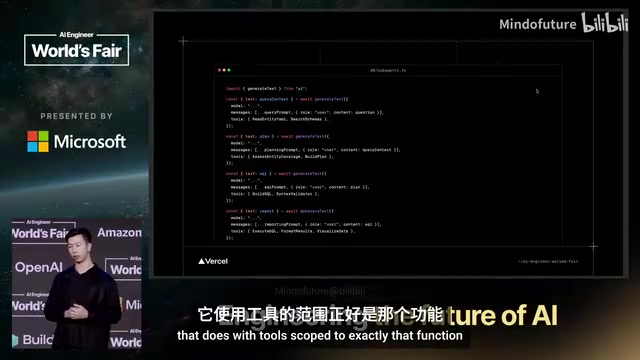
Vercel's Chief of Software Looks Back: The Evolution of Agent Building — From Multi-Agent Chains to File System Agents
Vercel's Chief of Software Andrew recaps the agent-building journey at AI Engineer: from giant prompts to multi-agent chains, monolithic memory, file system agents, and the open-source EVE framework.
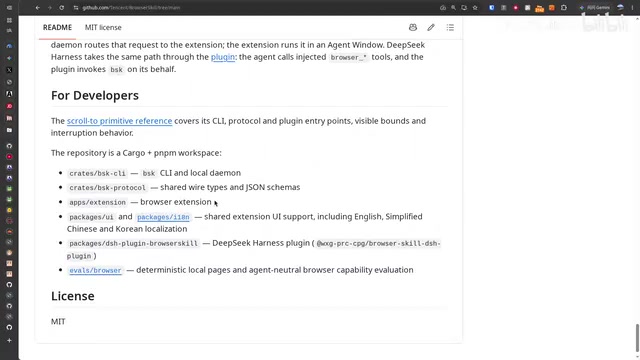
Tencent's Open-Source BSK in Action: Letting AI Take Over Your Already-Logged-In Browser
Tencent's open-source BSK (Browser Skill Kit) lets AI take over your real, logged-in Chrome via WebSocket. We break down the architecture, setup, and three key pitfalls from real-world testing.