MiniMax H3 VR180 Stereoscopic Video LoRA Model: A New Tool for AI-Powered Immersive Video Generation

A new LoRA model enables MiniMax H3 to generate VR180 stereoscopic videos in side-by-side format.
The open-source community has released a VR180 stereoscopic video LoRA model for MiniMax H3, enabling side-by-side stereo content generation compatible with major VR headsets. Integrated with ComfyUI workflows, it supports reference character input and start image control. This lightweight fine-tuning approach lowers the barrier for immersive VR content creation without expensive filming equipment.
MiniMax H3 VR180 Stereoscopic Video LoRA Model: A New Tool for AI-Powered Immersive Video Generation
Recently, the open-source community released a VR180 stereoscopic video LoRA (Low-Rank Adaptation) model specifically designed for the MiniMax H3 video generation model, opening new doors in the AI video generation space. This model can generate side-by-side (SBS) format VR180 stereoscopic content, giving creators a more accessible tool for immersive video production.
Technical Advantages of VR180 Format and LoRA Lightweight Fine-Tuning
VR180 is a hemispherical stereoscopic video format that, unlike traditional 360-degree panoramic video, focuses on the 180-degree field of view in front of the viewer, delivering stereoscopic depth information at higher resolution. From a technical standpoint, VR180 achieves stereo perception by simulating binocular disparity — two lenses capture simultaneously at a baseline distance of approximately 65 millimeters (close to the average human interpupillary distance), producing two slightly different video streams. During playback, a VR headset projects the left and right images to the corresponding eyes, allowing the brain to naturally perceive spatial depth. The side-by-side (SBS) format generated by this LoRA model is the standard encoding method that arranges left and right eye images horizontally within a single frame, compatible with mainstream VR devices like Meta Quest and Apple Vision Pro. Compared to 360-degree panoramic video, which must cover the entire sphere and thus reduces pixel density per unit area, VR180 concentrates all pixel resources on the front hemisphere, providing nearly twice the image clarity at the same total resolution. This format strikes an excellent balance between viewing experience and computational cost, making it particularly well-suited for content consumption on head-mounted VR devices.
The core advantage of this LoRA model lies in its lightweight fine-tuning capability. LoRA (Low-Rank Adaptation) is a parameter-efficient fine-tuning method proposed in 2021 by Edward Hu and colleagues at Microsoft Research. Its key insight is that the weight change matrices during model fine-tuning exhibit low-rank properties, so weight updates can be decomposed into the product of two low-rank matrices (ΔW = A × B, where the rank of A and B is much smaller than the dimensions of the original weight matrix). This means only a tiny number of parameters (typically 0.1%–1% of the original model's parameter count) need to be trained to adapt to a specific task, significantly reducing VRAM usage and training costs. Applying LoRA to video generation presents unique challenges: video models must handle features across both spatial and temporal dimensions, and the LoRA adaptation layers need to precisely target spatiotemporal attention modules to effectively guide the generation output. By adding low-rank adaptation layers on top of the pretrained MiniMax H3 base model, developers can enable stereoscopic video generation without retraining the entire large model. The current version is 0.1, using a 4-step inference process that significantly optimizes computational efficiency while maintaining generation quality.
MiniMax H3: A Next-Generation Video Generation Foundation Model
MiniMax is a Chinese AI company founded in 2021 by Yan Junjie, former VP of SenseTime, with a focus on multimodal large model R&D. H3 is MiniMax's video generation model, built on the DiT (Diffusion Transformer) architecture, which combines the generative capabilities of diffusion models with Transformer's sequence modeling strengths. Compared to earlier U-Net-based video diffusion models, the DiT architecture offers better scalability and temporal consistency when processing long video sequences. MiniMax H3 excels in text comprehension, motion coherence, and visual quality, and is regarded by the community as a strong contender among open-source video generation models. It is precisely because the H3 base model already possesses robust video generation capabilities that applying LoRA fine-tuning on top of it can achieve the specialized VR180 stereoscopic video function with relatively minimal parameter overhead.
ComfyUI Integration: Visual Workflows Made Simple
According to testing by the publisher rehan-fal, this LoRA model has been verified to work within the ComfyUI interface. ComfyUI is a popular node-based AI image and video generation tool created by developer comfyanonymous in 2023, employing a directed acyclic graph (DAG) node-based programming paradigm. Unlike traditional form-based interfaces such as Automatic1111's WebUI, ComfyUI abstracts each step — model loading, prompt encoding, sampler configuration, post-processing, and more — into independent nodes. Users define data flow by connecting these nodes, building flexible and reusable generation pipelines. This design not only makes complex generation workflows more intuitive and manageable but also allows advanced users to precisely control every intermediate step — for example, inserting custom guidance logic during the sampling process or using different model weights at different stages. ComfyUI natively supports hot-loading and dynamic switching of LoRA weights, making the integration of this VR180 LoRA model particularly seamless.
In practical use, the model supports two key input methods:
Reference Characters
Users can provide character reference images to maintain character consistency throughout the generated stereoscopic video clip. This is crucial for narrative VR content production. Character consistency has long been one of the core challenges in AI video generation — since diffusion models introduce randomness in the generation process for each frame, facial features, clothing colors, and even body proportions may drift between frames. The reference character feature injects the visual features of the reference image into the cross-attention layers of the generation process, providing the model with a continuous identity anchor that dramatically improves cross-frame consistency.
Start Images
The model supports generating video from a specified initial frame, giving creators more precise control over composition and creative direction. This Image-to-Video (I2V) generation mode is extremely practical in real-world creation: creators can use image generation models or hand-drawn art to carefully craft the composition, color grading, and style of the first frame, then use it as a starting point for the video model to "continue" the subsequent motion sequence, achieving pixel-level control over the video's initial state.
In testing, the publisher used configuration parameters of 21:9 aspect ratio, 1.3 megapixel resolution, and 768 pixels on the short edge. The choice of 21:9 aspect ratio has technical reasoning — VR180's SBS format requires left and right eye images arranged side by side horizontally, necessitating a wider frame than standard video to accommodate the dual-stream images. While the developer notes that whether these parameters are optimal still needs verification, the initial results showed good image quality, indicating the model already has practical value at medium resolution.
Profound Impact on the VR Content Creation Ecosystem
The release of this VR180 LoRA model carries multiple implications:
-
Lowering the barrier to entry: Individual creators and small studios can produce VR stereoscopic video content without professional stereoscopic filming equipment (such as the Insta360 EVO or Canon VR lens systems, which cost thousands of dollars). Traditional VR180 shooting not only requires expensive binocular camera hardware but also involves complex stereo rectification, depth alignment, and stitching post-processing workflows with very high technical requirements. AI generation constructs stereo disparity directly at the pixel level, completely bypassing the many limitations of physical filming.
-
Validating the technical approach: The successful application of the LoRA fine-tuning paradigm demonstrates that Parameter-Efficient Fine-Tuning (PEFT) methods can rapidly extend the capability boundaries of large models. PEFT has been an important research direction in large model adaptation in recent years. Beyond LoRA, it includes methods such as Adapters (inserting small bottleneck networks between Transformer layers), Prefix Tuning (adding learnable virtual tokens before input sequences), and QLoRA (combining quantization techniques to further reduce resource requirements). LoRA has become the most popular fine-tuning paradigm in the community due to its implementation simplicity, stable performance, and complete decoupling from the base model (LoRA weights can be distributed and combined independently). This successful application on a video generation model further validates LoRA's versatility in multimodal generation tasks.
-
Driving the content ecosystem: The open-sourcing of VR180 content generation capabilities is expected to accelerate the development of the virtual reality content ecosystem.
One of the primary bottlenecks to VR device adoption is the shortage of quality content. According to industry data, although the Meta Quest series has shipped over 20 million units cumulatively and Apple Vision Pro officially launched in 2024 to pioneer a new spatial computing category, the volume of immersive video content on VR/MR platforms still falls far short of traditional video platforms. Content scarcity leads to low user retention, which in turn suppresses developer motivation, creating a vicious cycle of "lack of content → low engagement → less investment." The introduction of AI generation technology has the potential to fundamentally improve this situation — when the marginal cost of creating a VR180 video drops from thousands of dollars in production costs to a few cents in GPU compute, the economic model of content supply will be completely reshaped.
How to Get Started with the MiniMax H3 VR180 LoRA Model
The model is currently hosted on the Hugging Face platform under an open-source license, available for developers to download directly or build upon for further development. As the world's largest AI model hosting and collaboration platform, Hugging Face provides infrastructure including model version management, automated model cards, and online inference APIs, making the distribution and reproduction of LoRA weights extremely convenient — users can pull weight files from the platform and load them into their local runtime environment with just a few lines of code.
For developers interested in trying this technology, the following steps are recommended:
- Familiarize yourself with ComfyUI's basic workflow and node configuration, particularly the usage of LoRA loading nodes and video output nodes.
- Set up the MiniMax H3 base model runtime environment. The model has certain GPU VRAM requirements — a graphics card with 24GB or more VRAM is recommended (such as NVIDIA RTX 4090 or A100), and ensure compatible PyTorch and CUDA versions are installed.
- Load the LoRA weights following the instructions on the Hugging Face page, making sure to verify compatibility between the LoRA weights and the base model version.
- Start with small-scale experiments and gradually explore optimal parameter configurations, including tuning hyperparameters such as LoRA strength (weight), sampling steps, and CFG guidance scale.
Note that the current version is still an early 0.1 release, and thorough testing should be conducted before use in production environments. Known limitations may include: stereoscopic disparity consistency may deviate in fast-motion scenes, color and brightness matching between left and right eye images may not be sufficiently precise, and temporal coherence in long sequences still has room for improvement. As community feedback accumulates and the model continues to iterate, improvements in resolution support, generation speed, and stereoscopic quality are expected.
Key Takeaways
Related articles
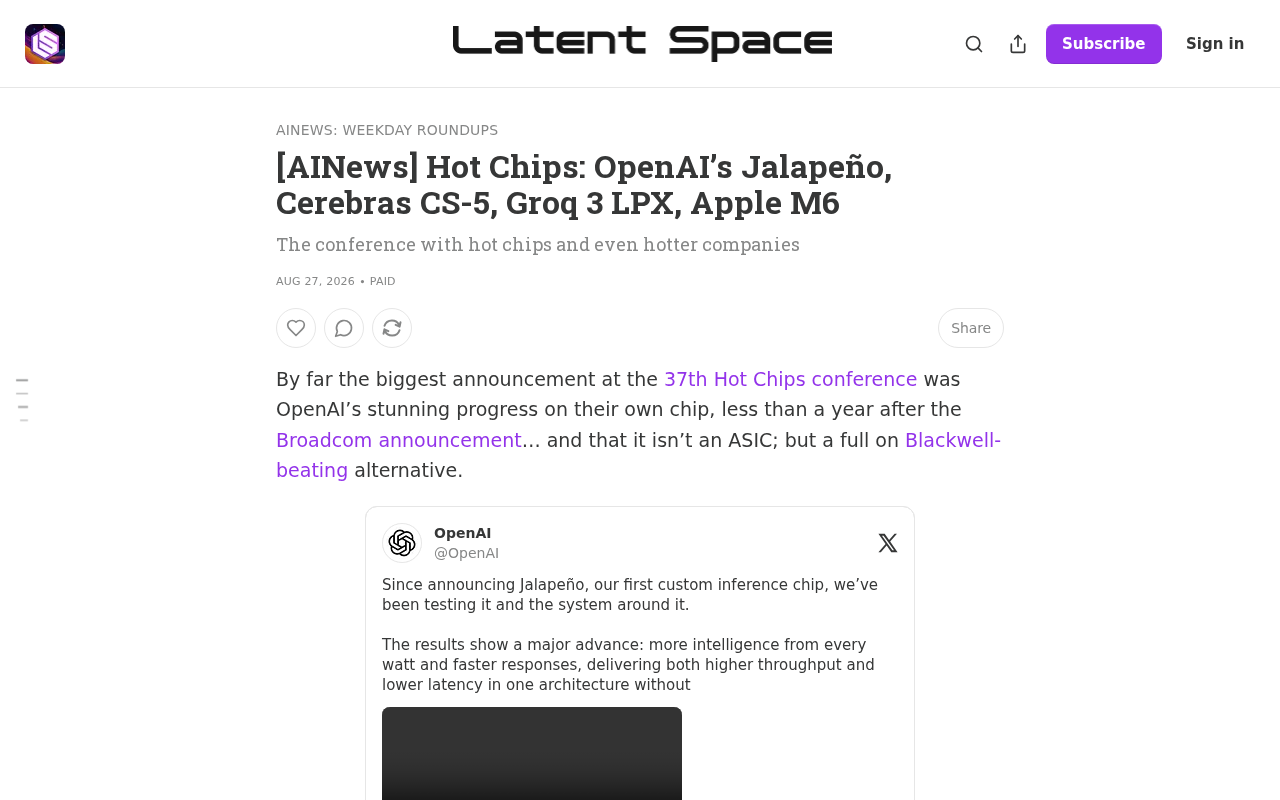
Hot Chips Conference: The AI Chip Arms Race Escalates Across the Board
Hot Chips showcases OpenAI Jalapeño, Cerebras CS-5, Groq LPX, and Apple M6—a deep dive into the AI chip arms race and the emerging multi-player competitive landscape.
GPT-6 Astra Code Review in Practice: Balancing Efficiency Gains, Data Privacy, and Cost
An in-depth analysis of GPT-6 Astra's real-world code review performance, examining efficiency gains, data privacy risks, and Token costs to build a decision framework for engineering teams.
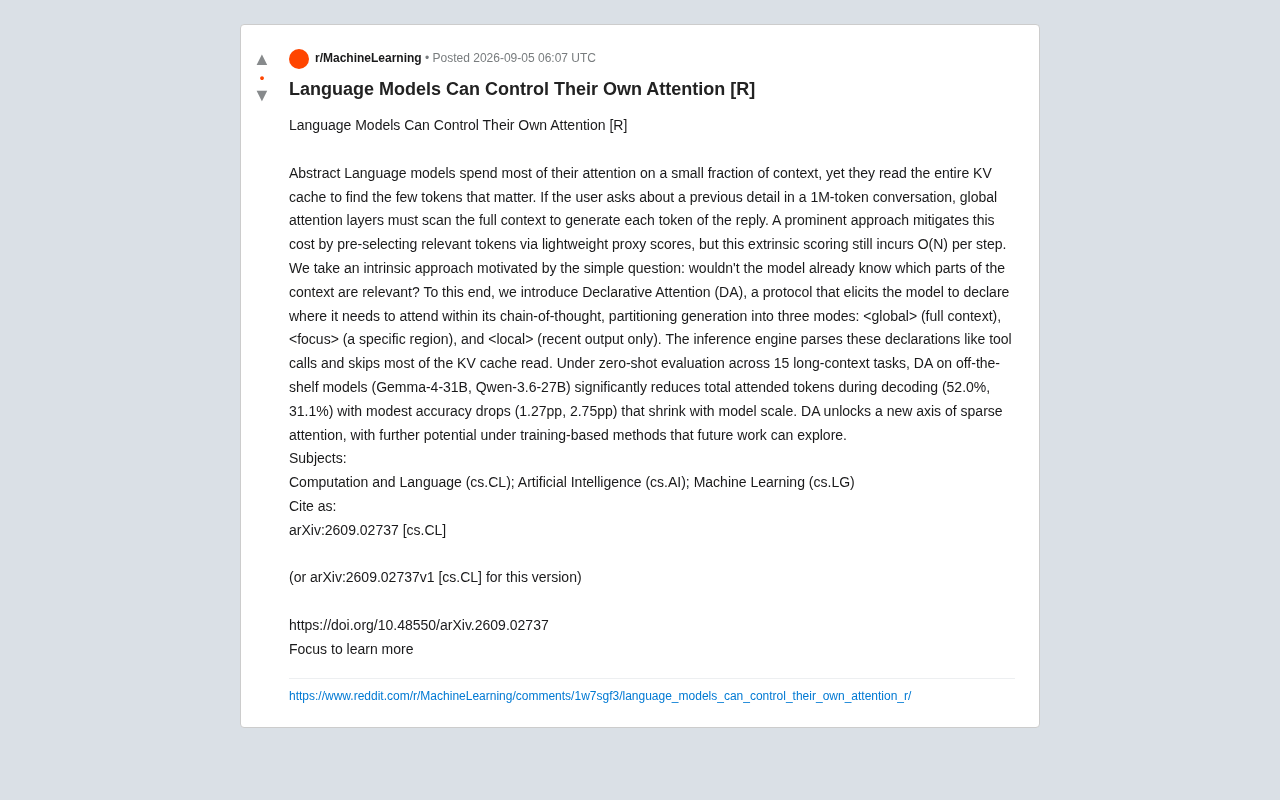
Declarative Attention: Letting LLMs Control Their Own Attention, Boosting Long-Context Inference Efficiency by 52%
Declarative Attention (DA) lets LLMs autonomously declare attention regions during inference via global, focus, and local modes, reducing attention tokens by 52% in zero-shot evaluation.