Mistral Large 4 Hands-On: Can a Trillion-Parameter Open-Source Model Pull Off an Upset?

Mistral Large 4 returns with a trillion-parameter MoE and open weights — solid in testing, but not leading.
Based on a YouTube creator's systematic hands-on testing of the Mistral Large 4 preview, this article maps out the capability boundaries of the model codenamed "Le Chonk." It uses a mixture-of-experts architecture with 1.05 trillion total parameters and 52 billion active parameters, features a 1.6-billion-parameter vision encoder, is priced clearly below Sonnet and GPT-6.1 Sol, and promises open weights on Halloween. Official messaging emphasizes cybersecurity and reverse-engineering benchmarks; standard coding benchmarks place it in the competitive range with GLM 5.3 and OpenCode. Tests covered a browser OS, games, a watch website, Jerry's apartment, and a cross-era city; overall performance was stable, the built-in app editor was rated the most creative feature, and all tests cost about $47 at half price. The verdict: a major leap over its predecessor that puts it back at the competitive table, but not yet in the lead.
Mistral has finally delivered something substantial. The model codenamed "Le Chonk" (French for fat cat, a community meme) — Mistral Large 4 — arrives with a mixture-of-experts architecture of 1.05 trillion parameters and 52 billion activated parameters. The official blog proudly showcases cybersecurity and reverse-engineering benchmarks, and sets the weight release for Halloween. A YouTube creator who has long tracked model capabilities immediately ran it through a full battery of "brute-force tests," and the results are worth a close look.
Specs and Positioning: Mistral Is Back at the Table
Mistral Large 4 represents a clear jump in scale over its predecessor, Mistral Large 3 — the latter sat somewhere in the 650-700 billion parameter range, while the new model crosses the trillion threshold outright. With 52 billion active parameters (including embedding and output layers), it's unlikely to be run locally by ordinary users, but there's still room to maneuver on cloud inference costs.
Multimodal capability is a key focus this time: the model carries a 1.6-billion-parameter vision encoder, a substantial size among comparable models, and the tester specifically designed tasks around vision.
On pricing, the official figures are $1.36 per million input tokens and $4.18 per million output tokens, with a two-week half-price promotion. Against Sonnet and GPT-6.1 Sol at $2 per million input and $10 per million output, Mistral Large 4 shows a clear price gap. The tester cautions against looking only at the discounted price — check the regular pricing after the promotion ends. By that measure, it still sits a tier cheaper.
The real differentiator is open weights. Competitors don't open-source; Mistral does, and this was repeatedly emphasized as "better vibes." The weights, however, won't be released until Halloween, with a countdown hanging on Hugging Face.
The core idea of the mixture-of-experts (MoE) architecture is to split a large feed-forward network into multiple "expert" subnetworks, with each token routed to only a few of them during inference. This preserves a massive total parameter count while sharply reducing the computation per forward pass. So "1.05 trillion total parameters, 52 billion active parameters" means the model has enormous knowledge capacity, but each inference calls roughly the compute of a dense model in the 50-billion-parameter class — which is exactly why cloud inference costs stay manageable. The trade-off: VRAM must still hold all expert weights, making local deployment extremely demanding, and routing balance directly affects training stability and quality.
Benchmark Performance: Cybersecurity Is the Headline Card
The official blog puts cybersecurity front and center, showcasing results on malware reverse engineering and an out-of-distribution investigation task. What spread most on social media was also the cybersecurity benchmark — per the tester, it "basically matches the other best-performing open-source model on that leaderboard."
On the standard Deep SWE benchmark, it sits in the competitive range with GLM 5.3 and OpenCode. The official team also specifically labeled the evaluation harness behind each score, which the tester praised as a responsible practice.
One key line near the end of the blog: the reinforcement learning training behind the preview is still ongoing and shows no sign of saturation, meaning there's considerable room for improvement. This frames how all subsequent test results should be read — what we're seeing is a mid-journey snapshot.
An evaluation harness refers to the standardized scripts and configuration used to run benchmarks — prompt templates, number of few-shot examples, sampling temperature, maximum output length, tool-calling format, and scoring logic. The same model can differ by several or even a dozen-plus percentage points across different harnesses, so cross-vendor leaderboard comparisons are often distorted. By labeling each score with the harness used, the official team effectively discloses reproducible evaluation conditions, letting readers judge whether score gaps come from model capability or evaluation configuration — which is why the tester called it a "responsible practice."
Browser OS Test: The Most Impressive Special Feature
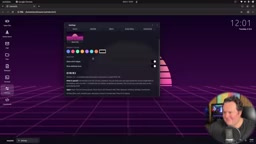
Testing was done through Mistral's own Vibe CLI, essentially Mistral's version of a cloud coding assistant. The first task was to generate a browser OS including a start menu, file system, notepad, terminal, settings, and context menu.
The finished product is quite complete: time and date display correctly, calendar functionality, battery and Wi-Fi status indicators are all present, Matrix rain and synthwave wallpapers are switchable, and even the theme color syncs the button icons and the "OS" wordmark. NeoFetch output in the terminal shows none of the usual garbling. The mail app can auto-reply to messages, and notes can actually be saved as TXT files to the file system.
The real surprise is a built-in app editor: write code in the editor, press run to execute it in a sandbox, press install and it becomes a standalone desktop app. The tester generated a simple first-person shooter with Gemini, pasted it in, and it actually ran inside the browser OS and successfully installed to the desktop. The tester called it "one of the most creative special features I've seen," even joking about cutting the footage into a trailer for dramatic contrast.
Vibe CLI is Mistral's command-line coding agent entry point, working much like Claude Code or Gemini CLI: the model gets a sandbox environment with read/write file access, command execution, and test running, autonomously completing the full journey from requirements to a runnable project through multi-turn tool calls. The ceiling on such agents depends not only on code generation quality but also on context management over long tasks, self-repair of errors, and tool-calling reliability. So descriptions like "two hours and forty minutes" and "max reasoning tier" are essentially stress-testing the model's stability as a long-horizon autonomous agent.
3D and Game Generation: Not Stunning, But Clean
C++ Skateboarding Test
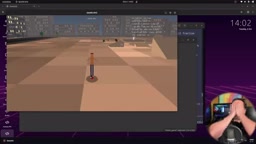
A standalone C++ skateboarding game with a Z-key replay feature. The first version's problems centered on the skater being purely 2D and all text rendered upside down. But the scene itself had no obvious flaws: buildings, water surface, and grind-rail logic all worked. The tester's judgment was that "this looks more like an unfinished result than a bad one."
Three high-quality reference images were then provided for a rework, but the model only extracted the color palette without replicating the structure. Investigation revealed the model couldn't actually read images at the time. After fixing the visual input and regenerating, brick materials and a traffic system were added, but it still wasn't a faithful recreation. What this test exposed was the problem of wiring vision capabilities into the engineering workflow, not the model's generative power itself.
Pool Party
This task ran about 2 hours 40 minutes at the maximum reasoning tier. The result supports multiplayer, characters have skeletal rigging, there are diving animations and splashes, a pool deck, a grill, and a TV. The water surface effect is weak, and characters look like they're jumping into an empty pool. Overall simple but clean.
Subway FPS
The new version required riding the subway to the next station after clearing a wave. Atmospheric copywriting, three weapons, shell casing ejection and ground bouncing were all implemented, with bullet holes only appearing on specific surfaces. The first generation had broken shooting logic for the weapons, fixed after repair. Visually far from stunning, but functionally complete.
Three.js is a JavaScript 3D library running in the browser on WebGL, suited to quickly building lightweight scenes; Godot is a full open-source game engine with a built-in scene tree, physics, animation, particles, and video export systems. The two impose different demands on the model: Three.js tasks usually require generating a single HTML file plus some module references, while Godot projects involve multi-file directory structures, asset paths, and engine API conventions, making errors more likely. The "missing import map" mentioned in the article is a typical symptom of browser-side ES module resolution failure, because newer Three.js versions ship as modules requiring an explicit module path mapping — when the model omits it, the page goes entirely blank.
Vision and Complex Scenes: Progress Visible, Shortcomings Visible Too
Watch Website
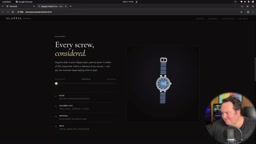
The overall structure is complete; the problems are specific: the watch face is reversed, the hands are arranged correctly but appear too small on a huge desktop, zooming in reveals the movement structure, and the "Bijan" special edition correctly applies the gold color and dial pattern from the reference photo. The copy was praised as having character. The downside is a lack of polish and detail tension.
Jerry's Apartment
Rebuilding the apartment from Seinfeld with Three.js, with reference photos attached. The model ran for over two hours; the output was missing an import map, which the tester manually added to get it running. Of nine preset viewpoints, you can see the kitchen, the Mac by the window, the poster, and neighboring Kramer's apartment. Wall positions and geometry show obvious distortion. Compared to similar tests from other models (e.g., Kimi K3's result was described as "very mediocre"), this result isn't bad.
Chronological City
Most unexpectedly, the model chose on its own to use Godot rather than Three.js for this cross-era 3D city scene, and even exported a video timeline. Vehicles have exhaust particles, character clothing changes with era — the 1985 segment features afros, shoulder-mounted boomboxes, slice pizza shops, and video rental stores; the 2005 segment has billboards and EV charging stations; the 2025 segment has vehicles with no exhaust and a single light bar design; the 2055 segment has hovering vehicles and drones.
The problems are also obvious: pedestrians walk backwards, there are geometry errors, and street lighting doesn't change with era. But the density of detail was described as "quite substantial at first glance."
The Cost Ledger and Final Verdict
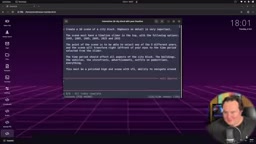
All tests together cost about $47 — and note, that's still at half price.
The tester's core conclusion: compared to previous Mistral models, this is a major capability leap that puts Mistral back in the conversation alongside GLM 5.3, the 2.4-trillion-parameter version of Qwen 3.8, and DeepSeekAd V4 Pro — in his words, "at least within the same zip code." No single test left him awestruck, but none produced an embarrassing breakdown either.
The factor to weigh on the other side: this is only a preview checkpoint, reinforcement learning is still progressing, and the weights haven't been released yet. The tester specifically noted that Mistral has long been talked down on social media, and this performance personally gratified him. Next up are the Qwen 4 series and likely opponents like GLM 5.5 and DeepSeek V4.1 Flash — competition will only intensify. But one more capable option is good for everyone.
Once the weights drop on Halloween, the real community test will only just begin.
One-line Summary
Mistral Large 4 returns with a trillion-parameter MoE and open weights — solid in testing, but not leading.
Paragraph Summary
Based on a YouTube creator's systematic hands-on testing of the Mistral Large 4 preview, this article maps out the capability boundaries of the model codenamed "Le Chonk." It uses a mixture-of-experts architecture with 1.05 trillion total parameters and 52 billion active parameters, features a 1.6-billion-parameter vision encoder, is priced clearly below Sonnet and GPT-6.1 Sol, and promises open weights on Halloween. Official messaging emphasizes cybersecurity and reverse-engineering benchmarks; standard coding benchmarks place it in the competitive range with GLM 5.3 and OpenCode, and reinforcement learning is still progressing without saturation. Tests covered a browser OS, a C++ skateboarding game, a pool party, a subway FPS, a watch website, Jerry's apartment, and a cross-era city. Overall performance was stable with no fatal breakdowns, the built-in app editor was rated the most creative feature, and all tests cost about $47 (at half price). The verdict: a major leap over its predecessor that puts it back at the competitive table, but not yet in the lead.
Related articles

Malicious Claude Code Extension Infiltrates Cursor: Version 2.1.313 Self-Check and Cleanup Guide
A malicious Claude Code build 2.1.313 appeared in the Cursor extension marketplace for about 11 hours, affecting up to 5,000 users. StepSecurity disclosed that it stole system information, git email, and environment variable names, and attempted to implant SSH keys and reverse tunnels. This article covers the incident, malicious behavior, and complete self-check and cleanup steps.

15 Essential Prompts for Vibe Coding: Keep AI from Wrecking Your Code
Vibe Coding often tempts AI to break your code. These 15 prompts—from PRD, architecture, and database to testing and debugging—chain each output as the source of truth, turning AI coding from casual chat into a controllable engineering process.

Cursor vs Windsurf: Code Review or Direct Apply — Which Fits You Better?
Cursor shows a diff for review before changing code; Windsurf applies changes directly. We analyze how each mode affects your workflow and cover Cursor 2.0's multi-agent mode.