Mistral Partners with Mozilla: A Privacy-First, Multilingual AI Browsing Experience
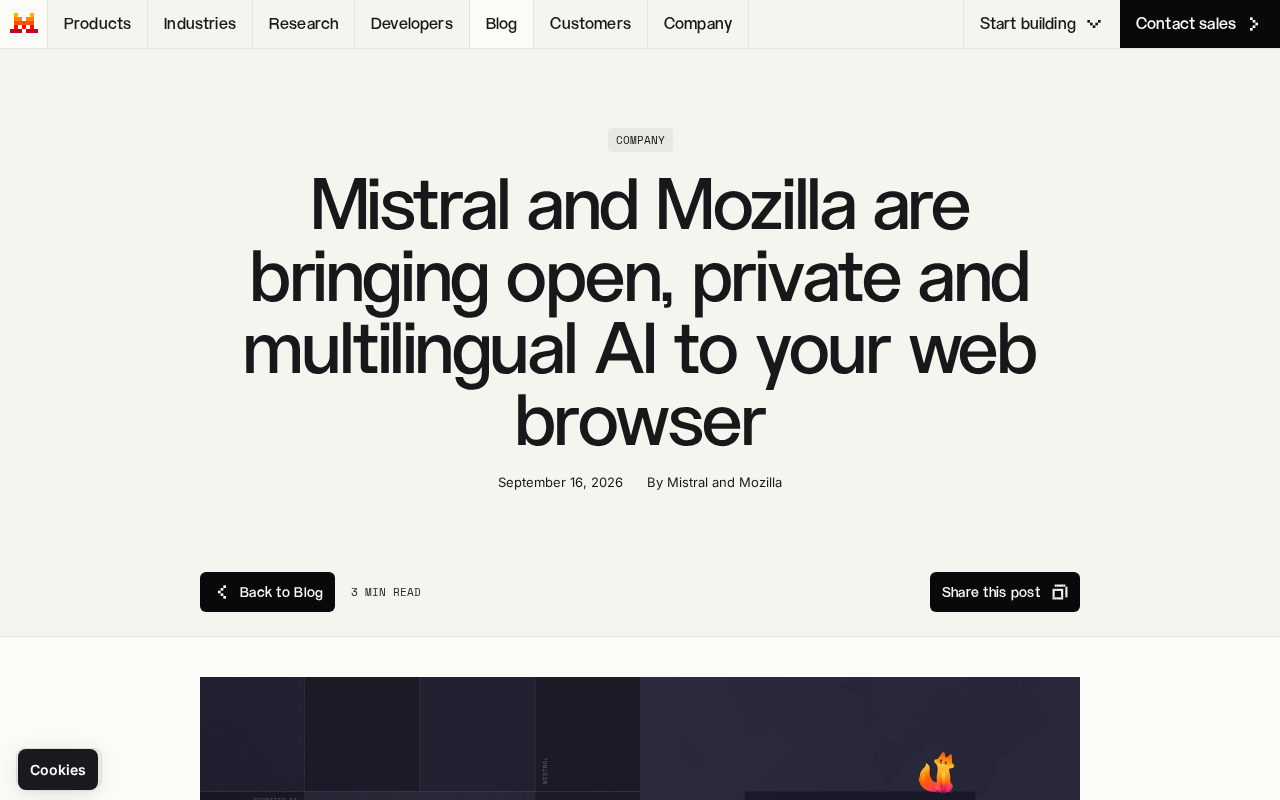
Mistral and Mozilla join forces to challenge Google and Microsoft with a privacy-first AI browser approach.
French AI company Mistral and Firefox-maker Mozilla have announced a partnership aimed at building a privacy-first, multilingual AI browsing experience. The collaboration is strategically positioned against Google's deep Gemini integration in Chrome and Microsoft's Copilot in Edge — both of which rely on uploading user data to vendor servers. Mistral is known for locally deployable open-weight models, while Mozilla has long championed minimal data collection, making them natural allies in delivering AI capability without sacrificing privacy. Public details remain limited and no firm launch timeline has been shared, but the partnership signals that the open-source and privacy camp is actively seeking its own differentiated answer in the AI browser race.
What the Mistral–Mozilla Partnership Means
French AI company Mistral and veteran open-source browser maker Mozilla have announced a collaboration centered on a "privacy-first, multilingual AI browsing" experience. This pairing stands out in an increasingly competitive AI browser landscape: Mistral is known for its open-weight models and commitment to European data sovereignty, while the Firefox team has long made privacy protection a core value.
Based on publicly available information, the partnership's primary focus is embedding Mistral's language model capabilities into the browsing experience while maintaining a privacy-first stance and strong multilingual support. This stands in sharp contrast to Google integrating Gemini into Chrome, or Microsoft stuffing Copilot into Edge — approaches that tend to funnel user data into the respective company's cloud ecosystem.
Mistral was founded in Paris in 2023 by former DeepMind and Meta researchers. The company quickly built a reputation by releasing highly efficient open-weight models — such as Mistral 7B and Mixtral 8x7B — that achieve performance comparable to much larger closed-source models at a fraction of the parameter count. Headquartered in the EU, Mistral is naturally subject to GDPR data protection requirements, and is frequently cited as a homegrown alternative in European data sovereignty discussions. Mozilla, on the other hand, is the nonprofit foundation behind the Firefox browser. Its commercial entity, Mozilla Corporation, has long championed an open web and resistance to platform monopolies, earning strong brand credibility in the user privacy space.
Why Privacy and Multilingual Support Are the Key Differentiators
Mainstream AI browser assistants face a common trust problem: do users' browsing content and query history get uploaded and used for training? Mozilla has historically emphasized local processing and minimal data collection, while Mistral is known for its self-deployable, open-weight models. Together, they can theoretically offer a solution where "AI capability doesn't come at the cost of privacy."
Multilingual capability is another of Mistral's strengths. Compared to some English-centric models, Mistral performs more consistently across European multilingual contexts — making it better suited for non-English users' needs like webpage translation, summarization, and Q&A. For Mozilla's global user base, this is a meaningful addition.
Mistral's "open weights" model deserves a closer look. Unlike fully open-source software, open weights means Mistral publicly releases the trained model parameter files, allowing anyone to download and run them locally or deploy them on private servers — without sending data to Mistral's cloud. This is a fundamental departure from the closed-source API-only approach taken by OpenAI, Anthropic, and others. For browser integration, this means that in theory, model inference can run locally on the user's device or within an organization's private infrastructure, so browsing content never has to pass through third-party servers — reducing privacy risks at the architectural level. That said, full local inference is constrained by device computing power, which limits the model size that's feasible. In practice, there will likely be trade-offs between the degree of privacy protection and the level of model capability.
Worth Watching, But Details Are Still Sparse
To be candid: as of now, this news has generated relatively little discussion on Hacker News (only 13 points and 0 comments), and the publicly disclosed technical details and rollout timeline are quite limited. The specific form of the collaboration — whether it will be deeply integrated into Firefox's core, or delivered as an extension or standalone product — remains unclear.
For developers and users following the AI browser space, this announcement is more of a directional signal than a product reveal: outside the Big Tech-dominated AI browser landscape, the open-source and privacy camp is working on its own answer. Whether it can build genuine competitive differentiation will ultimately depend on the actual user experience and depth of ecosystem integration.
Summary
The Mistral–Mozilla combination represents an alternative vision for AI browsing: one that doesn't treat AI capability and user privacy as opposing forces. In an era of tightening regulation and growing user privacy awareness, this approach holds real potential appeal. But until more detailed product information becomes available, its actual impact remains to be seen.
Related articles
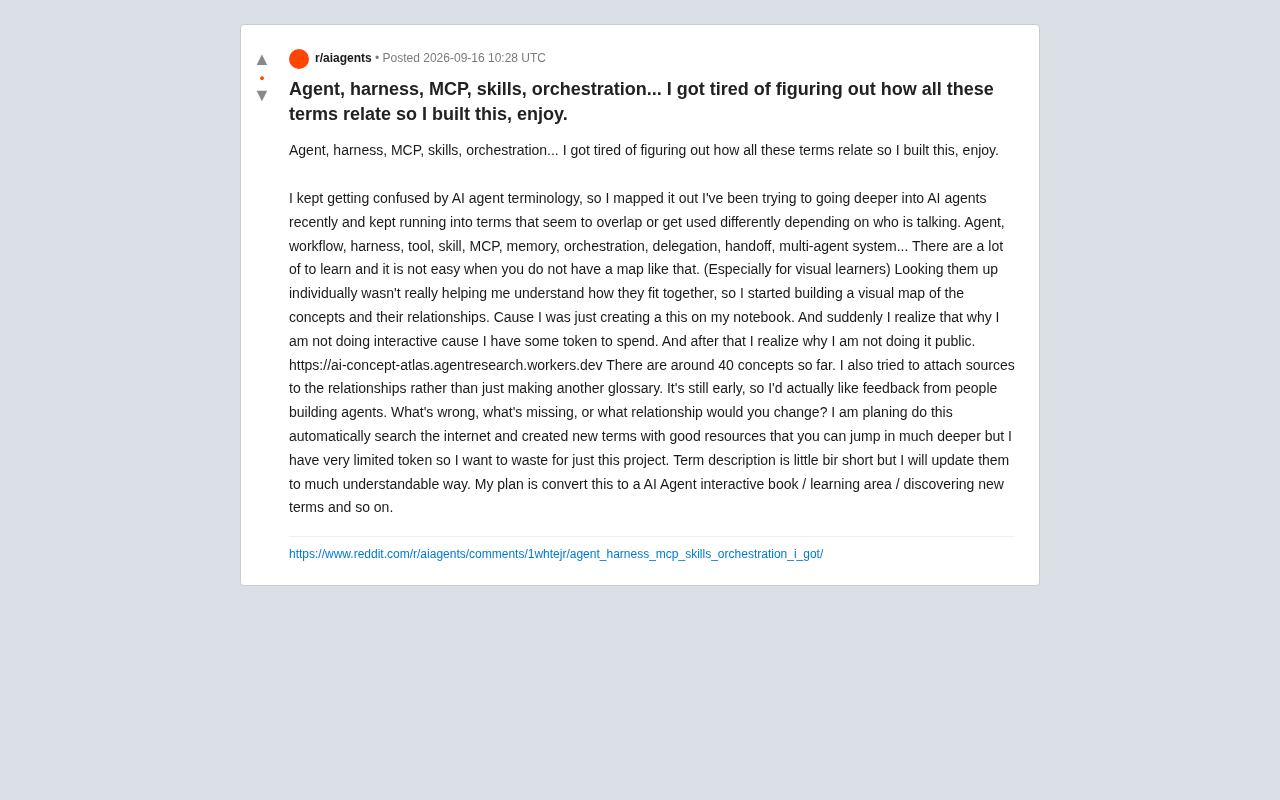
AI Agent Terminology Too Confusing? One Interactive Concept Map to Untangle 40+ Core Terms
Confused by AI Agent terms like MCP, harness, orchestration, and skills? AI Concept Atlas is an interactive map visualizing 40+ concepts and their relationships, with cited sources.
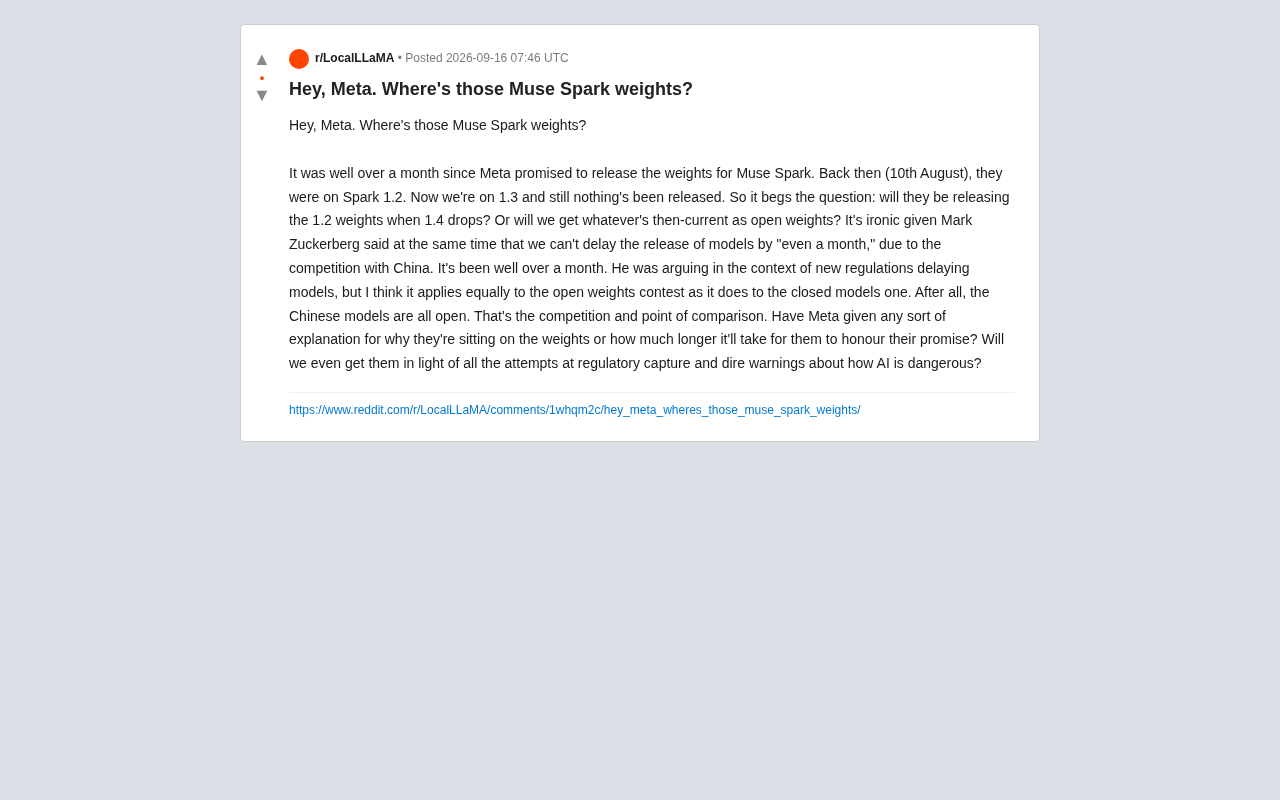
Meta's Broken Promise: Community Demands to Know Where the Muse Spark Weights Are
Meta promised to open-source Muse Spark model weights over a month ago, but still hasn't delivered. The community questions how this squares with Zuckerberg's "can't delay even a month" stance.
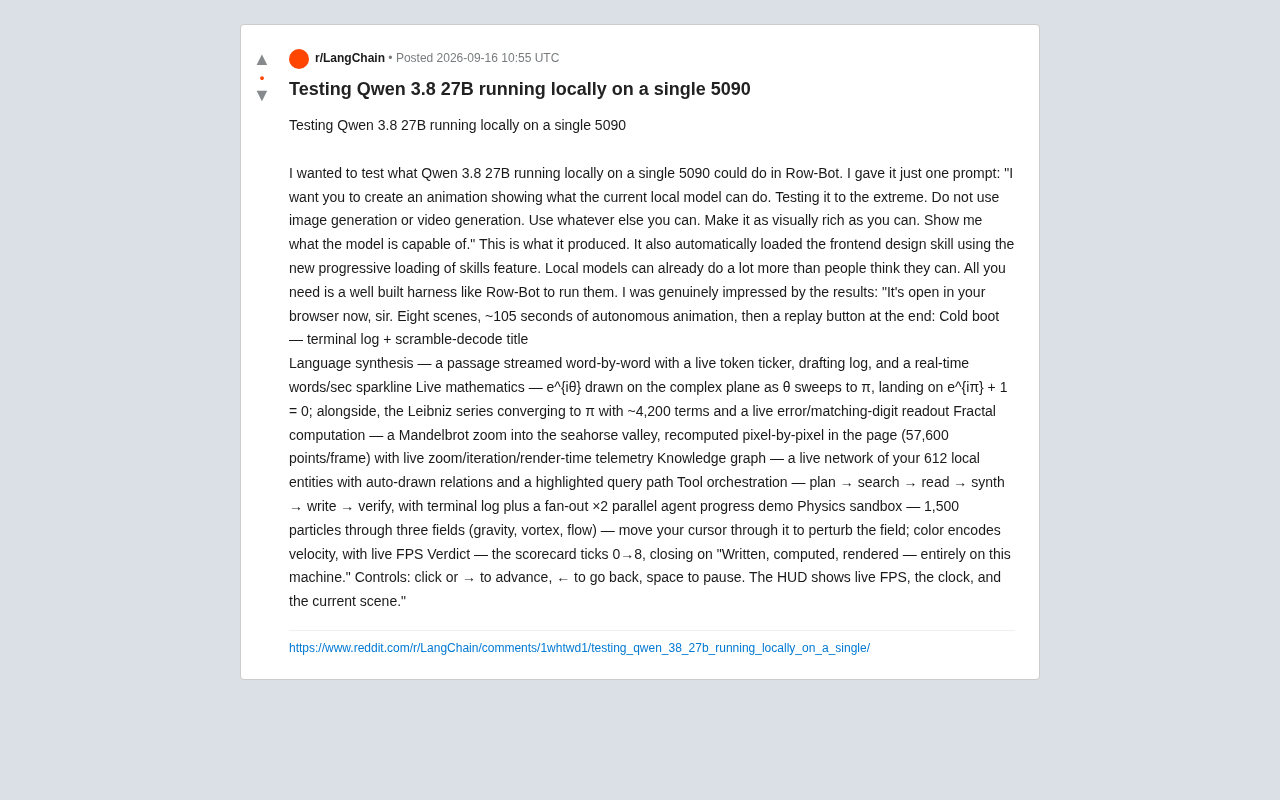
Running Qwen3 27B Locally on a Single RTX 5090: What Can It Actually Do?
A developer runs Qwen3 27B locally on a single RTX 5090 via the Row-Bot Agent framework, generating an 8-scene, 105-second interactive animation from one prompt — including real-time math, fractals, and physics.