Mistral Releases Timestral, Its Strongest Time Series Forecasting Model: Runs Even on a Phone
Mistral open-sources Timestral: top accuracy but high latency; small versions run in mobile browsers.
Mistral's open-source time series foundation model Timestral comes in four sizes from 5M to 209M parameters, supporting zero-shot probabilistic multivariate forecasting and covariates. Official benchmarks claim it leads among non-agentic models. Tests on two electricity datasets show the largest version achieves top accuracy (error dropping from ~125.1 to ~59.8 with covariates) but takes 87 seconds; the 28M version outperforms Chronos 2 and is faster; the 5M version runs sub-second and, after ONNX conversion, works offline in a mobile browser. The article recommends selecting by accuracy, speed, or on-device deployment, and notes tests were CPU-only.
Mistral recently open-sourced Timestral, a time series foundation model that its official benchmarks claim is the best-performing among non-agentic models. More importantly, the model comes in multiple versions ranging from 5 million to 209 million parameters, and the smallest versions can even run directly in a mobile browser. Based on hands-on testing by a YouTube creator, combined with official benchmarks and a browser demo project on GitHub, this article breaks down its capability boundaries, real-world performance, and suitable use cases.
What Is Timestral: A Time Series Foundation Model
Time series forecasting is nothing new—LightGBM and regression models can all do it. What sets Timestral apart is that it is a "foundation model"—pre-trained on large amounts of diverse data, it can perform zero-shot forecasting on new data without needing to be retrained for specific scenarios.
According to the creator, Timestral is a probabilistic multivariate forecasting model: its output is not a single value but a probability distribution including quantiles; it also supports multivariate forecasting and covariate inputs, such as feeding future temperature forecasts as known information to improve the accuracy of electricity consumption predictions.
The model comes in four sizes, with the largest at 209 million parameters and the smallest at 5 million parameters. Compared to large language models, this is still very small, but the benefit is low latency and the potential for on-device deployment.
Zero-shot forecasting means the model produces predictions directly without having seen the target data or being fine-tuned on it. Traditional time series modeling typically requires retraining or hyperparameter tuning for each dataset, whereas foundation models acquire general time series pattern recognition capabilities through large-scale diverse pre-training, allowing them to transfer directly to new series. Zero-shot does not mean unconditional accuracy—its effectiveness depends on the distributional similarity between pre-training data and target data; when the target series has rare periodicities or extreme events, a small number of examples for in-context learning or fine-tuning may still be needed.
Covariates are external variables beyond the forecasting target that may influence the target's values. They fall into two categories: future-known covariates (such as weather forecast temperatures, calendar holidays) and past-observed covariates (such as historical promotion records). Timestral supports future-known covariates as input, allowing the model to reference temperature forecasts when predicting electricity consumption—this is precisely the main source of its advantage over pure historical extrapolation methods.
Benchmarks and Real-World Testing: Strong, But Not Without Cost
Officially, it claims to surpass all non-agentic models on the GIFT-eval time series forecasting leaderboard. The creator also cautions that such benchmarks may have a "cherry-picking metrics that favor themselves" issue, but the overall performance is indeed impressive: only agentic models (those that reason and combine information) rank ahead of it, and those belong to a different task category.
The creator conducted comparative tests on two electricity datasets, with baselines including a naive baseline that copies last week's values, LightGBM, Amazon's Chronos 2, and different sizes of Timestral.
The first dataset forecasts the electricity load of a single transformer for 168 hours (one week) into the future. In terms of results, the naive baseline's MAE is about 3.985, LightGBM about 3.865, Chronos 2 about 3.299, while the largest Timestral achieves about 3.192—but takes about 17.5 seconds, the slowest of all.
Switching to smaller sizes reverses the situation: the 5-million-parameter version takes only about 0.83 seconds with an MAE of about 3.318, slightly worse than Chronos 2 but much faster; the 28-million-parameter version achieves an MAE of about 3.272, beating Chronos 2 while being faster.
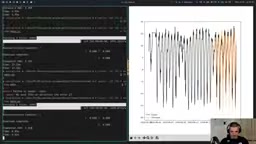
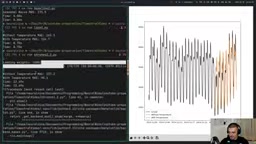
The creator also highlighted a key detail: Timestral outputs 21 quantiles, with the median (50th percentile) as the most likely forecast value, and the 10th to 90th percentiles forming the possible value range. In actual testing, there were indeed cases where true values fell outside the range, showing that probabilistic output is not a silver bullet either.
GIFT-eval is a public benchmark leaderboard in the time series forecasting field, aggregating datasets of different frequencies and domains and scoring models with a unified evaluation protocol. Leaderboards typically rank by metrics such as MASE and CRPS, but different models may perform differently on different subsets, so "top of the leaderboard" often depends on the specific aggregation method. The article's mention of "cherry-picking metrics that favor themselves" refers precisely to this aggregation caliber difference: vendors can choose to emphasize data subsets or metrics where they excel, while readers need to pay attention to the leaderboard's evaluation protocol and coverage.
MAE (Mean Absolute Error) is the average of absolute deviations between predicted and true values, with units consistent with the original data, making it intuitive to understand, though it is less sensitive to large errors than MSE. The other metric in the article has larger values because it may use a different scale or aggregation method (such as error normalized per series), and the two cannot be directly compared.
Covariate Scenarios: The Gap Widens
The second dataset forecasts electricity demand at the entire utility level, introducing temperature as a covariate. This step better demonstrates the value of foundation models: feed in future-known information and see how much the forecast improves.
The naive baseline's error metric is about 175.5. LightGBM without temperature is about 165.3, with temperature about 134.7. Chronos 2 without temperature is about 137.2, with temperature about 90.1. The largest Timestral without temperature is about 125.1, with temperature about 59.8—the improvement is significantly larger than other models, but it takes about 87 seconds, the longest of all.
The smaller versions redeem themselves: the 5-million-parameter version achieves about 111.5 in about 4.42 seconds, not as good as Chronos 2 but acceptable; the 28-million-parameter version achieves about 71.4 in about 15 to 16 seconds, already outperforming Chronos 2.
This set of data leads to a practical conclusion: if you pursue maximum accuracy and don't care about latency, use the largest version; if you need results within seconds, the 28-million-parameter version is a better balance point.
Running Models in a Mobile Browser: Feasibility Validation for On-Device Deployment
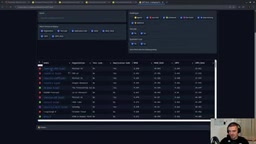
The creator mentioned that the model files on Hugging Face are based on PyTorch and safetensors, and need to be converted to ONNX format to run on a phone. A developer on GitHub created a browser demo project, converting the 5-million and 28-million parameter versions to ONNX and running them directly in the browser as local processes without calling any API.
The creator tested on a Samsung Galaxy S25 Ultra: opening the website, selecting a model, and running predictions—all computation is done locally on the phone. The first use requires downloading the model, after which offline inference is possible. The website also supports uploading custom CSVs, specifying the column to forecast, covariate columns, and forecast steps.
It should be noted that this website is a third-party proof-of-concept project, and the creator candidly says its interface "looks very much AI-generated," but it is indeed functional. Its significance lies in proving that on-device deployment of such foundation models does not require complex engineering modifications.
ONNX (Open Neural Network Exchange) is an open model exchange format used to migrate models between different deep learning frameworks. Models trained in PyTorch can be exported as ONNX computation graphs, then executed by ONNX Runtime in browsers (via WebAssembly or WebGPU), on mobile devices, or on servers without installing PyTorch. The export process requires handling dynamic shapes, operator compatibility, and other issues, which is why third-party projects need to do dedicated conversion work.
safetensors is a model weight storage format introduced by Hugging Face. It is safer and faster to load than pickle, supports zero-copy mapping, and only stores tensor data without executable code, making it suitable for distributing model files in constrained environments like browsers.
Suitable Use Cases and Selection Recommendations
Based on test results, Timestral is suitable for data with seasonality, regularity, and temporal variation, such as electricity load, sales, and power forecasting. The creator also mentioned trying stocks but explicitly does not recommend it.
For model selection, three tiers can be defined by need:
- Pursuing maximum accuracy, latency-insensitive: largest version (209 million parameters), with the most obvious advantage in covariate scenarios
- Balancing accuracy and speed: 28-million-parameter version, already able to outperform Chronos 2 in most tests
- Extremely low latency or on-device deployment: 5-million-parameter version, sub-second response, can run in a mobile browser
In terms of ecosystem, all sizes have Hugging Face repositories and are open-source and free. The creator also mentioned that it is produced by a European team, which is a plus for users who care about model origin.
One limitation to note: this test was completed entirely on CPU, so timing data will vary with hardware; MAE values also only represent performance on these two electricity datasets and cannot be directly extrapolated to other domains. If you have time series forecasting needs at hand, it is worth running your own data through it before making a judgment.
One-line Summary
Mistral open-sources the time series foundation model Timestral: real-world tests show leading accuracy but high latency; small versions can run in a mobile browser.
Paragraph Summary
Mistral's open-source time series foundation model Timestral comes in four sizes from 5 million to 209 million parameters, supporting zero-shot probabilistic multivariate forecasting and covariate inputs. Official benchmarks claim it performs best among non-agentic models. Real-world tests on two electricity datasets show: the largest version has the highest accuracy, with error in covariate scenarios dropping from about 125.1 to about 59.8, but taking up to 87 seconds; the 28-million-parameter version outperforms Chronos 2 in most tests and is faster, making it the balance point between accuracy and speed; the 5-million-parameter version offers sub-second response and, after ONNX conversion, can run locally offline in a mobile browser. The article recommends selecting by three tiers—accuracy, speed, and on-device deployment—and cautions that tests were all completed on CPU, so conclusions should not be extrapolated to other domains.
Related articles

Qwen 3.8 Beats Opus at Coding—But Can Your Mac Run It?
Open-source Qwen 3.8 beats Opus 4.6 at coding at just 18GB, but how much Mac memory do you need? 24GB crashes; 32GB is the sweet spot. Full config guide inside.

Claude Code + Agent: Building a Fully Automated AI Testing Loop
Bilibili course breakdown: how test developers can use Claude Code terminal-based Agents to build a fully automated AI testing loop. Compares permission boundaries of terminal vs. device Agents, explains why enterprise projects choose Claude Code over Open Claude-type tools, and outlines the Node.js environment setup and DeepSeek model integration path.

Working with AI Agents Requires Nerves of Steel
The more autonomous AI agents become, the heavier the user's psychological burden. Drawing from a Hacker News discussion, this article analyzes black-box anxiety, behavior drift, and monitoring fatigue in agent collaboration, and offers practical approaches like sandbox isolation, permission control, and task granularity management to reduce cognitive load.