Multi-Agent Collaboration with Coze: A Complete Guide to Building AI Agent Teams
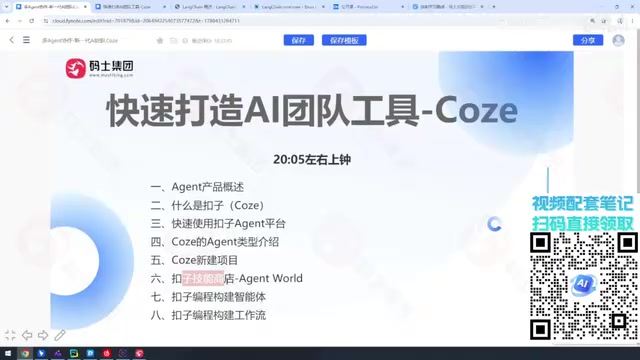
A complete guide to building collaborative AI agent teams using Coze's multi-Agent platform.
This guide provides an in-depth look at ByteDance's Coze platform and its multi-Agent collaboration capabilities. It covers the three types of agents, RAG knowledge base integration for reducing LLM hallucinations, workflow orchestration, and Coze Programming for extensibility. The article maps out a practical learning path from beginner to enterprise deployment, including key considerations around data security, cost management, and team collaboration standards.
What Is Coze? Redefining the AI Agent Platform
As AI Agent technology evolves rapidly, the market shows a clear stratification: tool-oriented products like Coze Studio and Dify focus on rapid prototyping; software-oriented products like Claude Code and Cursor directly execute tasks; and development frameworks like LangChain and LangGraph provide developers with foundational building capabilities.
An AI Agent is an AI system capable of autonomously perceiving its environment, making decisions, and executing actions. Unlike traditional single-turn Q&A AI, an Agent can decompose complex goals, formulate execution plans, invoke external tools, and dynamically adjust strategies based on intermediate results. Since 2023, with the leap in reasoning capabilities of large language models like GPT-4 and Claude, Agent technology has rapidly moved from academic concept to engineering practice. The explosion of open-source projects like AutoGPT and BabyAGI marked the acceleration of this trend, while products like Coze and Dify packaged Agent capabilities into platform services accessible to everyday users.
The current three-tier differentiation of AI products reflects the varying needs of different user groups. Tool-oriented products (like Coze and Dify) lower the barrier to entry through low-code/no-code approaches, making them ideal for business users and junior developers to quickly validate ideas. Software-oriented products (like Claude Code and Cursor) embed AI capabilities directly into workflows, emphasizing immediate productivity gains. Framework-oriented products (like LangChain and LangGraph) target senior developers, providing highly flexible low-level abstractions for building deeply customized AI applications. Among these, LangChain—the most popular LLM application development framework—helps developers integrate large models with external data sources and tools through modular components such as Chains, Memory, and Agents. LangGraph builds on this by introducing the concept of directed graphs, allowing developers to define Agent state transitions and decision flows as graph structures, making it more suitable for building multi-step Agent systems with complex branching logic.
Coze was launched by ByteDance and initially positioned as an agent-building tool, but version 3.0 has evolved into a comprehensive platform that blends tool and software characteristics. Its core value lies in dramatically lowering the barrier to agent development while maintaining enterprise-grade collaboration capabilities. For tech professionals, the Coze, Claude Code, and LangChain ecosystem forms an essential skill matrix—these capabilities are not mutually exclusive but need to be mastered comprehensively.
Multi-Agent Collaboration: Enabling AI Teams with Specialized Roles
Coze's most competitive feature is its multi-Agent collaboration mechanism. A single agent hits obvious bottlenecks when handling complex tasks, whereas multiple specialized Agents working in concert can significantly improve task completion quality.
Multi-Agent Collaboration is a classic research area in distributed artificial intelligence. Its core idea originates from the division of labor theory in sociology—when task complexity exceeds the capability of a single individual, specialization and coordination produce results far exceeding the sum of individual capabilities. In the era of large models, single Agents face bottlenecks including: limited context windows causing information loss in long tasks, a single system prompt unable to cover multiple domains of expertise, and error accumulation in complex reasoning chains. Multi-Agent architectures address these issues by decomposing complex tasks among multiple specialized Agents, each with its own system prompt, tool set, and knowledge base. An orchestration layer coordinates information passing and execution order between Agents, achieving higher-quality task completion. Stanford's "Generative Agents" experiment and Microsoft's AutoGen framework are landmark works in this field.
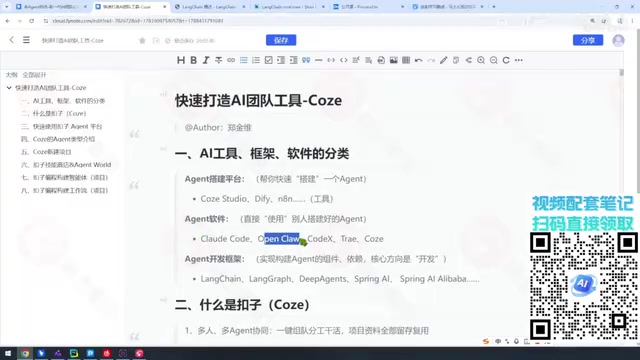
On the Coze platform, each Agent can assume a specific role. For example, a default agent named "Wang Gang" handles general conversations, while another Agent connected to a local Claude Code instance focuses on code-related tasks. This division of labor mirrors a real project team: a product manager handles requirements analysis, development engineers implement features, and testers ensure quality—all automatically connected through Coze's workflow orchestration.
The deeper value of multi-Agent collaboration lies in transforming the human-machine interaction paradigm. Instead of manually switching between different tools, users can orchestrate an agent team through Coze's unified dispatching, achieving end-to-end automation from requirements to delivery.
Deep Dive into Coze's Core Features
Three Types of Agents for Diverse Scenarios
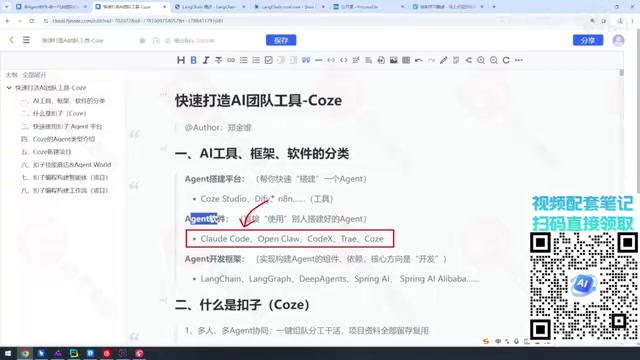
Coze offers three Agent types corresponding to different levels of application complexity:
- Single-Turn Dialogue Agent: Suitable for simple Q&A and information retrieval. Each interaction is processed independently without retaining conversation history.
- Multi-Turn Dialogue Agent: Supports contextual memory for handling complex tasks requiring multiple interactions. It continuously tracks user intent and progressively deepens the conversation.
- Workflow Agent: Implements complex business logic through visual orchestration. Designed for enterprise-level applications, it supports advanced control structures like conditional branching, parallel execution, and error handling.
RAG Knowledge Base: Addressing LLM Hallucinations and Knowledge Timeliness
Coze has built-in RAG (Retrieval-Augmented Generation) capabilities, allowing users to upload private knowledge bases such as enterprise documents and technical specifications. Before generating a response, the agent first retrieves relevant documents, then combines them with the LLM's reasoning capabilities to produce results. This effectively mitigates the LLM "hallucination" problem and knowledge timeliness gaps—critical for enterprise scenarios involving domain-specific expertise.
RAG (Retrieval-Augmented Generation) was first proposed by Meta AI's research team in 2020 and has become the mainstream technical approach for overcoming the knowledge limitations of large models. Its workflow consists of three stages: First, enterprise documents are converted into vector representations through text chunking and embedding models, then stored in vector databases (such as FAISS, Milvus, or Pinecone). Second, when a user asks a question, the system converts the question into a vector and retrieves the most relevant document chunks through similarity search (e.g., cosine similarity). Finally, the retrieved document chunks are injected as context into the LLM's prompt, guiding the model to generate answers based on real data. The LLM "hallucination" problem—where the model confidently generates plausible but factually incorrect content—is a core obstacle to AI adoption in enterprise settings. RAG's "retrieve first, generate second" mechanism grounds the model's responses in evidence, reducing hallucination rates by 40%-70%. Coze's built-in RAG capability enables non-technical users to quickly build Q&A systems based on private knowledge bases without setting up vector databases and retrieval pipelines on their own.
Skills Store and Coze Programming for Extended Capabilities
Coze's Skills Store provides pre-built capabilities such as web search, image generation, and data analysis. Even more powerful is the Coze Programming feature, which allows developers to create custom skill plugins using Python, JavaScript, and other languages, breaking free from the platform's preset functionality limitations.
It's worth noting that Coze's Agent World feature is not yet fully open, presumably due to security concerns. Some advanced features may need to be implemented through custom programming.
Practical Path from Beginner to Enterprise-Level Application
Quick Start Guide for Beginners
- Choose an Access Method: Coze supports web, mobile, and PC clients. Starting with the web version (coze.cn) is recommended.
- Create Your First Agent: After logging in, the system automatically generates a default agent, allowing you to test conversation features immediately.
- Configure Skills and Knowledge Base: Add skill plugins and upload business-relevant documents based on your actual needs.

Key Success Factors from 20+ Project Cases
From customer service automation to code generation assistance, from data analysis to content creation, Coze covers a wide range of application scenarios. Successful cases share the following traits:
- Clear Task Boundaries: Each Agent focuses on a specific domain, avoiding capability dilution from over-generalization.
- Well-Designed Workflows: Leveraging conditional logic, loops, and other constructs to automate business processes.
- Continuous Prompt Optimization: Even when using pre-built capabilities, precise prompt engineering remains essential for quality results.
Prompt Engineering refers to the technical practice of carefully designing input prompts to guide large models toward desired outputs. It has evolved from simple instruction writing into a systematic methodology. Core techniques include: Zero-shot prompting, which directly describes the task requirements; Few-shot prompting, which provides examples to help the model understand output formats and reasoning patterns; Chain-of-Thought (CoT) prompting, which guides the model to reason step by step rather than jumping to conclusions, significantly improving accuracy on complex reasoning tasks; and the ReAct framework, which alternates between Reasoning and Acting, enabling Agents to think and invoke tools simultaneously. On the Coze platform, each Agent's System Prompt directly determines its behavior patterns, output quality, and level of expertise. Even with powerful pre-built capabilities, a poorly designed prompt will cause an Agent to perform far below expectations—making Prompt Engineering the highest-ROI investment in Agent development.
Key Considerations for Enterprise Deployment
Enterprise users should focus on the following when deploying Coze:
- Data Security and Compliance: Evaluate the sensitivity of knowledge base data and choose private deployment options when necessary.
- Granular Cost Management: Coze offers free quotas, but large-scale applications require careful evaluation of API call costs.
- Team Collaboration Standards: Leverage multi-user collaboration features to establish standardized Agent development processes.
When adopting AI agent platforms, data security and compliance are the top decision-making factors for enterprises. Core concerns include: training data leakage risk—whether enterprise documents uploaded to the platform will be used for model training; data transmission security—whether data is end-to-end encrypted during API calls; and regulatory compliance—especially in regulated industries like finance, healthcare, and government, where data may need to meet standards such as China's Classified Protection 2.0 or GDPR. On-Premise Deployment deploys the entire AI platform on the enterprise's own servers or private cloud, keeping data within the enterprise network boundary—the preferred option for sensitive industries. As a ByteDance product, Coze's domestic version (coze.cn) stores data on servers in China, complying with Chinese data export regulations. For enterprises with higher security requirements, ByteDance's Volcano Engine also provides enterprise-grade private deployment options that support deploying LLM and Agent capabilities in dedicated enterprise environments.
Capability Building Path for Tech Professionals
As an IT professional, learning Coze should be integrated into a comprehensive skill system:
- Foundation Layer: Master Prompt Engineering principles and how large models work. Understand core concepts like the Transformer architecture, attention mechanisms, and tokenization—this knowledge determines how effectively you can leverage AI tools.
- Tool Layer: Become proficient with Agent-building platforms like Coze and Dify. Be able to rapidly build, test, and iterate on agent applications.
- Software Layer: Learn to use AI coding assistants like Claude Code and Cursor, seamlessly integrating AI capabilities into your daily development workflow.
- Framework Layer: Study development frameworks like LangChain and LangGraph in depth to master the foundational skills for building customized Agent systems.
These four layers complement each other. Prioritize them dynamically based on project needs and career stage rather than making either-or choices. For most practitioners, starting with the Tool Layer to gain practical experience quickly, while simultaneously building theoretical knowledge at the Foundation Layer, then extending to the Framework Layer as deeper technical requirements arise, is the recommended approach.
Future Outlook and Action Items
As a representative domestic AI platform, Coze's multi-Agent collaboration model provides a viable path for enterprise AI adoption. From complete beginners to technical experts, everyone can find an appropriate entry point on the platform. As Agent technology matures and Coze continues to iterate, "AI teams" are becoming standard infrastructure for enterprises.
For developers looking to dive deeper, it's recommended to systematically study the official documentation (coze.com/docs) and accumulate experience through real projects. Tools will continuously evolve, but the underlying logic and methodology for building agents remain your lasting core competency.
Key Takeaways
Related articles
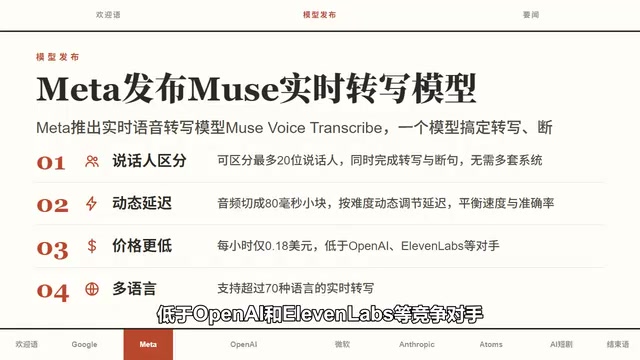
WeatherNext 3 Achieves 5km Precision — Breakthroughs in AI Weather Models and Inference Costs
Google DeepMind's WeatherNext 3 achieves 5km AI weather forecasting, Meta launches low-cost Muse transcription, Microsoft reports 300x inference cost drop, OpenAI declares AGI era.
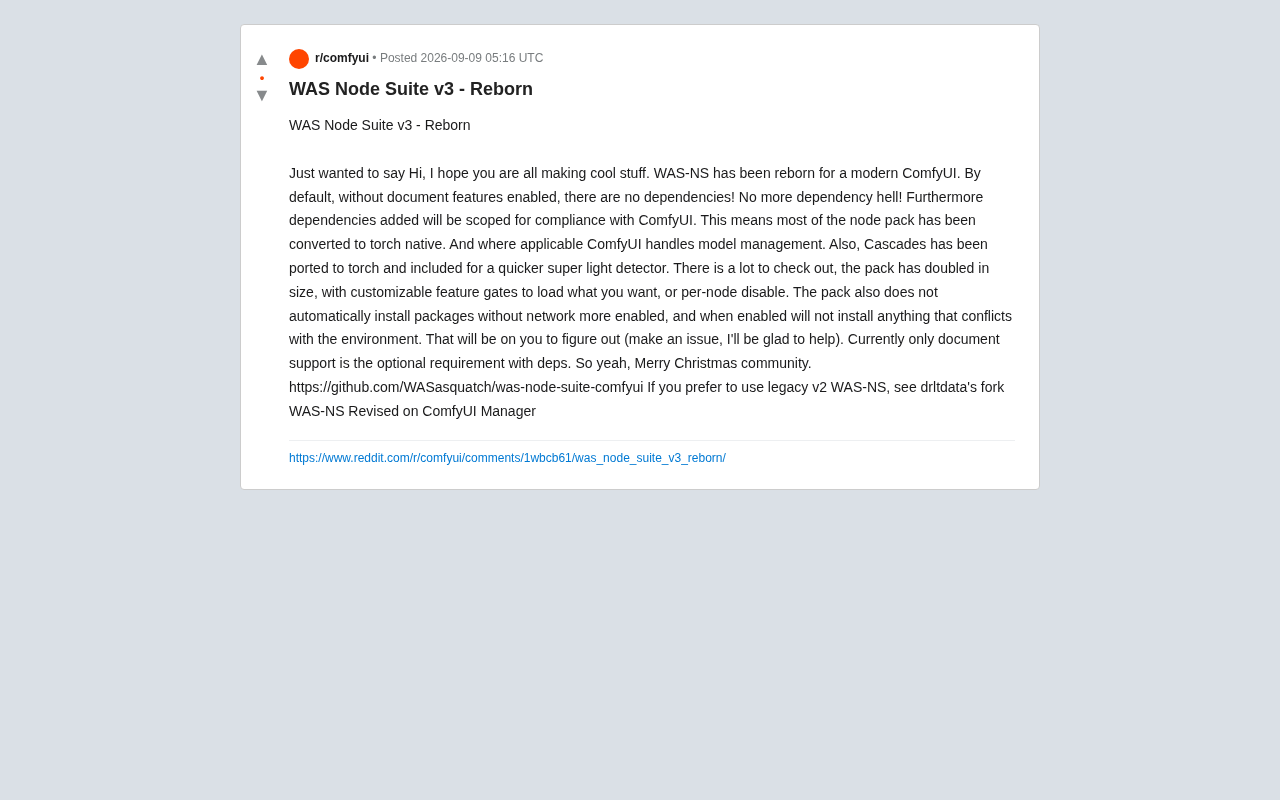
WAS Node Suite v3: A Comprehensive ComfyUI Node Pack Upgrade That Eliminates Dependency Hell
WAS Node Suite v3 overhauls the ComfyUI node pack with zero external dependencies, native PyTorch conversion, doubled node count, and flexible feature gating to eliminate dependency hell.

AI Training Facilities Face Superhuman Hacker Threats: An Unprecedented Cybersecurity Risk
AI safety experts warn: next-gen LLM training infrastructure may face superhuman-level attacks from AI hackers, with threat scales exceeding all of human history.