Muse Launches Paid AI Phone Call Service That Can Call US Businesses on Users' Behalf
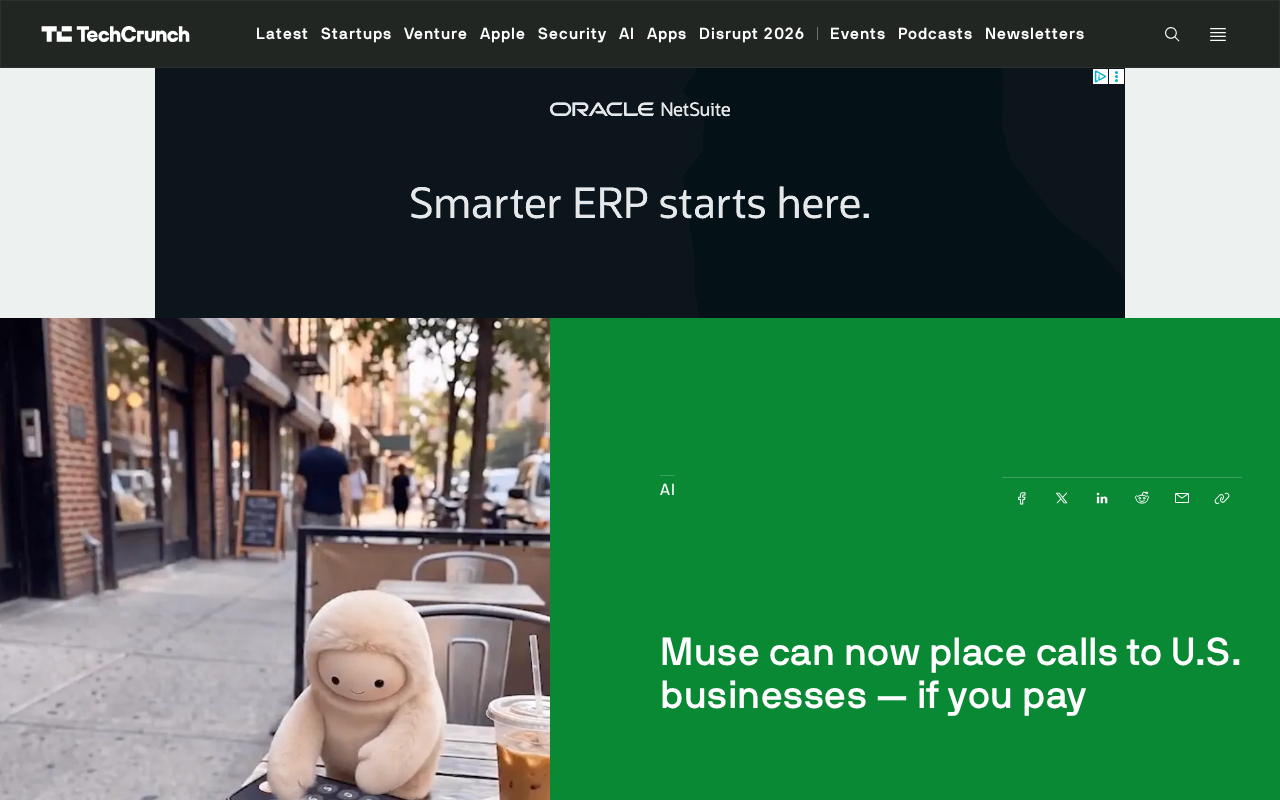
Muse launches paid AI outbound calling that phones US businesses on users' behalf; success hinges on call quality and compliance.
Muse extends AI agents from digital tasks to phone calls: users can have AI dial US businesses for them, but only behind a paywall. Phone communication is poorly automated and costly, and outbound calls carry higher unit costs than text, so paid access filters casual users and covers call expenses. AI calling real businesses faces IVR menus, transfers, noise, and 'is it human?' sensitivity, plus US telecom rules. Success depends on call accuracy, task completion, and users' willingness to let AI speak for them.
Muse is extending AI agent use cases beyond the screen into real-world phone communication. According to its latest announcement, Muse's AI can now make outbound calls to US businesses on behalf of users, but this capability sits behind a paywall.

From Digital Assistant to Phone Agent
Over the past year, competition among AI agents has centered on digital tasks such as browser operation, email drafting, and scheduling. Muse's latest update pushes the capability boundary into the phone, a traditional communication channel. Users can have the AI agent call US merchants for them, handling calls that would otherwise require a real person to wait on hold and repeatedly explain their requests.
This direction is not surprising. Phone communication is one of the least automated and most labor-intensive scenarios. Business customer service often involves queueing, and individual users handling appointments, inquiries, and information confirmation spend a lot of time waiting for connections and being repeatedly transferred. Muse's choice to start here means it wants to solve the "last mile" of real-world communication, rather than staying at the level of text generation.
Outbound phone calls place fundamentally different technical demands on AI compared with text interaction. It typically requires chaining together speech recognition (ASR), dialogue management, speech synthesis (TTS), and real-time communication (such as SIP or Twilio-style voice gateways), with end-to-end latency compressed to within a few hundred milliseconds, otherwise the conversation feels sluggish. Even harder is handling interruptions, accents, background noise, and IVR keypad or voice navigation—none of which exist in text scenarios. As a result, the completion rate of an outbound calling agent often depends not on the model itself but on the engineering stability of the entire voice pipeline.
The Logic Behind the Paid Model
Muse explicitly states that this outbound calling capability is not free. Although the company has not disclosed pricing details, the "paid access" setup itself reveals the product thinking: outbound calls involve real-time speech synthesis, dialogue understanding, and communication resource consumption, with unit costs far higher than pure text interaction. Putting it behind a paid tier both filters out low-frequency curious users and covers the actual call costs incurred.
For users, whether to pay depends on the value of the scenario. If AI can replace a ten-minute wait and conversation, willingness to pay exists; if it's just an occasional phone call, free alternatives are clearly more attractive. What Muse needs to prove is that its comprehension accuracy and task completion rate during calls are sufficient for people to trust it to talk to real businesses on their behalf.
Real-World Barriers Facing Outbound Calling Agents
Having AI call real businesses is far more complex than demonstrating in a sandbox environment. Business phone systems vary widely, and IVR menus, transfer rules, and background noise all affect conversation quality. More importantly, the person on the other end is human, and humans are naturally sensitive to whether they are talking to a real person.
There is also regulatory uncertainty. AI automated outbound calls in the US are subject to telecom regulations and consumer protection rules, involving requirements such as identity disclosure and recording notification. Muse limiting its service to within the US is, to some extent, validating the model within a controllable scope first, but it also means it must handle compliance boundaries properly, otherwise scaling will quickly hit a ceiling.
US regulation of automated outbound calls mainly falls under the Telephone Consumer Protection Act (TCPA) framework. The TCPA restricts automated dialing or prerecorded voice calls without consent, and is especially strict on marketing calls, with violations potentially facing high per-call damages. In addition, the Federal Trade Commission and individual states have their own recording notification and identity disclosure rules. For AI agents, the key questions are whether they legally count as "automatic dialing systems," whether prior consent from the called party is required, and whether the start of a call must disclose that it is AI. These determinations still lack unified case law, so product companies typically can only adopt conservative strategies, such as restricting use cases, limiting geography, or adding human takeover mechanisms.
The Real Question These Products Must Answer
Phone call handling sounds practical, but ultimately it still has to answer the old question: are users willing to hand over the power to speak on their behalf to AI? In text scenarios, mistakes can be withdrawn and edited; in phone scenarios, saying one wrong sentence could affect an appointment or a service confirmation. Muse's paid strategy is in effect also filtering for users with clear needs who are willing to bear some trial-and-error cost.
If this path works, possible future forms include automated answering for small businesses, cross-language phone communication assistance, and task loops that connect outbound calls with scheduling and order systems. At this stage Muse has only taken the first step; whether it can go from "can call" to "worth calling" still depends on completion quality in real calls.
One-line Summary
Muse launches a paid AI outbound calling service that can call US businesses on users' behalf, with success hinging on real call quality and compliance.
Paragraph Summary
Muse extends AI agent capabilities from digital tasks like browsers and email to phone communication: users can have AI make outbound calls to US businesses on their behalf, but the feature sits behind a paywall. The article argues that phone communication is poorly automated and labor-intensive, making it a real-world "last mile" pain point; outbound calls involve real-time voice, dialogue understanding, and communication resources, with unit costs higher than pure text interaction, so the paid model both filters low-frequency users and covers call costs. At the same time, AI calling real businesses faces technical challenges such as IVR menus, transfer rules, background noise, and sensitivity about whether the caller is human, and must also navigate US telecom regulations and consumer protection rules. Whether the product succeeds ultimately depends on comprehension accuracy and task completion rate during calls, and on whether users are willing to hand over the power to speak on their behalf to AI.
Related articles

Multi-Agent Collaborative Development: Task Card-Driven Practices for Medium-to-Large AI Projects
A Bilibili creator shares a task card-driven, PM-orchestrated multi-Agent collaboration model with local-first repository state, so any Agent tool can take over a project anytime.

Cursor vs Copilot vs Claude Code: How Laravel Developers Should Choose
Compare Cursor, GitHub Copilot, and Claude Code for Laravel development: an AI-first editor, a plugin for existing editors, and a terminal agent for multi-file tasks and testing — plus workflow-based recommendations.
AgentScope Java Edition: A Practical Guide to Enterprise-Level Agent Frameworks
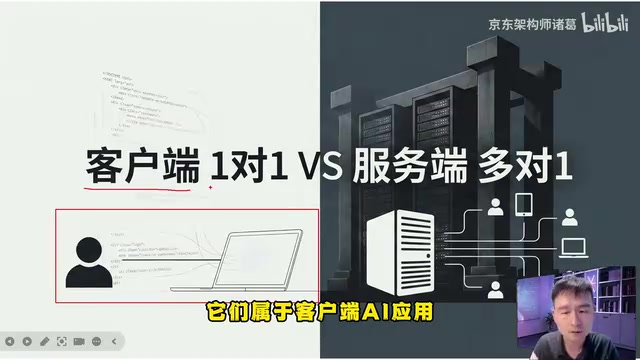
An in-depth analysis of Alibaba's AgentScope Java enterprise agent framework: contrasting client-side AI and server-side AI, explaining Java's natural advantages in high concurrency and distributed state management, and outlining a complete learning path from core principles to multi-agent collaboration.