Muse Spark 1.1 Launch: How AI Creative Tools Can Break Through Fierce Competition

Muse Spark 1.1 launches on Hacker News, highlighting how AI creative tools compete through differentiation and agile iteration.
Muse Spark 1.1 has launched on Hacker News, earning 82 upvotes and 53 comments. This article explores how AI creative tools can stand out in a crowded market — through differentiated user experience, response speed, scenario focus, and agile iteration driven by real user feedback. It also offers practical insights for both creators and indie developers navigating the AI productivity landscape.
Muse Spark 1.1 Makes Its Official Debut
Muse Spark version 1.1 has officially launched, sparking lively discussion on the Hacker News community — earning 82 upvotes and 53 comments. As an AI tool focused on creative workflows, this version update reflects the intense competition and rapid evolution currently defining the AI productivity tools space.
The jump from 1.0 to 1.1 may seem like a minor bump, but in the AI tools world, frequent minor version updates often signal a team continuously refining its product based on real user feedback. This "small steps, fast pace" development rhythm is the core product philosophy for many AI startups today. In Semantic Versioning, a Minor Version increment typically represents backward-compatible feature additions or experience improvements rather than breaking changes — meaning the team is delivering perceptible value to users while maintaining stability.
Why This Launch Is Worth Paying Attention To
In a technically-oriented community like Hacker News, 82 upvotes is respectable, but over 50 comments signals that the product has genuinely touched on real pain points for developers and creators. Hacker News was founded by the well-known startup accelerator Y Combinator, and its Show HN section is a gathering place for early adopters worldwide — products like Dropbox and Stripe both took their first cold-start steps here. The comments section of a technical community is the most direct proving ground for any product — users will bluntly call out performance bottlenecks, pricing concerns, and honest comparisons with competitors, making this feedback far more valuable than conventional market research.
The AI Creative Tools Space: From "Does It Exist?" to "Is It Actually Good?"
As the capabilities of large language models (LLMs) continue to leap forward, AI writing assistants and tools centered on content creation, code generation, and creative support are proliferating. Foundation models like GPT-4, Claude, and Gemini — pre-trained on massive text corpora and refined through instruction fine-tuning — already possess impressive language understanding and generation capabilities. However, calling these models via API is merely the starting point for building a product. What truly determines user experience is how you build application-layer capabilities on top of model power: prompt engineering, context window management, output formatting, and personalized memory. From Notion AI to countless indie developers' side projects, this space has entered deep waters — the competition is no longer about "can you call AI" but "is the experience genuinely good."
Differentiation Is the Core Competitive Moat
For AI creative tools like Muse Spark, simply integrating a large model API is no longer a competitive barrier. Real differentiation shows up across three dimensions:
- Interaction experience: AI capabilities need to flow naturally into the creative process rather than abruptly disrupting a user's train of thought. This involves latency perception optimization for streaming output and context-aware smart triggering logic;
- Response speed: The right balance between local processing and cloud-based inference directly determines user retention. The maturation of edge inference technology means some lightweight models can run on local devices, significantly reducing latency;
- Scenario focus: Rather than building a broad, general-purpose tool, going deep on a specific creative scenario and establishing a unique advantage pays off. Vertical-scenario-specific data and workflow design often deliver experience gains that general-purpose models simply can't replicate.
Looking at the update logic behind version 1.1, the product team's direction is clear — refine the core experience rather than blindly pile on features.
The Product Thinking Behind Version Iteration
Building a User Feedback Loop Through Agile Iteration
The rapid transition from 1.0 to 1.1 typically encompasses performance optimization, bug fixes, UI/UX detail polishing, and feature tweaks based on early user feedback. This agile release cadence allows a product to establish a tight feedback loop with users early on. In software engineering, this idea traces back to the core value in the Agile Manifesto of "responding to change over following a plan," further systematized in Eric Ries's Lean Startup methodology — using a minimum viable product (MVP), measuring user behavior data, and iterating quickly to create a Build-Measure-Learn flywheel.
For indie developers or small teams, this approach is especially important. With limited resources, making continuous small improvements to gradually converge on the product form users actually need is far more efficient than building in isolation — and far better at capturing fleeting market windows.
Hacker News: A Natural Hub for Early Users
Choosing to launch on Hacker News is itself a precise cold-start strategy. The platform attracts a high concentration of early adopters and technical thought leaders. In Everett Rogers's Diffusion of Innovations theory, early adopters are the critical population for crossing the "chasm" and driving a product from the geek cohort into the mainstream market. Their feedback is high quality, their reach is strong, and public discussions about a product often ripple out to broader tech media and communities. An AI productivity tool that earns positive discussion here typically gains its first batch of high-quality seed users along with genuinely valuable improvement suggestions.
Among the 53 comments, there were both acknowledgments of the product's strengths and pointed questions about pricing models, data privacy handling (such as whether user input is used for model training), and how it differs from mainstream competitors — all of which represent invaluable first-hand user insights for the product team.
Takeaways for Creators and Indie Developers
For Creators: Treat AI Tools as Amplifiers, Not Replacements
If you're looking for an AI-assisted tool to boost your creative efficiency, Muse Spark 1.1 is worth adding to your trial list. It's worth maintaining realistic expectations — the value of AI creative tools lies in amplifying human creativity and execution efficiency, not replacing human judgment and aesthetic sensibility. From a cognitive science perspective, AI excels at "convergent thinking" tasks (such as text polishing, format standardization, and information retrieval), while human "divergent thinking" and emotional resonance remain the core barriers in content creation. The creator themselves is always the one who ultimately produces great content.
For Indie Developers: Deep Scene Understanding Matters More Than Being First to Integrate
Muse Spark's iteration path offers a valuable product case study: in an era when AI tools are highly commoditized, success depends not on being the first to integrate the latest large model, but on deeply understanding a specific niche scenario and responding quickly to user feedback. The technical moat has been significantly lowered in the era of large models — what's truly hard to replicate is deep embedding in users' workflows and the accumulation of scenario-specific data. Identifying the real pain point and polishing relentlessly is the right way to break through.
Conclusion
The launch of Muse Spark 1.1 is yet another snapshot of the AI creative tools space in continuous evolution. In a moment when model capabilities are advancing daily and product competition is white-hot, the products that survive and grow are typically those that know how to listen to users, stay focused on the core experience, and commit to agile iteration.
Continuously tracking the iteration trajectories of AI content creation tools not only helps you find the right efficiency boosters for your work — it also offers a window into the broader industry's evolution and future direction, from the boundaries of underlying model capabilities, to innovations in application-layer product form, to the ultimate contest over business models and user mindshare.
Key Takeaways
Related articles
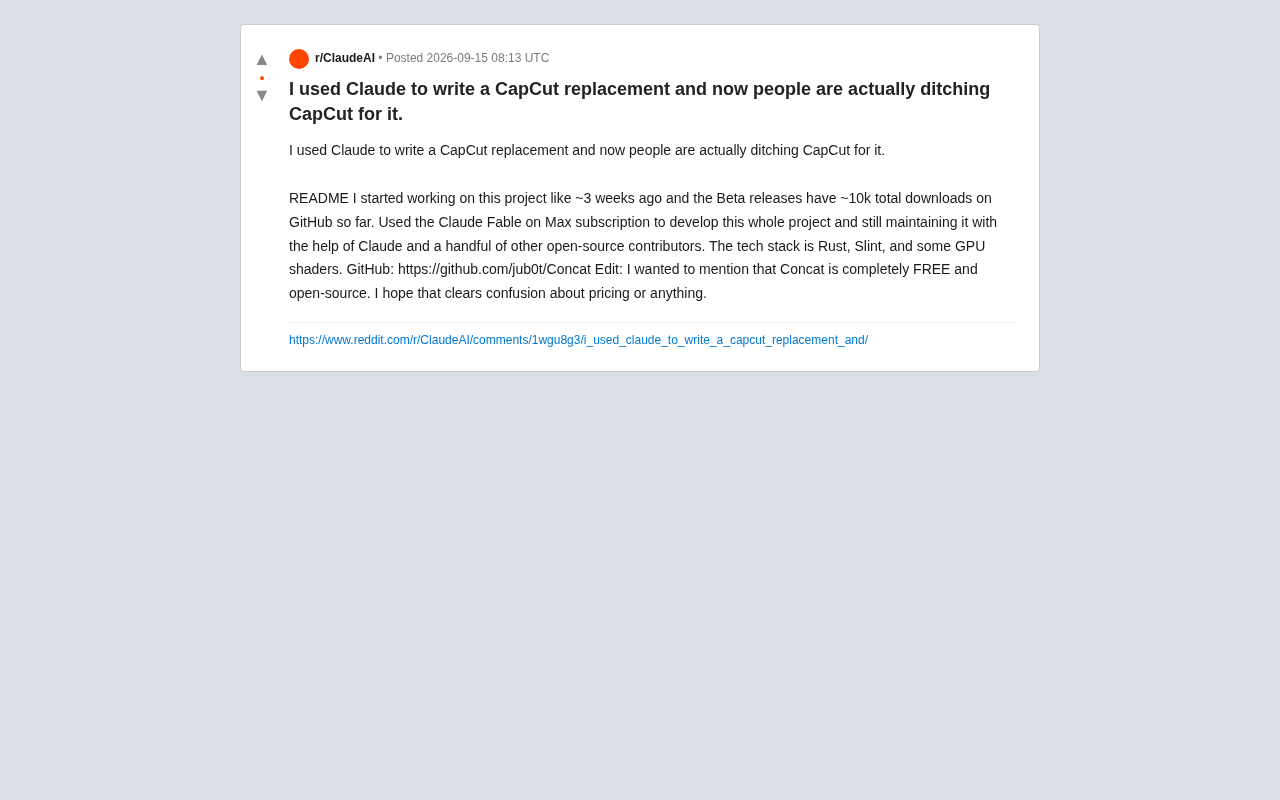
Building Open-Source Video Editor Concat with Claude: A Free Alternative to CapCut
A developer used Claude to build Concat, an open-source CapCut alternative, in just three weeks. With nearly 10K downloads, it's a striking example of AI-assisted solo development.
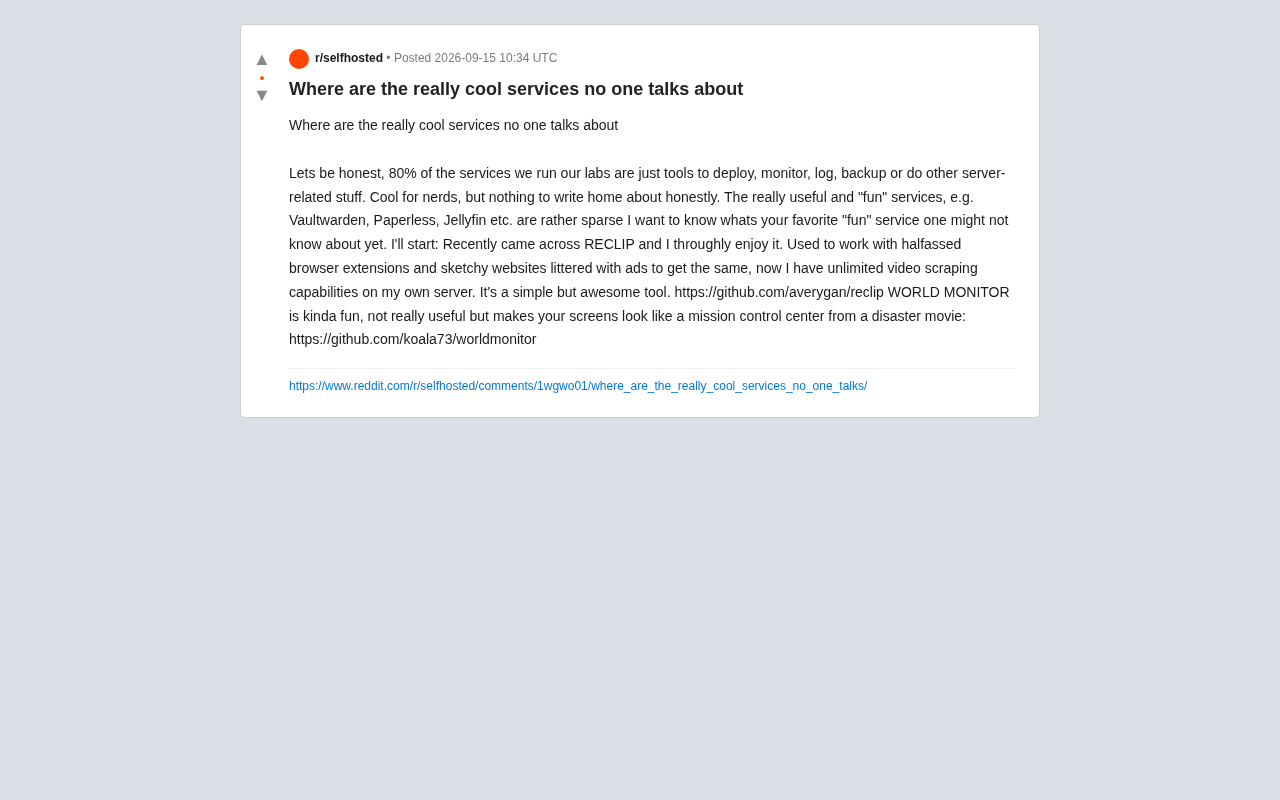
The Overlooked Gems of Self-Hosting: Fun and Useful Services Nobody Talks About
From a Reddit thread, we explore overlooked self-hosted services — including video scraper RECLIP and data viz project WORLD MONITOR — and why fun services are so rare.
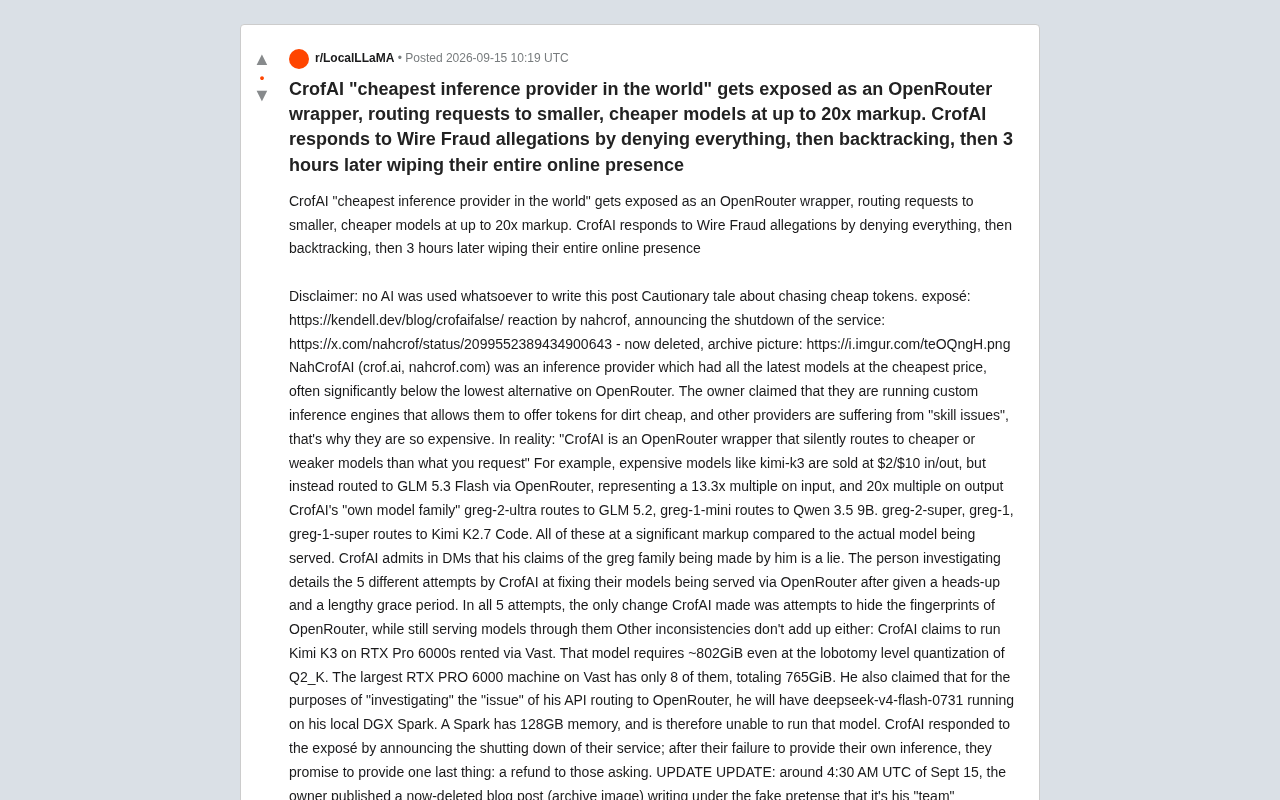
CrofAI Fraud Exposed: 'World's Cheapest AI Inference' Turns Out to Be an OpenRouter Wrapper Scam
CrofAI claimed to offer the world's cheapest AI inference, but was exposed as an OpenRouter wrapper silently rerouting requests to cheap models at up to 20x markups.