Muse Spark 1.1 Released: Competing Through Ultra-Low Cost in a Crowded AI Tool Market

Muse Spark 1.1 bets on ultra-low cost as its core differentiator in a crowded AI tool market.
Muse Spark 1.1 has launched on Reddit with a clear pitch: the lowest cost AI tool on the market. This deep-dive examines why cost has become a decisive competitive dimension, the technical methods (quantization, KV cache, speculative decoding) that enable it, and what the 1.0-to-1.1 version bump signals about the team's maturity. The piece also frames Muse Spark within the broader commoditization trend reshaping the AI industry.
Muse Spark 1.1 Official Release
The Muse Spark team recently announced the launch of version 1.1 on Reddit, with a core value proposition that targets one of the industry's biggest pain points — extremely low usage costs. In an era where AI tools are proliferating and subscription fees remain stubbornly high, a product that differentiates itself on "lowest cost" has clearly struck a nerve with developers and everyday users alike.
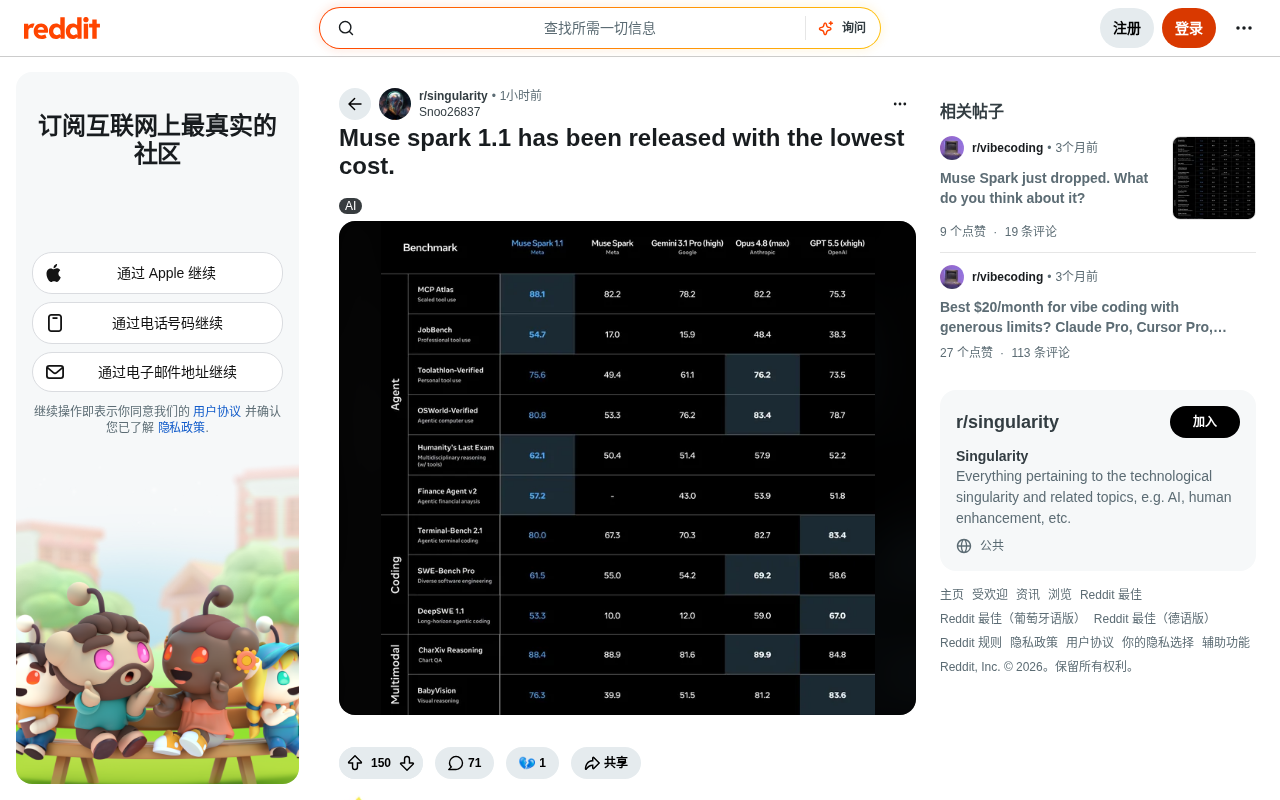
Based on publicly available information, Muse Spark 1.1's marketing message is remarkably focused: deliver functional utility while pushing costs down to levels that competing products struggle to match. Given the increasingly fierce competition in the AI application market, this is a strategy with real-world relevance.
Why "Low Cost" Has Become a Core Competitive Advantage
The Cost Problem With AI Tools
As large model capabilities have rapidly evolved, AI applications have emerged at a staggering pace. Yet the enormous compute costs and API fees involved ultimately get passed on to end users. Whether charged via monthly subscription or usage-based billing, cost is consistently the top concern for individual developers and small-to-medium teams when choosing an AI tool.
This cost problem has deep roots in hardware. Large language models — whether for training or inference — are heavily dependent on high-end GPU compute. Training a model at GPT-4 scale requires thousands of A100 GPUs running for months, and inference also requires sustained access to premium GPUs. With NVIDIA H100 cards selling for over $30,000 each on the market, and cloud on-demand rental running around $2–3 per hour, these figures represent a hard cost floor for AI services and explain why most providers have limited room to offer significant discounts.
It's worth noting that inference cost pressure comes not only from hardware, but also from fundamental model architecture constraints. The dominant Transformer architecture has an inherent computational bottleneck: the Self-Attention mechanism scales quadratically with sequence length (O(n²)), meaning compute consumption explodes when processing long texts. This makes long-context inference one of the hardest cost optimization challenges — and explains why "long context" features are universally priced at a premium across providers.
Meanwhile, mainstream AI tool subscription fees typically fall in the $20–$100/month range: ChatGPT Plus at ~$20/month, Claude Pro at ~$20/month, GitHub Copilot at ~$10/month, and enterprise plans that can run into the hundreds. At the API level, OpenAI GPT-4o charges roughly $5 per million input tokens and $15 per million output tokens — costs that compound quickly for high-frequency use cases.
It's also worth clarifying what a "token" actually is: it's the basic unit that large language models use to process text. Roughly speaking, 1,000 tokens equals about 750 English words or 500 Chinese characters. A single complete conversation can involve thousands or even tens of thousands of tokens in input and output combined — which means API costs in high-frequency scenarios can grow much faster than users expect. For enterprises that need to batch-process documents or continuously invoke AI capabilities, this cost structure is especially sensitive.
This reality has created strong market demand for low-cost alternatives, and it's precisely this demand that gives products like Muse Spark a viable opening.
The Technical Paths That Enable Low Cost
While the official announcement is brief, several well-established technical approaches can underpin a "lowest cost" positioning:
-
Model optimization: Using smaller, more efficient models, or applying quantization and distillation techniques to inference, reducing per-call compute consumption. Model quantization compresses neural network weights from high-precision floats (e.g., FP32) to low-precision integers (e.g., INT8, INT4), shrinking model size by 4–8x and boosting inference speed by 2–4x with minimal accuracy loss. Knowledge distillation uses a large "teacher" model to guide training of a smaller "student" model, giving the student near-comparable capabilities. These two techniques are widely used in mainstream open-source models like Meta's LLaMA and Google's Gemma, and are among the most effective tools for inference cost reduction.
-
Engineering architecture: Techniques like caching and batching can eliminate redundant computation and improve resource utilization. KV Cache (key-value caching) is a key optimization mechanism for Transformer inference — it stores previously computed attention key-value pairs to avoid recomputing historical context when generating each new token, reducing inference latency in long conversation scenarios by over 50%. Request batching consolidates multiple user requests into a single GPU operation, dramatically increasing hardware utilization. Speculative Decoding, formally introduced by Google DeepMind in 2023 and now widely validated, is an acceleration technique where a small draft model quickly generates multiple candidate token sequences, which are then verified in parallel by the target large model — accepting tokens that match the probability distribution and discarding those that don't. Since verifying multiple tokens in parallel costs far less than generating them one by one, overall throughput improves by 2–3x with no degradation in output quality. These engineering techniques can substantially reduce marginal inference costs without changing the underlying model.
-
Business model: Open-source, freemium, or ultra-low subscription pricing strategies that trade short-term margins for long-term scale.
One important caveat: low cost does not equal low value. The real challenge is maintaining acceptable performance and user experience while compressing costs — and that will determine whether Muse Spark 1.1 can hold its ground.
From 1.0 to 1.1: What a Minor Version Bump Actually Means
A version increment from 1.0 to 1.1 typically signals incremental improvements in stability, feature completeness, or cost control — not a ground-up rebuild. Under the Semantic Versioning standard (SemVer), version numbers follow a Major.Minor.Patch format (e.g., 1.1.0): major version changes signal breaking API changes; minor version increments represent backward-compatible feature additions or performance improvements; patch numbers cover backward-compatible bug fixes only. Introduced by GitHub co-founder Tom Preston-Werner in 2010, SemVer has become the de facto standard in open-source and commercial software alike.
By this standard, the 1.0-to-1.1 upgrade means existing users can update seamlessly without worrying about breaking changes. For early adopters, minor version updates like this tend to deliver a smoother experience and more mature feature behavior.
For AI tools specifically, this kind of version iteration carries additional meaning. Early versions typically focus on validating core functionality; minor updates concentrate on engineering maturity of the inference pipeline — including stability improvements, edge-case fixes, and fine-grained cost structure optimization. Unlike traditional software, the operational cost of AI products is a dynamic variable that fluctuates with call volume, model versions, and infrastructure pricing power — making cost optimization an ongoing engineering challenge rather than a one-time design decision. From this perspective, Muse Spark 1.1 leading with "lowest cost" as its headline update is a clear signal that the team has shifted engineering focus from baseline functionality validation to operational efficiency optimization.
Positioning "lowest cost" as the centerpiece of this release also reflects a clear sense of market identity — rather than trying to compete feature-for-feature with industry giants, the team has chosen to go deep on one specific dimension and carve out a foothold in a focused segment.
Staying Rational: What Information Is Still Missing
Publicly available information about Muse Spark 1.1 remains limited, and the Reddit announcement reads more like a teaser than a full product disclosure. For users interested in evaluating this product, here are the key questions worth tracking:
- Actual cost data: The "lowest cost" claim needs concrete pricing or usage data to back it up — more transparent detail from the team would go a long way.
- Feature boundaries: Low cost often comes with trade-offs in capabilities; users should clarify which specific scenarios this product supports and where its limits lie.
- Real community feedback: Actual usage reviews on Reddit and similar platforms will be a critical indicator of whether the marketing holds up in practice.
Conclusion: The Cost Competition Reshaping the AI Tool Market
The launch of Muse Spark 1.1 is a microcosm of a broader "cost competition" trend now taking hold in the AI tool market. As large model technology matures and the underlying capabilities commoditize, competition is shifting away from raw capability benchmarks toward more holistic dimensions like value-for-money, ease of use, and scenario fit.
This trajectory closely mirrors the early evolution of the cloud computing market — commoditization refers to the process by which once-differentiated technology becomes standardized and interchangeable. Cloud computing went through roughly a decade-long commoditization cycle: when AWS launched EC2 in 2006, cloud services were scarce; by around 2015, the core compute offerings of the major cloud providers had become highly homogeneous, with price competition driving EC2 instance costs down over 80% across a decade. The AI large model space is now experiencing an accelerated version of the same process: when GPT-4 launched in early 2023, input token pricing was $0.03 per thousand tokens; by late 2024, GPT-4o mini had brought that down to $0.00015 per thousand tokens — a reduction of over 200x. It is precisely this structural downward pricing pressure that creates a viable market window for cost-oriented products like Muse Spark. As baseline capabilities trend toward commoditization, cost efficiency and user experience become the decisive competitive variables.
Viewed through the lens of market segmentation, the AI tool ecosystem is coalescing into a clear three-tier structure: at the top are frontier capability providers like OpenAI and Anthropic, competing on state-of-the-art model performance; in the middle are vertical application-layer players earning a premium through scenario-specific fit; at the bottom are accessibility-focused tools competing on cost efficiency. Muse Spark sits in the third tier, and its survival logic rests on a simple insight: a significant share of real-world use cases don't need the most powerful model — they just need something "good enough and cheap enough." This market stratification closely parallels the historical evolution of the SaaS industry, suggesting the low-cost segment isn't a transitional niche but an independent market with durable structural demand.
For developers and users prioritizing value for money, this category of low-cost AI tools is well worth watching. That said, actual adoption decisions should still be grounded in concrete feature performance and real cost data. Hopefully the team will publish more detailed technical specs and pricing plans soon — so the promise of "lowest cost" can be properly put to the test.
Related articles
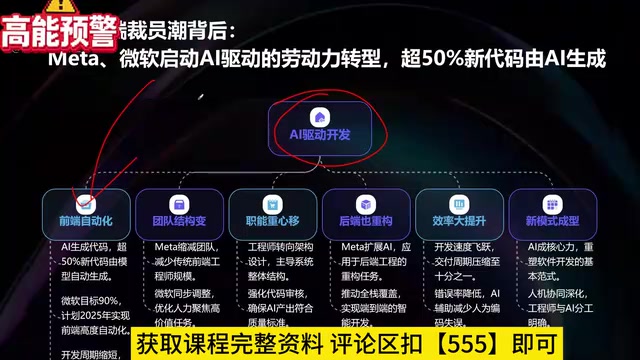
What Is Vibe Coding? The AI Programming Skill Every Developer Needs
What is Vibe Coding? Learn how AI programming is reshaping dev teams, why traditional programmers face displacement, and why Cursor & Claude Code matter.
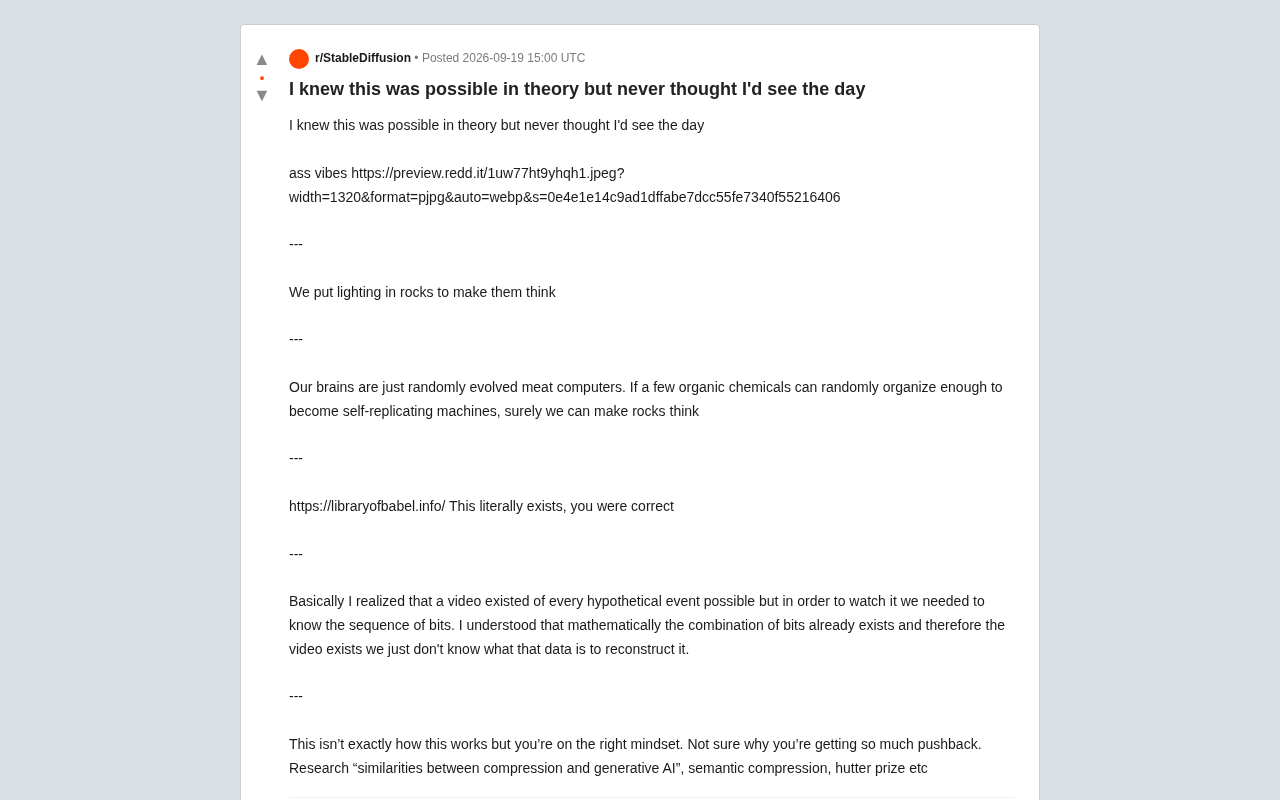
Making Rocks Think: A Philosophical Exploration of Generative AI and Information Compression
From a viral Reddit post to deep AI theory: why compression equals understanding, the Library of Babel thought experiment, semantic compression, and the Hutter Prize.
Irregular Warns: Four AI Lab Security Breaches Traced to the Same Root Cause
Irregular reveals four AI lab security breaches share a single root cause, exposing systemic risks from technology stack homogeneity across the AI industry.