Musk Plans to Gift SpaceX Shares to Every American Child, Trump Accounts as the Distribution Channel

Musk plans to gift SpaceX shares to every American child, with Trump announcing distribution via Trump Accounts.
Musk proposed giving one SpaceX share to every American child next year, and Trump announced these shares will be distributed through "Trump Accounts," a policy-driven children's savings vehicle promoted by Brad Gerstner, whom Musk publicly thanked. Analysis notes SpaceX is private, so shares lack public market liquidity, and the gift involves practical issues like guardianship, taxes, valuation, and future sale restrictions, with no timeline or account rules announced. The proposal highlights close tech-political interaction and pushes the "children's equity account" concept into the spotlight, though its long-term impact depends on institutional design.
Elon Musk's proposal to gift SpaceX shares to every American child has found a new path to implementation. Donald Trump announced that these shares will be distributed through "Trump Accounts." The news links the policy visions of two billionaires with a financial innovation tool, sparking discussion about children's wealth accumulation, stock market participation, and the design of policy instruments.
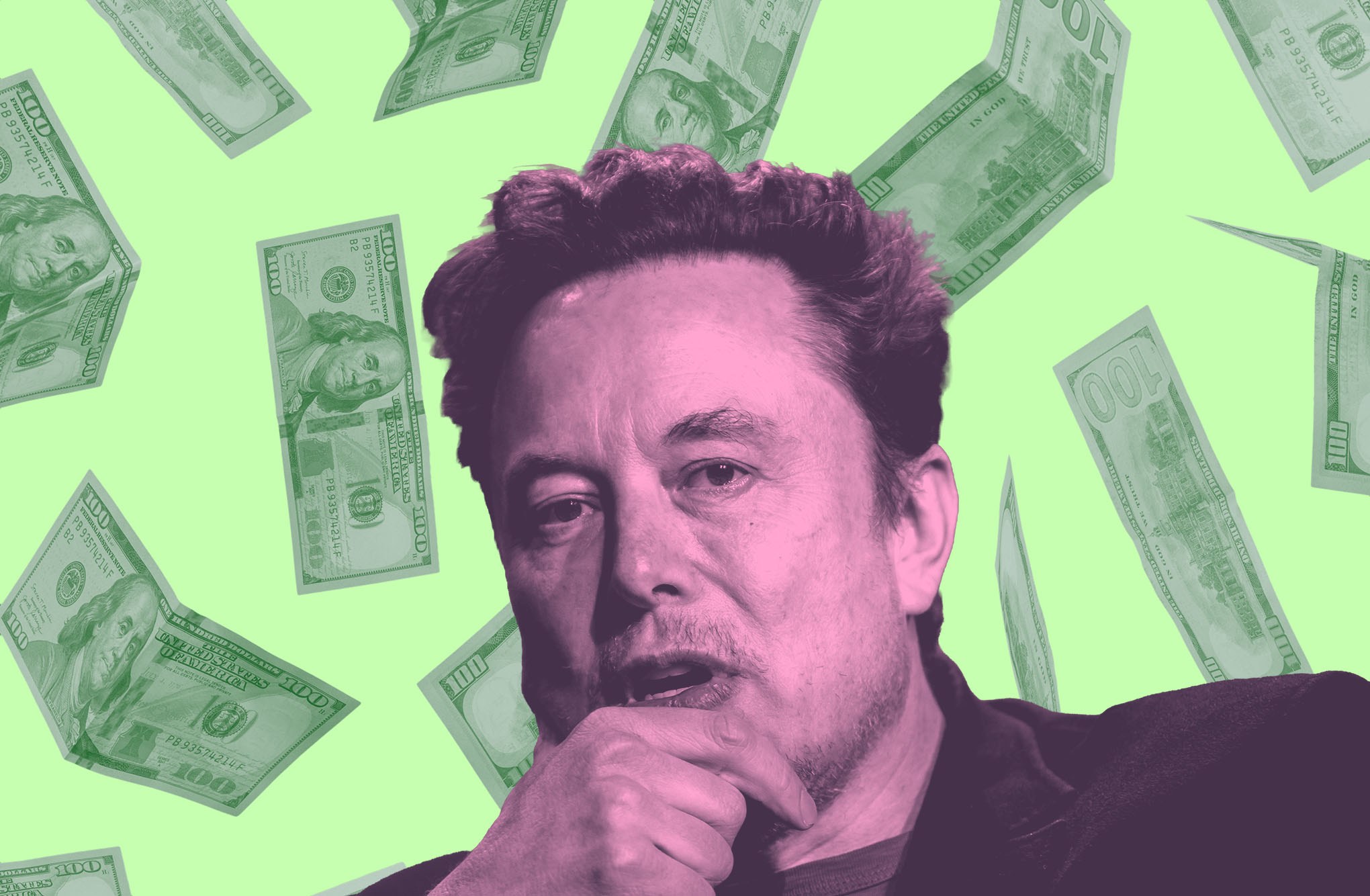
The Share Gift Concept and Distribution Channel
Earlier today, Musk said he would give "one share of SpaceX" to "every child in America" "sometime next year." Trump then confirmed in an afternoon statement that these shares would be allocated through Trump Accounts. Musk publicly thanked Brad Gerstner, the driving force behind Trump Accounts, for "helping make this happen." Trump himself also expressed support.
The core of this arrangement lies in tying private company equity gifts to a specific policy tool. Trump Accounts are not a simple bank account but a savings or investment vehicle with policy objectives. Injecting SpaceX shares into them means that children receiving the gift not only obtain an asset but may also be guided into a long-term investment framework.
Understanding the Role of Trump Accounts
The specific mechanisms of Trump Accounts as a policy concept have not been detailed in this announcement. However, context suggests it is likely a tax-advantaged savings account for families or children aimed at encouraging long-term asset accumulation. Gerstner's active promotion of the account indicates support from the financial and tech communities.
Musk's choice to distribute shares through this channel rather than directly to individuals may serve multiple purposes: simplifying administrative processes, leveraging an existing account system for scaled distribution, and embedding the gift within a broader wealth-building narrative. For SpaceX, this amounts to a public-facing equity dispersal, though the actual control rights and economic significance of each share require careful scrutiny.
Trump Accounts are a children's savings program launched in 2025 under the leadership of the U.S. Department of the Treasury, with its legal basis in the tax and spending bill passed that year. The program establishes tax-deferred investment accounts for American children born between 2025 and 2028, with the federal government providing initial seed funding for eligible children. Families, employers, or charities may contribute additional amounts annually (subject to a cap), and funds can be invested in compliant products such as low-cost index funds. Accounts are generally not freely withdrawable before the beneficiary turns 18, and after adulthood may be used for purposes such as education, home purchase, or starting a business according to regulations. Compared with traditional 529 education savings plans, Trump Accounts have broader uses and carry a universal benefit aspect with direct government funding. Brad Gerstner is the founder of venture capital firm Altimeter Capital, who has long advocated for "baby bonds" or children's investment accounts to narrow the wealth gap and was actively involved in the policy design of this account.
The Symbolism and Reality Behind Tens of Millions of Shares
The promise of "one share per child" sounds massive in scale. With tens of millions of children in the U.S., Musk could be giving away tens of millions of SpaceX shares. However, SpaceX is not a public company; its shares cannot be freely traded on public markets, and both valuation and liquidity are constrained. Families of children receiving the gift need to understand that the actual value realization path for this asset differs from publicly traded stocks.
Moreover, the legal and tax implications of the gift remain unclear. Minors holding private company equity involves a range of issues including guardianship, voting rights proxies, and future sale restrictions. Whether Trump Accounts can properly handle these details will determine whether this concept becomes a meaningful asset gift or remains merely symbolic.
SpaceX is currently a private company, and its shares circulate through private financing and secondary market transactions (such as employee share transfers, Special Purpose Vehicles, and other channels). Ordinary investors cannot buy or sell directly on Nasdaq or the NYSE. Valuations of private company equity are typically determined based on the most recent financing round or independent valuation firm assessments rather than real-time market prices; shareholders seeking liquidity often must wait for an IPO, acquisition, or sale through company-approved secondary transfer windows, and may be subject to rights of first refusal, lock-up periods, and transfer restrictions. Furthermore, placing private equity into tax-advantaged accounts for minors is far more complex than holding publicly traded securities in terms of custodial structures, annual valuations, and compliance reporting—which is an important reason why operational details have been slow to emerge.
The Intersection of Politics and Business
This event highlights the increasingly close interaction between tech giants and political figures. Musk and Trump have converging positions on multiple issues, and this share gift arrangement through Trump Accounts further blurs the line between business initiatives and public policy. Gerstner, as a bridge figure, has helped the account tool he promotes gain practical resource support from tech leaders.
From public reactions, supporters view it as an innovative measure to popularize financial literacy and equity awareness, while critics question the political motives and practical feasibility behind it. Regardless, the proposal has pushed the concept of "children's equity accounts" to the center of public discourse.
Unresolved Questions
Currently, details are lacking regarding the specific timeline for the share gift, how accounts will be opened, the legal ownership of the shares, and subsequent management rules. How Musk's "next year" will align with the existing or yet-to-be-built framework of Trump Accounts remains to be seen. For families interested in participating, following official rule updates for Trump Accounts is more practical than focusing on the gift slogan itself.
The long-term impact of this proposal depends on the institutional design at the implementation level. If Trump Accounts can provide a transparent, compliant, and low-cost holding structure, it may set a precedent for similar private company equity gifts; conversely, if details are vague and operations complex, it may become merely an eye-catching headline.
(This article is based on a single news source; subsequent developments await verification from additional information.)
Related articles

AI Simulates Thousands of Typhoon Seasons, Reshaping Tropical Cyclone Risk Assessment
AXA and NVIDIA Earth-2 use AI to generate over a thousand simulated cyclone seasons, overcoming the sparsity of 46 years of historical data and providing a richer probabilistic view for tropical cyclone risk assessment and insurance pricing.

JetBrains Incubates ThinkRail: A Pi-Based Agentic IDE with a New Spec-Driven Development Experience
JetBrains Innovation Hub's open-source agentic IDE ThinkRail, built on Pi, offers spec-driven development, Git worktree parallel workspaces, and Monaco editor interaction—completely free. This article details installation, workflow, and ecosystem integration.

Beyond the Mainstream World: Security and Privacy Struggles in Overlooked Regions
Human-centered security research has long focused on the West, causing security solutions to fail in the mainstream world. Researcher Collins Minando draws on Kenyan mobile loan apps, internet café authentication dilemmas, and local expert studies across nine countries to reveal how socioeconomic constraints reshape privacy practices, and proposes mobile money privacy redesign and PETs deployment pathways.