Musk Revives Hyperloop Dream: Boring Company Proposes Austin-to-San Antonio Route

Musk's Boring Company proposes a Texas Hyperloop, but its track record raises questions about follow-through.
Elon Musk's The Boring Company has proposed a Hyperloop line connecting Austin and San Antonio, Texas, continuing his pursuit of disruptive transportation. Hyperloop uses low-pressure tubes to dramatically cut air resistance, with theoretical speeds far exceeding conventional rail — yet no large-scale commercial system exists anywhere in the world. The Boring Company's past projects have had a limited delivery rate, and its operational Las Vegas Loop fell well short of the original vision. Given the technical, financial, regulatory, and logistical hurdles facing mega-infrastructure projects, this proposal currently reads more as an aspirational statement than a near-term engineering reality.
Musk's Latest Transportation Vision
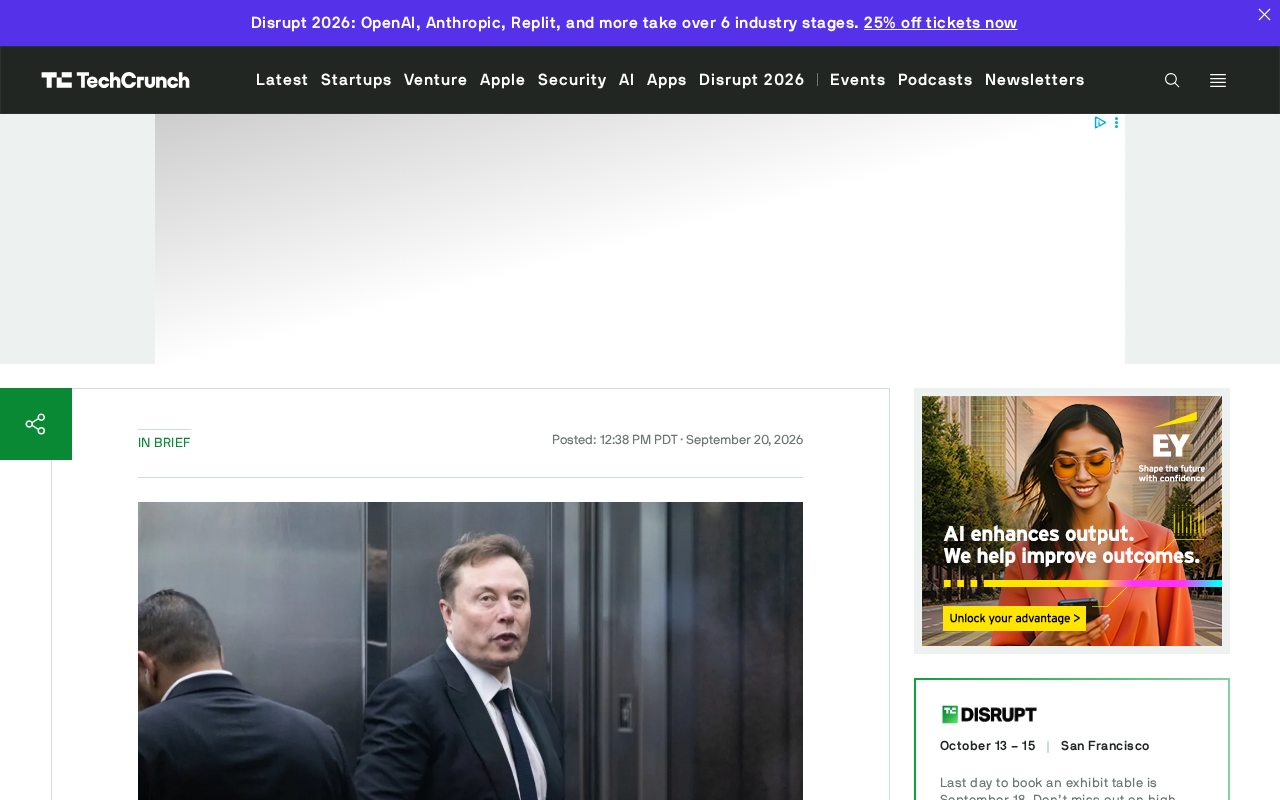
Elon Musk's The Boring Company has once again unveiled an ambitious transportation plan — a Hyperloop line connecting Austin and San Antonio in Texas. The proposal is consistent with Musk's long-standing obsession with futuristic transit, aiming to redefine intercity travel through high-speed tunnel transportation.
Austin and San Antonio are two densely populated Texas cities at a reasonable distance from each other, making them theoretically suitable candidates for testing point-to-point high-speed transit. If Hyperloop can deliver the high-speed performance Musk has long envisioned, commute times between the two cities could be dramatically reduced — and that's the core appeal of this proposal.
A Look Back at the Hyperloop Concept
The Hyperloop concept was first popularized by Musk years ago. Its fundamental idea is to run sealed passenger pods through low-pressure tubes, reducing air resistance to achieve speeds far beyond conventional rail transit. The concept sparked a wave of global startups pouring resources into development, yet no large-scale commercial deployment has materialized to date.
The Boring Company was originally founded with a mission to dig low-cost tunnels and ease urban surface congestion. Its underground Loop system at the Las Vegas Convention Center is one of the few projects actually up and running. Incorporating a more radical high-speed solution like Hyperloop for intercity connections would represent a far greater test of the company's technical capabilities and engineering execution.
Musk first published the Hyperloop Alpha white paper in 2013, proposing passenger pods placed in near-vacuum sealed tubes, propelled by linear induction motors and air bearings, with a theoretical top speed of 1,200 km/h — far exceeding conventional high-speed rail at roughly 350 km/h. After the white paper's release, Musk invited outside participation by open-sourcing the concept, giving rise to companies like Virgin Hyperloop One and Hyperloop Transportation Technologies. However, Virgin Hyperloop One shut down in late 2023, and most of its peers have struggled with funding shortfalls and engineering bottlenecks. Globally, only test tracks spanning a few hundred meters to a few kilometers have been built — nowhere near the scale needed for commercial intercity service. Long-term maintenance of low-pressure environments, emergency evacuation safety mechanisms, and sealing integrity over ultra-long tube sections remain key unresolved engineering challenges.
A Realistic Assessment of Feasibility
It's worth noting that many projects previously announced by The Boring Company never progressed to actual implementation. From early multi-city tunnel plans to various ambitious connectivity proposals, the rate of real-world follow-through has been quite limited. This track record warrants a measured outlook on the Austin-to-San Antonio Hyperloop proposal.
Mega-infrastructure projects of this nature face challenges on multiple fronts: technical readiness, enormous capital requirements, complex land acquisition and regulatory approval processes, and prolonged construction timelines — any one of which can cause a project to stall or collapse entirely. Musk's timelines have historically leaned optimistic, so there is still a long road between this proposal and actual groundbreaking, let alone operations.
The Loop system The Boring Company built in Las Vegas operates quite differently from the original vision — rather than autonomous pods, the tunnels carry ordinary Tesla vehicles at speeds of only around 80 km/h, a far cry from the "hyperloop" concept. Previously announced but unexecuted projects include a Los Angeles-to-San Francisco tunnel, a Chicago O'Hare airport express, and the "East Coast Loop" connecting Washington D.C. to New York. U.S. infrastructure projects also commonly face lengthy National Environmental Policy Act (NEPA) review processes, with major interstate projects often requiring years of approvals — further narrowing the window for any optimistic timeline.
Takeaway
The proposed Hyperloop route between Austin and San Antonio reflects Musk's continued enthusiasm for breakthrough transportation and fits The Boring Company's characteristically bold style. But given the company's track record on project delivery, this vision currently looks more like an aspirational statement than an imminent engineering reality. Whether it can move from proposal to execution remains a question that only time and tangible progress can answer.
Related articles

When Did Paid Childcare Become the Norm? Working Mothers and the Evolution of Childcare
When did paid childcare become the norm? This article traces the evolution from the rise of childcare centers in the 1970s–80s and the 1990s linking of federal subsidies to work requirements, to declining stigma and rising costs, and explores advocates' 25-year effort to catch up with other countries on childcare and paid parental leave.

Red Flags for Product-Market Fit: A Practical Guide from Top VCs and the Superhuman Founder
Investors from Iconiq and Sapphire Ventures and Superhuman founder Rahul Vohra share PMF red flags and practical methods, including the 40% disappointment rule, retention curves, and acquisition costs.

What Task Should AI Agents Take Over Most? Heated Reddit Discussion
Reddit discussion: Which task do you most want AI agents to take over completely? Cross-app data migration, CRM updates, and report generation top the list, but insufficient reliability and the trust gap are the biggest obstacles to automation adoption.