Musk's Grokipedia Resumes Updates: The Controversy and Promise of AI-Generated Encyclopedias

Musk's AI encyclopedia Grokipedia restarts after months of inactivity, but questions over quality and sustainability remain.
Grokipedia, the AI-driven encyclopedia launched by Elon Musk's xAI, has resumed updating entries after months of near-total inactivity. Positioned as an AI-powered alternative to Wikipedia and built on the Grok large language model, it embodies Musk's vision of a more neutral knowledge base. However, the restart has yielded only scattered minor edits rather than systematic progress. The platform faces three core criticisms: LLM hallucinations threaten content reliability; a single-company-controlled model may be no more objective than crowdsourced editing; and its ability to sustain consistent updates remains unproven. Grokipedia's rocky trajectory highlights the wide gap between the ideal and reality of AI-driven knowledge production.
Grokipedia Ends Months of Stagnation, Resumes Updates
Grokipedia, the AI-powered online encyclopedia launched by Elon Musk's xAI, appears to have resumed updating its entries after months of inactivity. As previously reported by Lawfare, articles on Grokipedia had not received any reviewed edits since April, leaving the platform in a near-frozen state for an extended period. Now, the platform's live update page has begun showing recent changes across various entries, signaling that the project is active once again.
That said, many of the observed "updates" remain fairly superficial — some changes amount to little more than scattered minor edits, falling well short of systematic, large-scale content iteration. This has left observers questioning Grokipedia's true operational capacity and long-term roadmap.
What Is Grokipedia? An AI-Powered Challenge to Wikipedia
Grokipedia is positioned as an AI-generated and AI-maintained online encyclopedia — essentially a direct challenge to Wikipedia, the long-established collaboratively edited reference. Unlike Wikipedia, which relies on millions of volunteer editors around the world, Grokipedia aims to use xAI's Grok model to automatically generate, organize, and update knowledge entries.
Musk has long been critical of Wikipedia, arguing that its content is biased. He has repeatedly expressed a desire to build a "more neutral" knowledge base using AI. Grokipedia is the embodiment of that vision. It represents a new paradigm for knowledge production: replacing human crowdsourcing with large language models to automate the accumulation and updating of knowledge.
The Gap Between Vision and Reality
Yet the concept of an AI-generated encyclopedia faces significant real-world challenges. The months-long update freeze itself demonstrates that maintaining an AI-driven platform covering an enormous breadth of topics is far more difficult than anticipated. Accuracy, timeliness, and how to handle controversial topics with neutrality are all unavoidable technical and ethical hurdles.
While the resumption of updates is an encouraging sign, the reality that "many updates are only minor scattered edits" suggests Grokipedia still has a long way to go before becoming a truly reliable and comprehensive knowledge source.
Wikipedia, founded in 2001, has built the world's largest free knowledge base on three core principles — verifiability, neutral point of view, and no original research — backed by millions of volunteer editors globally. The strength of its collaborative model lies in using community consensus to prevent any single viewpoint from dominating, while edit histories and talk pages enable public accountability. However, the model has its limitations: article depth depends on volunteers' areas of interest, timely updates rely on human effort, and the platform has long faced criticism for lacking diversity among its editors. It is against this backdrop that Grokipedia's emergence is seen as a direct challenge to the traditional crowdsourcing model — even as its approach of replacing human effort with AI introduces an entirely different set of bias and reliability risks.
The Core Criticisms Facing AI Encyclopedias
Skepticism surrounding AI-generated encyclopedias like Grokipedia centers on several key concerns.
Content credibility: Large language models are prone to "hallucination" — generating information that sounds plausible but is factually incorrect. How an AI encyclopedia without human review ensures factual accuracy is the most fundamental challenge it faces.
The neutrality paradox: Musk criticizes Wikipedia for bias, but can an encyclopedia dominated by a single company and generated by a specific model truly be more objective? AI models inherit biases from their training data and may even introduce new ones.
Sustainability of updates: The recent restart after months of stagnation exposes the platform's operational instability. A knowledge base that cannot maintain a consistent, steady update cadence will see its practical value significantly diminished.
Hallucination refers to the phenomenon where large language models generate text with high confidence that contains facts which are entirely fabricated or incorrect — such as inventing names, citing nonexistent sources, or making up details about historical events. This stems from the fundamental mechanism of LLMs: they predict the "next most likely word" rather than truly "understanding" or "verifying" knowledge. While hallucinations may be tolerable in casual conversation, they are a fatal flaw for an encyclopedia whose core value proposition is accuracy. Proposed mitigations in both academia and industry include Retrieval-Augmented Generation (RAG — having the model retrieve from an external knowledge base in real time) and introducing human fact-checking, but neither has eliminated the risk entirely. This is precisely why the credibility of purely AI-driven encyclopedias remains a persistent concern.
What This Means for Knowledge Production
Grokipedia's experiment reflects the profound transformation that knowledge production is undergoing in the AI era. Whether the traditional crowdsourced model (Wikipedia) or the AI auto-generation model (Grokipedia) is better suited to an age of information overload remains an open question.
In the long run, the two approaches need not be mutually exclusive. AI can serve as an assistive tool, helping human editors produce and verify content more efficiently, while human review remains an indispensable layer for ensuring the quality of AI-generated content. Grokipedia's turbulent progress may well be a microcosm of this broader exploration.
For everyday users, until AI encyclopedias mature, maintaining critical thinking and cross-referencing multiple sources remains the wisest approach when engaging with these emerging knowledge platforms.
Conclusion
Grokipedia's resumption of updates signals xAI's continued investment in the AI encyclopedia space, but the scattered nature of current updates suggests the project is still in an early, exploratory phase. Whether it can truly fulfill the ambitious vision of "reimagining knowledge bases with AI" will require time and far more substantive progress to determine. This challenge to Wikipedia has only just begun.
Related articles

WorkBuddy Step-by-Step Tutorial: Get an Automated Workflow Running in Half an Hour
A step-by-step breakdown of the WorkBuddy automated workflow: why most people only use it as a chat app, how the 27-anchor course and 12 templates help beginners get up and running in half an hour, plus notes on usage boundaries.

The Truth About Free Claude Code: Three Legitimate Paths and One Scam
Is free Claude Code possible? We break down the real cost of Pro and Max (with exchange rates and taxes), how community free methods work and their privacy trade-offs, plus fake installers and phishing traps—and three legitimate free paths.
Codex Cloud Mode Explained: Environment Setup and Use Cases
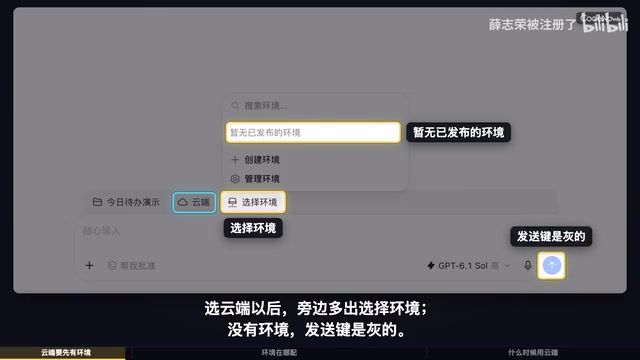
This article explains how Codex cloud mode works, environment setup steps, and use cases, including how to create environments, connect GitHub repositories, set scheduled tasks, and compare cloud vs. local mode.