Musk Settles Million-Dollar Voter Sweepstakes Lawsuits, Legal Dispute Comes to a Close

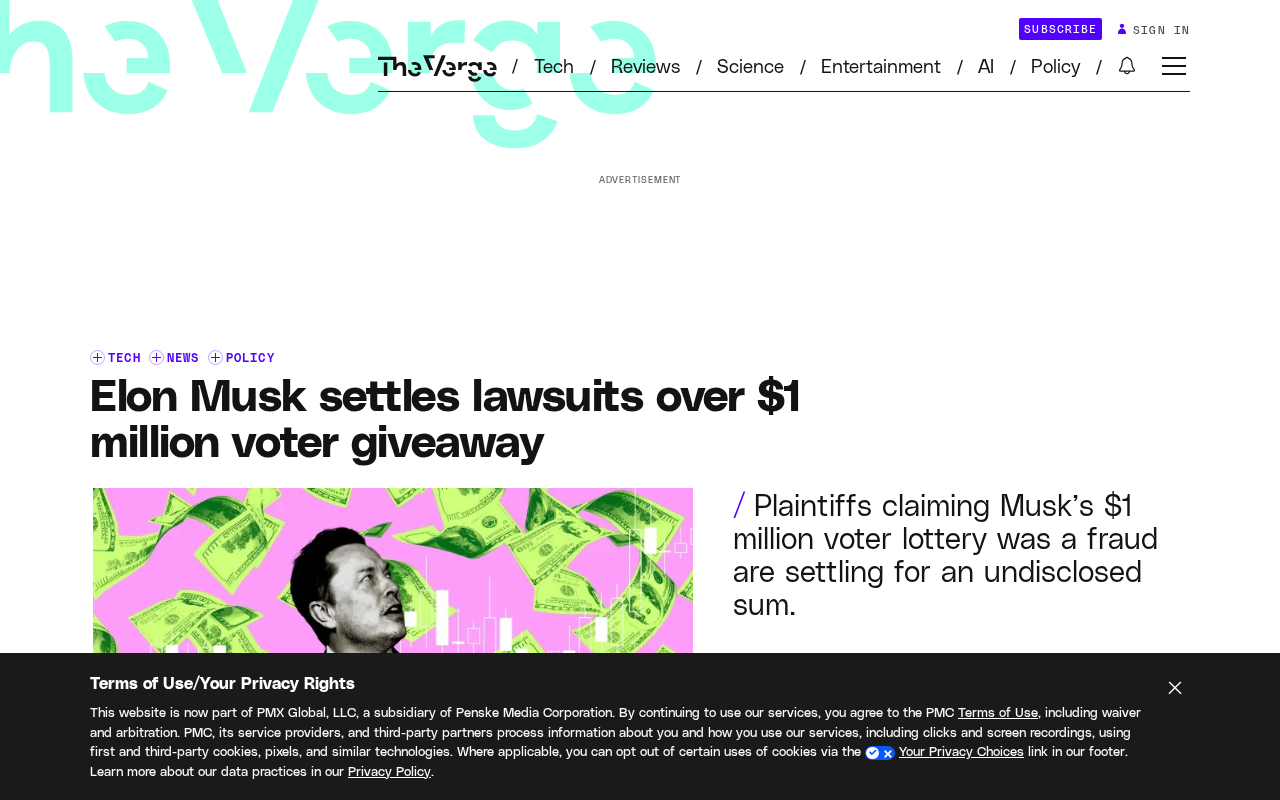
Musk agreed to settle two fraud lawsuits filed by Arizona residents over his $1 million swing-state voter sweepstakes.
Musk had promised through his PAC to give $1 million daily to a randomly selected registered voter in swing states to encourage voter registration, but the campaign quickly drew legal scrutiny and fraud allegations. Two Arizona residents sued, claiming the sweepstakes was a scam. Musk has now agreed to settle both lawsuits, with terms undisclosed. The settlement avoids a judicial ruling on whether the sweepstakes violated federal vote-buying prohibitions or whether the process was truly random. Analysts say the resolution may prompt stricter legal review of similar political campaigns, though the debate over money in elections will continue.
Elon Musk once promised to give away $1 million each day to a randomly selected registered voter in swing states—a campaign that sparked legal challenges and fraud allegations. Now, Musk has agreed to settle two lawsuits filed by Arizona residents, bringing this controversial sweepstakes to a close.
Background: The Origins of the Million-Dollar Sweepstakes
In 2024, Musk launched a sweepstakes through his political action committee, promising to give $1 million each day to a randomly selected registered voter in a swing state. The initiative was intended to encourage voter registration but quickly drew legal scrutiny. Critics questioned whether it violated federal election law, arguing it amounted to a veiled form of vote buying.
According to the original report, the campaign "prompted legal challenges, raised questions about its legality, and drew lawsuits from two Arizona residents claiming the sweepstakes was a scam."
Swing States are a key concept in U.S. electoral politics, referring to states where support for the two parties is close and the election outcome is uncertain. Because the U.S. presidential election uses the Electoral College system, and with the exception of Maine and Nebraska, the vast majority of states apply a "winner-take-all" rule—a candidate who wins the majority of the popular vote in a state receives all of that state's electoral votes. As a result, a small shift in votes in a swing state can change the entire election outcome, making these states the core battleground for campaign resources and mobilization. In the 2024 election, states such as Arizona, Georgia, Michigan, Nevada, North Carolina, Pennsylvania, and Wisconsin were widely regarded as swing states. By limiting the sweepstakes to "registered voters in swing states," Musk's campaign targeted precisely these high-leverage districts, using financial incentives to boost registration rates—which amplified both its political intent and its controversial nature.
Lawsuit and Settlement Details
The two lawsuits were filed by Arizona residents who claimed the sweepstakes involved fraudulent conduct. Although the specific settlement terms were not made public, Musk's agreement to settle indicates his desire to avoid a prolonged legal battle. The exact settlement amount and conditions have not been disclosed, but this development marks a temporary close to the legal disputes surrounding the sweepstakes.
Political Action Committees (PACs) are an important tool in the U.S. political finance system, referring to independent organizations that raise and spend money to support or oppose candidates and ballot measures. Under federal law, traditional PACs are subject to strict limits on direct contributions to candidates, but "Super PACs" can raise and spend unlimited amounts following the 2010 Citizens United v. FEC ruling, provided they do not coordinate directly with candidate campaigns. Musk's launch of the sweepstakes through his political action committee exploited precisely this institutional space. However, Super PAC spending must still comply with disclosure rules and may not be used directly for prohibited activities such as "vote buying," which is one of the contexts in which the campaign faced legal scrutiny.
Legal and Ethical Controversy
The sweepstakes was controversial from the start. Legal experts pointed out that offering financial rewards to registered voters could violate federal law provisions prohibiting bribery of voters. Musk's side, however, insisted the campaign was legal and aimed at increasing voter participation.
The Arizona residents' lawsuits focused on fraud allegations, claiming the sweepstakes process was not truly random or that participants were misled. The settlement avoided a substantive court examination of these claims, so the relevant legal questions have not received a clear judicial ruling.
The "vote buying" prohibition in U.S. federal election law is mainly found in Title 52, Sections 10307 (formerly Title 42, Section 1973i) and 30121 of the U.S. Code. These provisions prohibit any person from directly or indirectly offering money, gifts, or anything of value to induce someone to vote or refrain from voting, or to reward their voting behavior. The focus of the legal dispute is whether the sweepstakes' targeting of "registered voters" rather than "voters," and its stated aim of encouraging registration rather than directing votes, constitutes "consideration in exchange for electoral behavior"—leaving room for interpretation. In addition, federal law prohibits candidates and their agents from making payments to voters in elections. Because this case ended in settlement, the court did not issue a substantive ruling on whether the sweepstakes violated these provisions, and the relevant legal boundaries remain unclear.
Impact on Musk and Future Election Activities
The settlement is a legal wrap-up for Musk, but its impact on his political activities remains to be seen. Analysts believe the settlement may encourage other similar campaigns to adopt more cautious legal review, while also reminding tech giants to be mindful of legal boundaries when participating in political activities.
With the settlement agreement reached, public discussion of the sweepstakes' legality may gradually subside, but the debate over the role of money in elections will continue.
Related articles

WorkBuddy Step-by-Step Tutorial: Get an Automated Workflow Running in Half an Hour
A step-by-step breakdown of the WorkBuddy automated workflow: why most people only use it as a chat app, how the 27-anchor course and 12 templates help beginners get up and running in half an hour, plus notes on usage boundaries.

The Truth About Free Claude Code: Three Legitimate Paths and One Scam
Is free Claude Code possible? We break down the real cost of Pro and Max (with exchange rates and taxes), how community free methods work and their privacy trade-offs, plus fake installers and phishing traps—and three legitimate free paths.
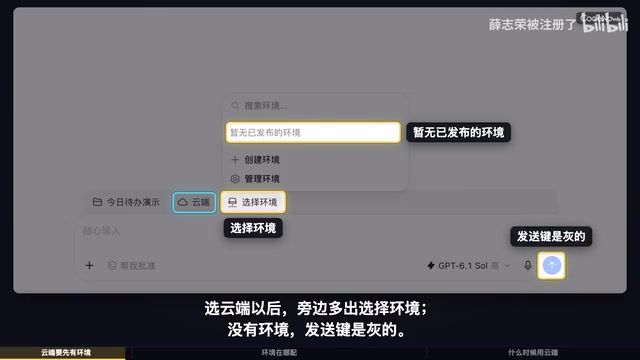
Codex Cloud Mode Explained: Environment Setup and Use Cases
This article explains how Codex cloud mode works, environment setup steps, and use cases, including how to create environments, connect GitHub repositories, set scheduled tasks, and compare cloud vs. local mode.