myPip: Building Monetizable Games with AI Vibe Coding

myPip generates playable games from natural language and integrates in-app purchases, ads, and multiplayer features, aiming to connect creation to monetization end to end.
myPip is a notable AI game creation tool on Product Hunt, touting "vibe code, publish, and monetize games." Users simply describe a game idea in natural language and AI generates a playable game in the browser—no coding required. The platform also supports multiplayer experiences, in-app purchases, and ad integration, and emphasizes bringing games beyond the browser to reach more players, positioning itself as a one-stop platform for creation, publishing, and monetization. The article argues that it lowers the barrier to game creation and suits idea enthusiasts, indie developers, and educational settings, but AI-generated games still face challenges in gameplay depth, performance, network synchronization, and content compliance. Moreover, its technical details and actual quality haven't been disclosed, warranting cautious optimism.
myPip: Building Monetizable Games with AI Vibe Coding
On Product Hunt, a product called myPip drew attention with 142 votes and a second-place ranking. Its tagline is "Vibe code, publish, and monetize games with AI"—use AI vibe coding to create, publish, and monetize games. That sounds like compressing the entire game development pipeline into a single sentence, but myPip is trying to prove it's not impossible.
From Idea to Playable Game, Just Describe It in One Sentence
The core logic of myPip is straightforward: you describe the game you want to build, and AI brings it to life directly in the browser—no coding required. This falls squarely into the category of "vibe coding"—developers no longer agonize over syntax and frameworks, but instead express intent in natural language and let AI generate a playable game.
According to the Product Hunt page, myPip supports creating multiplayer gaming experiences and can add in-app purchases and ads. This means it's not just a prototyping tool but an attempt to cover the entire chain from idea to monetization. For game enthusiasts without a programming background, this lowers the barrier to entry; for experienced developers, it could be a sandbox for quickly validating ideas.
One detail worth noting: myPip emphasizes "taking games beyond the browser" to reach more players. This hints that it may support exporting or publishing to other platforms, though the specific mechanisms haven't been detailed.
The term "vibe coding" was coined by AI researcher Andrej Karpathy in early 2025, referring to a collaborative approach where developers no longer write code line by line but instead describe intent in natural language, with large language models generating and iterating on the code. Its core feature is a rapid loop of "describe—generate—run—feedback," with humans playing more the role of intent expressers and result validators. This model relies on large models with code generation capabilities and an environment that can execute code instantly, lowering the syntax barrier to programming but also introducing new problems around code maintainability, security, and reproducibility of results. myPip migrates this paradigm from general software development to game development, meaning what's generated isn't just scripts but also game loops, interaction logic, and asset organization.
Monetization and Publishing: A One-Stop Game Creation Platform
myPip isn't positioned as a mere game generator but as a one-stop platform for creation, publishing, and monetization. The integration of in-app purchases and ads is key to monetization, while multiplayer features add a social dimension that could boost user retention.
In terms of product categories, myPip is listed under Developer Tools, Games, and Vibe coding, indicating it targets both the developer tools market and the game creation space. The makers include [REDACTED] and Tanis Lash, though their specific backgrounds haven't been disclosed.
However, publicly available information is currently limited—we can't know myPip's specific technical implementation, AI models, pricing strategy, or the actual quality of the games it generates. There are only 3 comments on Product Hunt, and in-depth feedback is lacking. Therefore, a cautiously optimistic stance is warranted regarding myPip's actual performance.
In-app purchases and ads are the two most common monetization methods for web and mobile games. In-app purchases refer to players buying virtual items, levels, or value-added services within the game, typically relying on payment and order management interfaces provided by the platform; ads generate revenue by embedding banners, interstitials, or rewarded videos into game scenes, with rewarded videos being well-received by players because they offer "watch an ad, get a reward." For AI-generated games, the challenge of monetization integration lies in: the generation logic needs to reserve interfaces for products and ad slots, revenue settlement and platform revenue-sharing rules need to be clarified, and compliance requirements such as minor protection and ad content review must also be addressed. Whether these mechanisms are uniformly hosted by the platform directly determines the actual monetization barrier for creators.
The Opportunities and Challenges of Vibe Coding
Vibe coding is a recently emerging concept that emphasizes natural language-driven development, reducing manual coding. myPip applies this philosophy to game development, attempting to make "everyone a game creator" a reality.
The opportunities lie in: Game development typically involves complex engines, art, sound effects, and other components. myPip simplifies the process through AI, potentially attracting a large number of non-professional creators. At the same time, the integration of in-app purchases and ads lowers the monetization barrier, allowing creators to focus more on creativity.
The challenges are also significant: AI-generated games may struggle to meet commercial standards in gameplay depth, balance, and performance; multiplayer games require mature technical support for network synchronization and anti-cheating; and how the platform ensures the quality and compliance of generated content is also an unknown.
Network synchronization for multiplayer games typically uses one of two architectures: state synchronization or lockstep. The former has the server maintain authoritative state and broadcast it to clients, while the latter transmits only input commands and relies on deterministic computation on each client. Either way, latency compensation, reconnection after disconnection, and consistency verification must be handled. Anti-cheating relies on server-authoritative judgment, input frequency detection, and anomalous behavior analysis to prevent client-side tampering with results. For AI-generated games, these capabilities often need to be provided uniformly by the platform at the infrastructure level—otherwise individual creators would find them difficult to implement on their own. Additionally, quality and compliance review of generated content (such as violence, gambling elements, and copyrighted assets) is a governance issue that platform-based tools must face, typically addressed through a tiered mechanism of automated filtering plus manual spot checks.
Who Is myPip Suitable For?
Based on available information, myPip may be suitable for the following groups:
- Game idea enthusiasts: People with ideas but lacking programming skills who want to quickly turn their concepts into playable prototypes.
- Indie developers: Those who need to quickly validate game concepts or create small-scale games for monetization testing.
- Educational settings: For teaching or workshops, allowing students to understand game logic through natural language.
But if you're looking for high-quality games with complex mechanics, myPip may not yet be able to deliver.
Conclusion
myPip represents one direction for AI game creation tools: lowering barriers, integrating monetization, and covering the entire process. Its philosophy is worth watching, but its actual effectiveness remains to be tested by the market. For those interested in trying AI game development, myPip is an option worth keeping an eye on.
(Note: This article is based on publicly available information from Product Hunt and does not include undisclosed technical details.)
Related articles

Ten Must-Know Agent Loop Interview Questions: Breaking Down Bilibili's Most Detailed Loop Engineering Tutorial
Breakdown of Bilibili's Agent Loop interview tutorial: the four dimensions—lifecycle, tools, memory, deliverables—that distinguish Agent Loop from a single API call, plus interview answer templates.
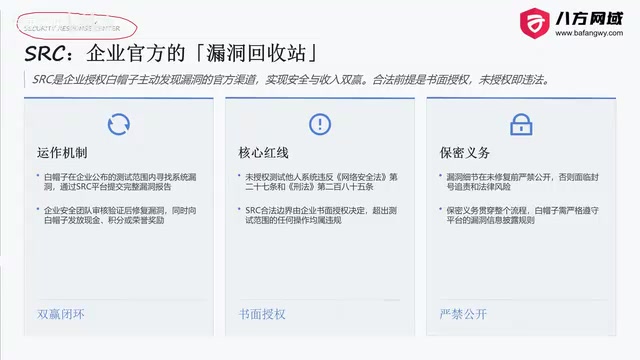
Beginner's Guide: Legal Boundaries and Practical Introduction to SRC Vulnerability Hunting
A must-read for SRC beginners: how SRCs work as corporate vulnerability drop boxes, the legal boundaries of written authorization and confidentiality, mainstream Chinese SRC platforms and the Butian submission process, plus high-frequency vulnerability lab practice paths and pitfall guides.

Big Tech AI Engineering Interview: Full-Chain Observability from Frontend Monitoring to Agents
From PerformanceObserver metrics collection and onerror/unhandledrejection exception capture, to RAG pipeline reranking and context compression for token cost control, to designing a full-site AI full-chain observability system benchmarked against LangSmith and Sentry—breaking down the three progressive layers of big tech AI engineering interviews.