n8n AI Agent Basics: What Are Tokens and Why They Determine Your Costs
Understand how Tokens work in n8n AI workflows and why output scale — not prompt length — drives your API costs.
This article uses n8n AI workflow building as a backdrop to explain the core concept of Tokens and their real-world impact. Tokens are the smallest unit AI models use to process text, and both input and output count toward consumption — even a simple greeting can cost around 26 Tokens. The key insight is that Token usage is driven not by prompt length but by the output scale demanded: a short prompt like "write a hundred-page novel" triggers massive output Token costs. Higher Token usage leads to four consequences: higher API fees, slower response times, richer contextual quality, and the risk of hitting the model's context window limit. The article concludes with practical tips on writing concise prompts, controlling output scope, using context wisely, and planning Token budgets.
When building AI automation workflows in n8n, many people overlook a deceptively simple concept that directly affects cost — Tokens. Whether you're a developer just getting started with AI Agents or an engineer deploying automation solutions for an enterprise, understanding how Tokens work is foundational to managing your budget and optimizing performance.
What Is a Token
A Token is the smallest unit an AI model uses to process text. When you send a prompt to a model, ask it a question, or run an AI Agent node in n8n, the model first breaks the text down into individual Tokens before processing it. Think of Tokens as the AI model's "unit of reading and writing" — the more information you send, the more Tokens are typically consumed.
The key point: Tokens include both what you input and what the model outputs. In other words, every character in both the input and the output of a complete interaction counts toward your Token usage.
Tokenization efficiency varies significantly across languages. English words typically map to 1–2 Tokens each, while Chinese characters — due to a larger character set — often consume 2–3 Tokens per character. This means a Chinese prompt with the same semantic content generally uses more Tokens than its English equivalent. Major model providers like OpenAI use the BPE (Byte Pair Encoding) tokenization algorithm, which merges frequently occurring character combinations into single Tokens. As a result, technical jargon, rare words, or misspelled words tend to get split into more Token fragments. You can use the official OpenAI Tokenizer tool at platform.openai.com/tokenizer to visualize how any text gets tokenized — extremely handy for estimating API call costs.
A Real-World Example
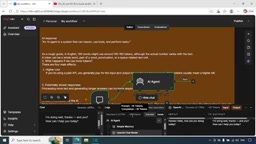
In the video, the author connects a chat trigger to an AI Agent node in n8n and enters a very simple prompt: "Hello, how are you doing today?"
After successful execution, the workflow shows a total of 26 Tokens consumed. The input prompt accounts for roughly 10 Tokens, while the full interaction including the model's reply totals more. The fact that a simple greeting produces this much consumption shows that Tokens accumulate faster than most people expect.
This reveals an easily overlooked truth: even the most minimal conversation is continuously incurring charges behind the scenes. In production environments that call models at high frequency, these seemingly tiny costs can scale up rapidly.
Context Matters More Than Word Count
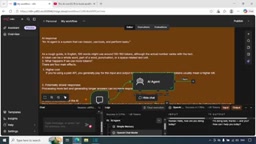
The author then offers an illuminating comparison. He enters another prompt: "Can you generate a 100-page fiction book?"
On the surface, this prompt is only seven or eight words — not much longer than the greeting. But what truly determines Token consumption isn't the length of the prompt itself; it's the scale of output it demands. Asking the model to generate a hundred-page novel means the output side will produce a massive number of Tokens.
This example highlights a core principle: the quality of your input directly determines the Token cost of the output. A well-crafted input can yield a precise answer with very few Tokens, while requests like "analyze a 100-page document" or "write a book" — however brief in wording — will trigger enormous Token expenditure.
Four Major Impacts of Higher Token Usage
The author summarizes four main consequences that come with increased Token consumption:
1. Higher Costs
If you're using a paid API, charges are typically calculated based on both input and output Tokens combined. The more Tokens a model processes, the higher your bill. In large enterprise environments — finance, insurance, and similar industries — employees are often required to report how many prompts they've submitted and how many Tokens were consumed, because every API call generates real expenses.
2. Slower Response Times
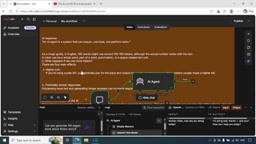
Processing more text and generating longer answers increases response time. If you ask the model to "write a hundred-page book," it naturally takes longer to progressively produce that output, and your entire workflow slows down accordingly.
3. Richer Context for the AI
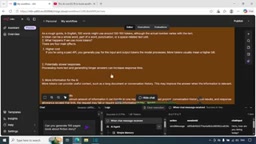
Higher Token usage isn't always a bad thing. When you provide relevant information — such as long documents or conversation history — more Tokens give the model useful context that can improve the quality of its responses. The key is that the information must be genuinely relevant, not just padding.
4. Context Window Limitations
Every model has a maximum amount of information it can process in a single request. When the combined total of the prompt, conversation history, tool call results, and response exceeds this limit, the request may fail outright, or the system may automatically truncate some of the content. This means that when you feed in too much, the model may actually "cut off" part of your prompt in order to return a result more quickly.
How to Use Tokens Efficiently
Once you understand these impacts, the optimization strategy becomes clear:
- Keep prompts concise. If you can express a requirement in one or two sentences, don't write a long paragraph.
- Control output scope. Explicitly tell the model you want a brief answer to avoid unnecessary verbosity.
- Use relevant context wisely. Provide the background information the model truly needs, but avoid stuffing in irrelevant content.
- Mind the context window. When working with long documents or multi-turn conversations, plan your Token budget in advance to prevent requests from being truncated or failing.
Whether you're an Agent engineer, a prompt engineer, or a machine learning engineer, once you start working with LLMs or AI Agents, you should always keep the Token concept in mind. Learning to structure prompts more efficiently — getting the model to deliver precise answers in fewer words — saves money and improves the overall performance of your workflows.
Background: Context Windows Explained
The context window refers to the maximum total number of Tokens a model can "see" and process in a single request, covering both input and output. The limits vary dramatically across models: GPT-3.5-turbo has a context window of approximately 16K Tokens, GPT-4o supports 128K Tokens, and the Claude 3 series can handle up to 200K Tokens. In n8n multi-turn conversations or AI Agent scenarios, each round of conversation history gets appended to the input of the next request, so cumulative Tokens can quickly approach the window limit as the conversation grows. Once the limit is exceeded, two common strategies apply: rolling truncation (discarding the earliest conversation records) or summary compression (replacing the full history with a brief summary). n8n's Memory node provides relevant configuration options — setting the window size and memory strategy appropriately can effectively prevent request failures.
Related articles

Meta vs. Publishers: The AI Data Battle Over Terms of Service Changes and the Future of the Internet
Meta changed its business account terms to allow AI training on linked website data, sparking backlash from publishers and creators. Industry groups demanded negotiations, forcing Meta to remove 'training' wording and delay the effective date. The dispute reveals the deeper battle over data authorization and the future of the internet in the AI era.

When Outside Xbox Meets Blood on the Clocktower: A Legion Match in Minecraft
Outside Xbox guests Ellen and Mike play Minecraft Blood on the Clocktower in a Legion game. How can three good players fight an evil majority amid information noise? This article breaks down Legion mechanics, information-role mind games, and the endgame reversal.

Kimi K3.1 Hands-On Test: Open-Source Model Nears Opus, Video Generation Steals the Show
Kimi K3.1 completed motion graphics, 3D rendering, mini-games, and video generation in a live test. Analysis of its 2.8T MoE architecture, gap vs Opus/GPT, and hidden video generation.