N8N AI Agent Monetization Guide: Three Packaging and Sales Models
Three paths to monetizing N8N agents: custom services, template sales, and productized fixed packages.
Starting from the perspective of "the agent is already built—how do I sell it next," the article uses two agent cases—lead research and content repurposing—to break down three monetization paths for N8N workflows. Model 1 is done-for-you custom services: low barrier to entry and fast cash flow, but hard to scale, making it suitable as a starting point. Model 2 is template sales: develop once, sell many times, with near-zero marginal cost, but requiring ready-to-use templates and complete documentation. Model 3 sits between the two, using fixed-price, scope-locked delivery packages to achieve standardization. The author also provides a pre-sale packaging checklist: a demo recording, a feature description, and installation instructions, addressing trust, fit, and onboarding. Finally, it recommends doing a few custom orders first to collect feedback, then converting them into templates or productized offers.
Turning a working N8N workflow into income is less a test of technical skill than of packaging and pricing thinking. The original video's author breaks down three mainstream monetization paths using two real-world cases—a lead research agent and a content repurposing agent.
From a Finished Agent to a Sellable Product
The author's premise is clear: the agent itself is already built, and what needs solving next is "how to sell it." This shift in perspective is crucial, because most tutorials stop at "how to build" and rarely explain what the deliverable looks like or why a customer would be willing to pay.
The two agents mentioned in the video correspond to two types of high-frequency needs: lead research addresses information gathering on the sales front end, while content repurposing addresses asset reuse for marketing teams. What these two scenarios share is high repetitiveness, time-consuming manual work, and standardizable results—exactly where automation most easily demonstrates its value.
N8N is an open-source workflow automation tool that uses node-based visual orchestration, where users build automation flows by dragging and connecting nodes. It is positioned similarly to tools like Zapier and Make, but its core differences are that it can be self-hosted, its code is open source, and its node ecosystem is extensible—which is why it is often used to build automation systems that require deep customization. In the context of N8N, the term "agent" in this article usually refers to a complete workflow that integrates LLM nodes, external API calls, conditional branches, and data processing, and can autonomously complete tasks such as lead scraping and content rewriting. Understanding this is important: an N8N workflow is essentially an exportable JSON configuration file, which makes template sales possible, but also means that after importing it, buyers still need to configure their own API keys and account credentials—this is precisely the technical reason the author emphasizes that installation instructions and documentation are indispensable.
Model 1: Done-for-you Custom Services
The most direct starting point is custom delivery. Find a client with a repetitive problem—such as needing continuous research on potential customers, breaking long content into multi-platform assets, or handling repetitive customer inquiries—and then build an agent specifically for them. The pricing structure is an upfront build fee plus an optional monthly maintenance fee.
The advantage of this model is its low barrier to entry and fast cash flow: customers pay for "solving my specific problem" rather than for an unfamiliar template. The drawbacks are also obvious: every order is custom, the time cost cannot be reused, and the ceiling for scaling is very low. The author's judgment is to treat it as a starting point rather than an endpoint—first use a few orders to validate whether the demand truly exists.
Model 2: Template Sales
Once the workflow is polished and well documented, it can be sold as a template. Channels include various marketplaces or direct sales. The reason buyers are willing to pay is simple: it saves time.
The keyword here is "ready to use out of the box." The author emphasizes that templates must be clear, come with good documentation, and actually work. The template business is essentially selling certainty; a template that requires buyers to spend half a day debugging it themselves will quickly destroy its reputation.
The advantage of the template model is that you develop once and sell many times, with marginal costs approaching zero. But it requires you to understand a scenario deeply enough; otherwise, the template will become a pile of node connections that no one can understand.
In the automation tool ecosystem, template marketplaces are a mature business model. N8N officially provides a template library, while platforms such as Gumroad and Lemon Squeezy support creators in directly selling digital products and handling payments, invoices, and download distribution. A notable feature of template-based digital products is zero marginal cost and nearly instant delivery, but they also face the problems of pirated resale and homogeneous competition. Therefore, the real moat in template sales often lies not in the file itself, but in the quality of the accompanying documentation, after-sales support, and depth of understanding of specific industry scenarios. A common pricing approach is to offer a basic version and an upgraded version with support services, using the latter to filter out customers willing to pay for certainty.
Model 3: Productized Services
The third model sits between the first two: neither fully custom nor merely selling files, but selling a fixed-scope delivery package. For example, "lead research agent setup" is sold at a fixed price, and "content repurposing system" promises delivery within one week.
This model is easier to scale than pure customization because the scope is locked down, and pricing, timeline, and delivery standards can all be clearly defined in advance. Customers know what they are buying, and you know where the boundaries are.
Packaging Checklist: Prepare Three Things Before Selling
The preparation checklist the author provides is plain but practical: a demo or screen recording of the agent actually running; a clear feature description explaining what it does and who it is for; and simple installation instructions.
These three things correspond to the three questions buyers have when making a decision: Does it really work? Is it suitable for me? How do I get started once I have it? The demo video addresses trust, the feature description addresses fit, and the installation instructions address onboarding. The author's observation is that the clearer the quote, the easier the sale—a vague offer will make potential customers give up immediately.
A Pragmatic Path Forward
The advice given at the end of the video deserves to be highlighted separately: start with the agent you are most familiar with, offer it as a service to a few people, collect feedback, and then turn it into a template or productized offer.
The author's exact words are that most people overcomplicate their first sale—"solve one clear problem for one type of customer." Behind this statement is a wariness of over-engineering: rather than building a system with broad features but no one can clearly articulate its value, it is better to perfect a narrow scenario until customers are willing to pay.
For people who have already built a few workflows in N8N, the value of this path lies in turning technical assets into business actions. The technical barrier is falling rapidly, and the real dividing line is whether you can package your capabilities into a product that customers can understand and feel confident buying.
One-line Summary
Three paths to monetizing N8N agents: custom services, template sales, and productized fixed packages.
Paragraph Summary
Starting from the perspective of "the agent is already built—how do I sell it next," the article uses two agent cases—lead research and content repurposing—to break down three monetization paths for N8N workflows. Model 1 is done-for-you custom services: low barrier to entry and fast cash flow, but time costs cannot be reused and scaling is difficult, making it suitable as a starting point. Model 2 is template sales: develop once and sell many times, with marginal costs approaching zero, but templates must be ready to use out of the box and fully documented. Model 3 sits between the two, achieving standardization through fixed-price, scope-locked delivery packages. The author also provides a pre-sale packaging checklist: a demo screen recording, a feature description, and installation instructions, addressing the three questions of trust, fit, and onboarding. Finally, the recommendation is to first do a few custom orders to collect feedback, then convert them into templates or productized offers.
Related articles
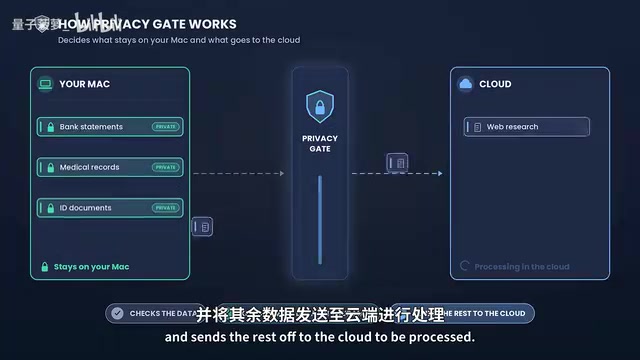
Perplexity Hybrid Compute Tested: Privacy Data Never Leaves the Mac
Perplexity Hybrid Compute tested: how PrivacyGate intercepts sensitive data, how local and cloud models divide work, model differences on 16GB vs 32GB Macs, and privacy protection in real scenarios like bank statements and medical records.

Big Fat Fish Roasts Mainstream LLMs at Home and Abroad: Doubao Takes the Crown, DeepSeek Tied for First
Bilibili creator Big Fat Fish roasts mainstream LLMs: Doubao tops for emotional value, DeepSeek ties first for open-source value, with ERNIE, Hailuo, Yuanbao, Kimi, Qwen, Kling, Claude, Gemini, and Grok each branded with a distinct persona.

How to Truly Test AI Agents Before Production? A Practical Testing and Monitoring Framework
BotGage founder Pramin Pradeep shares a three-step framework for testing AI Agents before production: Agent registration visibility, red teaming, and production observability — plus a real case cutting QA costs from $180K to $80K and an analysis of IT roles shifting to Agent supervisors.