Nanbeige4.3-33B Open-Sourced: Outperforms Qwen3.8-27B and Paves the Way for Small-Model Distillation
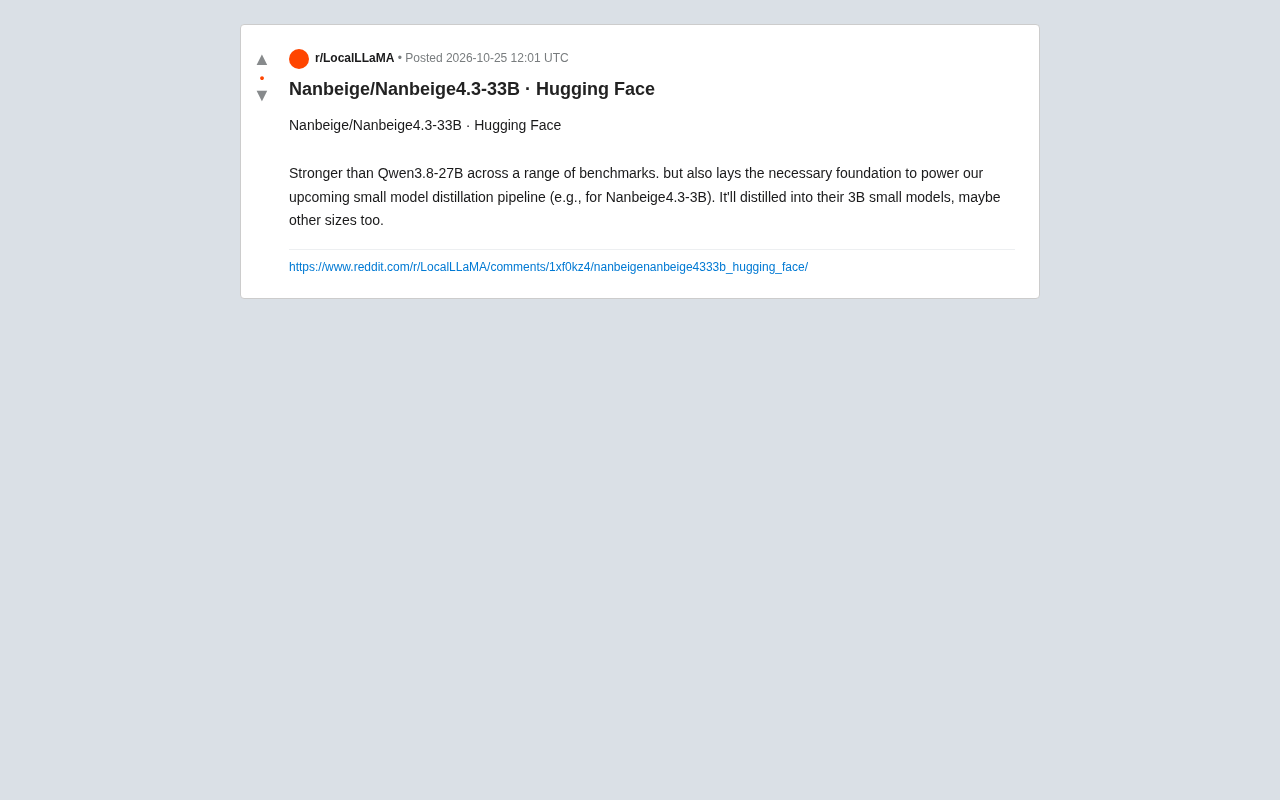
Nanbeige4.3-33B with 33B parameters outperforms Qwen3.8-27B and will serve as the distillation base for the 3B small model.
Nanbeige4.3-33B is a newly released open-source large model with 33 billion parameters. According to its Hugging Face model card, it outperforms Qwen3.8-27B across multiple benchmarks, demonstrating cross-tier competitiveness in the 30B range. Officially positioned as the foundation for a small-model distillation pipeline, it is planned to be distilled into Nanbeige4.3-3B and possibly other sizes, forming a "large model explores capability frontier, small model handles deployment" combination. For developers, this enriches 30B-tier open-source options and enables side-by-side testing against Qwen3.8-27B. However, benchmark details, distillation methods, license terms, and the 3B model's capability retention rate are not yet public; conclusions still need independent reproduction, and continued attention to Hugging Face page updates is recommended.
The open-source large model race has a new strong contender. The newly released Nanbeige4.3-33B model on Hugging Face, with its 33 billion parameters, has posted results outperforming Qwen3.8-27B across multiple benchmark suites. More notably, the team explicitly states that this model will serve as the foundation for an upcoming small-model distillation pipeline, with Nanbeige4.3-3B being the first beneficiary.
Punching Above Its Weight: How a 33B Beats a 27B
According to information from the Hugging Face model card cited by the Reddit community, Nanbeige4.3-33B outperforms Qwen3.8-27B on "a series of benchmarks." While the original text does not list individual scores item by item, the comparison itself sends a clear signal: within the 30B parameter range, the Nanbeige team has found a more efficient training recipe or architecture tuning strategy.
Larger parameter count does not automatically equal stronger performance, especially against the backdrop of the Qwen series having already built a solid reputation. The fact that Nanbeige4.3-33B can achieve this cross-tier comparison suggests targeted optimization in data mixing, training strategy, or post-training stages. For developers focused on open-source model selection, this means one more candidate worth benchmarking for reasoning capability.
Benchmarks are standardized evaluation suites for assessing large model capabilities. Common ones include MMLU (multidisciplinary knowledge), GSM8K (elementary school math reasoning), HumanEval (code generation), and C-Eval (comprehensive Chinese evaluation). Different benchmarks focus on different capability dimensions, and a single score can hardly reflect a model's overall level. Moreover, evaluation results are highly sensitive to prompt templates, the number of few-shot examples, decoding parameters (temperature, top-p), and whether chain-of-thought is used—so cross-model comparisons must ensure consistent evaluation configurations. The industry generally holds that only conclusions reproduced by independent third parties and consistent across multiple benchmarks have reference value, which is why the claim of "outperforming Qwen3.8-27B" needs more corroboration.
The Distillation Blueprint: 33B Is a Starting Point, Not the End
The official positioning of Nanbeige4.3-33B is not just as a standalone model, but as "laying the necessary foundation for the upcoming small-model distillation pipeline." According to the model card, the 33B model will be distilled into a 3B-scale small model, and may cover other parameter sizes as well.
This approach aligns with common practice in the open-source community: first use a large-parameter model to push the capability ceiling, then compress that capability into a deployable small model through distillation. Nanbeige4.3-3B thus becomes the most direct beneficiary. If the distillation pipeline lands smoothly, users could obtain a lightweight version with some of the 33B model's capabilities on consumer-grade hardware—highly attractive for edge deployment and cost-sensitive applications.
Knowledge distillation is a model compression technique: first train a large, capable "teacher model," then have a smaller "student model" learn the teacher's output distribution (not just the ground-truth labels). The student model is typically trained by minimizing the KL divergence between its output probability distribution and the teacher's, thereby retaining most of the teacher's capability at a smaller parameter scale. Common forms of distillation include logit distillation, intermediate-layer feature distillation, and the recently popular on-policy distillation (where the student generates samples and the teacher scores them). Distillation effectiveness depends on teacher quality, data coverage, temperature settings, and other factors, with capability retention typically fluctuating between 70%–90%. Therefore, "distilling 33B to 3B" represents a relatively large compression span, and actual results require empirical validation.
Practical Implications for Developers
From a selection perspective, the arrival of Nanbeige4.3-33B enriches the open-source options in the 30B tier. Developers can run side-by-side evaluations against Qwen3.8-27B on the same batch of tasks to verify whether the claimed advantages hold in their own business scenarios.
From an ecosystem perspective, a model family with a clearly planned distillation roadmap often has more long-term value than a single point release. The 33B explores the capability frontier while the 3B handles deployment—if this "large-plus-small" pairing materializes, it will reduce the migration cost for teams going from experimentation to production. Currently, official information on the specific distillation methods, data composition, and timeline remains limited, and future progress is worth tracking.
Open-source model licenses are an easily overlooked yet crucial factor in model selection. Different open-source models adopt widely varying agreements: Apache 2.0 is the most permissive, allowing commercial use, modification, and redistribution; the custom community licenses used by the Llama series typically come with user-scale thresholds and naming requirements; some models are restricted to research use only. License terms directly determine whether a model can enter commercial products, whether it can be used for distillation and redistribution, and what constraints derivative models must follow. Before incorporating Nanbeige4.3-33B into production workflows, developers should carefully verify whether its license permits commercial use and whether it imposes additional restrictions on the distilled 3B model.
What Still Needs Watching
The specific benchmark items, evaluation configurations, and comparison conditions have not yet been fully presented in public information, and the conclusion of "outperforming Qwen3.8-27B" needs more independent reproduction for corroboration. In addition, key details such as the actual capability retention rate of the 3B distilled model, license terms, and inference efficiency await further supplementation in the model card. Developers interested in this model are advised to first follow updates on the Hugging Face page before deciding whether to incorporate it into production workflows.
Related articles
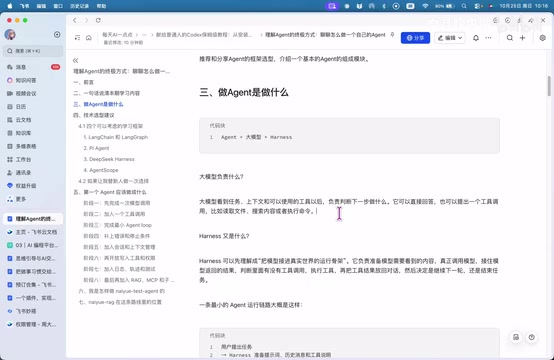
Build an Agent Yourself: The Best Path to Understanding AI Agents
Want to truly understand AI Agents? This article shows how to build a minimal Agent from scratch, breaks down the LLM/Harness division of labor, recommends learning frameworks like PiAgent and DeepSeek Harness, and outlines eight progressive stages plus the relationship between RAG and Agents.
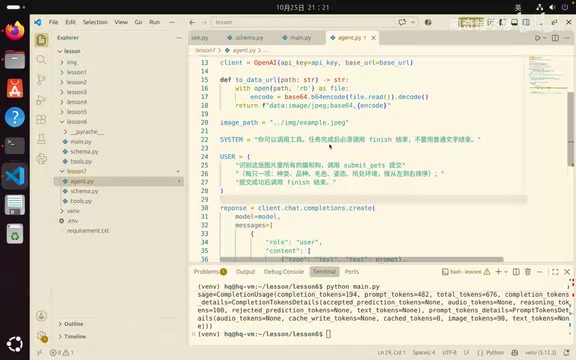
Building a Minimal Agent from Scratch: A Hands-On Guide to Writing AI Loop Invocation Code
Follow a Bilibili tutorial to build a minimal AI Agent from scratch: define tool schemas and a finish signal, design system/user prompts, implement a loop with a max step limit, parse tool call results, and fix the bug where the loop does not exit after finish.

Kimi K3.1 Pro Hands-On: Can an Open-Source Model Challenge Opus 5.5?
Kimi K3.1 Pro tested against Opus 5.5 and DeepSeek V4.1 Flash: strong benchmarks, but MOBA game dev exposes weaknesses. Speed near Opus, cost near DeepSeek—the open-source value pick.