Navier-Stokes Millennium Problem Announcement: Why the Math World Is Buzzing Again
Clay Mathematics Institute's Navier-Stokes announcement fuels speculation about a breakthrough on the $1M Millennium Prize problem.
The Clay Mathematics Institute recently issued an announcement on the Navier-Stokes equations, triggering over 220 upvotes and 150+ comments on Hacker News. The Navier-Stokes equations are foundational to fluid mechanics and one of the seven Millennium Prize Problems worth $1 million. The central question — whether 3D fluid solutions can "blow up" in finite time — is deeply tied to understanding turbulence. The article cautions that any major mathematical claim requires rigorous peer review and at least two years of community scrutiny, as the Poincaré conjecture precedent shows. The answer, either way, would have significant implications for numerical simulation and engineering.
An Announcement from the Clay Mathematics Institute
The Clay Mathematics Institute recently released an announcement regarding the Navier-Stokes equations, which quickly sparked heated discussion on Hacker News — garnering over 220 upvotes and more than 150 comments. For anyone following foundational mathematics, any official development related to this equation deserves serious attention, as it is one of the famous "Millennium Prize Problems," carrying a prize of one million dollars.
It's worth noting that the original source material is limited in detail, primarily pointing to a statement on the Clay Mathematics Institute's official website. Given this, it's more useful to approach the topic from the angle of background and significance — helping readers understand why this announcement matters.
What Are the Navier-Stokes Equations
The Navier-Stokes equations are a system of partial differential equations that describe the motion of fluids — both liquids and gases — and serve as the cornerstone of fluid mechanics. From airflow around aircraft wings and ocean currents to blood flowing through vessels, nearly every physical phenomenon involving fluid motion can be modeled using these equations.
Engineers use numerical methods to solve this system every day, for applications ranging from weather forecasting and automotive aerodynamic design to climate simulation. The equations are "effective" on a practical level, but mathematicians are concerned with a deeper question: in three-dimensional space, given smooth initial conditions, do solutions always exist and remain smooth — that is, do they avoid "blow-up" (becoming infinite) in finite time?
The Core Mystery of the Millennium Prize
When the Clay Mathematics Institute established the Millennium Prize Problems, it included "Existence and Smoothness of the Navier-Stokes Equations" as one of the seven. The essence of the problem is this: can we rigorously prove, mathematically, that solutions for a three-dimensional incompressible fluid never "go out of control"? This seemingly technical question cuts to the heart of humanity's understanding of turbulence — still regarded as one of the toughest unsolved problems in classical physics.
"Blow-up," mathematically speaking, refers to a situation where some quantity in the solution (typically the velocity field) tends toward infinity in finite time. Intuitively, this would correspond to a fluid accumulating infinite energy or vorticity at a single point — something that obviously doesn't happen in reality. But whether the mathematical solution is capable of "self-regulating" and remaining finite forever is something no one has been able to rigorously prove. Turbulence is precisely the extreme manifestation of such behavior — turbulent fluid motion exhibits chaotic, multi-scale complexity, with energy cascading from large-scale eddies down to smaller and smaller scales (known as the energy cascade), until it dissipates as heat at the smallest scales. Whether the Navier-Stokes equations can fully capture this process without producing mathematical singularities is the central tension of the problem.
Why a Single Announcement Generates So Much Buzz
Whenever the Clay Institute issues an announcement about a Millennium Prize Problem, the community instinctively wonders: has someone submitted a complete proof? Is there a major development that requires official clarification? Historically, the resolution of the Poincaré conjecture — achieved by Perelman — stands as the only one of the seven problems to have been solved, and that precedent ensures that every official statement carries inherent news value.
The high engagement on Hacker News reflects the sustained curiosity the technical community holds toward breakthroughs in foundational mathematics. Comment sections tend to attract mathematicians, engineers, and enthusiasts alike, debating the credibility of any proof, the review process, and the real-world significance of the problem.
The Rigorous Peer Review Mechanism for Mathematical Proofs
It's worth highlighting that there is a lengthy and rigorous peer review process between a mathematical result being "claimed" and being "accepted." The Clay Institute has clear rules for awarding the Millennium Prize: a proof must be published in a reputable journal and withstand at least two years of community scrutiny. This cautious mechanism exists precisely to avoid the recurring historical phenomenon of "false proofs."
There have indeed been multiple instances of "false breakthroughs" surrounding the Navier-Stokes equations. One of the most notable occurred in 2021, when a mathematician submitted a paper to the preprint server arXiv claiming to prove that three-dimensional solutions blow up — drawing widespread attention before experts quickly identified a critical flaw. The resolution of the Poincaré conjecture similarly illustrates the necessity of rigorous review: Grigori Perelman posted his proof on arXiv between 2002 and 2003, and the mathematical community spent a full three years verifying it line by line before the Clay Institute officially announced the award in 2010. This precedent sets an extremely high verification standard for any potential proof of the Navier-Stokes problem.
The Real-World Stakes of the Turbulence Problem
Even setting aside the million-dollar prize, the resolution of the Navier-Stokes problem — in either direction — would have profound implications for science and engineering. Proving that solutions always remain smooth would greatly reinforce confidence in the reliability of numerical fluid simulations. Conversely, finding a "blow-up" counterexample would mean that existing physical models may break down under extreme conditions, requiring a new theoretical framework.
In recent years, researchers have also begun exploring whether machine learning tools can assist in probing the behavior of solutions to partial differential equations. While these tools cannot replace rigorous proofs, they offer fresh perspectives for understanding complex fluid systems.
In engineering practice, existing numerical methods — such as Direct Numerical Simulation (DNS), Large Eddy Simulation (LES), and Reynolds-Averaged Navier-Stokes (RANS) approaches — all "work around" the existence and smoothness problem to varying degrees, obtaining approximate solutions through discretization. However, the reliability of these methods degrades significantly under extreme conditions at high Reynolds numbers (i.e., intensely turbulent flows), and the computational cost grows exponentially. A rigorous mathematical clarification of solution behavior could, in principle, provide stronger error estimates and convergence guarantees for these numerical methods — with practical value for fusion reactor design, hypersonic aerodynamic simulation, and fine-grained climate modeling.
Closing Thoughts: Stay Curious, Stay Rational
The most rational approach to announcements like this is to stay engaged without over-interpreting. Until the Clay Institute or a leading mathematical journal delivers a definitive conclusion, any claim that the problem has been "solved" should be treated with caution. A genuine mathematical breakthrough can withstand the test of time — and every discussion surrounding the Navier-Stokes equations is itself a valuable opportunity for the public to engage with foundational science.
Readers who are interested are encouraged to consult the original announcement on the Clay Mathematics Institute's official website directly for the most accurate first-hand information.
Related articles

QApilot MCP: Test Android Apps in Natural Language Inside Your AI Coding Assistant
QApilot MCP lets developers test Android apps in natural language inside Claude, Cursor, and Codex — no Appium code needed. Auto-generates reusable Gherkin test cases.
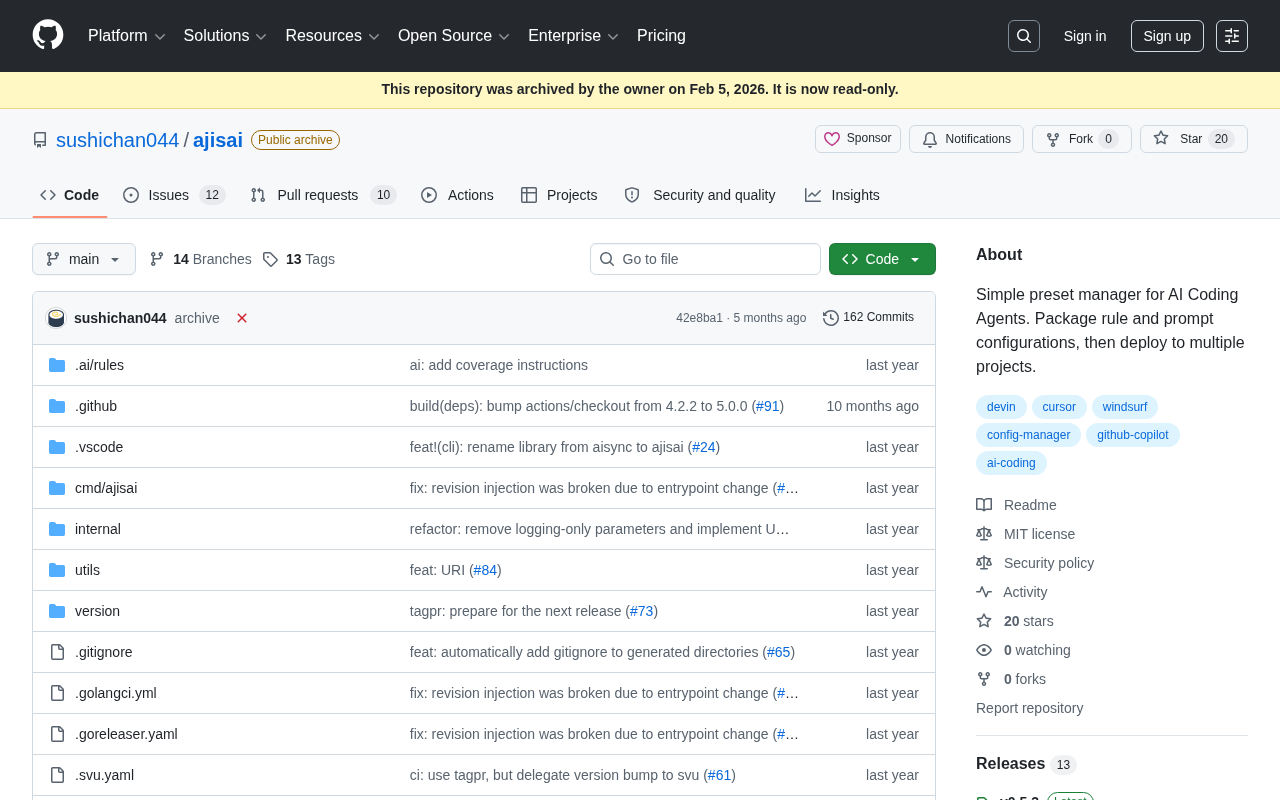
ajisai: A Preset Management Tool for Unifying Rules and Prompts Across AI Coding Assistants
ajisai is a Go-based preset manager for AI coding assistants like Cursor and Claude Code. Package rules and prompts once, deploy everywhere. Early-stage but promising.
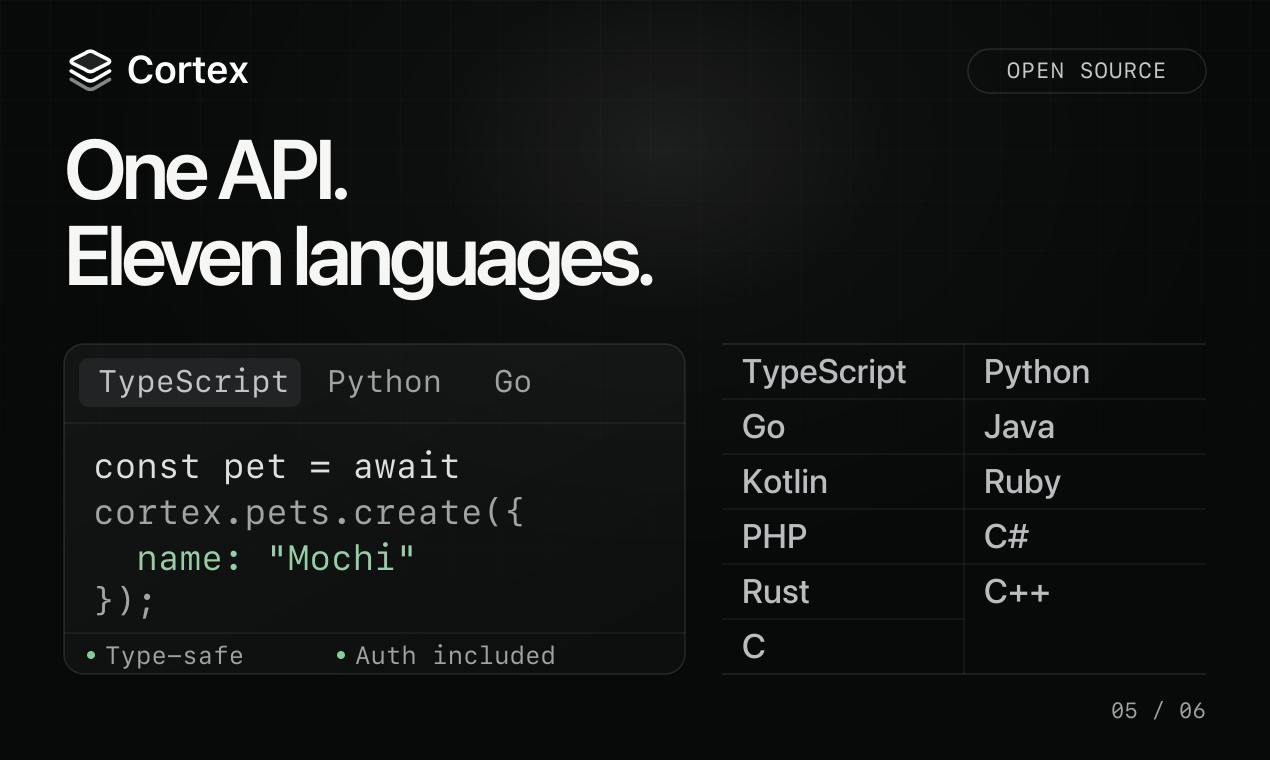
Cortex: Convert API Specs into Docs, SDKs, and MCP Servers in One Click
Cortex is an open-source tool that converts OpenAPI, GraphQL, gRPC and more into interactive docs, typed SDKs in 11 languages, and MCP servers for AI agents.