Nemotron Wins IMO Gold: A Full Breakdown of the Open-Source Math Olympiad Proof Pipeline
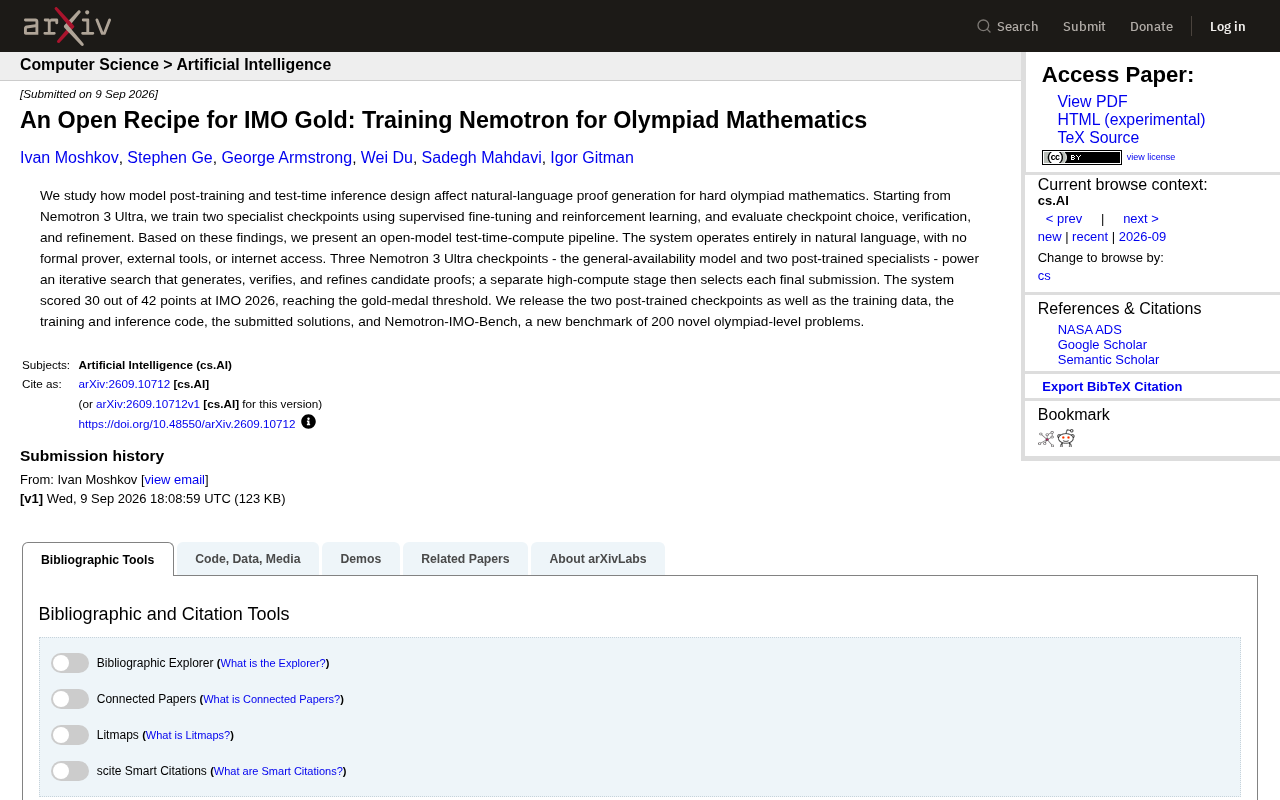
NVIDIA's open-source Nemotron system wins IMO gold using a multi-model natural language proof pipeline.
NVIDIA's paper *An Open Recipe for IMO Gold* details how a system built on Nemotron 3 Ultra scored 30 out of 42 points at IMO 2026, clearing the gold medal threshold. Operating entirely in natural language without formal provers, the system uses three checkpoints — one general-purpose and two SFT+RL specialist models — in an iterative generate–verify–refine loop, with a high-compute selection phase for final answers. The team open-sourced model weights, training data, code, solutions, and the new 200-problem Nemotron-IMO-Bench to prevent data contamination issues.
Nemotron Wins IMO Gold: A Full Breakdown of the Open-Source Math Olympiad Proof Pipeline
Math olympiad competitions have long been considered the ultimate benchmark for AI reasoning. They demand more than computation — they require airtight logical chains, creative problem-solving, and complete natural language proofs. NVIDIA's research team has just published a compelling answer in their paper An Open Recipe for IMO Gold: a system trained on Nemotron 3 Ultra scored 30 out of 42 points at IMO 2026, clearing the gold medal threshold.
What makes this especially significant is that the team didn't lock the results away in a closed-source black box. They publicly released the trained model weights, training data, training and inference code, submitted solutions, and a brand-new evaluation benchmark — giving the entire open-source community a fully reproducible "gold medal recipe."
Purely Natural Language — No Formal Provers
The most notable design choice in this system is that it operates entirely in natural language. It relies on no formal provers, calls no external tools, and has no internet access.
This stands in sharp contrast to some earlier AI math systems. Many high-performing mathematical reasoning systems have leveraged formal verification tools like Lean or Coq, translating proofs into machine-checkable symbolic form. That approach guarantees rigor, but it also confines the problem to what can be formally expressed — and comes with enormous engineering complexity.
Nemotron takes a path much closer to how humans actually solve problems: read the question, write out the reasoning, and produce a complete argument in natural language. This means the model must ensure logical correctness on its own, without any external "referee" as a safety net. Reaching gold-medal performance under these constraints is a strong signal that large language models' native reasoning capabilities have reached a remarkable level.
From General-Purpose Model to Specialist Checkpoints
The entire approach starts from Nemotron 3 Ultra. From there, the team used supervised fine-tuning (SFT) and reinforcement learning (RL) to train two olympiad-specific "specialist checkpoints."
The research focuses on three factors that influence proof quality: checkpoint selection, verification mechanisms, and iterative answer refinement. These three variables form the core of the post-training phase. SFT teaches the model the expressive patterns and problem-solving conventions of olympiad proofs; RL then further optimizes its reasoning strategy and reliability on hard problems.
This layered approach — general-purpose base model plus specialized post-training — reflects a dominant paradigm in current LLM development: the base model provides broad knowledge and language ability, while post-training focuses that capability onto specific, high-difficulty tasks.
A Three-Model Test-Time Compute Pipeline
What actually pushes the score over the gold threshold is a carefully designed test-time compute pipeline. The system simultaneously leverages three Nemotron 3 Ultra checkpoints — the general-purpose version plus two post-trained specialists — to drive an iterative search process.
This pipeline breaks down into three stages:
Iterative Generate–Verify–Refine Loop
Multiple models work together to generate candidate proofs, which are then verified to identify gaps or errors, and subsequently refined based on that feedback. This "generate–verify–refine" loop runs iteratively, progressively converging on a correct and complete solution. This self-verification and correction mechanism compensates for the error-prone nature of single-pass generation.
High-Compute Selection Phase
After the iterative process produces multiple candidates, a separate high-compute phase selects the final answer to submit for each problem. In other words, the system doesn't simply trust the first answer that looks correct — it invests additional computational resources to make the final call.
This design validates a broader trend in recent years: trading inference-time compute for reasoning quality. Rather than purely scaling up parameters, letting the model "think multiple times and double-check" during inference yields substantial gains on difficult tasks.
The Weight of Open-Sourcing and the New Nemotron-IMO-Bench
The greatest community value of this work lies in how openly it shares its findings. The team released two post-trained checkpoints, training data, training and inference code, and the actual submitted solutions. This means other researchers can not only see the results but fully reproduce the entire pipeline.
On top of that, the team introduced Nemotron-IMO-Bench — a benchmark consisting of 200 entirely new olympiad-level problems. Math olympiad AI research has long faced a lurking risk: classic problems from the internet have very likely already entered training data, making it possible to "game" benchmarks rather than genuinely test reasoning ability. A benchmark built from new problems offers a fairer measure of a model's generalized reasoning capabilities.
What This Means for AI Reasoning
Clearing the IMO gold threshold is a symbolic milestone in its own right, but the deeper takeaway lies in the methodological lessons it offers.
It demonstrates that, without formal verification tools, a purely natural-language LLM system can already handle mathematical proofs at the level of the world's top high school students. And achieving this required not just a stronger base model, but also specialist post-training, multi-model collaboration, and iterative search-and-verification at inference time.
For the broader field, this "open-source recipe" lowers the barrier to entry for high-level mathematical reasoning research and provides an engineering reference for how to organize reasoning pipelines on genuinely hard tasks. When model capability, post-training strategy, and inference-time compute are systematically combined, AI's frontier in serious reasoning continues to advance.
Related articles
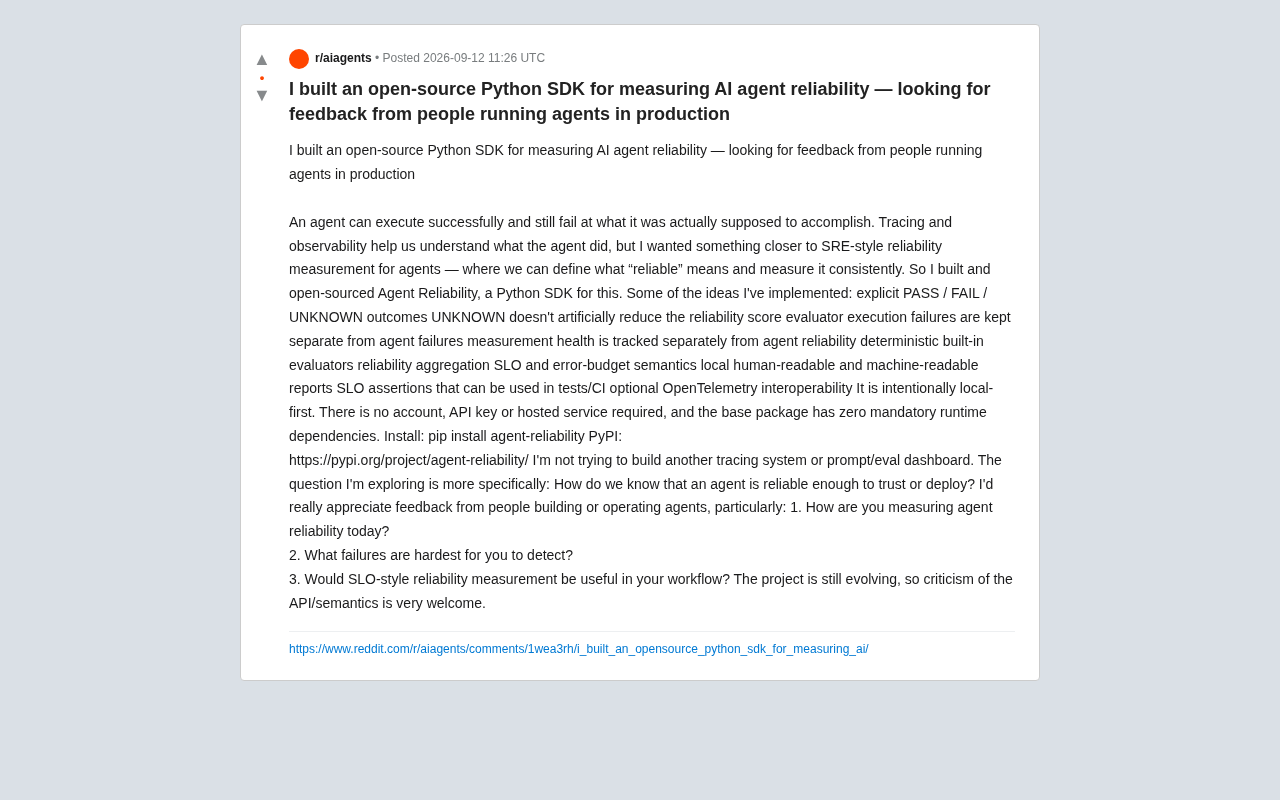
Open-Source Python SDK: Measuring AI Agent Reliability with SRE Principles
Agent Reliability is an open-source Python SDK that applies SRE's SLO and error budget concepts to AI Agent evaluation, with PASS/FAIL/UNKNOWN states, CI assertions, and zero forced dependencies.
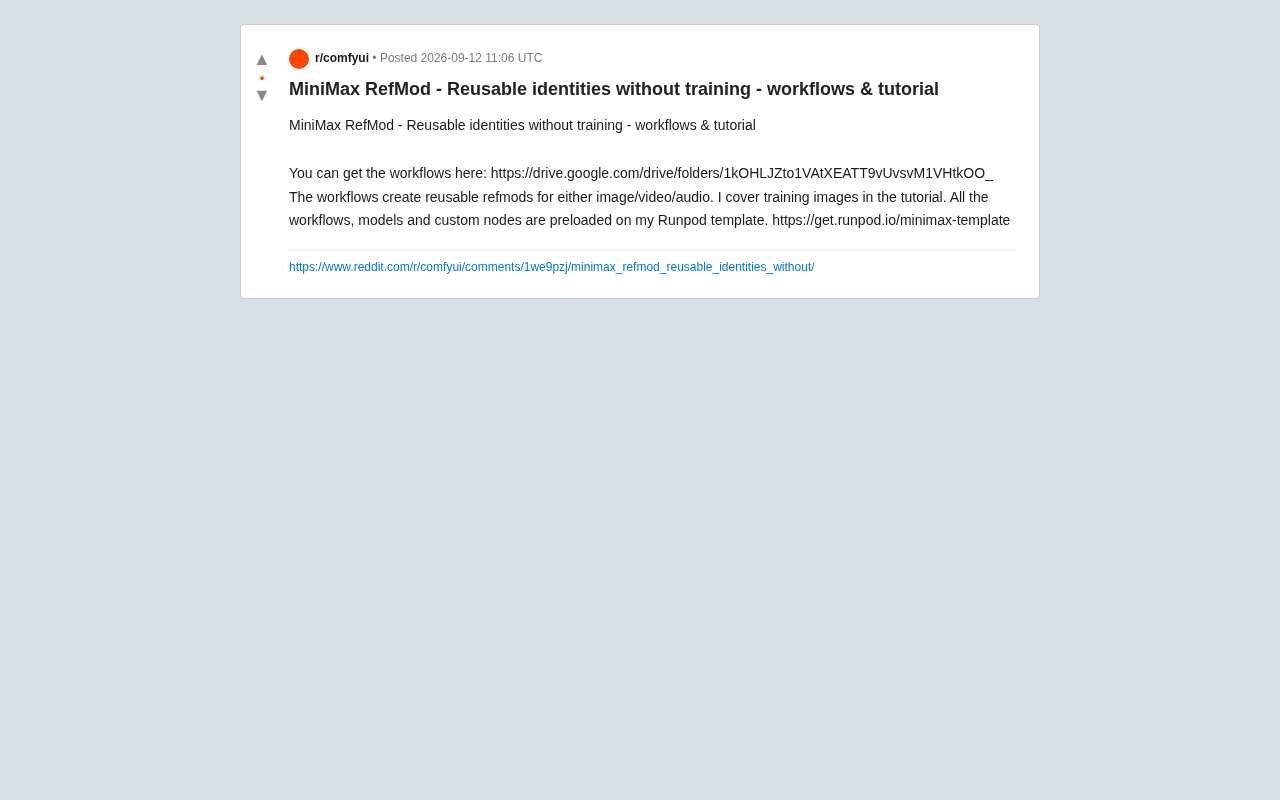
MiniMax RefMod: A Complete Guide to Training-Free Reusable Identity Workflows
MiniMax RefMod offers training-free reusable identity workflows for image, video, and audio generation. Includes Runpod template and tutorial for quick setup.

Invalid Source Material Notice
The source material provided lacks substantive information and is unrelated to AI/tech topics, making it impossible to produce a complete professional article.