Open-Source Python SDK: Measuring AI Agent Reliability with SRE Principles
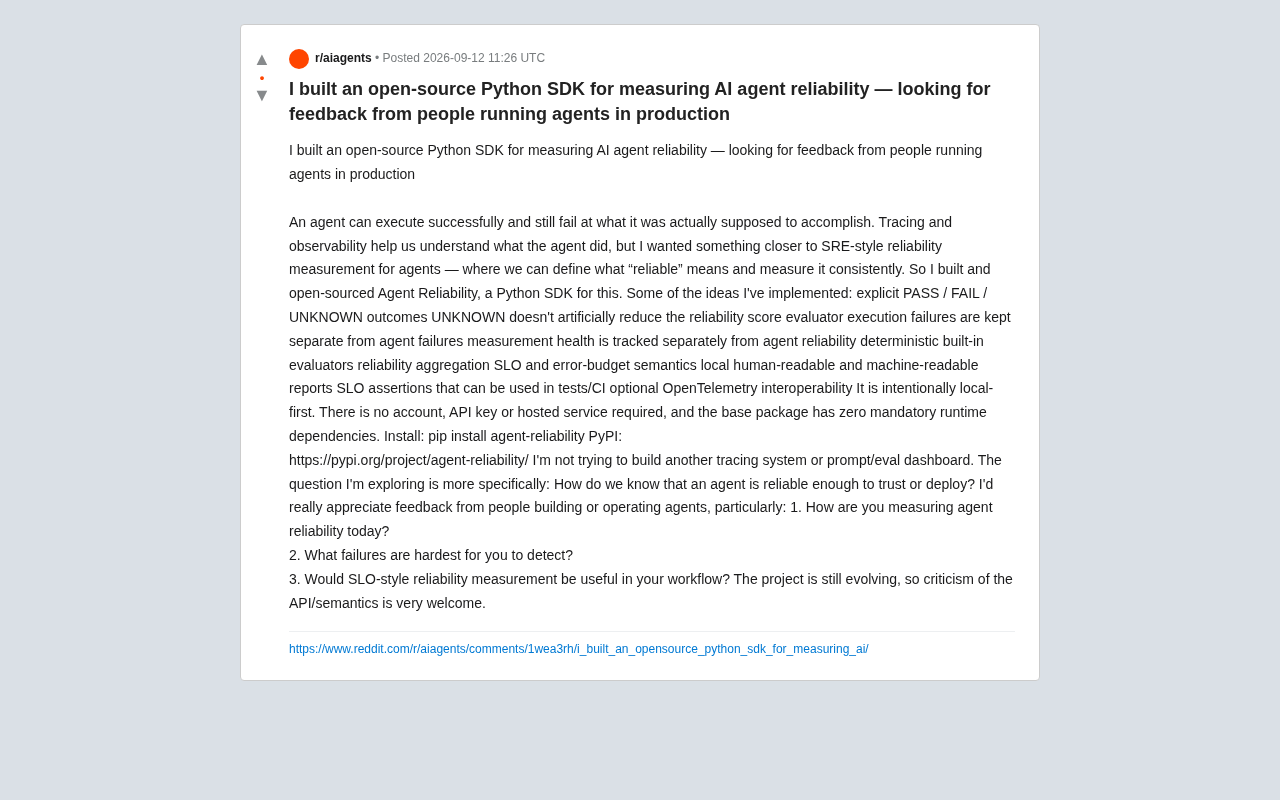
An open-source Python SDK that applies SRE reliability principles to AI Agent evaluation with CI integration.
Agent Reliability is an open-source Python SDK that addresses the hidden problem of AI Agents that "succeed" technically but fail at their actual task. It ports SRE concepts like SLOs and error budgets into Agent evaluation, introduces a PASS/FAIL/UNKNOWN three-state result system, and strictly separates evaluator failures from Agent failures. The project is local-first with zero mandatory runtime dependencies, no account or API key required, optional OpenTelemetry support, and the ability to embed SLO assertions directly into CI pipelines — turning Agent reliability into a hard release gate rather than an afterthought.
When an Agent "Succeeds" But Doesn't Actually Do Its Job
There's a subtle but critical problem with AI Agents: they can execute every step cleanly, return a result, and still completely fail to accomplish what they were supposed to do. Tracing and observability tools can tell you what an Agent did — but they can't answer the more important question: Is this Agent actually reliable enough to deploy with confidence?
A developer recently shared on Reddit an open-source project they built to tackle exactly this problem: Agent Reliability, a Python SDK focused specifically on measuring AI Agent reliability. The core idea is to port the well-established reliability measurement methods from SRE (Site Reliability Engineering) into the world of Agents — first define what "reliable" actually means, then measure it consistently and repeatably.
Core Design: Separating "Uncertain" from "Failed"
The most notable aspect of this SDK is its semantic discipline. Traditional evaluation systems often lump all non-success states together as failures, which distorts reliability scores. Agent Reliability introduces a more granular result classification:
Three Explicit Result States
- PASS / FAIL / UNKNOWN — three explicit outcome states
- UNKNOWN does not artificially drag down reliability scores — situations that can't be determined shouldn't be treated as failures, a trap many evaluation frameworks fall into
- Evaluator execution failures are strictly separated from Agent failures — if your evaluation script crashes, that shouldn't count against the Agent
- Measurement health and Agent reliability are tracked independently — first ensure "your ruler is accurate" before judging what you're measuring
Behind this separation logic is a simple but often-overlooked engineering principle: reliability measurement itself can fail. Conflating "measurement failure" with "subject failure" renders the entire evaluation meaningless.
SLO and Error Budget Semantics
The project introduces two key concepts from the SRE framework:
- Reliability aggregation: rolling up multiple measurement results into an overall reliability metric
- SLO and error-budget semantics: treating Agents like production services — setting reliability targets and tracking error budget consumption
- SLO assertions usable in tests and CI: meaning you can make "fail the build if reliability falls short" a first-class part of your pipeline
Embedding reliability checks into CI is one of the more novel aspects of this project — it attempts to make Agent reliability a hard gate on releases, just like unit test pass rates.
SLO (Service Level Objective) and Error Budget are core concepts in SRE. An SLO is a quantified reliability commitment for a service — for example, "99.9% of requests return successfully within 200ms." The error budget is the maximum allowed failure space within that SLO — a 99.9% SLO means roughly 43 minutes of "allowable downtime" per month. When the error budget is exhausted, teams typically freeze new feature releases and prioritize stability fixes. Applying this logic to Agent evaluation means you can set targets like "95% of production requests must be judged PASS," automatically check in CI whether error budget consumption has exceeded the threshold, and block releases when it has — a pattern identical to using test pass rates as release gates in traditional software engineering.
Local-First: No Account, No API Key, Zero Forced Dependencies
Unlike many evaluation platforms that require hosted services, accounts, and API keys, Agent Reliability deliberately takes a local-first approach:
- No account registration, no API key, no hosted service required
- Zero mandatory runtime dependencies in the base package
- Local reports in both human-readable and machine-readable formats
- Built-in deterministic evaluators
- Optional OpenTelemetry interoperability
Installation is straightforward:
pip install agent-reliability
PyPI: https://pypi.org/project/agent-reliability/
The zero-dependency, local-first design lowers the bar for production adoption — it won't force your Agent execution data to a third party, and it won't saddle your existing stack with heavy dependencies. The choice to use deterministic evaluators matters too: if evaluation itself isn't reproducible, reliability numbers have no reference value.
OpenTelemetry (OTel) is the open standard for cloud-native observability, maintained by the CNCF, designed to unify the collection and transmission of Traces, Metrics, and Logs. Supporting OpenTelemetry interoperability means reliability metrics generated by Agent Reliability can be exported via standard protocols and integrated seamlessly with existing observability platforms like Jaeger, Grafana, or Datadog — no per-platform adapters needed. For teams that already have OTel infrastructure in production, this design lets Agent reliability metrics flow directly into existing monitoring dashboards rather than requiring a separate setup.
What It's Not Trying to Be
The author is explicit about the boundaries: this is not another tracing system, and it's not a prompt or evaluation dashboard product. There's no shortage of those. This project targets a more focused — and harder to answer — question:
How do we confirm that an Agent is "reliable enough" to be trusted and deployed?
In other words, tracing answers "what happened," while Agent Reliability is trying to answer "can I trust it." These are complementary, not competing.
Three Real Questions the Author Is Asking
The project is still evolving, and the author explicitly welcomes feedback on API and semantic design — and has raised three questions worth considering for anyone building Agents:
- How are you currently measuring Agent reliability? Most teams are still stuck at manual spot-checks or simple success rate counts.
- Which failures are hardest to detect? The silent failures — where execution succeeds but the result is wrong — are often the most dangerous.
- Is SLO-style reliability measurement useful for your workflow? Is it actually feasible to bring the mature paradigms from service reliability engineering into the Agent world?
A Direction Worth Watching
As more teams push AI Agents into production, "how do you prove it's reliable" is shifting from an academic question to an engineering necessity. The value of Agent Reliability lies not just in the code itself, but in the framework it proposes: apply the rigor of SRE to Agents, and turn reliability into something definable, measurable, assertable, and enforceable as a CI gate.
For teams running Agents in production, this open-source project at minimum provides a starting point you can try immediately — no hosted costs, no setup overhead. If you're wrestling with "is this Agent actually trustworthy," it's an experiment worth watching and contributing feedback to.
Related articles
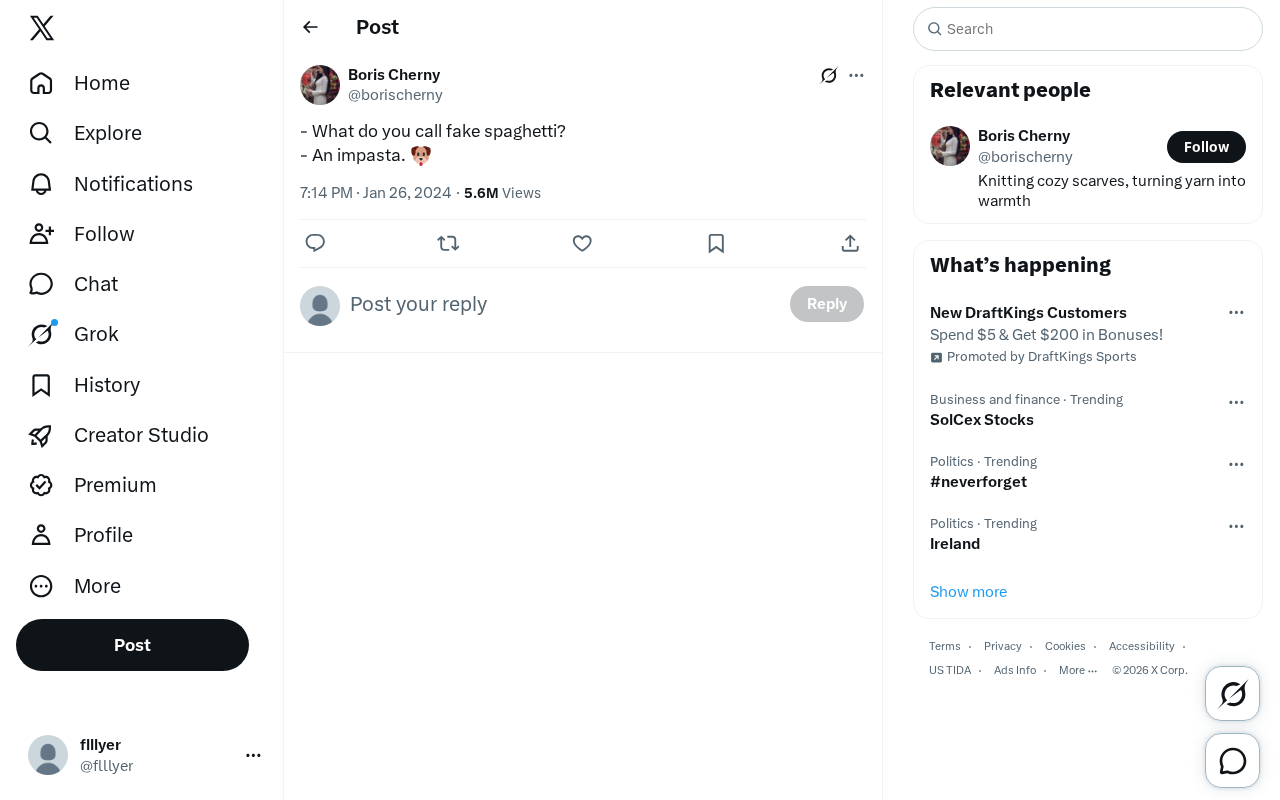
No Valid Source Material: A Dad Joke Tweet Cannot Support a Technical Article
The source material provided is an unrelated dad joke tweet with no informational value. A valid technical article cannot be generated. Please provide relevant tech content.
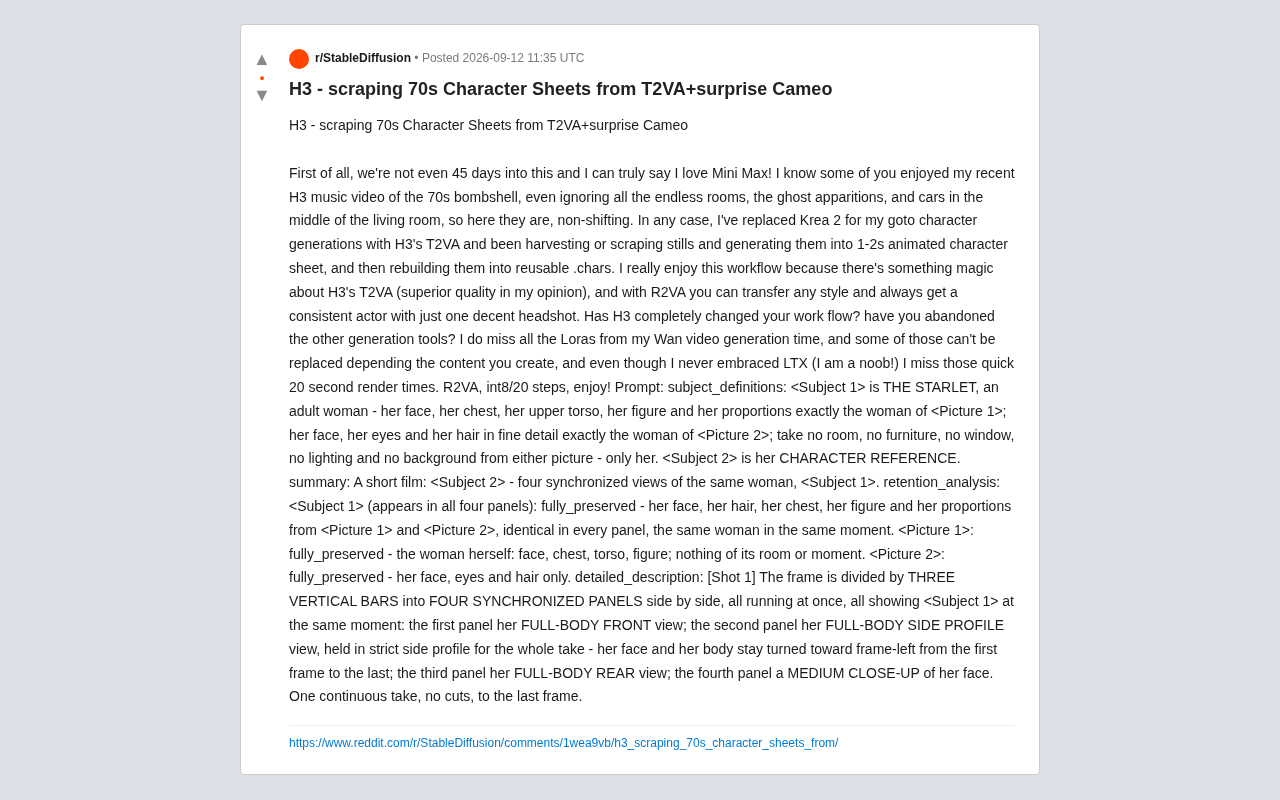
Building a Character Consistency Workflow with Hailuo H3: A T2VA Character Sheet Tutorial
A Reddit creator shares how to build a character consistency workflow using MiniMax Hailuo H3's T2VA/R2VA — from still harvesting to reusable .chars files, with a structured four-view character sheet Prompt.
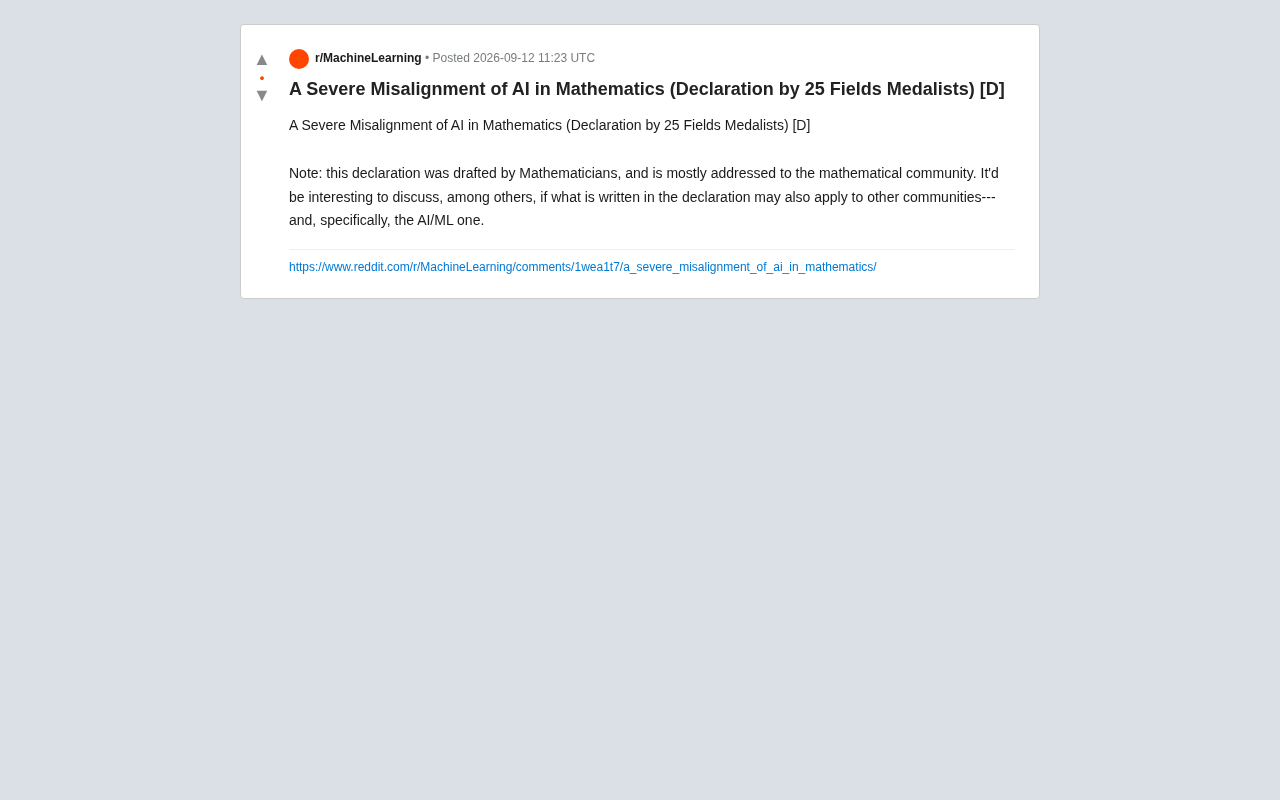
25 Fields Medalists Issue Joint Statement: AI Is Causing Severe Misalignment in Mathematics
25 Fields Medalists issue a joint statement warning that AI is causing "severe misalignment" in mathematics — and what this means for the broader research community.