New Apple TV 4K Unveiled: Performance Upgrades and Smart Home Ambitions

The new Apple TV 4K strengthens chip and smart home capabilities, evolving toward a home hub.
Apple released the new Apple TV 4K, further iterating on chip computing power, network connectivity, and smart home integration. The device is transitioning from a mere streaming box to a smart home hub, with tvOS taking on content aggregation and HomeKit/Matter control roles. Compared with Roku and Fire TV, its premium mainly comes from ecosystem integration, system support cycles, and ad-free experience. Upgrade decisions should be based on Apple ecosystem dependence, home hub needs, and existing device bottlenecks.
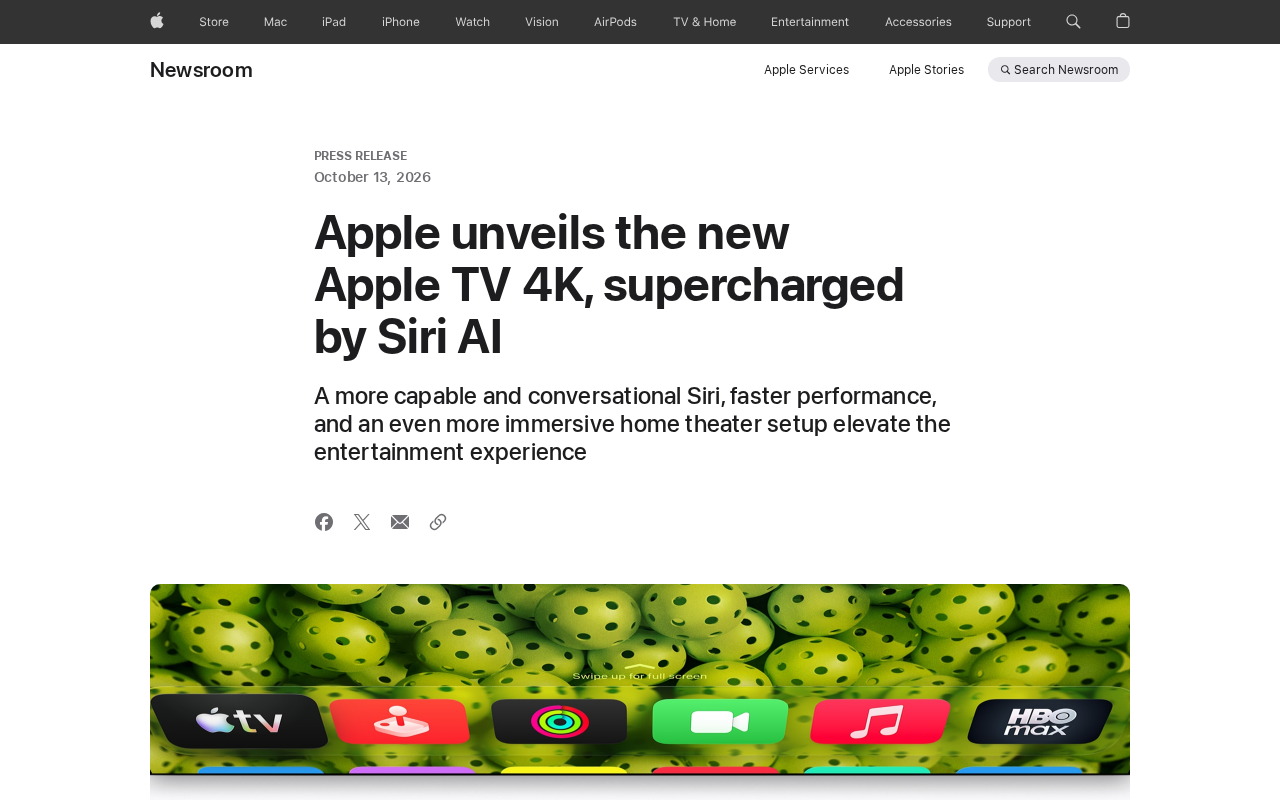
Apple has refreshed its streaming box lineup, and the new Apple TV 4K takes a more definitive step forward in both hardware configuration and smart home integration. Although official details remain limited, the product's iteration trajectory and discussions within the developer community suggest this device is moving from being a "tool for watching TV" toward becoming a "smart home hub."
Hardware Upgrades: Routine Refresh or Key Springboard
The new Apple TV 4K continues Apple's support strategy for image quality and audio formats, maintaining coverage of mainstream standards including 4K resolution, HDR10+, and Dolby Vision. For most users, these specifications have already become the "passing grade" for streaming boxes—the real differentiation lies in chip computing power and interaction methods.
Apple has consistently used chip solutions on its Apple TV product line that share the same lineage as iPhone chips, giving the device surplus computing power for decoding high-bitrate video, running tvOS apps, and processing game graphics. For users who treat the Apple TV 4K as a casual gaming terminal, the frame rate stability and loading speed improvements brought by chip iteration are often more perceptible than resolution specifications.
What's worth noting is the interface and connectivity. Whether the Ethernet port, Thread border router, and other home networking capabilities are retained and upgraded directly determines the device's role positioning in smart home scenarios. Related discussions have been heating up in technical communities like Hacker News, with developers generally believing that the Apple TV's hardware potential has long been underutilized by the tvOS ecosystem.
Thread is a low-power mesh networking protocol based on IPv6, designed specifically for smart home devices, featuring self-healing, low latency, and no need for a central gateway. A "Border Router" refers to a device that can bridge a Thread network with IP networks such as Wi-Fi/Ethernet. With a built-in Thread border router, the Apple TV 4K can directly serve as a gateway between Thread devices (such as smart locks and sensors) and the home network, eliminating the need to purchase an additional dedicated bridge. This elevates the Apple TV in the smart home architecture from a "display terminal" to "network infrastructure," with strategic significance far beyond streaming playback itself.
tvOS Ecosystem: Content Aggregation and Home Control Running in Parallel
The evolution direction of tvOS reflects Apple's judgment about the living room scenario. On one hand, there's content aggregation, reducing the cost of users switching between different streaming services through a unified watchlist and cross-app search; on the other hand, there's smart home control, with HomeKit device management, Matter protocol support, and Thread networking capabilities allowing the Apple TV to gradually assume the responsibilities of a home hub.
This dual positioning raises a practical question: Are users willing to pay a premium for a streaming box that "can also control lights and door locks on the side"? Based on current market feedback, the answer depends on whether users are already deeply invested in the Apple ecosystem. For users who also use an iPhone, HomePod, and HomeKit accessories, the Apple TV 4K's hub value is obvious; for users with purely streaming needs, its competitiveness still mainly comes from content and app quality.
Matter is a smart home interoperability standard jointly promoted by Apple, Google, Amazon, and others, aiming to unify connection and control protocols across different brands of devices. HomeKit is Apple's own smart home framework, and Matter can be seen as its cross-platform extension. The Apple TV 4K supports both, meaning it can manage HomeKit devices and also serve as a Matter controller to connect to third-party ecosystems. For users, this reduces brand lock-in risk; for Apple, it's a key strategic move to seize the hub position in the smart home standards competition.
Competitive Landscape: Is It Worth the Premium?
In the streaming hardware market, the Apple TV 4K has always been priced higher than competitors like Roku and Amazon Fire TV. The reasons supporting the premium typically include: longer system support cycles, less content recommendation ad interference, and seamless collaboration with the Apple ecosystem.
Judging from reactions in technical communities, users rate the "ad-free system experience" highly, which is precisely an advantage that low-cost competitors find difficult to replicate. But opposing views exist as well: if the core need is simply watching mainstream streaming platforms, mid-range competitors are already sufficient in functionality, and the Apple TV 4K's extra value requires users to actively discover it.
This divergence essentially points to a product philosophy question—is a living room device a "content portal" or a "computing platform"? Apple is clearly betting on the latter, and whether the market buys in depends on whether tvOS can grow enough attractive native apps and games.
Roku and Amazon Fire TV are the main low-cost competitors in the streaming hardware market, both using content aggregation and advertising subsidies to lower hardware prices. Roku's system is known for neutrality and ease of use but displays more recommendation ads; Fire TV deeply integrates Amazon's content ecosystem and similarly pushes ads. The Apple TV 4K's high pricing strategy is directly related to its "ad-free" system experience, which creates a differentiated advantage among users who value privacy and interface simplicity.
Technical Details Worth Watching and Potential Impact
For developers and tech enthusiasts, there are several signals worth tracking with the new Apple TV 4K. Chip performance improvements leave room for tvOS games and spatial computing applications; networking capability upgrades may strengthen its pivotal position in Matter/Thread smart home networks; and system-level privacy policies continue Apple's consistent approach of keeping data processing as local as possible.
These features combined make the Apple TV 4K no longer just "an accessory to the Apple ecosystem," but more like a testing ground for Apple in the home scenario. Its success or failure concerns not only the streaming box category but may also influence Apple's voice in the smart home standards competition.
For ordinary users, the upgrade decision can be reduced to three questions: Are you already deeply invested in the Apple ecosystem? Do you need a stable home hub device? Is your existing device hitting bottlenecks in performance or system support? Only when two or more of these questions are answered "yes" will the upgrade value of the new Apple TV 4K truly manifest.
Spatial computing is a concept Apple has proposed in recent years, referring to a computing paradigm that seamlessly integrates digital content into physical space, with Vision Pro as the typical representative. The Apple TV 4K's improved chip computing power provides the possibility of running lightweight spatial computing applications on tvOS, such as spatial video playback and 3D interface interaction by connecting to an iPhone or future headset. Although tvOS does not yet explicitly support spatial computing features, the hardware surplus leaves room for imagination for future system updates, which is one reason developers continue to pay attention to its chip iterations.
Frequently Asked Questions
Which users is the new Apple TV 4K suitable for? Users who are deeply invested in the Apple ecosystem, need a HomeKit home hub, or have requirements for an ad-free system experience.
What are its main differences from competitors? Ecosystem integration, system support cycles, and privacy policies—not individual hardware specifications.
Is it worth upgrading from an older model? If the older model is already constrained in system smoothness or smart home capabilities, the upgrade benefits are more obvious; otherwise, you can wait and see as needed.
One-line Summary
he new Apple TV 4K strengthens chip and smart home capabilities, evolving toward a home hub.
Paragraph Summary
Apple released the new Apple TV 4K, further iterating on chip computing power, network connectivity, and smart home integration. The article's analysis suggests that the device is transitioning from a mere streaming box to a smart home hub, with tvOS simultaneously taking on content aggregation and HomeKit/Matter control roles. Compared with competitors like Roku and Fire TV, its premium mainly comes from ecosystem integration, system support cycles, and an ad-free experience. The developer community is watching its potential as a home computing platform, but hardware capabilities remain constrained by the degree to which the tvOS ecosystem unleashes them. Upgrade decisions should be based on three dimensions: dependence on the Apple ecosystem, home hub needs, and existing device bottlenecks.
Related articles

Amphibious Transforming Drone: Beyond 100x Power Savings, What Are the Real Needs?
Is the amphibious transforming drone just a gimmick? Starting from the 100x power difference of the M4 Morphobot, explore real application scenarios and thesis topic ideas, analyzing boundary conditions where pure drones and pure ground robots both fail.

Warhound Raises $200 Million: Genetically Engineered "War Dogs" Paired with Anduril Gear
Warhound raises $200M, backed by Ben Lamm and Palmer Luckey, to genetically engineer dogs for military and law enforcement use and equip them with Anduril gear. This article analyzes its technology direction, funding logic, and ethical controversy.

Claude API Comes to Google Cloud: IAM Integration and SDK Access Guide
Anthropic hosts the full Claude API on Google Cloud with IAM-controlled permissions and unified billing. This guide covers the Vertex AI and Anthropic-hosted entry points, IAM role configuration, and SDK access.