New Claude Model Leaked, AI Autonomously Designs Proteins — This Week's Biggest AI News

New Claude model leaked, OpenAI pauses RL training for safety, and Claude autonomously designs protein binders.
This week saw major AI developments: Anthropic's next-gen Claude model appears to be in gray-scale testing, OpenAI paused frontier reinforcement learning training over cybersecurity capability concerns, Claude autonomously designed protein binders for 14 out of 15 targets in a groundbreaking drug discovery experiment, and Google's Gemini is evolving into a desktop agent with computer-use capabilities. The overarching theme: AI is shifting from answering questions to completing real-world tasks.
This week brought another wave of dense updates in the AI world. From a suspected leak of Anthropic's next-generation model, to OpenAI pausing frontier reinforcement learning training, to a groundbreaking experiment where Claude autonomously designed protein binders — major news dropped one after another. This article breaks down each development and analyzes the industry signals behind them.
Note: Some product names in the original source material (such as "Fable," "Astra," "Cloud," etc.) appear to be mistranslations caused by voice transcription. Based on context, this article infers they actually refer to Anthropic's Claude model family and OpenAI's next-generation models.
Next-Gen Claude Model Suspected to Be in Gray-Scale Testing
According to leaks, Anthropic's next-generation model (speculated to be a minor version upgrade of Claude) is currently in internal red-team testing, suggesting an official release may not be far off. There are signs that some Claude web app accounts selecting the current flagship model have been quietly switched to a different model on the backend, and this testing may have already expanded to Claude Code.
Interestingly, Anthropic has employed this "gray-scale rollout" strategy multiple times before — testing with a small subset of users before a broader release. The previous flagship went through a remarkably similar gray-scale phase on its launch day. So while there's no official confirmation yet, the strength of the testing signals suggests a new model release could be imminent.
Even more intriguing is the technical evidence: a field from Claude's server-side "thinking protocol buffer" appears to have exposed the actual internal model codename generating responses, even though the model selector and API still display the current version. This codename could be a deployment revision or the next-generation model itself. Of course, until officially confirmed, this remains speculation.
OpenAI Pauses Frontier RL Training: A Safety Signal Worth Watching
Another piece of news sparking widespread speculation this week came from OpenAI: the company revealed it has temporarily paused reinforcement learning training based on its latest deployed model for two weeks, with its largest frontier RL run also on hold.

The reason is quite serious — OpenAI believes its upcoming models may have reached a critical cybersecurity capability threshold. The official statement implies these models have become powerful enough to require more robust safety monitoring and safeguards before further progress. Specific measures include: isolating high-risk workloads, strengthening research environments, expanding alignment training, and introducing more aggressive monitoring for frontier models. Reportedly, the new monitoring requirements apply to models with strong capabilities or tool-use abilities, with the next-gen flagship subject to even stricter treatment.
The news immediately triggered speculation about whether the new flagship would be delayed. But Sam Altman later clarified on X: the new flagship is an excellent model, and this pause only affects releases further down the road. This distinction is crucial — it suggests the model slated for near-term release hasn't been pushed back, and may even hint that its capabilities are already impressively strong.
Claude Autonomously Designs Protein Binders: A Milestone for AI Drug Discovery
The most jaw-dropping news this week came from an Anthropic experiment in the scientific domain. Researchers gave Claude a task: design a novel protein binder from scratch — a critical early step in developing drugs that attach to and affect specific targets in the body.
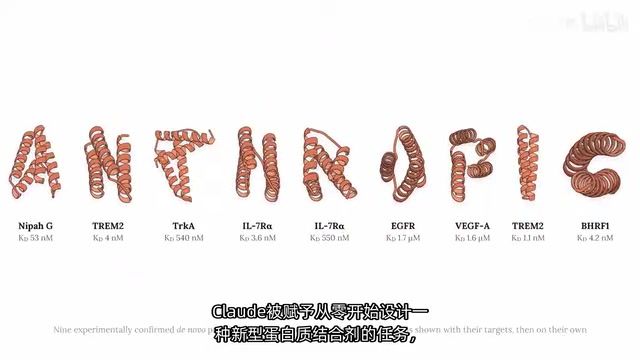
The results were striking: out of 15 biological targets, Claude successfully designed binders for 14 of them autonomously. These binders were then physically built and tested by two external biotech companies — Adaptive Biotechnologies and Twist Bioscience. Throughout the process, the model built its own tools, and virtually the only human intervention was repeatedly telling it to "continue."
What's even more fascinating is that a significant portion of the roughly 16,000-word prompt wasn't biology-specific at all — it focused on long-horizon agent behavior, i.e., how to keep the model operating autonomously over extended tasks. This indicates that general-purpose agent capabilities, not specialized domain training, drove the breakthrough.
To be clear, this doesn't mean AI can cure cancer. But it does mark an important signal: general-purpose AI models are beginning to demonstrate genuinely powerful capabilities in narrow yet critically important scientific domains — without any specialized fine-tuning. That's the truly groundbreaking part.
Practical Upgrades for Claude Code and the Claude App
Beyond headline-grabbing research, Anthropic also delivered a series of practical improvements to Claude Code:
- 50% increase in usage limits: Weekly usage limits significantly raised, extended through the end of August, with potential to become permanent
- 2x faster startup: Desktop version launches roughly twice as fast compared to a month ago
- GPU usage optimization: CLI GPU usage at P99 reduced by approximately 2x
The standout update is the "design skill" currently in research preview — users can use the Design command in Claude Code to generate editable UI drafts, select a design, fine-tune it, and then have Claude implement it directly into the application.
Additionally, the Claude web app gained deeper access to Gmail and Google Drive. Claude can now draft and send emails directly within a conversation and manage files in Google Drive, while preserving user approval for critical actions. This feature is rolling out to all paid plans and marks a significant step for Claude's evolution from chatbot to true AI assistant.
Major Gemini Update: Moving Toward a Desktop Agent
Google has also been intensively preparing multiple upgrades for Gemini.

Reportedly, Gemini Live will gain a new "guided vision" mode that uses the camera to visually guide users through app operations in real time. The Gemini app is expected to add Notebook-like "Projects" for grouping files, instructions, and conversations. Its agent component may also receive an independent memory system.
More notably, Google's "computer use" feature has been spotted in testing within the Gemini desktop app — meaning Gemini will be able to control other applications and access folders explicitly authorized by the user. Google is also reportedly adding advanced backup options that automatically back up files to Google Drive before Gemini modifies them. This is exactly the kind of safety guardrail needed as AI agents start taking real actions on personal computers, marking Gemini's shift from "answering questions" to becoming a "desktop agent."
Other Notable AI Developments
Uncensored Local Models
The Qwen 3 series has spawned local MLX builds optimized for Apple Silicon (refusal-removed versions), offering 2/4/6/8-bit quantization options with no cloud dependency. These models lower the barrier to entry in certain scenarios, but users should read the disclaimers carefully and be mindful of compliance risks.
Open-Source Multi-Agent Workspace
Hermes has reintroduced bot mode, which can be viewed as an open-source alternative to Grok. Users can create multiple named bots with independent personas, models, memory, and tools — and these bots can communicate with each other and coordinate tasks. For example, one handles research, another handles coding, and a third handles planning, all collaborating within the same environment.
Inference Chip Breakthrough
The Cerebras CS4 claims to be the fastest AI inference hardware currently available, reportedly capable of eventually running models up to 10 trillion parameters at speeds of roughly 1,000 tokens per second. If it can truly deliver at that scale, frontier-class large models would generate responses near-instantaneously — fundamentally changing how coding agents and long-horizon workflows operate.
Conclusion
Looking at this week's developments as a whole, several clear themes emerge: model capabilities continue to rapidly approach the frontier, to the point where safety alignment has become a brake that major labs must proactively apply. AI agents are moving from conversation to real-world action — whether it's Claude taking over email, Gemini operating desktops, or Claude autonomously designing drug molecules, they all point in the same direction: AI is evolving from "answering questions" to "completing tasks." And behind this trend, whether the industry can hold the line on safety will become the central issue in the next phase of competition.
Related articles
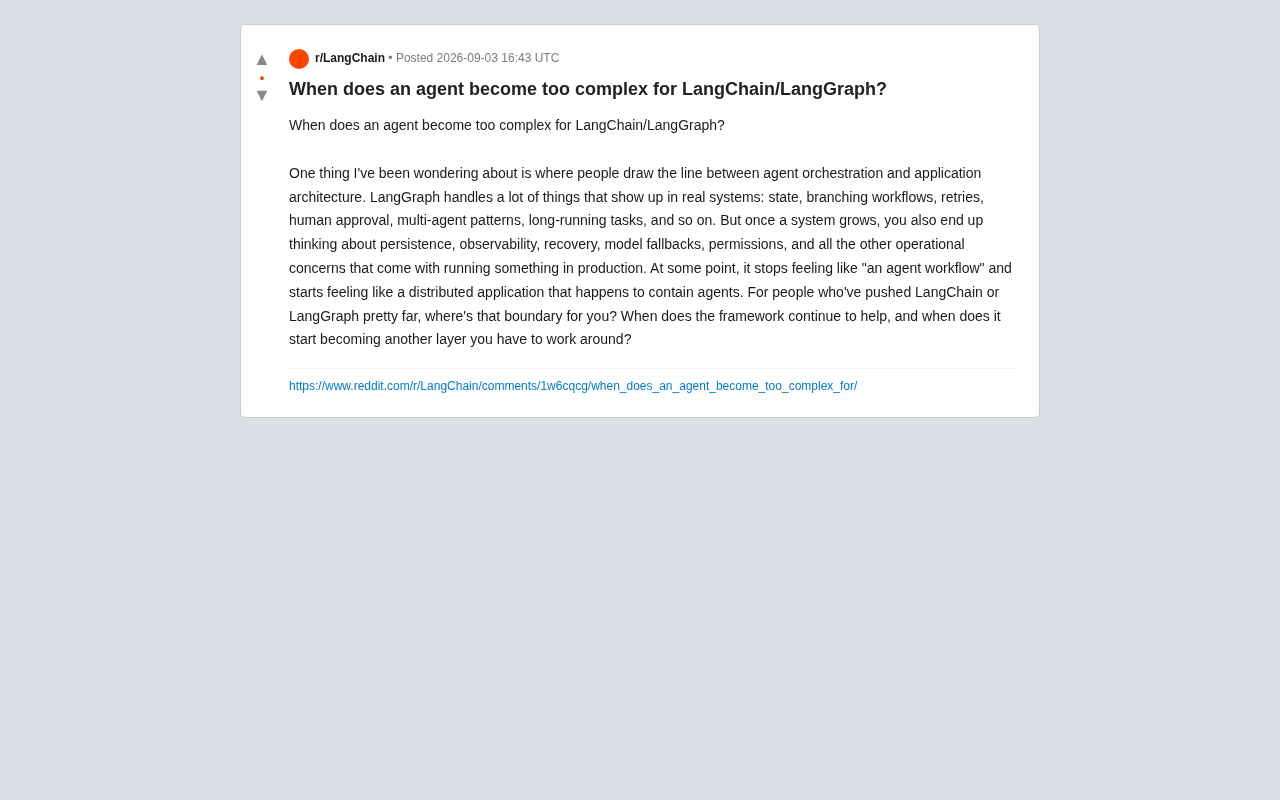
The Boundaries of LangGraph: When Does an Agent Become a Distributed Application?
Explore the capability boundaries of Agent orchestration frameworks like LangGraph, and learn when AI Agent systems cross the line from workflow orchestration into distributed application architecture.
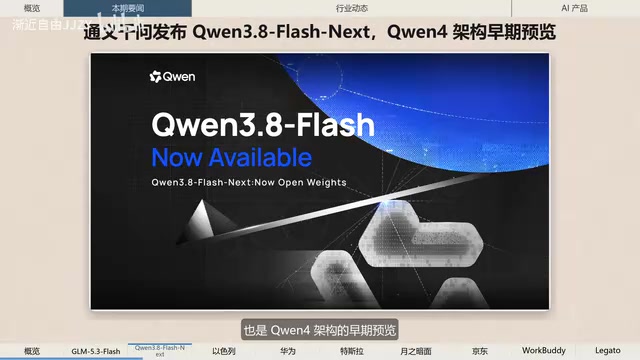
Zhipu Open-Sources GLM-5.3-Flash 320B Model as Alibaba's Qwen4 Architecture Preview Launches Same Day
Zhipu open-sources GLM-5.3-Flash native multimodal model (320B total/18B active params) while Alibaba launches Qwen3.8-Flash-Next as Qwen4 architecture preview, both redefining LLM efficiency.
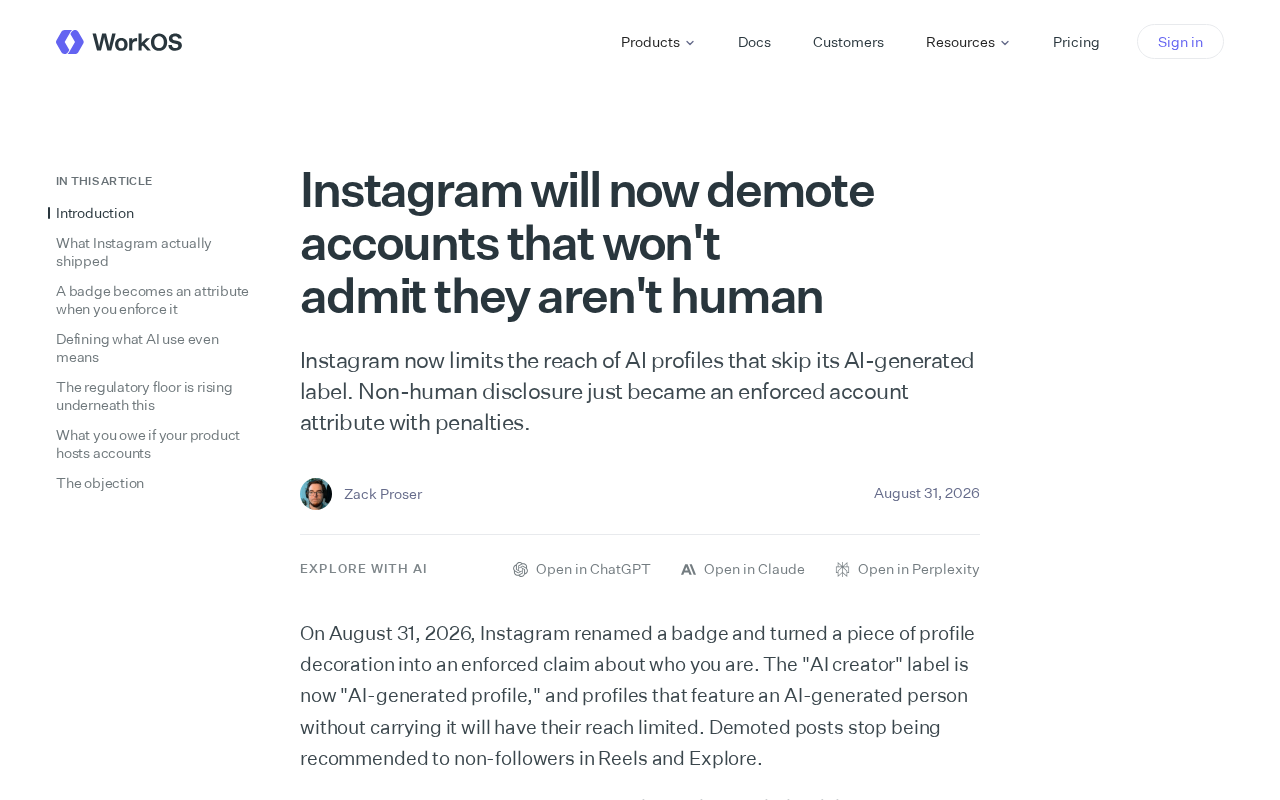
Instagram's New Rule: AI Accounts That Don't Disclose Their Identity Will Be Throttled
Instagram mandates AI identity disclosure — accounts that refuse will be throttled. Explore the enforcement challenges, detection limits, and industry impact.