New Orleans Uses AI to Triage 911 Calls: How Smart Dispatching Is Changing Emergency Response

New Orleans deploys AI to intelligently prioritize 911 calls during backlogs, raising efficiency and ethical questions.
New Orleans is using AI to triage 911 calls when backlogs occur, leveraging speech recognition, keyword extraction, and emotion analysis to prioritize emergencies. The system activates only when human capacity is exceeded. While promising for efficiency, it raises concerns about misclassification risks, accountability, automation bias, and the need for industry standards.
AI Enters the Emergency Dispatch Center
New Orleans is deploying an AI system to intelligently triage 911 calls when a backlog occurs. This move marks AI's penetration into one of the most critical and sensitive areas of public safety — the initial response to emergencies.
For any city, the 911 system is a lifeline. Since its establishment in 1968, the U.S. 911 emergency call system has been operating for over half a century. There are approximately 6,000 Public Safety Answering Points (PSAPs) nationwide, handling more than 240 million emergency calls annually. However, the system's infrastructure has long suffered from aging — many dispatch centers still rely on technology from the 1990s. The staffing crisis is even more severe: data from the National Emergency Number Association (NENA) shows that the annual turnover rate for 911 dispatchers ranges from 19% to 30%, far exceeding other public service positions. When natural disasters, mass-casualty incidents, or holiday surges cause call volumes to spike, dispatch centers are often understaffed, and answer delays can directly impact whether someone lives or dies.
New Orleans is a particularly telling case — the city has long faced fiscal pressures and the threat of hurricanes. The painful lesson of the 911 system's near-total collapse during Hurricane Katrina in 2005 remains a powerful driver for technological upgrades. New Orleans' initiative aims to leverage AI during critical moments of staffing shortages to quickly identify and prioritize the most urgent calls for help.
How the AI Triage Mechanism Works
From "Wait in Line" to "Intelligent Prioritization"
Traditional 911 systems operate on a first-come, first-served basis — all calls enter a single queue and are answered sequentially by human operators. This model works well under normal load, but once a backlog develops, urgent calls further back in the queue can be severely delayed.
The core value of an AI triage system lies in breaking this linear processing logic. Using speech recognition, keyword extraction, and emotion analysis, the system can make an initial assessment of each call the moment it comes in — distinguishing high-risk situations requiring immediate response (cardiac arrest, fires, violent crimes) from low-priority requests that can wait (noise complaints, non-emergency inquiries).
From a tech stack perspective, the system involves a sophisticated combination of mature and cutting-edge technologies. At the speech recognition (ASR) layer, current mainstream models like OpenAI's Whisper can achieve high accuracy across various accents and noisy environments, but error rates still rise significantly under extreme conditions — panicked callers, screaming, crying, or whispering. Keyword extraction relies on natural language processing (NLP), with the system pre-loaded with a high-risk keyword library — terms like "gun," "not breathing," "on fire" — combined with contextual semantic disambiguation. Emotion analysis (Sentiment/Emotion Analysis) uses acoustic features such as pitch, speech rate, and volume fluctuations to gauge the caller's urgency, falling under the domain of Affective Computing. The entire system must complete end-to-end inference in milliseconds, placing extremely high demands on model latency and deployment architecture.
A "Standby" Mechanism Activated Only During Backlogs
A notable detail: New Orleans' AI system is designed as a backup mechanism that only kicks in when call volume exceeds human processing capacity. This design borrows from the "levels of automation" concept in aviation — in avionics systems, autopilot has multiple intervention levels, and pilots can choose how much control to hand over to automation depending on the situation. Similarly, the 911 AI triage uses a conditional trigger architecture: the system continuously monitors queue wait times and backlog volume, activating the AI prioritization module only when metrics exceed preset thresholds.
This design reflects a cautious approach: AI isn't meant to replace human dispatchers but to serve as a high-peak auxiliary tool, relieving pressure and preventing critical calls from being buried in the flood. It effectively reduces public resistance to being "judged by a machine" while confining the systemic risks AI might introduce to the specific scenario of high-pressure periods. From an engineering standpoint, this also means the AI module must have "cold start" capability — remaining on standby during normal times but running at peak performance immediately upon activation, with no warm-up delay allowed.
Controversies and Potential Risks of AI Emergency Dispatching
The Unacceptable Cost of Misclassification
The biggest concern about introducing AI into high-stakes scenarios like 911 is misclassification. Emergency calls often involve panicked, incoherent callers or those with strong regional accents. Whether speech recognition and semantic understanding can deliver reliable accuracy under these extreme conditions directly determines the system's viability. If the AI misclassifies a genuine emergency as low priority, the consequences could be catastrophic.
In emergency dispatching, misclassification falls into two categories: false negatives (classifying a real emergency as non-urgent) and false positives (elevating a non-emergency to high priority). The cost of false negatives far exceeds that of false positives — the former can be fatal, while the latter merely wastes resources. Therefore, systems are typically designed to deliberately lower the classification threshold, preferring more false positives over missing any real emergencies — a technique known as "asymmetric cost-sensitive learning" in machine learning. Additionally, handling edge cases is critical: for example, a call with an outwardly calm tone where the caller might be held hostage and afraid to speak loudly. These "calm emergencies" pose enormous challenges for emotion analysis models. Current research directions include incorporating multimodal signals — such as background noise analysis and historical data from the calling number — to support more comprehensive assessments.
Accountability and Decision Transparency
Another core issue is accountability. When AI helps determine which calls get answered first, who bears responsibility if a delay leads to harm? Is the system's decision logic transparent and auditable? These are questions that must be answered when introducing automated decision-making into public safety.
Accountability for AI in public safety decisions touches on a deeper legal question: the legal personhood and liability attribution of algorithmic decisions. Under current U.S. law, 911 dispatcher misjudgments are subject to qualified immunity, but whether AI systems can enjoy similar protection remains unsettled. The EU AI Act has classified AI in emergency services as "high risk," requiring deployers to provide complete technical documentation, conduct conformity assessments, and ensure humans can override AI decisions at any time. At the U.S. federal level, unified legislation is still lacking, though some states have begun requiring government agencies to conduct Algorithmic Impact Assessments when using automated decision-making tools. Technical auditability is typically achieved through audit logs — the system must record the AI scoring rationale, priority ranking logic, and final human handling outcome for each call, enabling post-hoc review.
Broader Trends of AI in Public Safety
New Orleans' case is not an isolated one but a snapshot of AI's accelerating deployment in public services. Multiple cities and agencies are exploring AI for handling non-emergency municipal hotlines (such as the U.S. 311 system), optimizing dispatch routes, and assisting intelligence analysis.
The U.S. 311 system is a hotline dedicated to non-emergency municipal service requests, covering pothole repairs, trash collection complaints, noise reports, and more. New York City's 311 system handles over 30 million calls annually, making it one of the busiest municipal hotlines in the world. Several cities have deployed AI chatbots and auto-classification tools in their 311 systems with significant efficiency gains — for example, Kansas City used AI to automatically route citizen complaints to the appropriate government departments, reducing processing time by about 40%. In dispatch optimization, fire departments in Detroit and Los Angeles are already using predictive AI to optimize fire truck deployment, forecasting high-risk areas based on historical fire data combined with real-time weather and building data. The success of these lower-risk applications has built the technical and operational foundation for AI to enter high-risk domains like 911.
Emergency response — a field with extreme time sensitivity and chronic staffing shortages — is a natural priority for AI applications. However, the margin for error in public safety is far narrower than in commercial settings. Advancing these applications requires striking a delicate balance between efficiency gains and safety baselines.
The ideal path may be the Human-in-the-Loop (HITL) model — AI handles rapid screening and ranking, while trained human dispatchers retain final judgment on critical decisions. HITL is currently the most widely accepted human-AI collaboration paradigm in AI ethics, with mature applications in medical imaging — AI flags suspicious lesions, and radiologists make the final call. But in the 911 dispatch scenario, HITL faces a unique contradiction: the system is activated precisely because human dispatchers are already overloaded. Under such high-pressure conditions, whether dispatchers have sufficient cognitive bandwidth to review and override AI ranking suggestions is questionable. Cognitive science research shows that people under high pressure are prone to "automation bias" — the tendency to unconditionally accept system recommendations rather than exercising independent judgment. This means HITL theoretically preserves human oversight, but in real-world high-pressure scenarios, it may degrade into "human-out-of-the-loop."
Conclusion
New Orleans' use of AI for 911 call triage is a pragmatic exploration of technology serving public safety. Its value lies in addressing sudden peak pressures, but its success ultimately depends on the system's reliability under real extreme scenarios, its transparency, and the supporting human oversight mechanisms.
As more cities may adopt similar approaches, establishing industry standards and regulatory frameworks will become the next pressing issue. Currently, there are no unified global standards specifically for AI emergency dispatch systems. The NIST AI Risk Management Framework released in 2023 provides general guidance but doesn't drill down to emergency service scenarios. Key standard dimensions currently under industry discussion include: minimum accuracy requirements (e.g., false negative rates must fall below specific thresholds), maximum system response latency, regular stress testing mechanisms (simulating catastrophic peak scenarios), and fairness audits (ensuring the system doesn't produce discriminatory bias against callers with specific accents, languages, or from certain communities). The International Telecommunication Union (ITU) and NENA are also working to incorporate interoperability and security requirements for AI components into NG911 (Next Generation 911) standards. The urgency of establishing these standards is clear: if cities independently deploy different AI solutions, it will lead to system fragmentation, undermining cross-regional collaboration and experience sharing.
Related articles

Gaussian Process Bandit Optimization: Exploration Strategies and Inference Regret Guarantees
Cumulative regret guarantees in Bayesian optimization fail to reflect final recommendation quality. This article examines a new study that provides inference regret guarantees for Gaussian process bandit optimization through exploration query strategies and fill distance analysis, validated on hyperparameter optimization and control tasks.
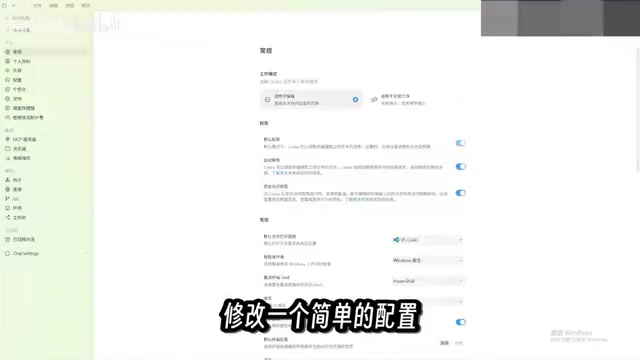
The Most Detailed Codex Guide on Bilibili: From Installation to Real-World Practice
The most detailed Codex guide on Bilibili: from app store installation to daily work mode configuration, with a real coffee shop project demonstrating file organization, data extraction, dashboard creation, and other practical tasks. Learn to use Plan Mode and desktop pets to leverage Codex efficiently.

Appearance Compensation in Volume Rendering: Why RGB Accuracy Cannot Guarantee Density Correctness
Volume rendering research reveals that volumetric data perfectly reproducing external RGB views may still contain density errors: appearance compensation can double central density and keep external rays unchanged even when L2 error exceeds 14.52%. Density recovery depends on appearance capacity, spatial resolution, and measurement design.