Nex In-Depth Analysis: A Vertical AI Agent Built for High-Volume GTM Workflows
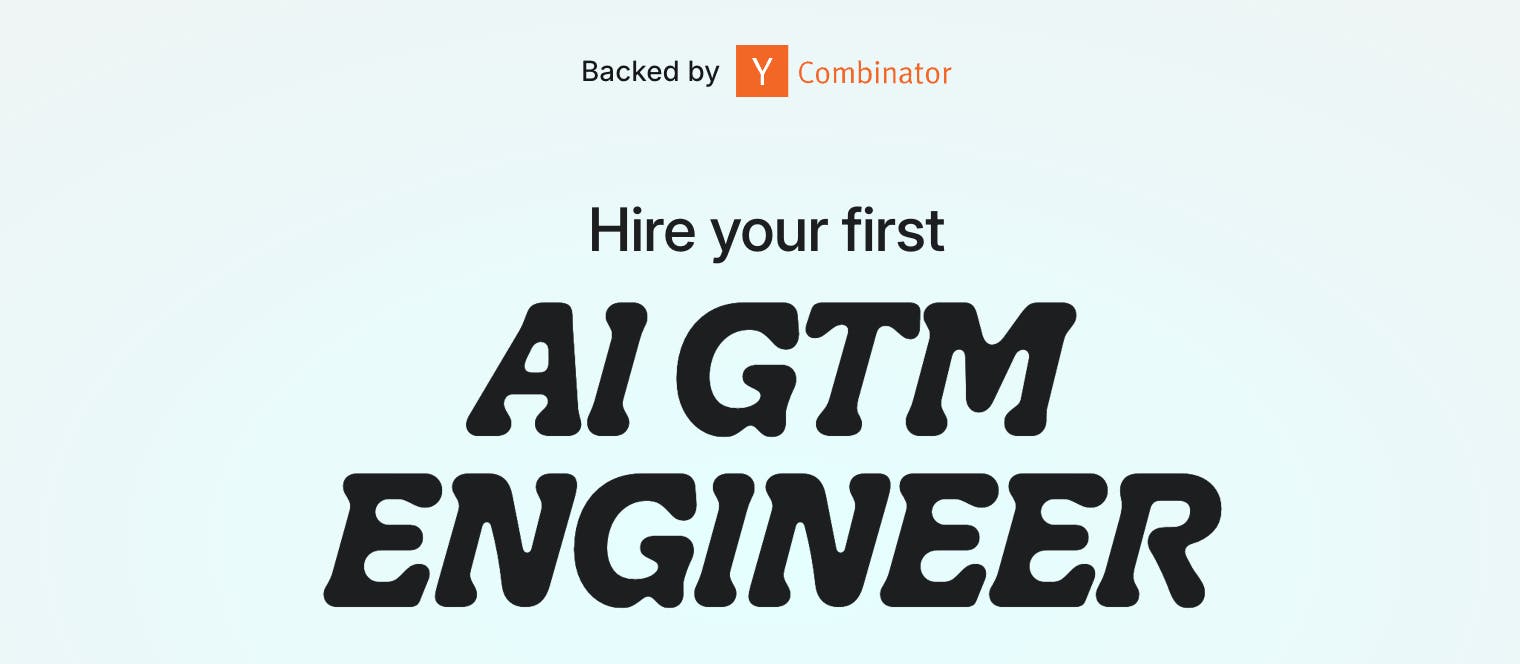
Nex is a vertical AI agent for high-volume GTM workflows, backed by HubSpot's co-founder.
Nex is a specialized AI agent built by former HubSpot core members and backed by co-founder Dharmesh Shah. Unlike general-purpose assistants like ChatGPT or Claude, it focuses exclusively on complex, high-frequency Go-To-Market workflows that require enterprise-grade reliability, deep CRM integration, and robust error handling.
A New Track Beyond General-Purpose Agents
As general-purpose AI assistants like ChatGPT and Claude sweep across industries, a clear problem has emerged: when it comes to enterprise-grade, high-frequency, high-complexity business processes, general-purpose agents often fall short. Nex, a product recently launched on Product Hunt with 101 votes and ranked 6th for the day, directly addresses this pain point.
Nex has a very clear positioning—"Claude Cowork for high-volume GTM workflows." It focuses on building and running complex, high-frequency Go-To-Market (GTM) workflows that general-purpose agents struggle to handle.
What Are GTM Workflows? Why Do They Need Dedicated AI Agents?
GTM (Go-To-Market) refers to the overall strategy and execution process by which companies bring products or services to market, encompassing lead generation, customer outreach, marketing campaigns, channel operations, and more. In the SaaS industry, GTM workflows typically include inbound lead capture and scoring, outbound prospecting, lead qualification (such as MQL to SQL progression), automated email sequences, CRM data synchronization and updates, customer success follow-ups, and other interconnected steps. These steps involve numerous conditional branches and data dependencies—for example, a lead's score determines which nurture path it enters, and customer behavior within that path triggers different subsequent actions. According to industry reports published by Salesforce, medium to large SaaS companies use an average of more than 10 systems to support their GTM processes, with data silos and process fragmentation being widespread pain points.
In practice, GTM workflows exhibit three key characteristics:
- High frequency: Processing hundreds or thousands of leads or customer interactions daily;
- High complexity: Involving multi-system data integration, multi-step conditional logic, and personalized decision-making;
- Strong fault tolerance requirements: A single error can directly impact revenue conversion.
It's precisely these characteristics that cause general-purpose agents, which rely on single-turn conversations and limited context, to frequently fail. You can ask ChatGPT to write a prospecting email, but having it reliably execute an entire sales automation workflow involving CRM, email, scoring, and follow-ups is a different story altogether.
Why General-Purpose Agents Tend to "Get Stuck" in GTM Scenarios
General-purpose agents excel at flexible natural language understanding and broad knowledge coverage, but in enterprise process automation, they expose several critical shortcomings.
Current mainstream general-purpose AI agents (such as conversational assistants based on GPT-4 or Claude) primarily use frameworks like ReAct (Reasoning + Acting) or Plan-and-Execute to complete multi-step tasks. The ReAct framework refers to agents alternating between reasoning and acting during execution, using observations from each step to decide the next action. However, this architecture faces three major challenges in enterprise GTM scenarios:
First, the context window ceiling. Even though the latest models support 128K or even longer context windows, they still fall short when handling enterprise processes involving dozens of steps and hundreds of data records. Long task chains easily go off track, making it difficult to maintain logical consistency between steps.
Second, insufficient depth in enterprise system integration. While general-purpose agents' tool use and function calling capabilities are rapidly improving, their integration with enterprise systems like CRMs (such as Salesforce, HubSpot) and marketing automation platforms (such as Marketo, Pardot) remains at the shallow level of API calls, lacking native understanding of business logic.
Third, reliability issues in batch execution. General-purpose agents lack effective error recovery mechanisms and state management capabilities in large-scale batch scenarios. When a step fails mid-process, they often need to retry from the beginning rather than resume from a checkpoint, making it difficult to ensure consistency and control.
Nex's choice to "go deep vertically" in the GTM domain is a direct response to these pain points.
Team Background: Built by Former HubSpot Core Members, Backed by Dharmesh Shah
One of Nex's most compelling aspects is the deep industry background of its team and investors. According to the Product Hunt page, Nex was built by former HubSpot core members—people who operated HubSpot's three largest customer platforms and have firsthand practical experience with GTM pain points and scaling challenges.
To understand the weight of this background, you need to know HubSpot's position in the industry. Founded in 2006, HubSpot is a global leading CRM and marketing automation platform, went public on the NYSE in 2014, and had a market cap exceeding $30 billion as of 2024, serving over 200,000 business customers worldwide. Its core product matrix spans Marketing Hub, Sales Hub, Service Hub, CMS Hub, and Operations Hub, forming a complete GTM tech stack. The fact that Nex team members operated HubSpot's three largest customer platforms means they have hands-on experience handling enterprise-scale (millions of contacts) GTM workflows.
More notably, Nex has received investment backing from HubSpot co-founder Dharmesh Shah. Dharmesh is not only a tech entrepreneur but also a key proponent of the "Inbound Marketing" concept, wielding significant influence in the SaaS community. As an iconic figure in SaaS and marketing automation, Dharmesh's involvement brings not just funding but professional validation of the product direction—his personal investments are often viewed as indicators of where SaaS and marketing technology are headed.
Additionally, the product's Maker list includes Garry Tan (current CEO of Y Combinator), further highlighting the project's attention in venture capital circles. Y Combinator is the world's most influential startup accelerator, with a portfolio including tech giants like Airbnb, Stripe, and Dropbox valued at over hundreds of billions of dollars, with total portfolio company valuations exceeding $600 billion. Before becoming YC CEO, Garry Tan was co-founder of Initialized Capital and early investor in companies like Coinbase and Instacart. His involvement with Nex signals high recognition within Silicon Valley's core venture network, providing significant trust endorsement for future fundraising and enterprise customer acquisition.
Why Vertical Industry Experience Is a Core Moat for AI Agents
In an era of heavy AI agent product commoditization, the real moat often lies not in the model itself but in deep understanding of vertical industry know-how. A team that has operated a marketing platform with tens of millions of users has irreplaceable insight into "what workflows are truly difficult and where things tend to break." This is Nex's differentiating advantage over purely technical teams.
The Rise of Vertical AI Agents: Analyzing Nex's Market Position
Nex's emergence exemplifies the broader trend of AI agents moving from "general-purpose" to "vertical." As underlying large model capabilities increasingly become platformized, startup opportunities are concentrating on embedding model capabilities into specific industry workflows.
This trend has a clear industrial logic: as companies like OpenAI, Anthropic, and Google progressively API-fy and platformize large model capabilities, differentiation at the model level is shrinking, and "last mile" application deployment becomes the competitive focus. According to a16z's 2024 AI application market analysis, AI products that truly achieve PMF (Product-Market Fit) are mostly concentrated in vertical domains with clear industry barriers like legal, healthcare, finance, and sales. In the sales automation space, companies like Clay, Apollo.io, and Instantly have established advantages in specific segments, but complete end-to-end GTM workflow orchestration and execution remains a relatively open market. Nex's entry at this level is essentially building an "AI-native workflow engine" rather than simply layering on AI features.
From Nex's category tags (Sales, SaaS, Artificial Intelligence), it's clear the product positions itself as AI infrastructure for the sales and SaaS domains. It doesn't try to be an all-purpose assistant but aims for excellence in the GTM niche—building, running, and hosting enterprise high-frequency marketing and sales processes.
This "less is more" strategy often builds trust more easily in enterprise markets. For paying enterprises, a dedicated tool that reliably executes critical business processes is far more valuable than a broadly functional but questionably reliable general assistant.
Conclusion: An Important Signal for Vertical AI Agent Commercialization
Although public information about Nex remains relatively limited, its team background, investor backing, and product positioning represent an important direction for AI agent commercialization: trading vertical depth for enterprise-grade reliability.
For practitioners tracking AI application deployment, Nex is a case worth continuous observation. Whether it can truly solve the "instability" problem of general-purpose agents in GTM scenarios, and whether it can transform HubSpot's industry accumulation into scalable product advantages, will be key indicators for judging the success potential of this class of vertical AI agents.
Key Takeaways
Related articles
AI Agent Cost Optimization in Practice: Engineering Wisdom That Saved $1 Million in One Hour
Databricks eliminated $1M/year in wasted AI Agent spend in just one hour. Learn the root causes of Agent cost overruns and key strategies like model tiering, context pruning, and caching.
How the FDA Is Building an AI-Ready Data Foundation on Databricks
Explore how the FDA leverages Databricks for Government to build a unified Lakehouse architecture and AI-ready data foundation while meeting federal security and compliance standards.
The Power of Security Collaboration: Why Vulnerability Discovery Cannot Do Without Human Intelligence
Explore how security collaboration outperforms tool dependency, the value of vulnerability stories, cross-team knowledge sharing practices, and building stronger defenses by investing in people and collaboration.