Nike Dropped from S&P 100: 18 Years in the Index and a $200 Billion Market Cap Wipeout
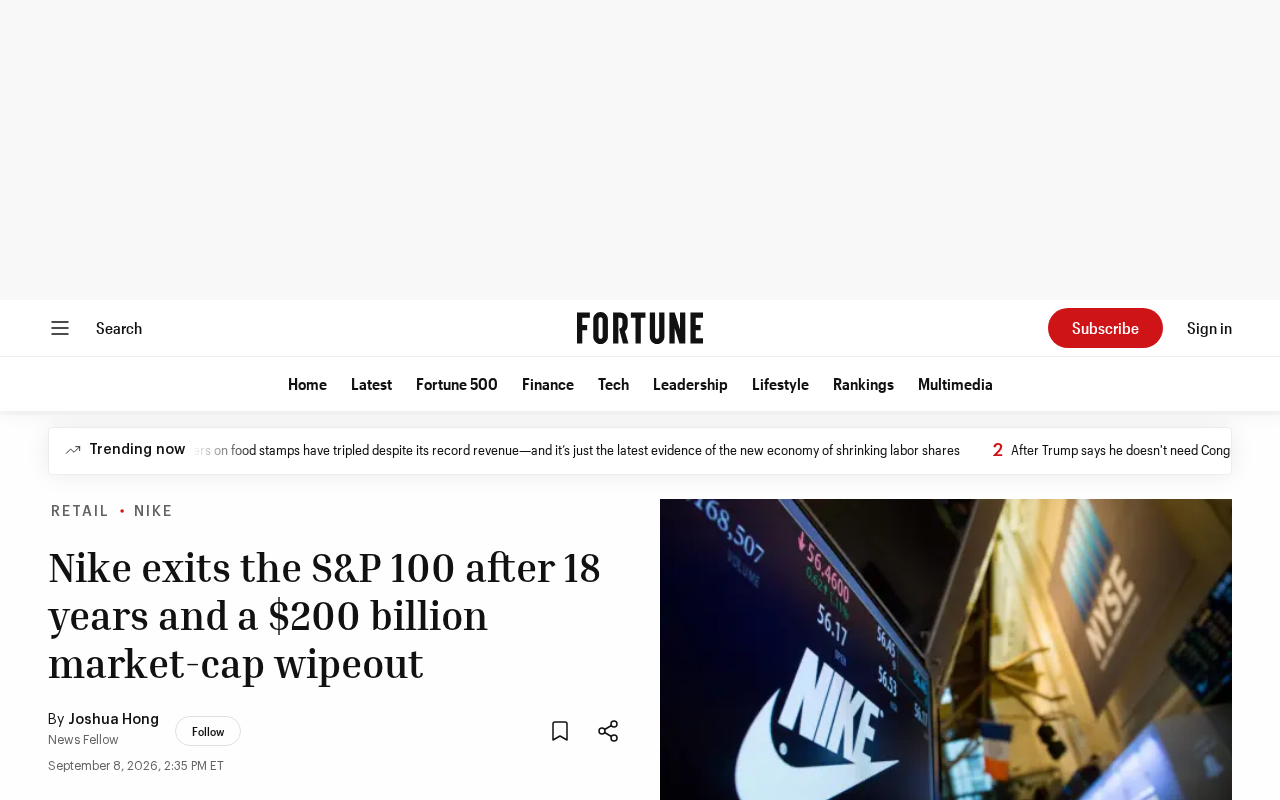
Nike exits the S&P 100 after 18 years with ~$200B in market cap lost, exposing the systemic pressures facing legacy consumer giants.
Nike has been removed from the S&P 100 after 18 years as a constituent, accompanied by a cumulative market cap loss of roughly $200 billion. The exit is no accident — it reflects a confluence of pressures: emerging athletic brands eroding market share, a DTC channel strategy creating friction with traditional retail partners, weakening demand in key markets like Greater China, and inventory missteps. On a macro level, Nike's removal also mirrors the long-term migration of capital market value toward technology and high-growth sectors. This case is a reminder that scale and historical prestige offer no permanent margin of safety — adaptability is what keeps a company at the table.
A Market Signal That's Sparked Wide Discussion
After 18 years as a constituent of the S&P 100, Nike has been removed from this elite index of America's largest blue-chip companies. Alongside its exit comes a staggering cumulative market cap loss of approximately $200 billion. The news drew 222 upvotes and 286 comments on Hacker News, sparking extensive debate about the rise and fall of consumer brands and the shifting structure of financial markets.
The S&P 100 consists of roughly 100 of the largest and most representative companies within the S&P 500 — a key benchmark for America's mega-cap enterprises. The fact that a once-dominant sportswear giant has been dropped from this list makes for a compelling business case study in its own right.
Note: This article is based on original reporting and discussions from the Hacker News community. Some details are limited due to the source article being behind a paywall.
What a $200 Billion Market Cap Loss Really Means
A $200 billion erosion in market capitalization is a setback of astronomical proportions for any consumer goods company. This isn't merely stock price volatility — it represents a systemic reassessment by investors of Nike's long-term growth prospects.
From a broader perspective, sharp market cap declines are typically the result of multiple converging pressures: core market share being eroded by emerging brands, growing pains from the direct-to-consumer (DTC) transition, inventory mismanagement, and weakening demand in key markets such as Greater China. When these negative factors compound simultaneously, the capital market's reaction tends to be amplified.
For index constituents, market cap ranking is a hard threshold. Once a company's valuation persistently slides and it gets overtaken by higher-growth peers, removal is only a matter of time. Nike's exit is, at its core, the result of being outpaced in the market cap race by those coming up behind it.
Why Consumer Giants Lose Their Luster
Nike's struggles reflect the common challenges that traditional consumer brands face in a new era. The competitive landscape in athletic apparel is evolving rapidly, with emerging brands continuously chipping away at the market share of incumbents through sharper niche positioning and more agile marketing strategies.
At the same time, while a direct-to-consumer (DTC) strategy theoretically boosts margins and strengthens the brand-customer relationship, poor execution — particularly when it creates friction with existing retail distribution partners — can actually damage the overall sales network. Brand moats are not impenetrable, and consumer loyalty has become increasingly fragile in an age of abundant choice.
For observers of technology and business, this case serves as a reminder: even companies with powerful brand equity are not immune to deep structural shifts in the market. Scale and historical prestige are not the same as a permanent margin of safety.
Index Rebalancing as a Reflection of Market Metabolism
Changes in index composition are a vivid illustration of the market's self-renewal mechanism. When traditional consumer giants exit, they are typically replaced by companies in high-growth sectors such as technology and AI. This see-saw dynamic reflects a shifting consensus among capital allocators about where the engines of future growth lie.
Over the past decade-plus, technology companies have steadily grown their weight in major indices, while the relative standing of traditional consumer and industrial companies has declined. Nike's removal from the S&P 100 can be read as another footnote in this long-term trend — the market's center of gravity is tilting toward digitally-native, platform-based business models.
For both investors and corporate leaders, this is both a warning and a lesson: the ability to adapt to change matters far more than past glory when it comes to staying at the table over the long run.
Closing Thoughts
Nike's exit from the S&P 100 is less a story of a single company's failure and more a vivid demonstration of the market's relentless process of natural selection. The sharp contrast between 18 years of prestige and $200 billion in evaporated market value serves as a wake-up call for every company that relies on brand moats. In an environment of accelerating competition and increasingly diversified consumer choice, no brand can afford to rest on its laurels.
Related articles

Ditch the Vector Database: Building a Memory Layer for LangChain Agents with BM25
CogniCore replaces vector databases with BM25 retrieval for LangChain agent memory, outperforming embeddings in small-context benchmarks with zero external dependencies.

Are All-in-One AI Platforms Actually Worth It? A Practical Guide to Escaping Subscription Overload
Tired of paying for ChatGPT, Claude, and Midjourney separately? We break down whether all-in-one AI platforms are actually worth it — and what a smarter subscription stack looks like.
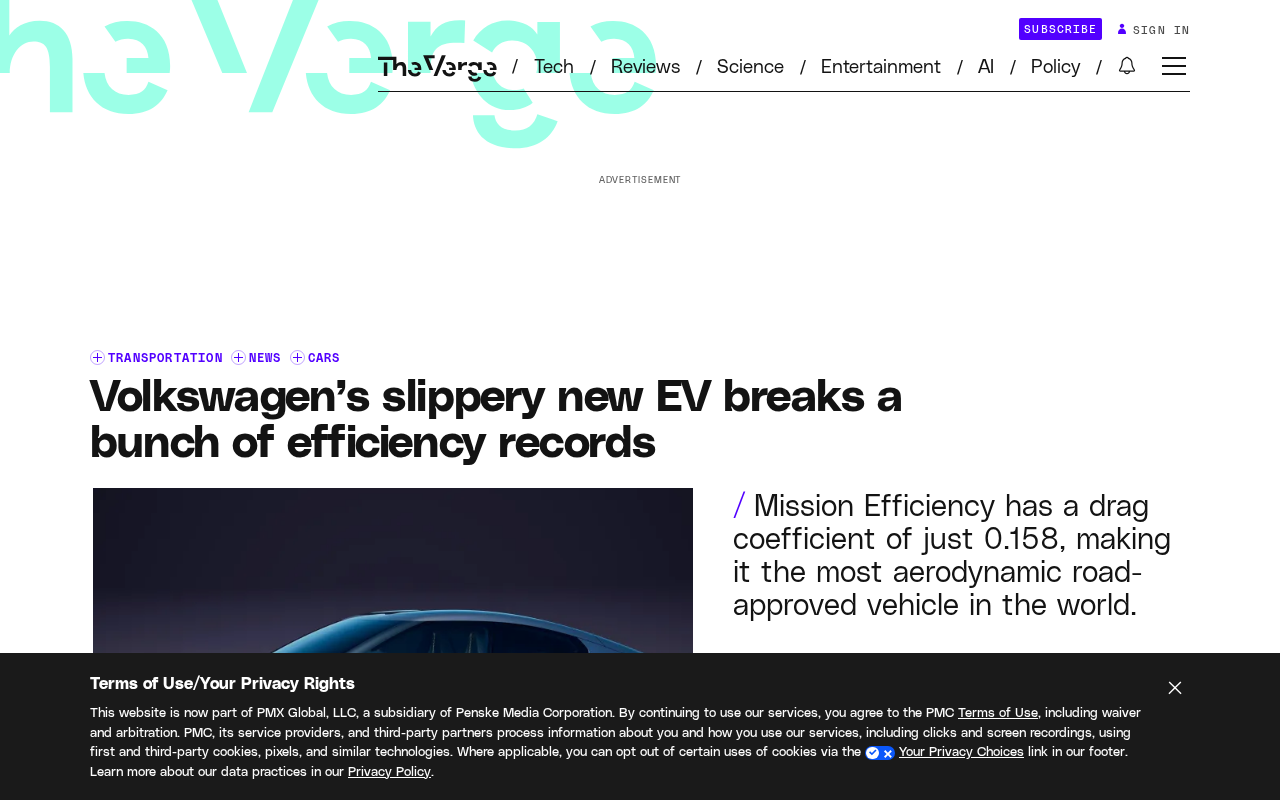
Volkswagen Mission Efficiency: The World's Lowest-Drag EV Breaks Multiple Efficiency Records
Volkswagen's Mission Efficiency prototype claims the world's lowest drag coefficient, built on MEB+ platform with ID. Polo and ID. Cross components. Here's what it means for EV efficiency.