Nikon P1100 Review: Hands-On with 125x Zoom and 3000mm Focal Length

Nikon P1100 review: 125x zoom, 3000mm reach, stellar stabilization for ~$1,000.
The Nikon P1100 superzoom camera delivers an extraordinary 125x optical zoom covering 24–3000mm equivalent focal length, with F2.8 at wide and F8 at telephoto. Its standout feature is remarkable image stabilization at extreme focal lengths. Priced around $1,000, it's ideal for birdwatching, sports, and moon photography — offering telescope-grade reach that would cost tens of thousands with pro gear.
A Camera That Takes Zoom to the Absolute Extreme
In an era where most cameras compete on computational photography and AI algorithms, the Nikon P1100 takes a radically different path — it goes all-in on pure optical zoom. This superzoom camera packs an astonishing 24–3000mm equivalent focal length lens with a staggering 125x zoom ratio.
Let's break down the concept of "equivalent focal length." The P1100 uses a small 1/2.3-inch sensor, so its actual physical focal length is far shorter than 3000mm. However, due to the crop factor of the small sensor, the field of view is equivalent to what a 3000mm lens would produce on a full-frame camera. The zoom ratio is simply the longest focal length divided by the shortest (3000 ÷ 24 = 125x). For reference, the human eye sees roughly the equivalent of a 50mm lens, a typical smartphone offers 3–10x optical zoom, and professional sports photographers commonly use lenses in the 400–600mm equivalent range. At 3000mm, the P1100 can pull distant subjects that are nearly invisible to the naked eye right into the frame, with a field of view of just about 0.7 degrees — comparable to a small telescope.
The real-world shooting demos are jaw-dropping: what starts as a seemingly ordinary scene gradually transforms as the lens pushes deeper and deeper, ultimately revealing a shooting distance that's hard to believe. This is exactly the kind of content that has made Nikon's P1100 series go viral on social media time and again.

It's worth noting that the P1100 didn't come out of nowhere. Its predecessors — the Nikon P900 and P950 — went viral years ago thanks to their outrageous zoom capabilities, with countless users shooting the moon, distant aircraft, and objects barely visible to the naked eye. The P1100 is the latest in this product line, pushing the boundaries of ultra-telephoto photography to new heights.
Superzoom cameras (also called bridge cameras) occupy a unique niche between compact point-and-shoots and interchangeable-lens cameras. They feature a fixed, non-removable lens that covers an extremely wide focal range, from wide-angle to ultra-telephoto. This category thrived in the 2010s but has since been squeezed by the rise of multi-camera smartphone systems and mirrorless cameras, and many manufacturers have abandoned the segment entirely. Nikon's P series is one of the few product lines still actively iterating in this space. The logic behind its survival is simple: even with multiple lenses, smartphones can't come close to the optical zoom range of a superzoom camera, and while interchangeable-lens systems deliver superior image quality, achieving equivalent focal lengths would cost many times more in both money and weight.
Nikon P1100 Optical Specs: It's More Than Just Long Reach
Many assume that an ultra-telephoto lens must come with massive image quality compromises, but the P1100's specs are surprisingly solid.
Usable Aperture Across the Entire Zoom Range
At the 24mm wide end, the lens opens to a maximum aperture of F2.8 — an excellent figure for a superzoom camera, providing good light-gathering ability and some background blur potential. At the extreme 3000mm telephoto end, the aperture holds at F8 — remarkably restrained and practical given such an extreme focal length.
Aperture (F-number) is the ratio of focal length to the effective diameter of the lens opening. A smaller F-number means a relatively larger opening that gathers more light per unit of time. The wide-end F2.8 means you can maintain relatively fast shutter speeds even in low light, while also achieving some degree of background blur. The telephoto-end F8 might sound large, but it needs to be understood in context: F8 at 3000mm equivalent means the effective light-gathering diameter is still quite substantial. By comparison, many competing superzoom cameras drop to F6.5 or even larger at their maximum telephoto. In practice, F8 provides sufficient exposure on sunny days outdoors and can manage moderately overcast conditions when paired with higher ISO settings. That said, F8 does become limiting indoors or in low-light scenarios — an inherent limitation of superzoom cameras, which are best suited for outdoor, well-lit, long-distance shooting.
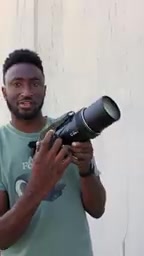
Image Stabilization Is the Real Black Magic
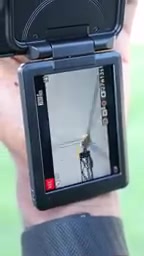
Throughout the review, the feature repeatedly highlighted as "the most impressive part" wasn't the 125x zoom ratio itself — it was the Nikon P1100's image stabilization. Anyone who has shot with long telephoto lenses knows that the longer the focal length, the more dramatically camera shake is amplified. At an extreme focal length like 3000mm, even the slight tremor from breathing can turn an image into a blurry mess.
The P1100's ability to keep the image relatively stable at such extreme focal lengths relies on the synergy between optical image stabilization (OIS) and electronic image stabilization (EIS). OIS works through a floating lens element group inside the lens — gyroscopic sensors detect the direction and magnitude of camera shake in real time, driving compensating elements to shift in the opposite direction, correcting shake before light even reaches the sensor. EIS operates at the sensor and software level, cropping the sensor's edge area to create a buffer zone and using algorithms to adjust the readout area in real time to counteract residual shake. Together, these are known as "dual stabilization" or "hybrid stabilization." At ultra-telephoto focal lengths, stabilization difficulty increases exponentially: every doubling of focal length also doubles the on-screen displacement caused by the same angular shake. At 3000mm, even the faint chest vibrations from a heartbeat — roughly 1–2Hz — produce visible image shake. Nikon has decades of expertise in optical stabilization, and its VR (Vibration Reduction) system is widely recognized as one of the industry's best. This is the technological backbone that gives Nikon the confidence to attempt 125x zoom, and it's the camera's true competitive moat.
The "Ultimate Zoom Camera" for Around $1,000
At a price of approximately $1,000, the Nikon P1100 has earned the title of "ultimate zoom camera." The reviewer wholeheartedly agrees: "This thing is truly amazing."
At this price point, it's virtually impossible to find another product offering the same zoom range. If you tried to achieve a 3000mm equivalent focal length with an interchangeable-lens system, the cost and weight of the lens alone would be enough to scare off the vast majority of photography enthusiasts. To be specific: in full-frame interchangeable-lens systems, the longest commonly produced telephoto prime lenses top out at around 800mm, priced between $10,000 and $20,000, weighing over 4 kilograms. To reach 3000mm equivalent, you'd need to stack teleconverters on an 800mm lens or use an APS-C body's crop factor to "extend" the focal length — but even then, hitting 3000mm directly is extremely difficult. Another option involves catadioptric (mirror) lenses or adapted astronomical telescopes, but these are bulky, difficult to focus, and lack autofocus and stabilization. All told, achieving similar ultra-telephoto results with professional gear could cost $5,000 to $20,000+, with system weight exceeding 5–10 kg, plus tripods and other support equipment.
The Nikon P1100 condenses "telescope-grade" ultra-telephoto capability into a single portable camera body at around $1,000 and roughly 1.5 kg. While its image quality and autofocus performance can't match professional systems, its accessibility and value-for-money advantage is overwhelming — and that's its core competitive edge.
Who Is the Nikon P1100 For? Use Case Analysis
So the question is: who exactly is this extreme zoom camera meant for?

Three Core Use Cases
- Birdwatching Photography: Birds are often distant and skittish. The 3000mm ultra-telephoto lets you capture feather details without getting close — this is the P1100's ideal use case and the primary reason many users choose it. In professional birding, photographers typically need 600–800mm lenses plus cropping to get satisfying bird close-ups. The P1100's 3000mm focal length far exceeds this range, allowing you to shoot undisturbed natural bird behavior from much greater, safer distances — significant for wildlife conservation and ecological documentation.
- Sports Photography: When you're in the stands far from the field, 125x zoom easily closes the gap, pulling distant athletic moments right into the frame without expensive professional telephoto lenses.
- Moon and Astronomical Photography: Capturing lunar surface craters in detail is a classic superzoom camera application and hugely popular in photography communities.
A Thought-Provoking Reminder
The review closes with a half-joking but pointed remark: beyond birdwatching and sports, "if you really want this camera for other reasons, I'd start to question your motives."
This quip highlights the double-edged nature of ultra-telephoto equipment — the powerful reach that enables creative possibilities also means it can capture images from extreme distances that perhaps shouldn't be captured. It's a reminder for every user to respect others' privacy and observe ethical boundaries while enjoying the convenience of technology.
Nikon P1100 Review Summary
The Nikon P1100 is a camera with an extremely clear purpose. It doesn't try to do everything — instead, it pushes "zoom" to the absolute limit of what the industry can achieve. With 24–3000mm focal length coverage, a practical aperture range from F2.8 at wide to F8 at telephoto, stunning image stabilization, and an approachable price of around $1,000, it becomes a nearly irreplaceable choice for specific long-distance shooting scenarios like birdwatching and sports events.
If your shooting needs center around the word "far," the Nikon P1100 is absolutely worth serious consideration. But if you're simply drawn in by a viral zoom video, it might be worth asking yourself first: do you truly need 125x ultra-telephoto capability, or do you just want to own a "cool" camera?
Related articles

RisenX Explained: The Coding Agent Officially Recommended by DeepSeek
RisenX is a DeepSeek-native coding agent featured in DeepSeek's official API docs. It supports cache-first loops, tool-call repair, and Flash/Pro smart switching.

ChordViz Review: A Real-Time Visualization Workbench for MIDI and Audio
In-depth review of ChordViz music visualization tool with real-time MIDI and audio input, chord visualization, notation, and audio-reactive visuals, plus OBS, TouchDesigner and Resolume integration.

3D-Printed Robot Desk Lamp: How to Make a Machine Feel Alive Like a Pixar Character
See how an indie developer uses 3D printing, ROS 2, and a custom animation editor to turn Pixar's iconic desk lamp into a real robot with personality, vision, and RL-driven autonomy.