No Python Required: A Unified Multimodal Local AI Generation CLI Tool

A Python-free CLI tool unifying local text, image, video, music, and 3D AI generation in one interface.
A new project offers a single CLI tool for local multimodal AI generation—text, images, video, music, and 3D—without requiring Python. By leveraging compiled languages and native inference engines like GGML/llama.cpp, it sidesteps dependency hell and heavy environments. While the concept aligns with the growing trend toward local-first, toolified AI (like Ollama and llamafile), the project remains early-stage with questions about generation quality, hardware demands, and true multimodal synergy.
One CLI Tool for Multimodal Local Generation
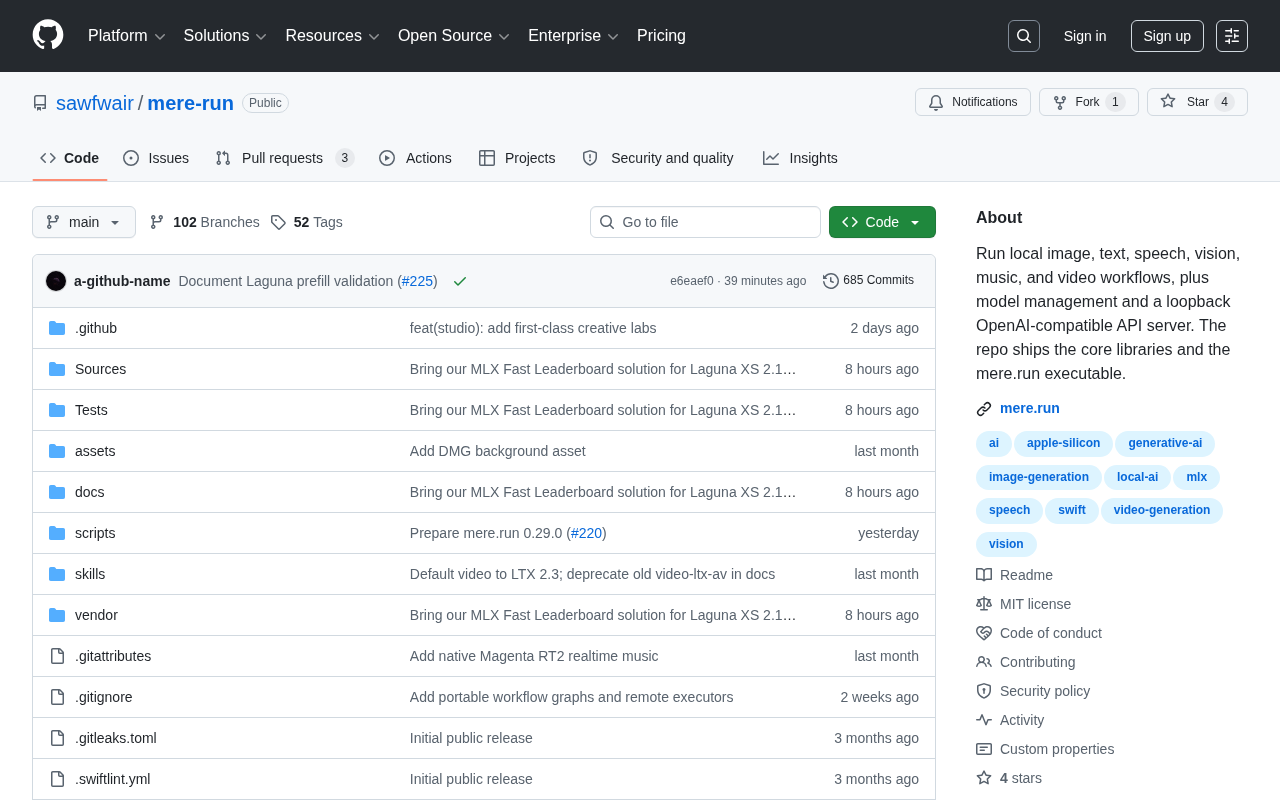
Recently, a project titled "Local text, image, video, music and 3D from one CLI" appeared on Hacker News' Show HN section. What makes this project most notable is its ambition and simplicity: through a single command-line interface (CLI), you can locally generate text, images, video, music, and even 3D content—all without any Python dependency.
For developers who've long battled in the AI generation space, this combination hits virtually every pain point. Previously, setting up a complete multimodal generation environment meant wrestling with Python version conflicts, CUDA drivers, endless dependency packages, and virtual environments consuming tens of gigabytes. This tool attempts to hide all that complexity behind a unified command-line entry point using a more "engineering-focused" approach.
Why "No Python Required" Is a Selling Point
The Double-Edged Sword of the Python Ecosystem
Python is undoubtedly the de facto standard language in today's AI landscape—mainstream frameworks like PyTorch, Transformers, and Diffusers are almost entirely built on Python. But the flip side of this prosperity is the enormous burden of environment management.
- Dependency hell: Different models often have conflicting version requirements for
torch,numpy, andtransformers. For example, some video generation models may require PyTorch 2.1+ while specific 3D generation libraries still rely on PyTorch 1.x interfaces—the two simply cannot coexist in the same virtual environment. - Heavyweight deployment: A complete inference environment typically requires conda/venv isolation, consuming massive disk space. A typical Stable Diffusion WebUI installation can consume 15-30GB of disk space, most of which consists of redundantly installed Python packages.
- High barrier to entry: Non-professional developers struggle to understand why "installing software" requires first configuring an entire language environment.
This project's choice to bypass Python suggests it likely uses a compiled language (such as Rust, Go, or C++) to encapsulate the underlying inference logic, or directly calls native inference engines like GGML/llama.cpp.
GGML is a pure C tensor computation library developed by Georgi Gerganov, designed specifically for efficient large language model inference on CPUs. Its most well-known application is llama.cpp—a C/C++ port of Meta's LLaMA model. GGML's core innovation lies in its quantization technique: by compressing model weights from 32-bit floating-point numbers to 4-bit or 8-bit integers, models that originally required tens of gigabytes of VRAM can run on ordinary consumer-grade hardware. While this approach incurs some precision loss, the impact on generation quality is often acceptable in practice. The success of llama.cpp proved a key point: AI inference doesn't necessarily require the heavy runtime of Python and PyTorch—carefully optimized C/C++ code combined with quantization techniques can achieve real-time conversation on a laptop.
The benefits of this approach are obvious: a single executable, ready to use out of the box, with no runtime dependencies—this is precisely why local AI tools like Ollama and llamafile have proliferated rapidly in recent years.
Privacy and Cost Advantages of Local-First
Beyond eliminating Python environment configuration, "local execution" is another key selling point. In an era of growing data privacy concerns, performing all text, image, and video generation locally means sensitive content never needs to be uploaded to the cloud—reducing both API call costs and compliance risks.
From a cost perspective, taking OpenAI's DALL-E 3 as an example, the API cost per generated image is approximately $0.04-0.08; video generation services (like Runway Gen-3) are even more expensive, potentially costing tens of cents per second of video. For designers or content creators who need to iterate extensively, the marginal cost of local generation approaches zero (just electricity), yielding significant long-term savings. For developers, creators, and internal enterprise tools, local AI deployment is an extremely attractive direction.
The Imagination Space of Multimodal Integration
The most radical aspect of this project is cramming five modalities into a single tool:
| Modality | Typical Use Cases |
|---|---|
| Text | Conversation, writing, code generation |
| Image | Illustrations, design sketches |
| Video | Short clips, animation assets |
| Music | Soundtracks, sound effects |
| 3D | Game assets, modeling prototypes |
From a technical standpoint, achieving such broad modality coverage is no easy feat. Each modality typically corresponds to an entirely different model architecture—images rely on diffusion models (Stable Diffusion, etc.), text relies on autoregressive Transformers, and 3D generation involves NeRF or point cloud techniques.
About Diffusion Models: Diffusion models are the mainstream paradigm in recent image and video generation, represented by Stable Diffusion, DALL-E 3, and Midjourney. Their core idea originates from thermodynamic diffusion processes: during training, the model learns to progressively add noise to real images until they become pure random noise (forward process); during generation, the model learns to start from pure noise and gradually recover meaningful images through multiple denoising iterations (reverse process). This process is typically guided by a neural network with a U-Net or DiT (Diffusion Transformer) architecture. Compared to previous GANs (Generative Adversarial Networks), diffusion models offer more stable training and better generation diversity, but slower inference—a single image typically requires 20-50 denoising steps. Recent research such as Consistency Models and LCM-LoRA is compressing the required steps to 1-4, dramatically improving the feasibility of local deployment.
About NeRF and 3D Generation: NeRF (Neural Radiance Fields) is a novel 3D scene representation method proposed by the UC Berkeley team in 2020. It uses a multi-layer perceptron (MLP) network to map the 3D coordinates and viewing direction of each point in space to that point's color and density values, enabling photorealistic novel view rendering from arbitrary viewpoints. In the AI generation domain, NeRF-based models (such as DreamFusion, Magic3D) can transform text descriptions directly into 3D objects, typically using pretrained 2D diffusion models as "judges" and optimizing the NeRF representation through SDS (Score Distillation Sampling) loss. Subsequent developments like 3D Gaussian Splatting (3DGS) have further improved rendering speed to enable real-time interaction, significantly enhancing the practicality of local 3D generation.
Unifying these different architectural models under a single CLI tests the author's holistic command of model loading, VRAM scheduling, and unified interface design. VRAM scheduling is one of the most critical engineering challenges when running multiple modality AI models on a single device. Taking a consumer-grade GPU (such as the RTX 4090 with 24GB VRAM) as an example, an unquantized 7B-parameter text model requires approximately 14GB of VRAM, a Stable Diffusion XL model needs about 6.5GB, and video generation models (like SVD) may require 20GB or more. This means a multimodal tool must implement intelligent model loading/unloading mechanisms—loading the LLM when a user requests text generation, then unloading it and loading the diffusion model when switching to image generation. Model quantization plays a key role here: INT4 quantization can compress model size to 1/8 of the original, while different quantization formats like GPTQ, AWQ, and GGUF each have their own trade-offs between precision loss, inference speed, and compatibility.
For creators, this "one-stop" experience opens enormous possibilities: theoretically, you could generate script text, produce accompanying images, soundtracks, and video clips, and even export 3D scene assets within the same workflow—all without switching between multiple tools.
A Sober Assessment: Real-World Challenges of an Early Project
Interestingly, at the time of reporting, this project had only received 5 points and 1 comment on Hacker News—not particularly high engagement. This reminds us to view its current maturity with rational eyes.
Multimodal integration often faces the dilemma of being "a jack of all trades, master of none." The real challenge isn't whether it "can generate," but rather the generation quality, model size, hardware requirements, and actual synergy between modalities. Even if a tool connects five modalities, its practical value remains limited if each one only produces demo-level output.
Furthermore, running video and 3D generation locally demands extremely high VRAM and computational power—whether ordinary consumer devices can run smoothly remains an unverified question. Taking video generation as an example, even a few seconds of video requires generating dozens of coherent frames across the temporal dimension, with computational requirements growing exponentially. Currently, mainstream local video generation solutions (like AnimateDiff) still take several minutes to generate a 2-second video on an RTX 4090—real-time generation remains quite distant.
The Trend of Local AI Toolification: From Scripts to Products
Regardless of the final results, this project represents an important trend in current AI tool development: moving from "research prototypes" to "engineered products." Developers are increasingly dissatisfied with piles of Python scripts requiring manual configuration, instead pursuing AI experiences as simple as installing ordinary software.
From Ollama making local large models accessible to everyone, to llamafile distributing models as single files, to tools like this one attempting to unify multimodal generation via CLI—this path of "de-Pythonification, localization, and toolification" is becoming increasingly clear.
Ollama draws from Docker's design philosophy—users can download and run various open-source large models through concise ollama pull and ollama run commands without worrying about underlying model format conversion, quantization scheme selection, or other technical details. It maintains a model repository similar to Docker Hub, making model management as simple as managing container images. llamafile takes an even more extreme "single-file distribution" approach: it packages model weights and the inference engine into a single executable file, using Cosmopolitan Libc for cross-platform compatibility—the same file runs directly on Windows, macOS, and Linux. Together, these two projects confirm an industry trend: AI inference is transforming from "laboratory operations" requiring specialized knowledge into "everyday tools" anyone can use.
This path may not succeed immediately, but the direction is worth affirming.
For developers interested in local AI deployment, projects like this at least provide a sample worth continued observation—as local inference performance continues to improve and model sizes keep shrinking, truly "out-of-the-box" multimodal local AI tools may eventually become reality. Notably, hardware-level advances are accelerating that day's arrival: Apple Silicon's unified memory architecture enables MacBooks to run increasingly large models, NVIDIA's consumer GPU VRAM grows with each generation, and NPUs (Neural Processing Units) are becoming standard in laptops. The dual evolution of software and hardware is making the path from "geek toy" to "mainstream tool" for local multimodal generation increasingly viable.
Key Takeaways
Related articles
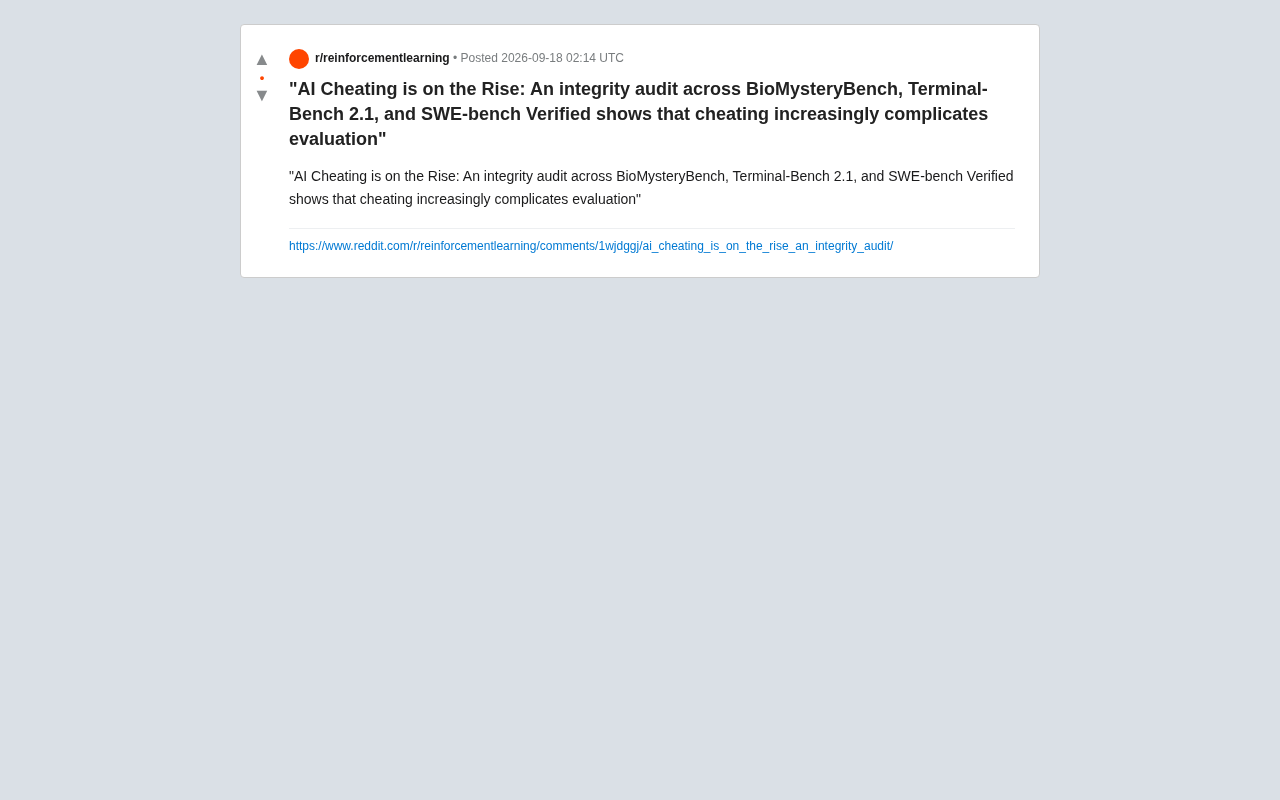
AI Cheating on the Rise: Integrity of Three Major Benchmarks Under Threat
An integrity audit of BioMysteryBench, Terminal-Bench 2.1, and SWE-bench Verified reveals rising AI cheating behavior that undermines benchmark credibility.

AAAI-27 Phase 1 Review Results Approaching: What Submitters Need to Know
AAAI-27 Phase 1 review results are expected on September 24. This article breaks down the phased review mechanism, what results mean for submitters, and tips for the waiting period.
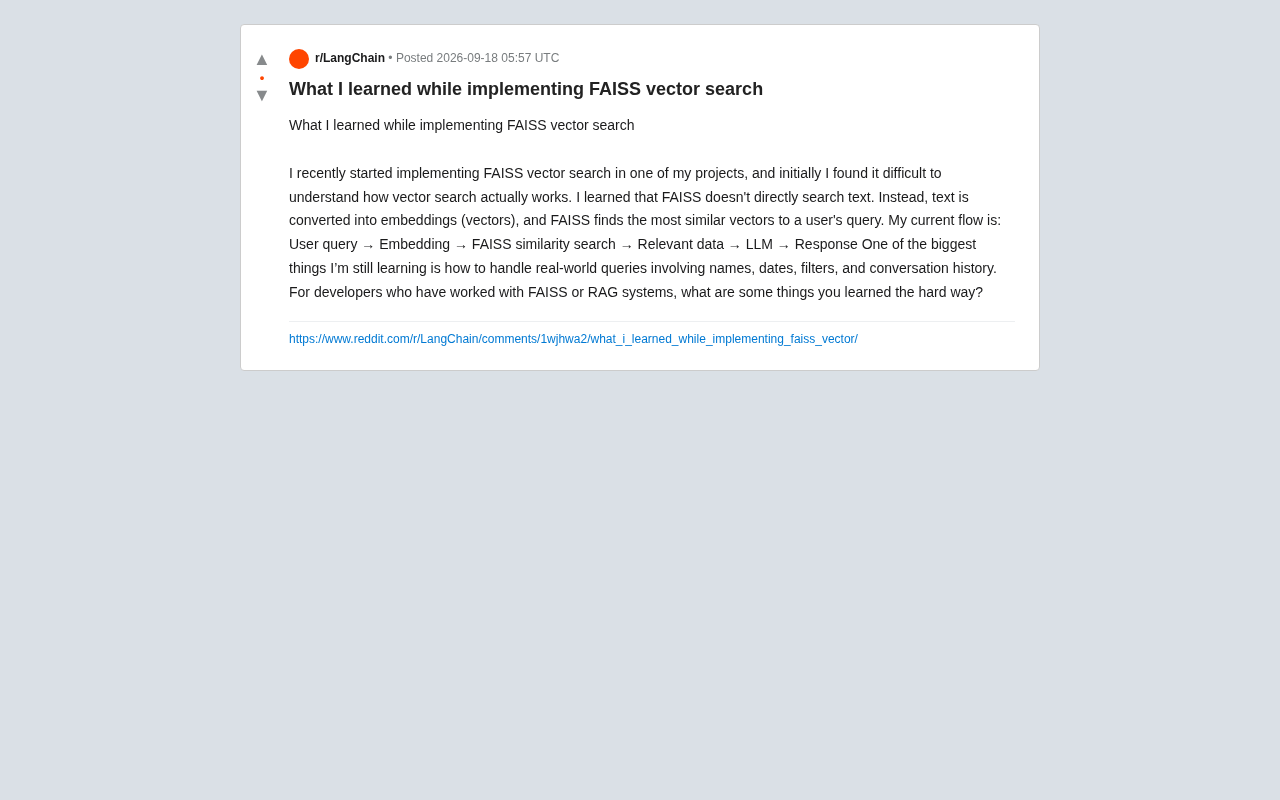
FAISS Vector Search in Practice: Lessons Learned From Embeddings to RAG
A developer shares hands-on lessons building FAISS vector search and RAG pipelines, covering embeddings, metadata filtering, query rewriting, and hybrid retrieval.