Nobel Prize in Chemistry Announced: Kagan and Soai Win, Japan's Nobel Tally Keeps Growing

Nobel Chemistry Prize awarded for asymmetric catalysis as Japan's decades-long basic research investment continues to pay off.
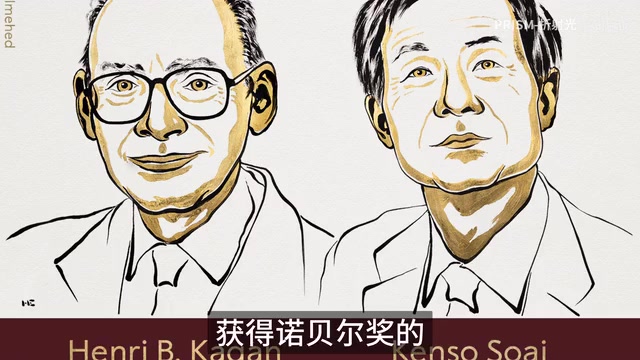
The Nobel Prize in Chemistry has been awarded jointly to French researcher Henri B. Kagan and Japanese chemist Kenso Soai for discovering nonlinear effects and autocatalysis in asymmetric organic synthesis — a highly specialized field focused on the precise creation of chiral molecules critical to drug development. Soai's win renews attention on Japan's 2001 goal of producing 30 Nobel laureates in 50 years; with over 20 already achieved, the country is steadily on track, led by strengths in physics and chemistry. This success reflects decades of stable institutional investment in basic research, and a reminder that Nobel-caliber discoveries are the long-delayed harvest of seeds planted generations earlier.
Nobel Prize in Chemistry Goes to Asymmetric Catalysis
The Nobel Prize in Chemistry has been awarded to French researcher Henri B. Kagan and Japanese chemist Kenso Soai. The two scientists were recognized for discovering nonlinear effects and autocatalysis in asymmetric organic synthesis.
This field is a relatively niche but highly valuable branch of organic chemistry. Asymmetric catalysis focuses on how to efficiently and precisely synthesize compounds with a specific chirality — that is, the "left-handed" or "right-handed" structure of a molecule. Chirality is critically important in pharmaceuticals, materials science, and beyond: two mirror-image forms of the same molecule can have vastly different therapeutic effects, with one being effective and the other potentially harmful. Kagan and Soai's research uncovered the deeper mechanisms behind chiral amplification.
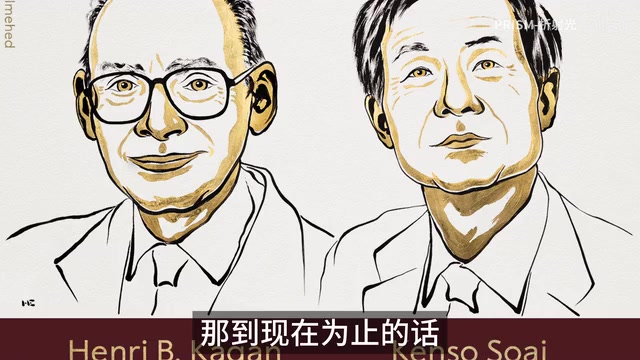
It's worth being upfront: this field has a steep technical threshold. The concepts of nonlinear effects and autocatalysis are not easy to explain quickly, even for many science journalists. At the time the winners were announced, there wasn't even a consensus on the standard Chinese transliteration of their names — a testament to just how specialized their work is.
Chirality is the foundational concept for understanding this field. A chiral molecule is one that cannot be superimposed on its mirror image — much like how your left and right hands are mirror images of each other but cannot be perfectly overlaid. These molecules are called enantiomers: they have the same chemical composition but opposite spatial orientations. Chirality is ubiquitous in nature and in living systems — nearly all amino acids are "left-handed," while most sugars are "right-handed." The goal of asymmetric catalysis is to use a chiral catalyst to preferentially produce one specific enantiomer in a chemical reaction, rather than generating an equal mixture of both (known as a "racemate"). The nonlinear effect discovered by Kagan overturned a previously held assumption in the field: the chiral purity of the catalyst and the chiral purity of the product are not always proportional. A small amount of a chiral catalyst can sometimes yield a product of far greater chiral purity than expected. The asymmetric autocatalysis discovered by Soai is even more remarkable: the reaction product itself acts as a catalyst, promoting its own further synthesis while continuously amplifying chiral purity — a process thought to be potentially related to the breaking of chiral symmetry in the origins of life.
Japan's "30 Nobel Prizes in 50 Years" Plan Steadily on Track
One of the most widely discussed aspects of this year's prize is that yet another Japanese researcher has joined the Nobel laureate roster — bringing to mind Japan's ambitious goal, set out in its Second Science and Technology Basic Plan, to produce 30 Nobel Prize winners within 50 years.
When the plan was proposed in 2001, many dismissed it as overly optimistic. But looking at the actual progress, Japan is steadily closing in on that target. To date, more than 20 Japanese researchers have won Nobel Prizes, and if all Japanese-nationality laureates throughout history are counted, the total approaches 30.
The distribution across disciplines clearly reveals Japan's strengths:
- Physics: The most, approximately 12 laureates
- Chemistry: Second place, around 9 including this year's winner
- Physiology or Medicine: Approximately 6
- Literature: 2
- Plus additional laureates in Peace and other categories
This distribution speaks to Japan's deep accumulated strength in the fundamental natural sciences, particularly in physics and chemistry.
Japan's "30 Nobel Prizes in 50 Years" goal originates from the Second Science and Technology Basic Plan (科学技術基本計画), enacted in 2001. The plan is revised by the Japanese government on a rolling five-year cycle and has continued since the First Plan in 1996 — it serves as the top-level policy framework for Japan's national research strategy. The "30 Nobel Prizes" formulation was first raised by then-Prime Minister Yoshiro Mori during Diet deliberations, originally as a way to advocate for greater funding for basic research, and was subsequently incorporated into the plan's language. It's worth noting that this target is not a formal quantitative performance metric, but rather a directional vision. The real policy levers behind it are long-term funding guarantees for national universities and research institutions, as well as the promotion of independent principal investigator (PI) systems for young researchers. The growing Nobel count is, in a sense, an outward expression of the compounding returns from these long-term institutional investments — not a result driven by the target itself.
The Long-Term Logic of Basic Research
Counting from 2001 when the plan was proposed, Japan's Nobel output over the past two-plus decades is quite impressive — averaging roughly one new laureate every two years. This pace is rare anywhere in the world, and it reflects a sustained, stable commitment to basic research.

It's worth clarifying that some of these laureates won their prizes before the 2001 plan was established. So strictly speaking, Japan has not yet fully met the "30 in 50 years" milestone by the plan's own timeline — but the pace of progress has turned what once seemed like a slogan into a tangible reality.
The Nobel Prize's well-known time lag is a given in the scientific community: many award-winning discoveries were made decades before the recognition. This means today's honors are the harvest of seeds planted in research programs from decades past. Japan's story perfectly illustrates the principle that basic research often takes ten, twenty, or even thirty years to bear fruit.
Lessons for the Scientific Ecosystem
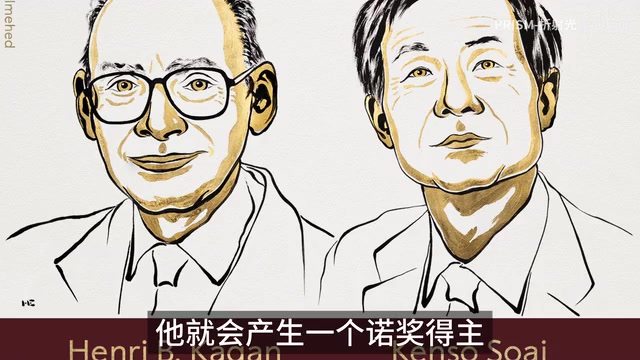
The awarding of the prize to Kagan and Soai once again shines a spotlight on basic research fields that seem obscure and far removed from public attention. Areas like asymmetric catalysis may not generate direct applications in the short term, but they could profoundly shape industries like pharmaceuticals and materials science for generations to come.
For any country or institution hoping to make its mark in frontier science, Japan's experience offers a valuable reference point: a clear long-term goal, sustained and stable funding, and genuine respect for basic research — all three are indispensable. A Nobel Prize is never a fruit you can harvest with a short sprint.
The specific scientific significance of this year's Chemistry Prize still awaits deeper explanation and broader public communication. But the signal it sends is already clear: in an era prone to short-termism, those who hold firm to the long game in basic research will ultimately be rewarded.
Related articles

WorkBuddy Step-by-Step Tutorial: Get an Automated Workflow Running in Half an Hour
A step-by-step breakdown of the WorkBuddy automated workflow: why most people only use it as a chat app, how the 27-anchor course and 12 templates help beginners get up and running in half an hour, plus notes on usage boundaries.

The Truth About Free Claude Code: Three Legitimate Paths and One Scam
Is free Claude Code possible? We break down the real cost of Pro and Max (with exchange rates and taxes), how community free methods work and their privacy trade-offs, plus fake installers and phishing traps—and three legitimate free paths.
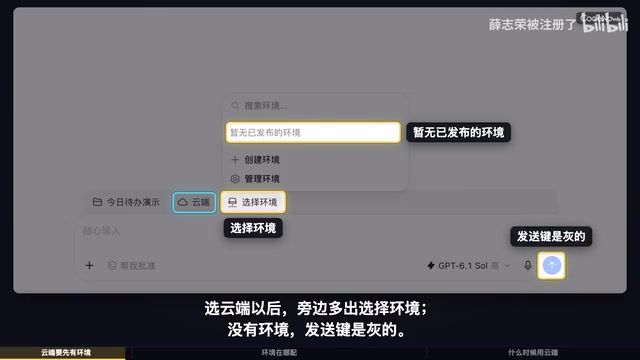
Codex Cloud Mode Explained: Environment Setup and Use Cases
This article explains how Codex cloud mode works, environment setup steps, and use cases, including how to create environments, connect GitHub repositories, set scheduled tasks, and compare cloud vs. local mode.