Nobel Prize in Chemistry: Molecular Chirality and the Mechanism of Chiral Amplification

Kagan and Soai won the 2026 Nobel Prize in Chemistry for revealing the chiral amplification mechanism that explains why life chooses single-chirality molecules.
The article introduces the 2026 Nobel Prize in Chemistry awarded to Henri Kagan and Kensō Soai for their pioneering research on molecular chiral selection mechanisms. Starting from the symmetric synthesis dilemma, it notes that ordinary chemical reactions produce 50-50 racemic mixtures, while biological systems use only specific chiral forms. Kagan and Soai showed that a single chiral molecule can act as a molecular machine, exponentially amplifying a tiny initial chiral bias (such as 51%) to very high enantiomeric excess through autocatalysis and enantiomeric inhibition. This mechanism provides experimental evidence for the origin of chirality on early Earth, but is not a complete explanation for the origin of life. The article also highlights the critical role of chiral control in the pharmaceutical industry, using the Thalidomide tragedy to illustrate that two enantiomers may have one that treats disease and one that causes harm. It concludes with the core insight: nature may need only a tiny initial bias plus a suitable amplification mechanism to break symmetry.
Chirality—the "left-handedness" and "right-handedness" of molecules—is one of the most fascinating puzzles at the intersection of chemistry and biology. Why does life almost exclusively use left-handed amino acids and right-handed sugars? Why do molecules synthesized symmetrically in the lab get recognized in only one form inside living organisms? According to a YouTube science current-events channel, chemists Henri Kagan and Kensō Soai have been awarded the 2026 Nobel Prize in Chemistry for revealing the selection mechanism of molecular chirality.
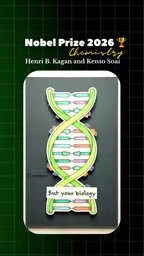
The Symmetric Synthesis Dilemma: Why Labs Always Get a 50-50 Mixture
In ordinary chemical reactions, the probability of producing left-handed and right-handed molecules is nearly equal, resulting in a 50-50 racemic mixture. But biological systems are extremely "picky"—they need only one specific chiral form.
This raises a fundamental question: how did nature initially break this symmetry? If in the primordial soup of early Earth, right-handed molecules were only slightly more abundant than left-handed ones, how was this tiny initial bias preserved and amplified to eventually establish the uniform chirality of biological molecules?
Kagan and Soai's research provides a key answer: a single chiral molecule can act as a molecular machine, catalyzing and guiding the production of more molecules of the same chirality.
Racemic Mixtures and Enantiomers
A "racemic mixture" refers to a system in which equal amounts of left-handed and right-handed molecules are mixed together. Such mixtures typically have no optical activity—because the two enantiomers rotate polarized light in opposite directions with equal magnitude, canceling each other out.
"Enantiomers" are a pair of molecules that are mirror images of each other and cannot be superimposed by rotation, just like the relationship between a left hand and a right hand. They have nearly identical physicochemical properties in achiral environments, but can behave drastically differently in chiral environments (such as enzymes and receptors).
A commonly used metric for chiral purity is "enantiomeric excess" (ee value), defined as the difference between the proportions of the two enantiomers divided by their sum, expressed as a percentage. ee=0% represents a completely racemic mixture, while ee=100% represents a single chiral pure substance. The Soai reaction is remarkable precisely because a very small initial ee value (such as 2%) can be amplified to nearly 100%, which is difficult to achieve with ordinary stoichiometric reactions.
The Mechanism of Chiral Amplification: From 51% to Overwhelming Dominance
Intuitively, if right-handed molecules initially account for 51%, many people would assume that the final product would also contain about 51% right-handed molecules. But the Soai reaction reveals a completely different picture.
Right-handed molecules can not only catalyze the production of their own copies, but in certain chemical systems, they can also actively suppress the formation of left-handed molecules. This dual mechanism of "positive feedback + negative inhibition" allows the initial tiny bias to be amplified exponentially.
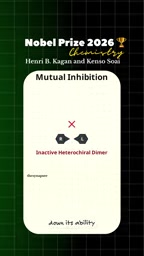
In the Soai reaction, an extremely small initial enantiomeric excess (ee value) can be amplified to a very high enantiomeric excess. The result: molecules of one chirality become overwhelmingly dominant, while the other becomes almost negligible. This provides experimental evidence for the idea that "a tiny imbalance in early Earth's chemical reactions may have laid the foundation for the chirality of biological molecules."
It should be emphasized that the Soai reaction is an important example in the field of chiral amplification, but it is not a complete explanation for the origin of life—it demonstrates a mechanistic possibility, not a complete historical pathway.
Autocatalysis and Chiral Autocatalysis
The core mechanism of the Soai reaction is "autocatalysis": the reaction product itself can catalyze its own formation. In chiral autocatalysis, one enantiomer of the product preferentially catalyzes the formation of molecules with the same chirality as itself, creating a positive feedback loop.
More ingeniously, the catalyst in the Soai reaction (a chiral amino alcohol zinc complex) not only accelerates the formation of same-chirality products but also inhibits the formation of the opposite chirality product through kinetic competition. This combination of "chiral autocatalysis + enantioselective inhibition" allows the initial tiny ee value to be amplified exponentially.
Mathematically, the growth of enantiomeric excess driven by positive feedback can be approximately described by nonlinear dynamics. The smaller the initial bias, the longer the time required for amplification, but it will ultimately still tend toward single-chirality dominance. This offers a possible chemical explanation for the "origin of chirality" question: if early Earth produced a tiny chiral bias due to accidental factors (such as circularly polarized light or adsorption on mineral surfaces), autocatalytic amplification mechanisms could have gradually amplified it to the uniform chirality required by biological molecules.
From Nobel Prize to Pharma: The Practical Value of Chiral Control
Chiral chemistry is far more than theoretical curiosity. In the pharmaceutical industry, the chiral form of a drug molecule directly relates to its efficacy and safety—two enantiomers may have one that treats disease and one that causes harm, with the most classic case being the Thalidomide tragedy.

Therefore, the ability to selectively synthesize a target chiral form is one of the core capabilities of modern drug development. Kagan and Soai's work provided a theoretical foundation for asymmetric catalysis and chiral amplification, and directly influenced industry strategies for synthesizing chiral drugs.
Core Insight: Nature may not need a large initial bias to break symmetry. A tiny tilt of 51:49, combined with a suitable amplification mechanism, is enough to determine which hand life's molecules will follow.
The Thalidomide Tragedy and Chiral Drug Regulation
Thalidomide was marketed in the late 1950s as a sedative to relieve morning sickness in pregnant women. At the time, it was sold as a racemate, containing both R- and S-enantiomers. Subsequent research found that the R-enantiomer has sedative effects, while the S-enantiomer is teratogenic, causing severe limb deformities in tens of thousands of infants worldwide.
This tragedy directly pushed drug regulatory agencies to impose strict requirements on chiral drugs: in 1992, the U.S. FDA issued a policy requiring that new drug applications clearly specify chiral composition and separately evaluate the pharmacology and toxicology of each enantiomer. Since then, single-enantiomer drugs (chiral switch) have become an important trend in the pharmaceutical industry, also spurring the rapid development of asymmetric catalysis and chiral resolution technologies. It is against this backdrop that Kagan and Soai's work provided the theoretical foundation and methodological tools for efficiently and highly selectively synthesizing single-chirality drugs.
One-line Summary
Kagan and Soai won the 2026 Nobel Prize in Chemistry for revealing the chiral amplification mechanism that explains why life chooses single-chirality molecules.
Paragraph Summary
The article introduces the awarding of the 2026 Nobel Prize in Chemistry to Henri Kagan and Kensō Soai for their pioneering research on the mechanism of molecular chiral selection. Starting from the symmetric synthesis dilemma, it points out that ordinary chemical reactions produce 50-50 racemic mixtures, while biological systems use only specific chiral forms. Kagan and Soai's research shows that a single chiral molecule can act as a molecular machine, exponentially amplifying a tiny initial chiral bias (such as 51%) to a very high enantiomeric excess through autocatalysis and enantiomeric inhibition. This mechanism provides experimental evidence for the origin of chirality on early Earth, but is not a complete explanation for the origin of life. The article also emphasizes the critical role of chiral control in the pharmaceutical industry, using the Thalidomide tragedy as an example to illustrate that two enantiomers may have one that treats disease and one that causes harm. Finally, it summarizes the core insight: nature may need only a tiny initial bias plus a suitable amplification mechanism to break symmetry.
Related articles

WorkBuddy Step-by-Step Tutorial: Get an Automated Workflow Running in Half an Hour
A step-by-step breakdown of the WorkBuddy automated workflow: why most people only use it as a chat app, how the 27-anchor course and 12 templates help beginners get up and running in half an hour, plus notes on usage boundaries.

The Truth About Free Claude Code: Three Legitimate Paths and One Scam
Is free Claude Code possible? We break down the real cost of Pro and Max (with exchange rates and taxes), how community free methods work and their privacy trade-offs, plus fake installers and phishing traps—and three legitimate free paths.

Codex Cloud Mode Explained: Environment Setup and Use Cases
This article explains how Codex cloud mode works, environment setup steps, and use cases, including how to create environments, connect GitHub repositories, set scheduled tasks, and compare cloud vs. local mode.