Nobody Asked for a Crab Chair: The False-Demand Trap in Product Design

The 'Crab Chair' metaphor unpacks why AI-era products keep solving problems nobody actually has.
Using a Hacker News post titled 'Nobody Asked for a Crab Chair' as its starting point, this article defines the 'crab chair' as any product that's technically flashy but lacks genuine user demand. It identifies three root causes — technology-driven thinking, creator projection, and the chase for novelty — and argues that the AI boom has made these tendencies worse by lowering the barrier to shipping 'AI for AI's sake' features. The piece closes with three diagnostic questions and practical frameworks like Customer Development and Fake Door Testing to help creators validate real demand before building.
The Crab Chair That Started It All
A post on Hacker News titled Nobody Asked for a Crab Chair sparked a wave of discussion. Behind its slightly sardonic title lies a problem that has long plagued product development yet continues to be overlooked: creators tend to obsess over building things they think are cool, rarely pausing to ask — do users actually need this?
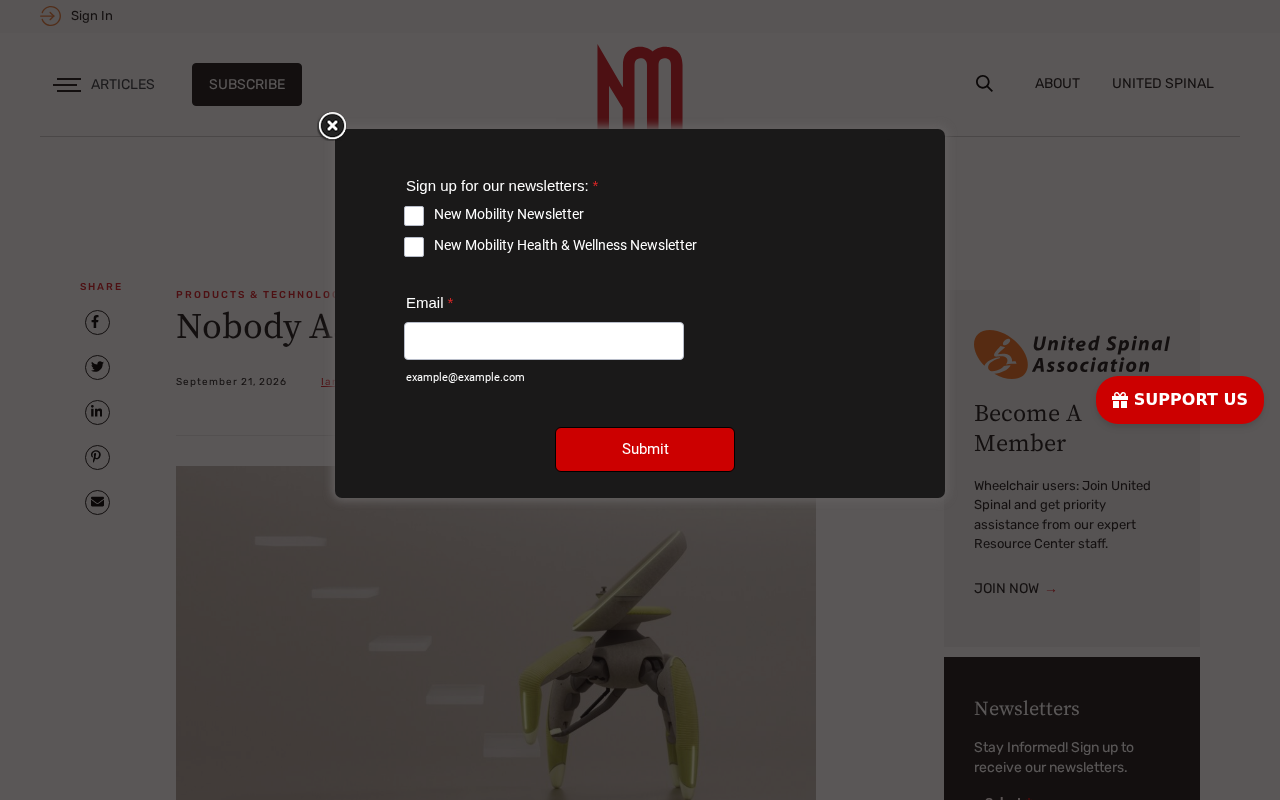
The "crab chair" serves as a metaphor for a product that is visually striking and perhaps technically impressive, yet lacks any genuine demand in real-world usage. It might generate buzz and turn heads, but once the novelty fades, it's left collecting dust.
Since the original post consists only of its title and limited community discussion (20 upvotes, 24 comments), this article uses it as a springboard to explore what this phenomenon means for the broader tech and AI product landscape.
False Demand: The Hidden Driver Behind Product Failures
In the tech industry, products that fail due to "false demand" are far from rare. Teams pour resources into something, swept up in their own technical enthusiasm or market hype, only to ship a product that feels innovative but attracts no real users.
Several underlying forces typically drive this pattern:
- Technology-driven rather than need-driven: Engineers and designers easily fall into the trap of "we can build it, so we will," treating technical capability itself as the product's value.
- Creator projection: Mistaking "what I want" for "what users want," with little genuine research or validation of real user needs.
- Chasing attention and showing off: A bizarre or eye-catching design can generate short-term buzz — but attention is not the same as willingness to pay or long-term retention.
The crab chair is a perfect metaphor for this kind of product — striking enough to get noticed, yet unable to answer the most fundamental question: who would actually use it, and why?
Why False Demand Is an Even Bigger Risk in the AI Era
The current AI wave has made this old problem considerably sharper. A flood of products have entered the market under the banner of "AI-powered," many of which simply bolt large language model capabilities onto existing features — manufacturing "AI for AI's sake" functionality.
These products tend to share a few telltale characteristics:
Feature Bloat, Disconnected from Real Scenarios
AI gets treated as a selling point rather than a solution — chat boxes, generate buttons, and smart assistants are shoehorned into workflows where users never needed them. Rather than improving the experience, this adds cognitive overhead.
Dazzling in Demos, Useless Day-to-Day
Many AI features shine brilliantly during demos and draw enthusiastic applause, but the moment they enter real, high-frequency usage, their reliability, accuracy, and practical utility fall apart. This is the crab chair product in its purest form — impressive to look at, frustrating to use.
Confusing Novelty with Value
Novelty has a shelf life. A feature that makes someone say "wow" will be abandoned quickly if it doesn't consistently solve a real problem. True product value comes from whether something can reliably and smoothly fit into a user's actual workflow.
This phenomenon has a well-established counterpart in product management: "gold plating" — when development teams add features beyond what was actually asked for or needed. In the AI era, this tendency is amplified by the low barrier to integrating large language models: calling an API is enough to claim a product "has AI capabilities," which drastically lowers the production cost of false-demand features and rapidly inflates the supply-side bubble. Venture capital's enthusiasm for the "AI-native" label further reinforces this incentive structure — startups are motivated to ship demonstrable AI interfaces before validating demand, trading on valuation premiums during the fundraising window.
How to Avoid Building a Crab Chair
For product creators, this metaphor offers a useful mirror. Before launching a new project or feature, ask yourself these questions — and keep asking them:
- Is this need real, or did we invent it? Have actual users ever expressed this pain point unprompted?
- If you strip away the flashy technology, does it still have value? Remove the "AI" and "innovation" labels — does the core value proposition still hold up?
- Will users pay for it or keep coming back? There is often a massive gap between attention and actual adoption.
Products built on real needs endure even when they're plain. Products built on technical showmanship, no matter how clever, will ultimately face the same fate: nobody asked for them.
The Lean Startup methodology offers a practical framework here through "Customer Development": before writing a single line of code, validate your assumptions through interviews, observation, and small-scale experiments — distinguishing between "known facts" and "hypotheses to be tested." An even more actionable tool is the Fake Door Test — launch a feature entry point or landing page before the feature itself is built, then measure real user click behavior to gauge willingness to pay or use, determining at minimal cost whether demand actually exists. The shared premise of all these approaches is this: "what we think users want" and "what users will actually spend time or money on" are two separate propositions that must be validated independently.
Closing Thoughts
Nobody Asked for a Crab Chair uses an absurd image to pinpoint the most easily overlooked — and most fatal — problem in product development. In a world where technical capabilities grow ever more powerful and AI features are increasingly within reach, resisting the urge to build something simply because you can, and returning to the fundamental question of whether users genuinely need it, matters more today than ever before.
After all, no matter what shape a chair takes, a good chair is simply one that lets you sit comfortably.
Related articles

When Did Paid Childcare Become the Norm? Working Mothers and the Evolution of Childcare
When did paid childcare become the norm? This article traces the evolution from the rise of childcare centers in the 1970s–80s and the 1990s linking of federal subsidies to work requirements, to declining stigma and rising costs, and explores advocates' 25-year effort to catch up with other countries on childcare and paid parental leave.

Red Flags for Product-Market Fit: A Practical Guide from Top VCs and the Superhuman Founder
Investors from Iconiq and Sapphire Ventures and Superhuman founder Rahul Vohra share PMF red flags and practical methods, including the 40% disappointment rule, retention curves, and acquisition costs.

What Task Should AI Agents Take Over Most? Heated Reddit Discussion
Reddit discussion: Which task do you most want AI agents to take over completely? Cross-app data migration, CRM updates, and report generation top the list, but insufficient reliability and the trust gap are the biggest obstacles to automation adoption.