Nordic AI Startup Field Notes: From Healthcare Agents to AI-Designed Molecules
Nordic AI startups go deep into healthcare, law, and biomanufacturing, building moats with programmatic guardrails and sovereign stacks.
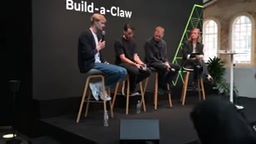
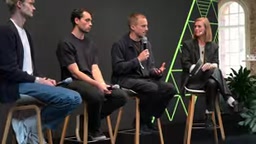
This article captures the Stockholm Build-a-Claw fireside chat with the founders of Corti, Legora, and Root Bio. The three companies embed AI into clinical workflows, the legal industry, and biomanufacturing: Corti built about 30 sub-agents for Europe's largest EHR system with programmatic guardrails; Legora reached $100M in 18 months by iterating fast before PMF and shifting to reliability after; Root Bio automated the path from prompt to molecule. The founders see little gap between open-source and frontier models and factor governance and provenance into model choice. The Nordic edge lies in application-layer distribution and a clearer regulatory framework, turning compliance into a moat.
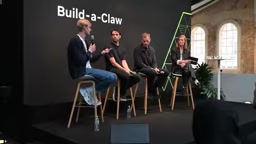
The Nordic AI startup ecosystem is forging a distinct path: rather than chasing model scale alone, it embeds AI into high-barrier domains like healthcare, law, and biomanufacturing. At a Build-a-Claw fireside chat in Stockholm, the founders of Corti, Legora, and Root Bio shared their practices—and revealed the real speed and costs of this ecosystem.
Three Nordic Companies, Three Distinct Paths to AI Deployment
The conversation was moderated by Fia, Managing Director for the Nordics at the Northscape Foundation, with three guests representing healthcare, law, and biotech.
Corti founder Lars holds a PhD in machine learning and previously worked at Apple. Today he leads a team building agentic infrastructure for clinical workflows. In his words, the company started in healthcare and has since expanded into life sciences, insurance, and finance. Developers can visit docs.corti.ai to explore its capability stack, which covers large language models, speech-to-text, agentic frameworks, and more.
Legora CEO Jacob joined a few weeks after YC and built the entire engineering organization from scratch. He offered growth numbers bluntly: $100M in 18 months, then another $100M in the following 6 months. The company focuses on AI workflows for the legal industry.
Root Bio's Martin shifted the lens to the lab. He started at KTH and Harvard Medical School designing a molecule that could reduce methane emissions from dairy cows. Three years later, the company has automated the entire process: AI designs novel molecules, and robots validate them in the lab.
What Agents Are Actually Doing for People
The moderator's first question was concrete: name one task an agent has already completed end-to-end in place of a human.
Lars's answer was coding—many users on the platform are doing coding, and the company itself writes code end-to-end internally. Jacob gave a more specific scenario: incident response, where the system can handle failures triggered by pushed code, and the process is quite smooth. Martin's answer was the most vivid: from a single prompt to a molecule in the lab.
These three answers neatly sketch three layers of agent capability—software production, operational response, and scientific discovery. You may not have noticed that coding was mentioned by two founders at once, and Lars added that GPT usage distribution is currently concentrated in coding as well.
Agentic framework refers to a software architecture that gives large language models the ability to plan autonomously, call tools, and execute multi-step tasks. Typical patterns include ReAct (reasoning-acting loops), function calling, and multi-agent collaboration. Unlike single-turn Q&A, agentic systems maintain state, decompose goals, and adjust next actions based on intermediate results, which places higher demands on error handling, observability, and permission control. In healthcare, legal, and similar scenarios, agentic frameworks usually need deep integration with business systems and must include human review checkpoints or hard interception rules—this is also the premise of the "programmatic guardrails" discussion below.
The Other Side of Hypergrowth: The Crash-and-Burn Moments Not in the Pitch Deck
Jacob's candor about the cost of growth was the most information-dense part of the conversation. He recalled the early days when demos frequently broke: co-founder Max would call anxiously saying "it won't run," and the whole team would troubleshoot together.
His lesson was phased: before finding product-market fit, you can iterate quickly and take shortcuts—these "yank shit" moments let the team iterate fast enough; once a direction is confirmed as a long-term need, you must shift to building reliability and robustness. This "get it running first, then harden it" logic matches the real rhythm of many startups, but few are willing to say it publicly.
Lars added an observation about Legora from another angle: they start from distribution and customers and build the product in reverse, whereas about 90% of teams do the opposite—build the product first, then look for customers.
Healthcare Agents: 30 Sub-agents and Programmatic Guardrails
Lars's case study was Europe's largest EHR (electronic health record) system, covering the Nordics and much of Europe, where agents are already live in production.
His judgment was blunt: clinicians inherently hate software—they don't stare at screens, they stare at patients. So this EHR vendor built a system through Corti's API containing about 30 sub-agents, partly using an orchestrator-plus-sub-agent architecture and partly using state graphs.
The key is the cost of error. A "Hi {name}" mistake in a marketing email is tolerable; in a clinical setting it is not. So the system enforces strict pre-checks—agents cannot bypass them and continue. Lars stressed that these are not flashy trunk guardrails, but programmatic guardrails wrapped around the agentic system.
EHR (Electronic Health Record) is the core system healthcare institutions use to store patient records, medications, test results, and clinical decision information. Europe's EHR ecosystem is highly fragmented, with different countries and hospital groups using different vendors, all constrained by GDPR and national healthcare data regulations. Embedding agents into EHRs means handling both structured and unstructured clinical data, complying with interoperability standards such as HL7 FHIR, and meeting compliance requirements for audit trails, access control, and patient privacy. As a result, agent design in clinical settings often prioritizes "low cost of error" over general-purpose capability.
The Gap Between Open-Source and Frontier Models, and Sovereign AI
When asked about the gap between open-source and frontier models, the three founders converged: the gap is small. Martin mentioned Root Bio would publish a whitepaper detailing this, while Jacob emphasized that benchmarks depend on the specific task and that ecosystem diversity is itself a good thing.
Lars added a detail: many people ask why not use Claude, but Claude only works with its own models, whereas these abstraction layers perform better in some scenarios.
On sovereign AI, Corti's approach is a fully sovereign stack by design, deployable on any compliant cloud. Legora factors governance and provenance into model selection—some customers have trust concerns about US models, others about Chinese models, and the company must adapt to customers' risk preferences.
Lars also shared an interesting test: a developer built a weekend project called CodingBridge that hooked Claude Code's harness to Corti's models. Some developers who had been strong advocates of Claude participated in an A/B test and couldn't tell the difference.
Sovereign AI refers to a country's or organization's ability to ensure its AI systems are free from external jurisdiction or single-vendor control in terms of data storage, model training and inference, supply chain, and governance rules. In Europe, sovereign AI is often tied to GDPR, the EU AI Act, and public-sector procurement rules, requiring data not to leave the country, models to be auditable, and vendors to be replaceable. Implementation paths include deploying open-source models on local or regional clouds, adopting end-to-end encryption with bring-your-own-key (BYOK), and retaining model provenance metadata. For startups, a sovereign stack is both a compliance cost and potentially a differentiator for regulated customers.
Why the Nordics: Distribution Strength and Regulatory Tailwinds
Martin explained why Root Bio is headquartered in Stockholm: it's a hub for CME5 capital, with strong data and talent foundations, and in the AI era, application-layer capabilities are further amplified. He used a phrase—Stockholm is "impact capital," where impact and AI intersect.
On regulation, Lars's view runs counter to the usual complaints: the EU AI Act and good-practice codes in healthcare and life sciences are now relatively clear, which actually creates barriers for non-European competitors. He even said the US market is a competitive advantage for Corti, while the EU's problem is that it has been "talking about this since 2010" and only now is it truly landing.
Asked about the future of the legal profession, Jacob's framework was: agents take over all the tedious tasks no one became a lawyer to do—legal research, finding key clauses in massive contracts—while human lawyers spend their time judging risk appetite: does the client want speed, conservatism, or aggression? His hope is that efficiency gains pull legal services off the trajectory where prices rose 10x over the past five to seven years, making them more accessible.
Advice for Developers: Try Something New Every Week
In the closing segment, the moderator asked each founder to recommend a tool. Lars urged everyone to try Corti's API this week—it runs in seconds. Jacob's advice was more macro: the frontier of AI changes every 6 to 12 months, no one has truly figured it out, and to stay at the frontier you have to try every new thing and be willing to grant it access you wouldn't normally give.
Martin's addition returned to the form of agents: from chat to team to agent, the interaction paradigm is still evolving, and the possibilities of this generation of models and combinations simply didn't exist before.
This conversation had no grand narrative—the three founders talked about specific failures, specific architectural choices, specific regulatory clauses. The sample value of Nordic AI startups may lie precisely here: going deep in regulated industries and turning compliance from a burden into a moat.
One-line Summary
Nordic AI startups go deep into high-barrier domains like healthcare, law, and biomanufacturing, building moats with programmatic guardrails and sovereign stacks.
Paragraph Summary
This article captures the Stockholm Build-a-Claw fireside chat with the founders of Corti, Legora, and Root Bio. The three companies embed AI into clinical workflows, the legal industry, and biomanufacturing respectively: Corti built about 30 sub-agents for Europe's largest EHR system, emphasizing programmatic guardrails; Legora reached $100M in 18 months, learning to iterate fast before PMF and shift to reliability after; Root Bio achieved end-to-end automation from prompt to molecule. The founders see little gap between open-source and frontier models and factor governance and provenance into model selection. The Nordic advantage lies in application-layer distribution and an increasingly clear regulatory framework, turning compliance from a burden into a moat.
Related articles

The Truth Behind Titanic's Sinking: Key Decisions and Communication Failures in the National Geographic Documentary
National Geographic's The Unsinkable Ship uses survivor testimony to reconstruct Titanic's fatal decisions—from the missing MSG telegram prefix and the broken boiler-room-to-bridge link to how 'unsinkable' thinking delayed damage control and evacuation.

74M-Parameter Open-Source Model Partially Outperforms Jev AI in Testing
Fastino AI's Glider 2.5 models, with just 74M–300M parameters, reportedly outperform Jev AI in some guardrail benchmarks per YouTube testing, run on consumer hardware, and even play Doom. We analyze small models' competitiveness and deployment value on specific tasks.

Gemini 4 Argon Hands-On: Aggressive Pricing, 3D Capabilities Need Coaching
Gemini 4 Argon hands-on: limited-time $2/$10 pricing, million-token output, strong 3D and reverse-engineering work, but weak front-end aesthetics and zero-shot ability need coaching.