NotebookLM Usage Limits Are Here: A Complete Guide to Google's Flexible Quota System
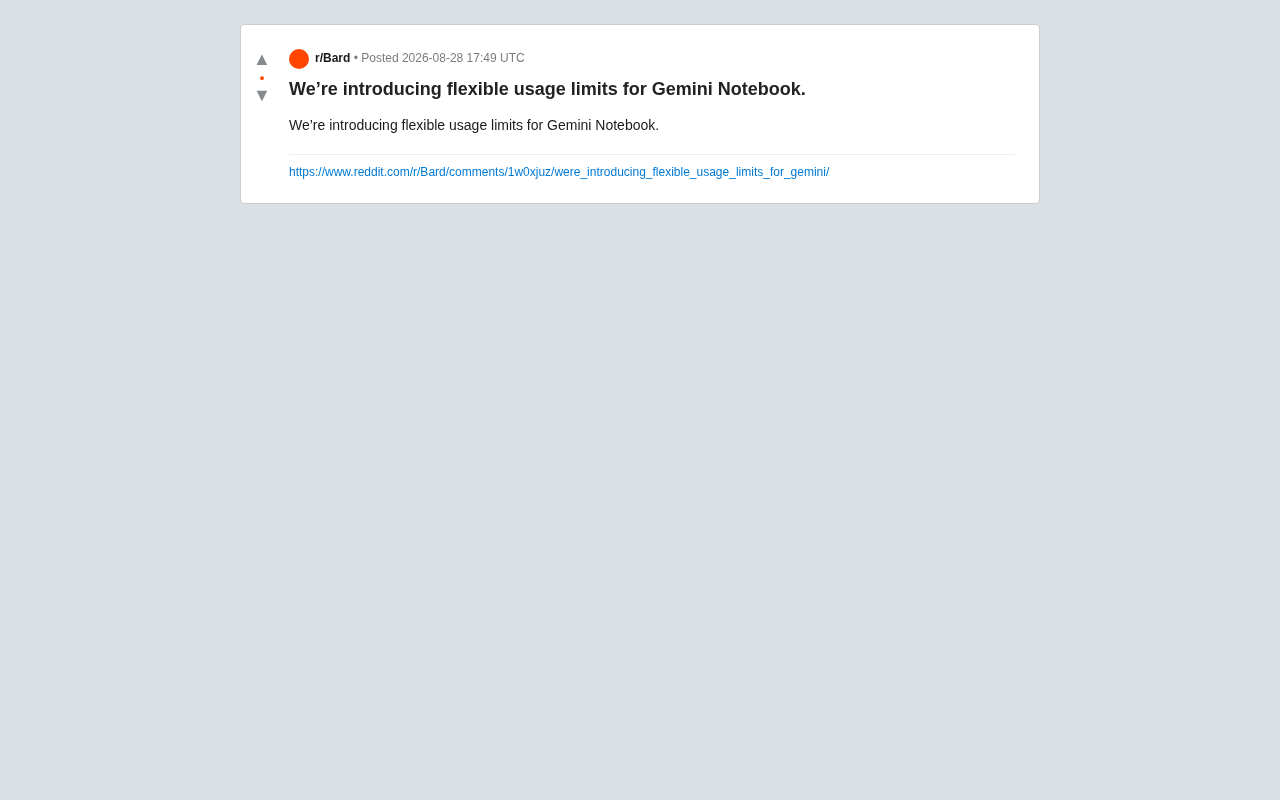
Google introduces flexible usage limits for NotebookLM, signaling a shift toward sustainable AI operations.
Google is rolling out flexible usage limits for its AI note-taking tool NotebookLM, dynamically adjusting quotas based on subscription tier and system load. While casual users will see little impact, power users may need to rethink workflows or upgrade to paid plans. The move reflects a broader industry trend as generative AI services transition from free unlimited access to more sustainable, tiered pricing models.
Google Adjusts Its Usage Policy for NotebookLM
Google recently announced that it will introduce flexible usage limits for its AI note-taking tool NotebookLM (also known as Gemini Notebook). On the surface, this is just a product operations update, but for users who have long relied on NotebookLM for research, learning, and content organization, it reflects the broader challenges generative AI products face in balancing commercialization and resource allocation.
Since its launch, NotebookLM has rapidly built a loyal user base in academia, scientific research, and knowledge management, thanks to its unique ability to generate answers based on user-uploaded materials and its Audio Overview feature. Unlike ordinary AI chatbots, NotebookLM's core strength lies in its Grounded Generation mechanism — users upload PDFs, web pages, YouTube videos, and other materials, and the model's responses are strictly anchored to these sources rather than relying on pre-trained knowledge, significantly reducing hallucination risk. Under the hood, it leverages Google's Gemini series of large models for long-context understanding, supporting input windows of hundreds of thousands of tokens. This means a single conversation can cover cross-referencing and comprehensive analysis across multiple lengthy documents. The rollout of flexible usage limits signals that Google is beginning to exercise more granular control over the resource consumption of this free tool.
What Are NotebookLM's Flexible Usage Limits?
Flexible usage limits mean the platform will no longer use a simple "one-size-fits-all" quota. Instead, available resource caps will be dynamically adjusted based on the user's subscription tier, usage scenario, and system load. This tiered rate limiting model is far from rare in the industry — OpenAI, Anthropic, and other providers have adopted similar strategies for their flagship models. From a technical implementation perspective, tiered rate limiting typically relies on token bucket algorithms or sliding window counters, which can maintain quality of service (QoS) for paying users while utilizing idle computing capacity during off-peak hours to serve free users, maximizing resource utilization. OpenAI has set subscription-tier-based message caps for its GPT-4o and o1 series models, Anthropic's Claude similarly enforces differentiated conversation frequency limits for free and Pro users, and Google's approach here is entirely consistent with these industry precedents.
The Compute Pressure Behind Usage Limits
NotebookLM's core features are heavily dependent on large model inference capabilities. The Audio Overview feature, in particular, requires simultaneous text generation and speech synthesis compute resources. Audio Overview is one of NotebookLM's most distinctive features — it automatically transforms uploaded documents into a podcast-style two-person conversational audio clip. The implementation involves multiple AI inference stages: first, a large language model summarizes the source material and generates a dialogue script, then a text-to-speech (TTS) model synthesizes highly natural-sounding speech. Some versions also involve fine-grained control over tone, rhythm, and character switching. The computational overhead of this multi-stage cascaded inference far exceeds that of ordinary text Q&A — the GPU time for a single audio generation can be tens of times that of a single text query.
From a broader industry perspective, large model inference costs are one of the core economic challenges facing the AI industry today. Large language models based on the Transformer architecture require massive matrix operations on GPU clusters for every generated response, with computational requirements roughly proportional to the number of input and output tokens. Industry estimates suggest that the inference cost of a single long conversation with a GPT-4-class model can reach several cents, and multimodal tasks (text + speech) cost even more. Although Google's proprietary TPUs (Tensor Processing Units) offer certain cost advantages on its own infrastructure, the total compute expenditure remains substantial when facing concurrent requests from millions of active users.
As the user base continues to grow, the cost of providing unlimited free services has become unsustainable. Introducing usage limits is essentially about finding the balance between user experience and operational costs.
For free users, this likely means daily or monthly caps on the number of notes generated, Q&A interactions, and Audio Overview quotas. Paid Google One AI Premium or Gemini Advanced subscribers, on the other hand, can expect more generous usage allowances. Google One AI Premium is a premium subscription plan launched by Google in 2024, priced at approximately $19.99 per month. It provides Gemini Advanced (an enhanced version based on the latest Gemini models), 2TB of Google One cloud storage, and AI integration across Workspace apps like Gmail, Docs, and Sheets. NotebookLM's paid user quotas will likely be tied to this subscription plan, creating a unified payment gateway for Google's AI product portfolio. This "basic free + premium subscription" freemium model maintains a large free user base for data feedback and market share while covering the operational costs of high-cost features through paid conversions.
Impact on Different User Groups
Casual Users: Daily Use Largely Unaffected
For users who only occasionally use NotebookLM to organize notes or summarize materials, the practical impact of flexible usage limits will be minimal. A few queries and a small number of audio generations per day will typically remain within the free tier.
Power Users and Professionals: Time to Rethink Your Workflow
The real impact will be felt by those who use NotebookLM as a core productivity tool — researchers, content creators, educators, and others. These users often need to process large volumes of documents frequently and generate Audio Overviews in bulk. The introduction of usage limits means they may need to:
- Plan their daily usage more carefully to avoid burning through their quota all at once
- Consider upgrading to a Gemini paid subscription for higher limits
- Distribute tasks across multiple AI tools to reduce dependence on a single platform
It's worth noting that in today's rapidly evolving AI tool landscape, deep dependency on a single platform carries significant vendor lock-in risk. When a platform adjusts its pricing strategy, modifies feature scope, or changes its terms of service, power users may face workflow disruptions and data migration difficulties. Industry best practices include: maintaining local backups of core data with standard format export capabilities, building fallback options into workflows (e.g., pairing NotebookLM with Notion AI, Perplexity, Obsidian + local models, etc.), and regularly reassessing the cost-effectiveness of each platform. This multi-tool coordination strategy not only hedges against policy change risks but also leverages the differentiated strengths of different platforms to boost overall efficiency.
Industry Perspective: Free AI Tools Move Toward Refined Operations
From a broader perspective, NotebookLM's adjustment is a microcosm of the generative AI industry's evolution. Over the past two years, major vendors have generally adopted generous free-tier strategies to attract users and capture market share. However, as the real-world pressure of AI inference costs continues to mount, the "free and unlimited" model is gradually being phased out.
Google's choice of "flexible" rather than "rigid" limits reflects its careful balancing act between retaining users and controlling costs. Compared to drastic cuts to free quotas, a dynamic adjustment mechanism can relieve compute pressure while still providing users with a better experience during off-peak periods.
Developments Worth Watching
Google has not yet disclosed the specific numerical details of NotebookLM's usage limits. Discussions on user communities like Reddit have been largely focused on speculation and concerns about the real-world impact of the new policy. This reminds us that the rules governing AI products are still evolving rapidly, and users would be wise to maintain some foresight about a tool's commercialization trajectory before becoming deeply dependent on it.
Summary
The introduction of flexible usage limits for NotebookLM marks a new phase in Google's operational strategy for this popular AI note-taking tool. Everyday use for casual users will remain largely unaffected, but power users will need to reassess their workflows and subscription choices. This change also reinforces an industry trend: as compute cost pressures intensify, generative AI services are shifting from early-stage free expansion toward refined, sustainable operations. Understanding and adapting to these changes is essential for anyone who wants to use AI tools effectively over the long term.
Key Takeaways
Related articles
GPT-6 Astra Voice Mode Hands-On: A Voice-Driven Personal Automation Operating System
In-depth analysis of GPT-6 Astra voice mode demo, showing how voice commands complete video-to-article conversion, landing page building, calendar management, and more. Codex-powered multi-threaded collaboration is redefining AI automation workflows.
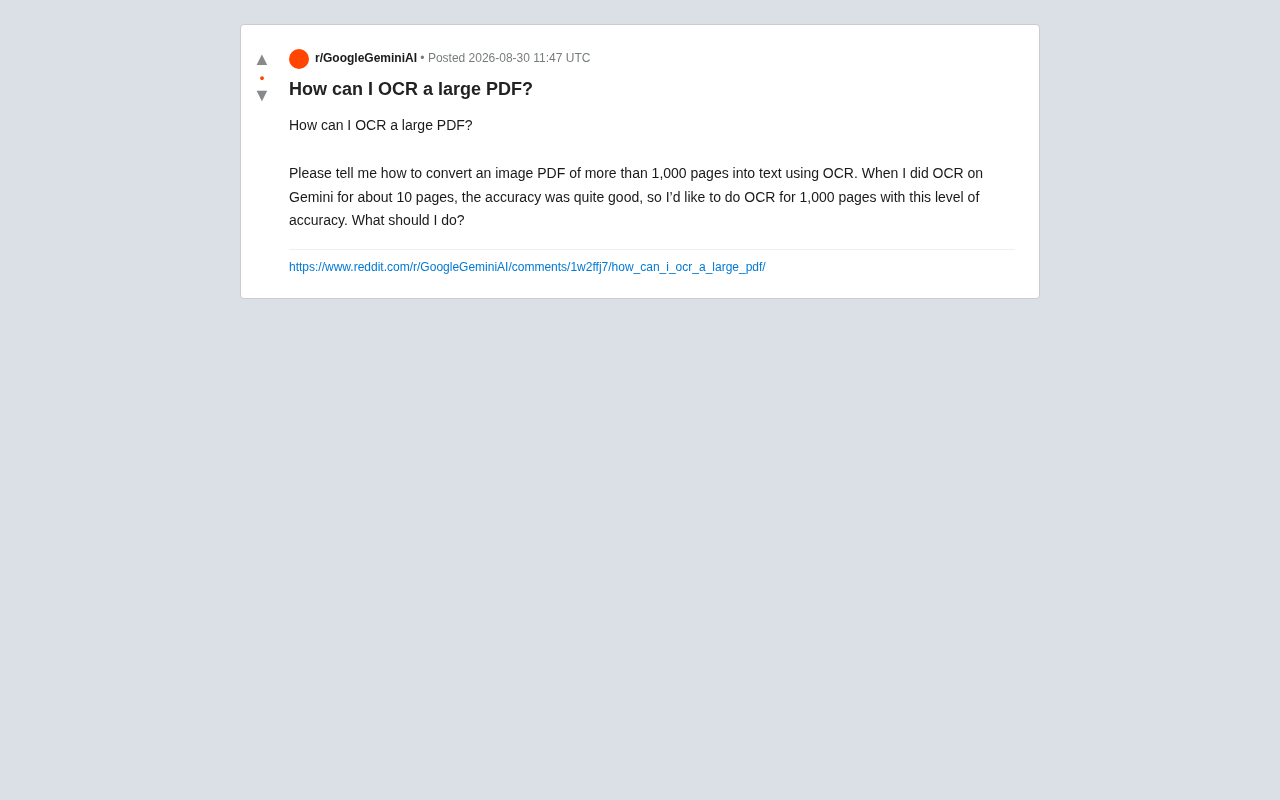
A Complete Guide to AI OCR for Large PDF Documents with 1000+ Pages
How to handle OCR for 1000+ page scanned PDFs using AI: covers Gemini batch calls, Tesseract, PaddleOCR, and cloud OCR services with accuracy, cost, and speed comparisons.

DeepSeek Harness Open Source Explosion: Deep Dive into Plugin Hot-Swapping Architecture
DeepSeek Harness open-source coding framework hits 150K GitHub stars with "everything is a plugin" architecture rivaling Claude Code. Deep dive into dynamic hot-swapping, trace tracking, and critical security gaps.