Notion 3.8 Turns the Workspace into a Shared Context Layer for AI Agents

Notion 3.8 turns the workspace into a model-agnostic shared context layer for multiple agents.
The core change in Notion 3.8 is turning the workspace into a shared context layer for all AI agents: documents, databases, and Skills are stored in one place, and any MCP-compatible agent can read and update them, eliminating the need to repeat background when switching models. It supports connecting Claude, ChatGPT, and any MCP-compatible agent, and Notion's own Agents can connect to 150+ third-party tools. The new Skills API syncs skill configurations across agents. Upgraded version history tracks each agent's edits, and combined with column permissions and rebuilt synced databases it enables finer-grained control. The article argues this marks Notion's shift from a note-taking tool to neutral context infrastructure for the multi-agent era, though concurrency conflicts, permission complexity, and context governance remain open challenges.
From "re-explaining every time" to "write once, use everywhere"
The most annoying part of switching AI models is having to repeat the same background information all over again. Notion 3.8 aims to solve exactly this pain point: it turns the workspace into a shared context layer for all of a team's AI agents — documents, databases, and Skills all live in one place, and any agent that supports the MCP protocol can read and update them. According to its Product Hunt page, this version received 93 upvotes on launch day, ranking 5th on the daily leaderboard.
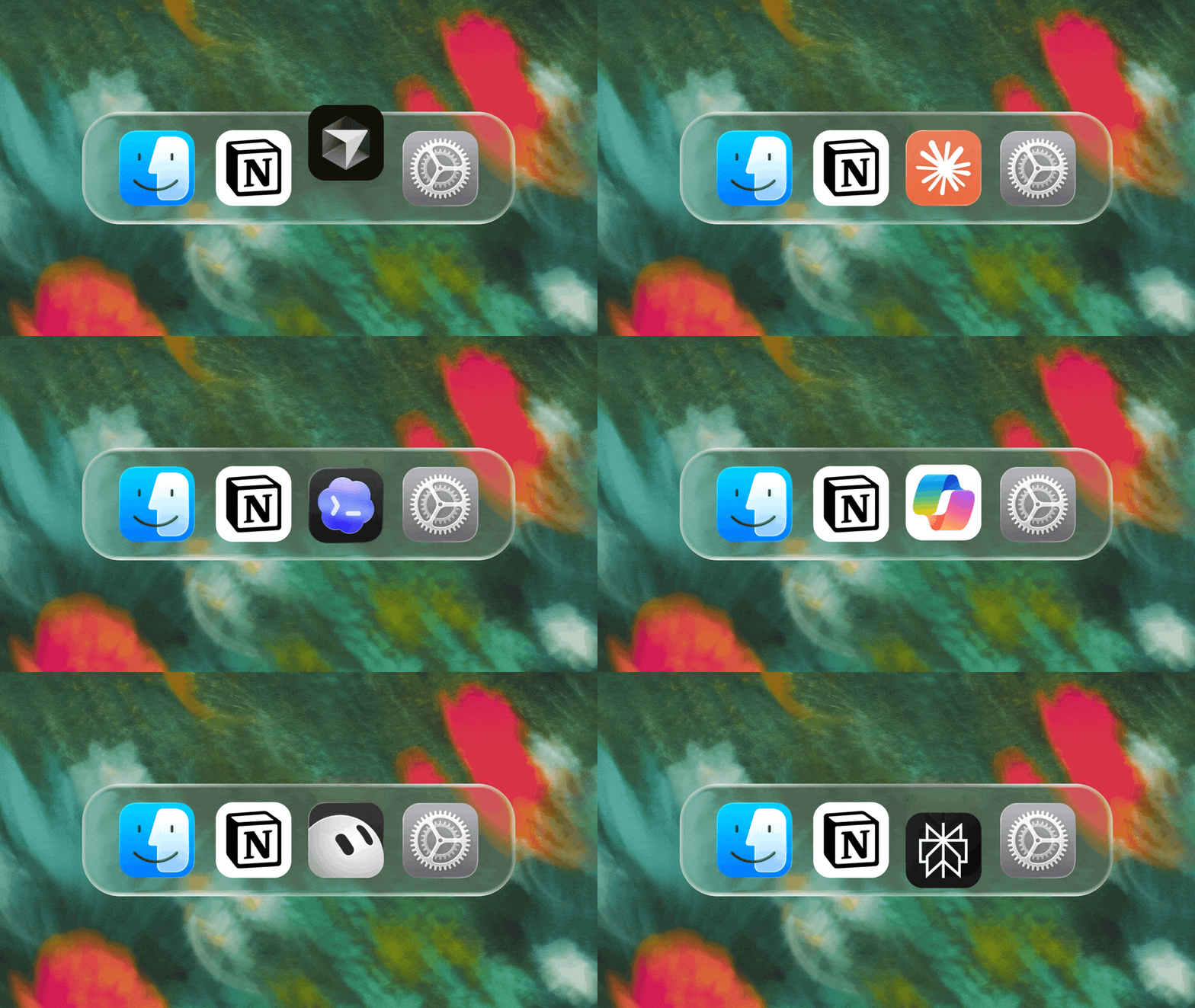
This positioning stands in sharp contrast to chat-based tools. ChatGPT and Claude conversation windows start from scratch every time you switch, whereas Notion's approach is to let context exist independently of any specific model and become a first-class citizen of the workspace.
Core mechanism: the MCP protocol enables multi-agent collaboration
Connect any MCP agent
Notion 3.8 supports connecting to Claude, ChatGPT, or any MCP-compatible agent. The key word is "shared": documents and databases within the same workspace are accessible to different agents, so teams don't need to maintain a separate copy of context for each model.
Agent in this context refers to a large-model application capable of autonomously planning steps, calling tools, and executing tasks over multiple turns, as distinct from a chat window that only handles single-turn Q&A. The core difficulty of multi-agent collaboration is shared state: if different agents each maintain their own copy of context, you get information drift, duplicated work, and version fragmentation. Centralizing state — documents, databases, and so on — in the workspace and reading/writing it through a unified protocol is essentially providing multiple agents with a common "blackboard," which is the engineering meaning of "write once, use everywhere."
Notion Agents connect to 150+ tools
Beyond external agents, Notion's own Agents can also plug into more than 150 third-party tools. This means workflows can be chained across platforms while context always accumulates in Notion.
Skills API syncs skills
The new Skills API lets skill configurations be synced everywhere, avoiding the need to redefine the same operational logic across multiple agents.
MCP (Model Context Protocol) is a protocol proposed and open-sourced by Anthropic in late 2024, designed to standardize how large language models connect to external data sources and tools. Think of it as the "USB-C port" of the AI world: models no longer need to write separate integration code for each data source — as long as the data source exposes an MCP-compliant server, any client that supports the protocol (Claude Desktop, IDE plugins, custom agents, etc.) can read resources, call tools, and use preconfigured prompts out of the box. The protocol defines three primitives — Resources, Tools, and Prompts — and uses JSON-RPC for transport. Since 2025, vendors including OpenAI and Google have successively announced support, rapidly turning MCP from a single-vendor specification into a cross-model de facto standard — which is precisely the precondition that lets Notion dare to make its workspace a "model-agnostic" context layer.
Skills are a form of capability encapsulation that emerged in agent products in 2025, typically describing — via structured documents or configuration files — "in what scenario, following what steps, calling which tools to complete a certain type of task." They are essentially reusable, versionable operational knowledge, distinct from simple function calls. The Skills API exposes this encapsulation as a programmatic interface, enabling skills to be created, read, updated, and distributed across different agents, without having to paste the same instructions into each model's system prompt. For teams, this means experience like "how to write a weekly report" or "how to organize meeting notes" can be maintained once and take effect in many places, and skill changes can be uniformly audited and rolled back.
Version history upgrade: every agent edit is traceable
When multiple AI agents operate in the same workspace, traceability becomes critical. Notion 3.8 upgrades version history so you can clearly see each agent's edit records. Combined with the new column permissions and the rebuilt synced databases, teams can control more precisely who (or which agent) can modify which data.
Taken together, these capabilities send a clear signal: Notion doesn't intend to be just "a note-taking tool with AI" — it wants to become neutral context infrastructure for the multi-agent era.
A strategic shift worth watching
From a product-logic perspective, Notion's move lands at the intersection of two trends. One is that the MCP protocol is gradually becoming the de facto standard for how agents interact with external tools; the other is rising enterprise demand for multi-model coexistence (rather than lock-in to a single vendor). Making the workspace a model-agnostic context layer amounts to placing itself at "the layer above the models."
Of course, challenges remain. Conflict handling when multiple agents concurrently edit the same data, the complexity of the permission model, and how to govern the quality of context itself are all unavoidable issues for this kind of shared-layer product. The single comment on Product Hunt also suggests that market discussion of this version has yet to pick up.
FAQ
Q: Which AI models do I need to use it? A: It supports Claude, ChatGPT, and any MCP-compatible agent, with no lock-in to a single vendor.
Q: Will agent edits overwrite existing content? A: The upgraded version history records every agent edit, so you can trace back and review them.
Q: What problem does the Skills API solve? A: It lets skill configurations sync across different agents, avoiding duplicate setup.
Related articles

Chain of Thought Isn't Just for AI: How Humans Can Use CoT to Improve Thinking Quality
Chain of Thought isn't just a prompt trick for large models. Starting from a Hacker News discussion, this article analyzes why CoT works for human thinking too, breaks down actionable ways to transfer it, and highlights the key differences between human CoT and machine CoT.
Cloudflare Teams Up with OpenAI: Closi…
Cloudflare Teams Up with OpenAI: Closing the Loop from Vulnerability Discovery to Defense with AI
Cloudflare uses OpenAI Daybreak to investigate security vulnerabilities and generate reviewable remediation plans, while developers use Codex to boost coding efficiency and quality.

Orca Multi-Agent Orchestration in Practice: A Guide to Parallel Collaboration with Claude and Codex
Orca is Stable AI's free open-source agent workbench supporting 34 agents like Claude Code and Codex in parallel. Learn its Git worktree isolation, multi-model orchestration, and mobile management.