Notion Meets Cursor: A New Workflow for Dispatching Coding Tasks Directly from Docs

Cursor's Notion integration lets you trigger cloud coding Agents directly from spec docs via the Cursor SDK.
Cursor now integrates with Notion through its new SDK, allowing users to @mention Cursor in any spec document to trigger a cloud Agent that automatically opens a Pull Request. Built on the same model, harness, and runtime as the local editor, this integration signals Cursor's shift from an IDE tool to broader development infrastructure — while real-world limitations around context windows and ambiguous requirements still apply.
Notion and Cursor: A Deep Integration
Cursor recently announced a noteworthy integration: users can now delegate tasks to Cursor directly from Notion. This means product specs, technical proposals, and requirement descriptions written in Notion can be seamlessly converted into actual coding tasks — no more switching between multiple tools.
This capability is built on the Cursor SDK. From a software architecture perspective, opening up an SDK means Cursor has abstracted the Agent execution environment, model invocation pipeline, and code manipulation primitives — previously encapsulated inside the editor — into a standardized API. Third-party platforms can now fully leverage Cursor's reasoning and execution capabilities without embedding its editor UI. This design philosophy is similar to OpenAI opening its API or Anthropic offering the Claude API: it's fundamentally about "platformizing" the core capabilities of a vertical product.
It's worth noting that opening an SDK is not merely a technical interface exposure — it's an ecosystem strategy. Historically, Twilio API-ified telephony and Stripe API-ified payments, both following the same "core capability as a platform" logic. By lowering the integration barrier for external developers, they embedded their capabilities into broader workflows, creating an ecosystem moat that's difficult to replace. The essence of this model: when your core capability becomes a foundational dependency in others' workflows, the cost of switching grows exponentially. At its peak, Twilio's API was embedded in the communication pipelines of hundreds of thousands of applications — the replacement cost far outweighed any competitor's pricing advantage. Cursor's move here is fundamentally about building a platform entry point for AI coding capabilities using the same logic. The Notion integration is just the first piece of that ecosystem puzzle.
This strategic choice also has a competitive backdrop. The AI coding tool market is increasingly crowded, with GitHub Copilot, Amazon CodeWhisperer, Tabnine, and others competing primarily on code completion quality and language coverage via editor plugins. By opening its SDK at this juncture, Cursor aims to claim the "AI coding capability as a service" platform entry point first — elevating competition from the product level to the ecosystem level. Once Cursor's Agent capabilities become a standard integration in mainstream workflow tools like Notion, Linear, and Jira, the moat will be far harder to breach than any editor feature.
According to official documentation, every cloud Agent triggered from Notion runs on the exact same model, harness, and runtime as the Cursor editor. In other words, what you invoke from Notion isn't a stripped-down assistant — it's the complete capability stack, identical to the local Cursor experience.
How the Workflow Changes
A Closed Loop from Document to PR
In traditional development workflows, after a product manager or engineer writes a requirements doc in Notion, someone must manually break it down into tasks, assign them to developers, and have those developers implement them in an IDE. This process has an obvious context gap — multiple layers of human relay stand between the requirements document and the actual code.
Now, users simply mention @Cursor in any spec document or directly assign it a task, and the Cursor cloud Agent automatically steps in, understands the requirements, and opens a Pull Request (PR) for the entire team to review.
A PR is the standard review mechanism for code changes before they enter the main branch in modern software development — originating from the collaborative workflow GitHub introduced in 2008. Anchoring the AI Agent's output to a PR is a deliberate design choice: it establishes a clear checkpoint between automation and human oversight, making the AI's actions predictable, auditable, and reversible. This aligns closely with the "human-in-the-loop" principle emphasized in current AI safety discourse and is the risk control strategy broadly adopted by AI coding tools today.
From the perspective of engineering collaboration history, the PR mechanism itself is a product of "asynchronous collaboration" philosophy. Before GitHub became widespread, code reviews relied on offline meetings or mailing lists — inefficient and hard to trace. PRs digitized the entire discussion, review, and merge process for code changes, creating a searchable history. Presenting AI Agent output as a PR not only reuses teams' existing collaboration tools and review habits, but also provides a natural audit trail for future retrospection of AI decision-making. This substantially narrows the gap between "writing docs" and "writing code," making the document itself an executable starting point.
The Consistency Advantage of Cloud Agents
In the AI Agent space, behavioral consistency between local and cloud environments has been a persistent engineering challenge. To understand this challenge, you need to know the core toolchain local Agents depend on. The most critical component is LSP (Language Server Protocol) — proposed by Microsoft in 2016 and popularized with VS Code, designed to decouple code intelligence features (auto-completion, go-to-definition, error diagnostics) from the editor into independent services. LSP was designed to solve the "M×N problem": previously, supporting intelligent features for every programming language in every editor required M (number of editors) × N (number of languages) separate integrations. LSP reduced this to a unified protocol, requiring editors and language services to each implement it only once.
The deeper significance of LSP is that it completely separates "code understanding" from the UI rendering layer. A language server conforming to the LSP specification can theoretically serve any host environment that supports the protocol — whether VS Code, Vim, or a cloud Agent. This provides the protocol foundation for Cursor to rebuild a complete code intelligence environment in the cloud. However, the challenges of deploying LSP in the cloud go far beyond protocol compatibility: language servers need access to the complete project filesystem and dependency tree, and in a multi-tenant cloud environment, securely isolating different users' code, quickly building indexes on cold start, and maintaining real-time synchronization with local file changes all require careful engineering. Local Agents can directly access live LSP feedback, filesystem state, code indexes, and Git history. For cloud Agents to replicate these capabilities, they must rebuild the complete toolchain in a remote environment — facing significant engineering challenges around latency control, permission isolation, and state synchronization.
"Same model, harness, and runtime" is the core orientation of this design. Cursor claims to solve this problem through a unified "harness" (execution framework) and runtime — meaning they've rebuilt the same tool-invocation environment as the local editor in the cloud, including a unified abstraction layer for atomic operations like file read/write, terminal execution, and code search. Many IDE plugins or third-party integrations produce inconsistent behavior when invoked across platforms — logic that works locally may behave differently in the cloud. By unifying the underlying layer through the SDK, Cursor addresses this architecturally, ensuring that whether an Agent is triggered from the editor or from Notion, its reasoning and execution remain consistent.
The Product Logic Behind It
The Strategic Significance of the Cursor SDK
The key to this integration is the capability openness of the Cursor SDK. Through the SDK, Cursor is no longer confined to its own editor interface — it abstracts AI coding capabilities into an externally callable service. Notion integration is just the first use case; it's entirely foreseeable that Cursor will further connect with project management tools, issue tracking systems, and CI/CD pipelines.
CI/CD (Continuous Integration/Continuous Delivery) pipelines are the core hub of modern development systems, responsible for fully automating the flow from code commit to deployment. Continuous Integration (CI) automatically triggers builds and tests after every code commit, ensuring the main branch always remains in a working state. Continuous Delivery (CD) automatically pushes validated code to staging or production environments. This system was systematized by Martin Fowler and others in the early 2000s and became an industry standard with the proliferation of tools like Jenkins, GitHub Actions, and GitLab CI. The core value of CI/CD is moving quality verification from "before release" to "at every commit," dramatically reducing the cost of discovering problems. If the Cursor SDK deeply integrates with CI/CD systems in the future, it means AI Agents could automatically intervene to fix build failures, automatically complete test cases when coverage drops, and automatically adjust code style when lint checks fail — truly embedding AI coding capabilities at every critical node of the development lifecycle, not just at the code-writing stage.
This marks a shift for AI coding assistants from "assistive tools inside the IDE" toward "infrastructure spanning the entire development workflow." The collaboration boundary between developers and non-developers (like product managers and designers) may also begin to blur — non-technical team members can directly drive code-level output from within their familiar Notion environment.
A New Collaboration Paradigm: The AI Era Evolution of Document-Driven Development
"Document-driven development" is not a new concept. In traditional software engineering, TDD (Test-Driven Development) and BDD (Behavior-Driven Development) already attempted to make non-code artifacts (test cases, behavior descriptions) the starting point of development.
BDD (Behavior-Driven Development), proposed by Dan North in 2006 and exemplified by tools like Cucumber, requires writing structured behavior descriptions in "Given-When-Then" format using Gherkin syntax. While this approach bridges the communication gap between business and technical stakeholders, it still carries a significant learning curve for non-technical users — every Scenario must adhere to strict format constraints, and even minor deviations prevent tools from parsing it correctly. The deeper tension lies in the persistent gap between BDD's ideal of "living documentation" and real-world implementation: as requirements iterate, the cost of maintaining Gherkin scripts often rivals maintaining the code itself, causing many teams to eventually abandon synchronizing spec documents with test code. The emergence of large language models fundamentally changes this limitation: unstructured natural language can be used directly as execution input, theoretically extending the applicability of "document as specification" from engineers to all document writers. This is precisely the paradigm leap represented by the Notion + Cursor combination.
Unlike earlier BDD tools (such as Cucumber), AI Agents don't require documents to follow specific syntax — they can theoretically handle less structured descriptions closer to human writing habits. This is both their advantage and the source of their uncertainty.
For teams, this "document-driven development" model offers several practical benefits:
- Context fidelity: Requirements and implementation share the same source, reducing distortion in information relay.
- Lower startup cost: Eliminates the intermediate steps of task decomposition, assignment, and tool-switching.
- Auditability: Agent output takes the form of standard PRs, naturally fitting into existing code review processes — humans still hold final approval authority.
Where to Be Realistic
Despite the imaginative experience this feature offers, it's worth evaluating its boundaries soberly. Official information released so far is relatively limited. The Agent's ability to understand complex or ambiguous requirements, the consistency of PR quality, and its adaptability to large codebases all await validation through more real-world scenarios.
Additionally, the convenience of "document as task" may introduce new risks — if the requirement description itself is ambiguous, a PR automatically opened by the Agent may deviate from expectations, actually increasing review burden. AI Agents' understanding of natural language is not lossless compression. Implicit assumptions, domain conventions, and architectural norms embedded in spec documents are often difficult to fully convey to a model through text alone. This problem is particularly pronounced in large codebases: a model's context window has a physical limit and cannot ingest an entire codebase at once.
The context window is the maximum number of tokens a large language model can process in a single inference, directly determining how much information the model can "see" when responding. A token is not simply equivalent to a character or word — in GPT-series models, for example, roughly 1.3 tokens correspond to one English word, while Chinese characters typically consume more tokens. Current mainstream models have expanded their context windows from early 4K tokens to 200K or beyond (e.g., Claude 3 series supports 200K tokens, roughly 150,000 English words), but a mid-sized engineering codebase can easily contain millions of lines of code — far exceeding any current model's single-pass processing capacity. This means Agents must rely on code retrieval and vector indexing mechanisms to selectively acquire relevant context, rather than comprehensively understanding everything. Vector indexing works by converting code snippets into numerical representations in a high-dimensional vector space, using semantic similarity to retrieve the most relevant code segments and injecting them into the model's context window. While this "Retrieval-Augmented Generation" (RAG) strategy effectively extends a model's information access range, retrieval quality is constrained by the semantic understanding capabilities of the vectorization model and the coverage of the index. When handling complex requirements involving cross-module dependencies or historical architectural decisions, critical information may go unretreived, resulting in code changes that are locally optimal but globally wrong. Therefore, these tools are better suited in the short term for tasks with clear boundaries and moderate granularity — not as replacements for human judgment over core architecture.
Summary
The Cursor–Notion integration is a signal of AI coding tools penetrating deeper into collaborative scenarios. It connects "writing specs" and "producing code" into a shorter path, and uses the Cursor SDK to guarantee consistency between cloud and local capabilities. Behind this architectural choice is a clear strategic intent: to evolve programming AI from an editor plugin into development infrastructure. For efficiency-driven engineering teams, this workflow is worth exploring — but while embracing the convenience, maintaining careful evaluation of output quality remains an indispensable step.
Related articles
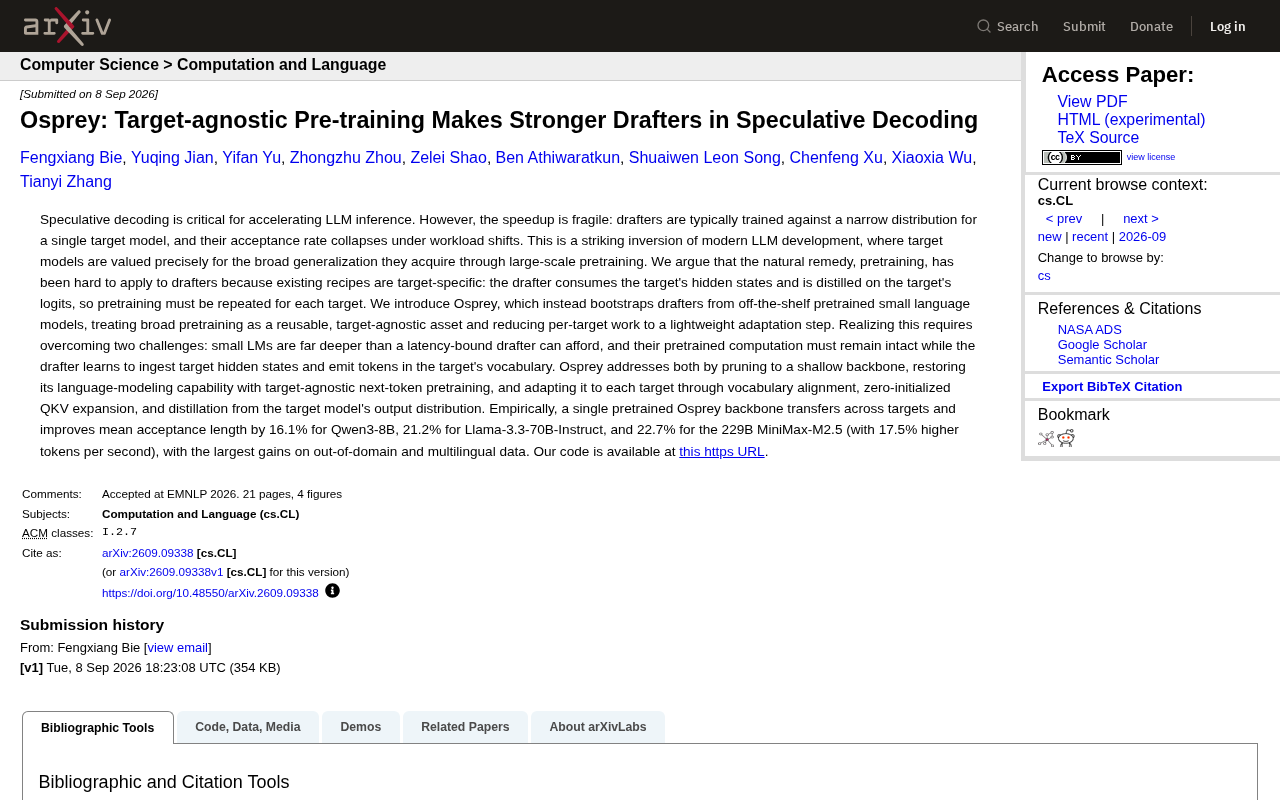
Osprey: General-Purpose Pretraining Makes Speculative Decoding Draft Models More Efficient
Osprey treats pretraining as a reusable, target-agnostic asset. Through pruning and lightweight adaptation, a single draft model transfers across multiple LLMs, boosting mean acceptance length by 16%-22%.
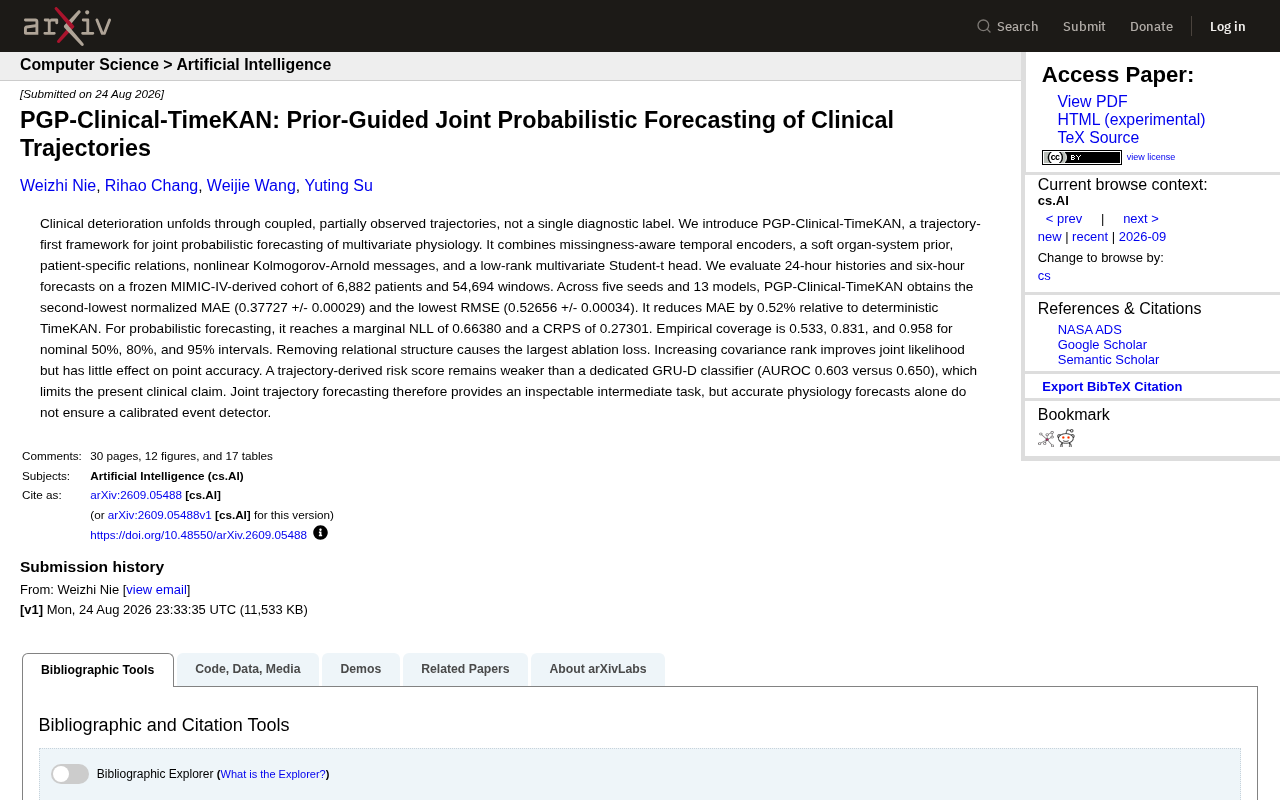
PGP-Clinical-TimeKAN: A Detailed Guide to the Multivariate Physiological Indicator Joint Prediction Framework
An in-depth analysis of the PGP-Clinical-TimeKAN framework for joint probabilistic prediction of multivariate physiological indicators, covering trajectory-first paradigm, KAN message passing, MIMIC-IV validation, and ablation studies.
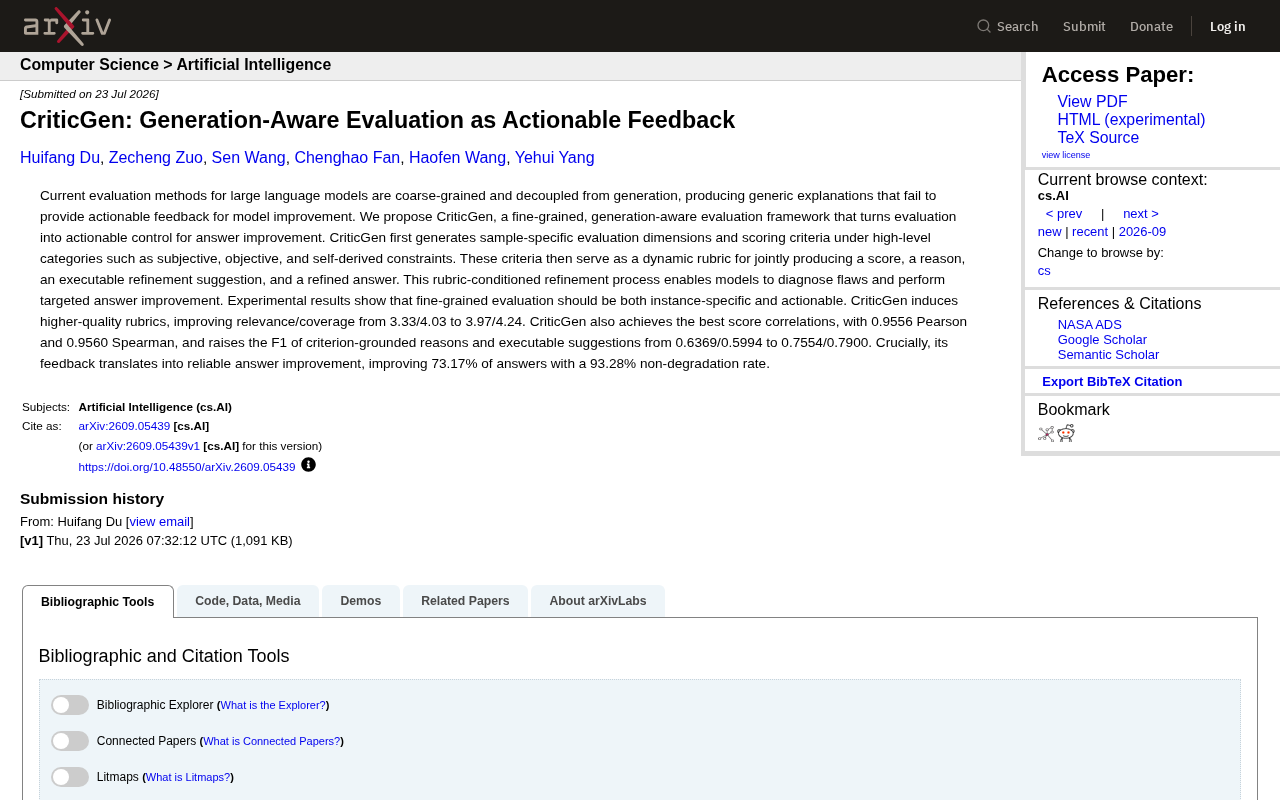
CriticGen: A New Framework That Transforms AI Evaluation into Actionable Improvement Feedback
CriticGen proposes a generation-aware evaluation framework that transforms AI assessment from passive scoring to an active optimization loop, achieving 73.17% answer improvement and 93.28% non-degradation rate.