Numbat Open Source: A Cross-Framework AI Agent Security Detection and Response Solution Explained

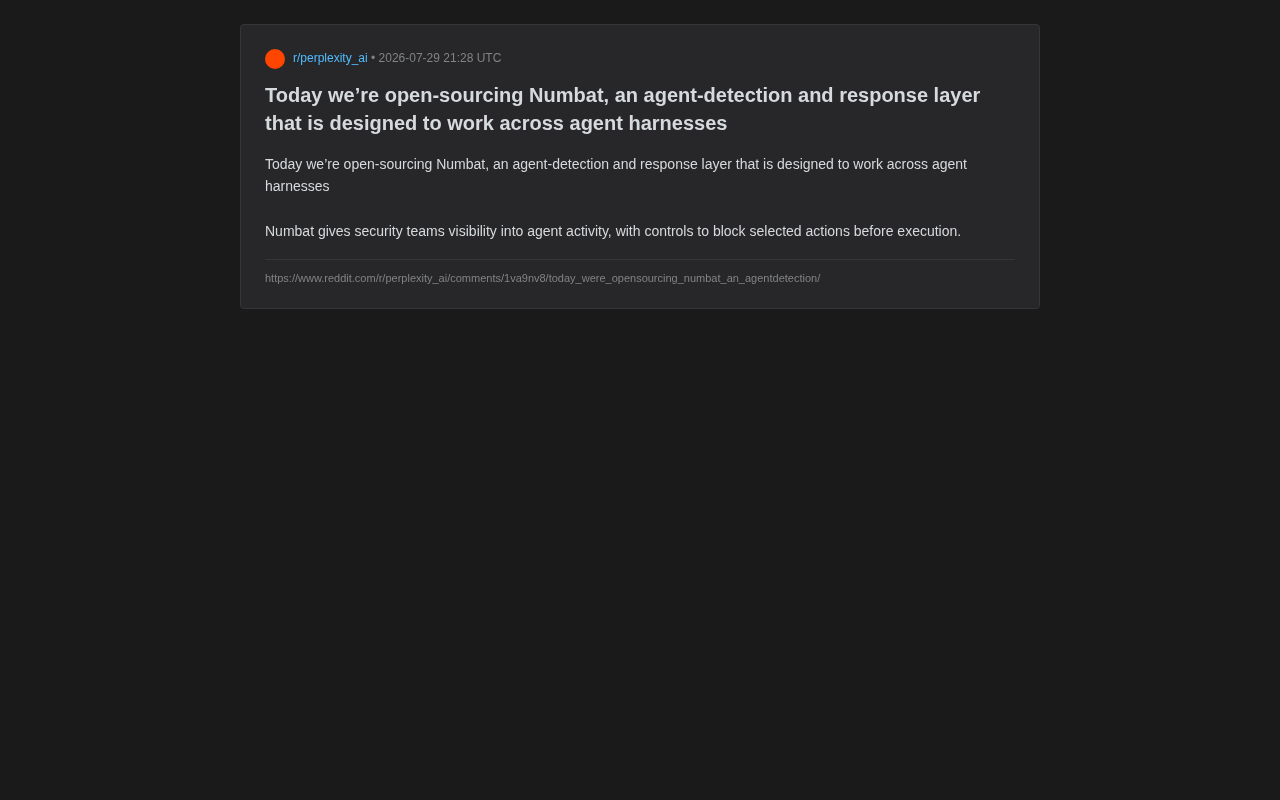
Numbat is an open-source cross-framework detection and response layer for securing AI Agents.
Numbat is a newly released open-source project that provides a cross-framework detection and response layer for AI Agents. It addresses two critical security challenges: providing complete visibility into Agent behavior and enabling pre-execution interception of dangerous actions. With its framework-agnostic design, it adapts to multiple Agent environments like LangChain, AutoGPT, and CrewAI, representing the emerging AgentSecOps paradigm.
When AI Agents Enter Production, Where's the Security Perimeter?
As LLM-driven AI Agents grow increasingly capable, more and more teams are deploying them into real business workflows—from code generation and automated operations to data processing, Agents are taking on tasks that require "hands-on execution." However, this autonomous execution capability introduces entirely new security challenges: when an Agent can independently invoke tools, access file systems, and execute commands, who supervises its every action?
AI Agents are fundamentally different from traditional AI assistants. Traditional assistants (like early ChatGPT) merely generate text responses, while Agents possess a complete "perceive-decide-execute" closed-loop capability, autonomously planning task steps, invoking external tools (Tool Use), and dynamically adjusting subsequent behavior based on execution results. This capability is typically implemented through the ReAct (Reasoning + Acting) paradigm, where the Agent reasons at each step before deciding which tool to invoke. It's precisely this autonomous execution capability that extends the security boundary from "generating harmful content" to "executing harmful operations"—the latter being far more destructive than the former.
Recently, an open-source project called Numbat was officially released, positioning itself as a cross-Agent-framework Detection and Response Layer (Agent Detection and Response Layer), designed to provide security teams with visibility into Agent activities and intercept dangerous operations before execution.
The concept of a detection and response layer borrows from the mature layered defense philosophy in cybersecurity. In traditional security architectures, the detection layer identifies anomalous behavior patterns, while the response layer takes mitigation measures. Applying this concept to AI Agents means establishing a Proxy Layer within the Agent's tool invocation chain, where all action requests issued by the Agent must pass through this layer's review. This is similar to how a Web Application Firewall (WAF) inspects HTTP requests in cybersecurity, but the inspection target shifts from network traffic to the Agent's intent and actions.
Numbat's Core Features: Solving Two Major AI Agent Security Challenges
Visibility: Making Agent Behavior No Longer a Black Box
Traditional application security tools are mostly designed for deterministic program logic, while AI Agent behavior is highly non-deterministic—the same task might lead the Agent to take completely different execution paths. This makes it difficult for security teams to predict what an Agent will do or audit its behavior trail after the fact.
One of Numbat's core values is providing security teams with complete visibility into Agent activities. By inserting a monitoring layer into the Agent's execution chain, teams can observe in real-time what actions the Agent is attempting to execute, including:
- Which external tools are being invoked
- Which resources and files are being accessed
- Which system calls are being initiated
- Which external services are being interacted with
An Agent's execution chain typically includes several key stages: user input → LLM reasoning → tool selection → parameter construction → tool execution → result return → next reasoning round. Numbat's monitoring layer is inserted before the "tool execution" stage, adopting the design philosophy of AOP (Aspect-Oriented Programming) or the interceptor pattern. Specifically, it wraps the tool invocation interfaces in Agent frameworks through Hook or Wrapper mechanisms, ensuring that every tool call first passes through the security policy engine's evaluation. This design ensures monitoring completeness—regardless of what reasoning path the Agent takes to reach the execution stage, it cannot bypass the security checkpoint.
This observability is the fundamental prerequisite for any AI Agent security governance.
Pre-Execution Interception: Intervening Before Damage Occurs
Visibility alone isn't enough. Numbat goes further by providing the active defense capability to block selected actions before execution.
This point is particularly critical. The root cause of many Agent security incidents lies in "execution equals effect"—once an Agent decides to delete files, send data, or run a command, the damage may already be done. Numbat adopts a pre-execution interception approach, essentially placing a review checkpoint between the Agent's intent and the actual action, allowing security policies to intervene before the action takes effect.
Cross-Agent-Framework Design Philosophy
The current AI Agent ecosystem is highly fragmented, with numerous different Agent frameworks and runtime environments (Agent Harnesses) on the market, such as LangChain, AutoGPT, CrewAI, and various proprietary Agent orchestration systems. If every security tool could only bind to a single framework, teams would face the dilemma of redundant development and maintenance.
The degree of fragmentation is comparable to early mobile development. LangChain is one of the most popular Agent development frameworks, providing standardized Chain and Agent abstractions; AutoGPT was an early representative of autonomous Agents, emphasizing fully autonomous task decomposition; CrewAI focuses on multi-Agent collaboration scenarios; Microsoft's AutoGen, OpenAI's Assistants API, and Anthropic's Claude Tool Use each have different interface specifications. Additionally, many enterprises choose to build custom Agent orchestration systems based on raw LLM APIs to meet specific business needs. This fragmentation means that if a security tool can only adapt to a single framework, its market coverage and practicality will be significantly diminished.
A major design highlight of Numbat is its positioning to work across Agent Harnesses. Rather than trying to bind to a specific Agent implementation, it serves as a universal detection and response layer capable of adapting to multiple different Agent runtime environments. This "framework-agnostic" design philosophy has clear practical value for enterprise security teams looking to uniformly manage multiple Agent systems.
The Evolution from DevSecOps to AgentSecOps
The emergence of Numbat, to some extent, marks the formation of a new sub-domain in the security field. Over the past few years, DevSecOps shifted security left into the software development lifecycle; now, as Agents become new "execution entities," we are witnessing the emergence of what can be called "AgentSecOps"—a detection, monitoring, and response system centered around autonomous AI Agents.
The core philosophy of DevSecOps is "Shift Left," embedding security practices into the early stages of software development rather than conducting security audits after deployment. Typical practices include SAST (Static Application Security Testing), DAST (Dynamic Application Security Testing), and SCA (Software Composition Analysis). However, AI Agents introduce a fundamental change: the execution entity is no longer deterministic code logic but an AI system with probabilistic decision-making capabilities. This means traditional code auditing and vulnerability scanning cannot cover Agent runtime behavioral risks, and security assurance must shift from "auditing code" to "monitoring runtime decisions"—which is precisely the core challenge that AgentSecOps needs to address.
Architecturally, the role Numbat plays is analogous to EDR (Endpoint Detection and Response) for endpoint devices in traditional security. EDR is one of the core components of enterprise security infrastructure, first proposed by Gartner in 2013. EDR systems continuously monitor process creation, file operations, registry modifications, network connections, and other behaviors on endpoint devices, identifying malicious activities through behavioral analysis and threat intelligence matching. When threats are detected, EDR can automatically isolate infected endpoints, terminate malicious processes, or roll back file changes. Representative products include CrowdStrike Falcon, Microsoft Defender for Endpoint, and others. Numbat migrates this "continuous monitoring + real-time response" paradigm from physical/virtual endpoints to AI Agents as a new type of "execution entity."
| Comparison Dimension | Traditional EDR | Numbat |
|---|---|---|
| Monitoring Target | Process behavior on endpoint devices | AI Agent action behavior |
| Detection Goal | Malware, anomalous processes | High-risk operations, unauthorized access |
| Response Method | Isolation, process termination | Intercepting Agent execution actions |
This analogy helps security practitioners quickly understand Numbat's positioning and value.
The Significance of the Open Source Strategy and Future Outlook
Choosing to release as open source is a wise strategy for infrastructure-type security tools like Numbat. The value of security tools is highly dependent on community trust and transparency—only when code is auditable can teams confidently embed it into critical Agent execution chains. At the same time, open source helps rapidly adapt to the growing variety of Agent frameworks, leveraging community contributions to expand compatibility.
In the security field, "Kerckhoffs's Principle" states that a system's security should not depend on the secrecy of the system itself. Open-source security tools are the practical embodiment of this principle. When a security tool's code is fully public, anyone can audit its implementation logic and verify whether backdoors or design flaws exist. This transparency is especially important for tools like Numbat that need to be deeply embedded in Agent execution chains—if the tool itself has vulnerabilities, it would instead become a new attack surface for attackers to exploit. Furthermore, the open-source model helps establish SBOM (Software Bill of Materials) compliance, meeting increasingly stringent supply chain security requirements.
Of course, as a newly released project, Numbat still needs to be validated in real production environments. The following aspects are worth continued attention:
- Whether detection rules are precise enough and false positive rates can be kept within reasonable bounds
- Whether interception policies will impact the Agent's normal execution efficiency
- The depth and coverage of cross-framework adaptation
- Whether the community ecosystem can sustain active development
Conclusion
AI Agents are transitioning from experimental toys to production-grade applications, and the accompanying security governance needs are becoming increasingly urgent. With its core features of being open source, cross-framework, and providing pre-execution interception, Numbat has entered a track that is still in its early stages but has enormous growth potential. Regardless of whether it ultimately becomes an industry standard, the approach it represents—"building a dedicated security layer for AI Agents"—deserves serious consideration and evaluation by every team deploying Agents.
Related articles
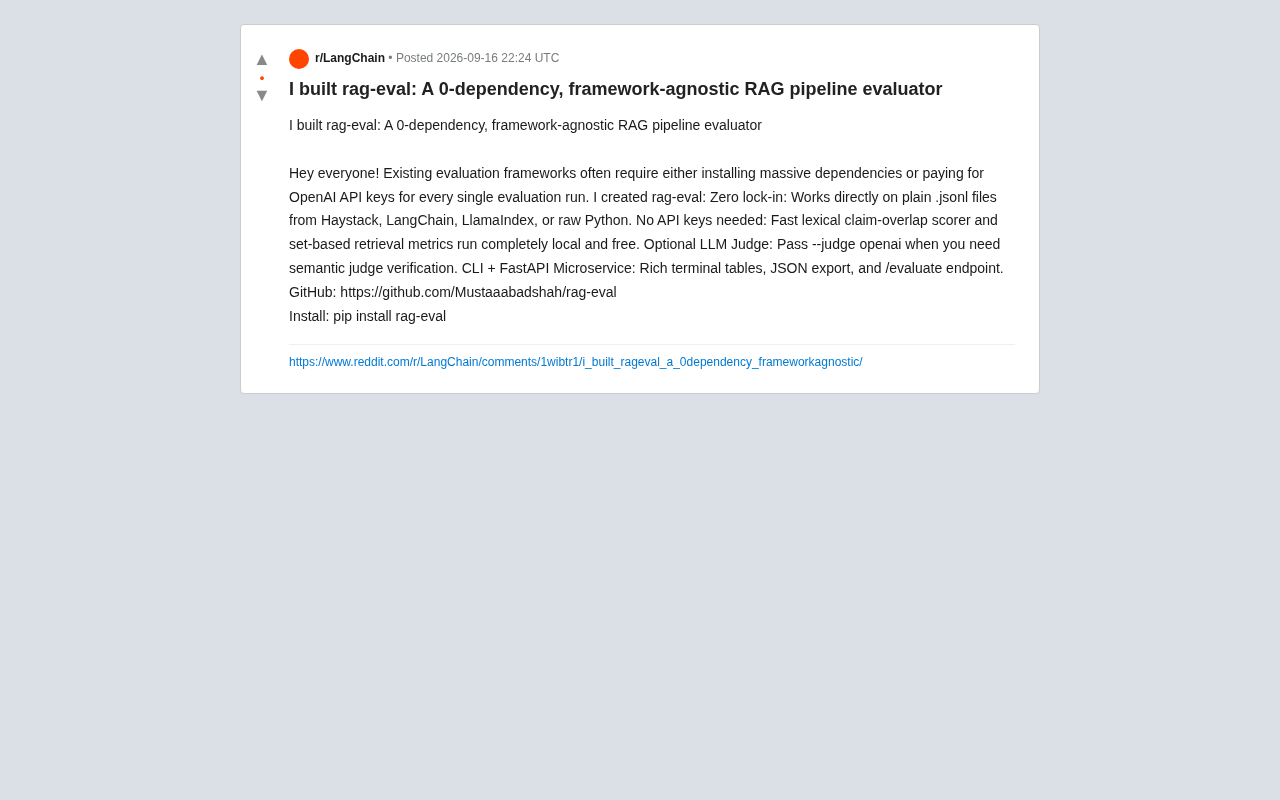
rag-eval: A Zero-Dependency, No-API-Key RAG Evaluation Tool
rag-eval is a zero-dependency, framework-agnostic open-source RAG pipeline evaluation tool. It supports free local lexical and retrieval metrics with no API keys required, and offers optional LLM Judge for semantic validation. Compatible with Haystack, LangChain, and LlamaIndex.
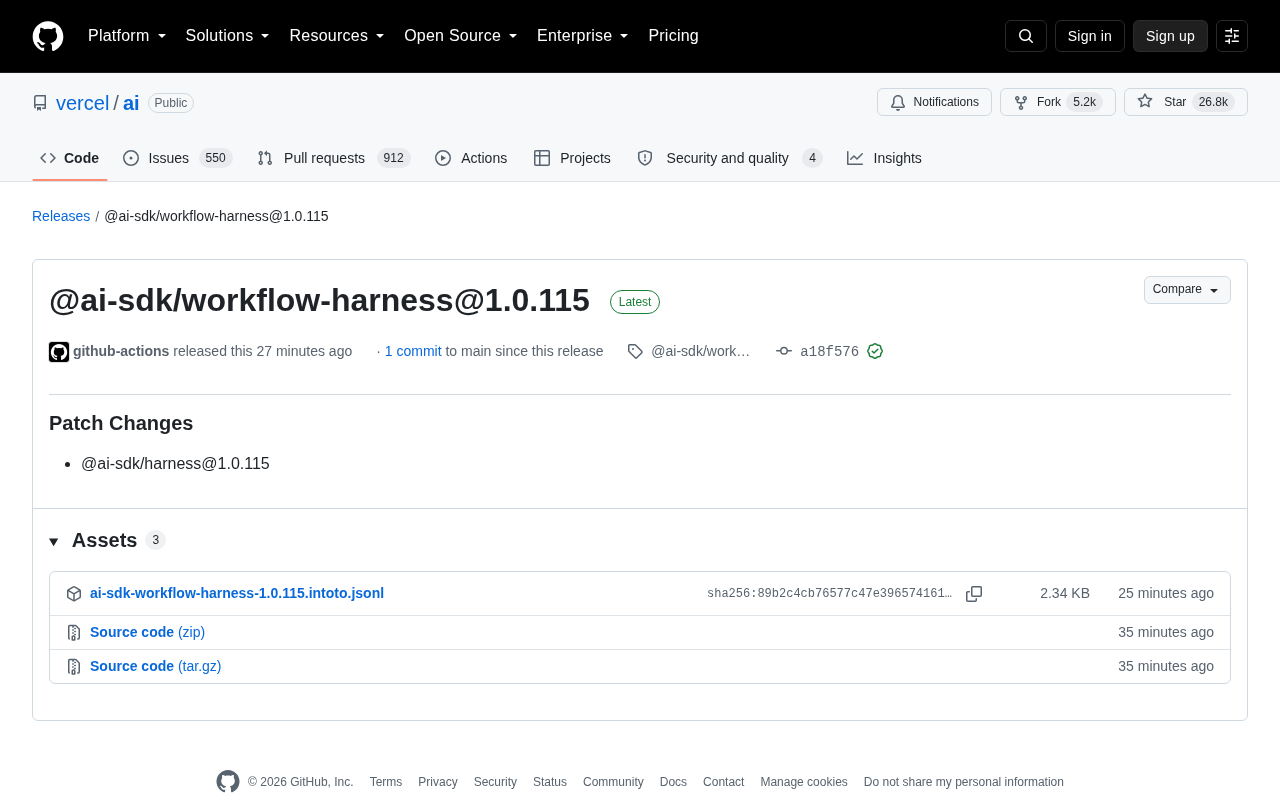
Vercel AI SDK Releases workflow-harness 1.0.115 Patch Update
Vercel AI SDK releases @ai-sdk/workflow-harness 1.0.115 patch update, syncing the @ai-sdk/harness dependency. Learn about the update, release mechanism, and what it means for developers.
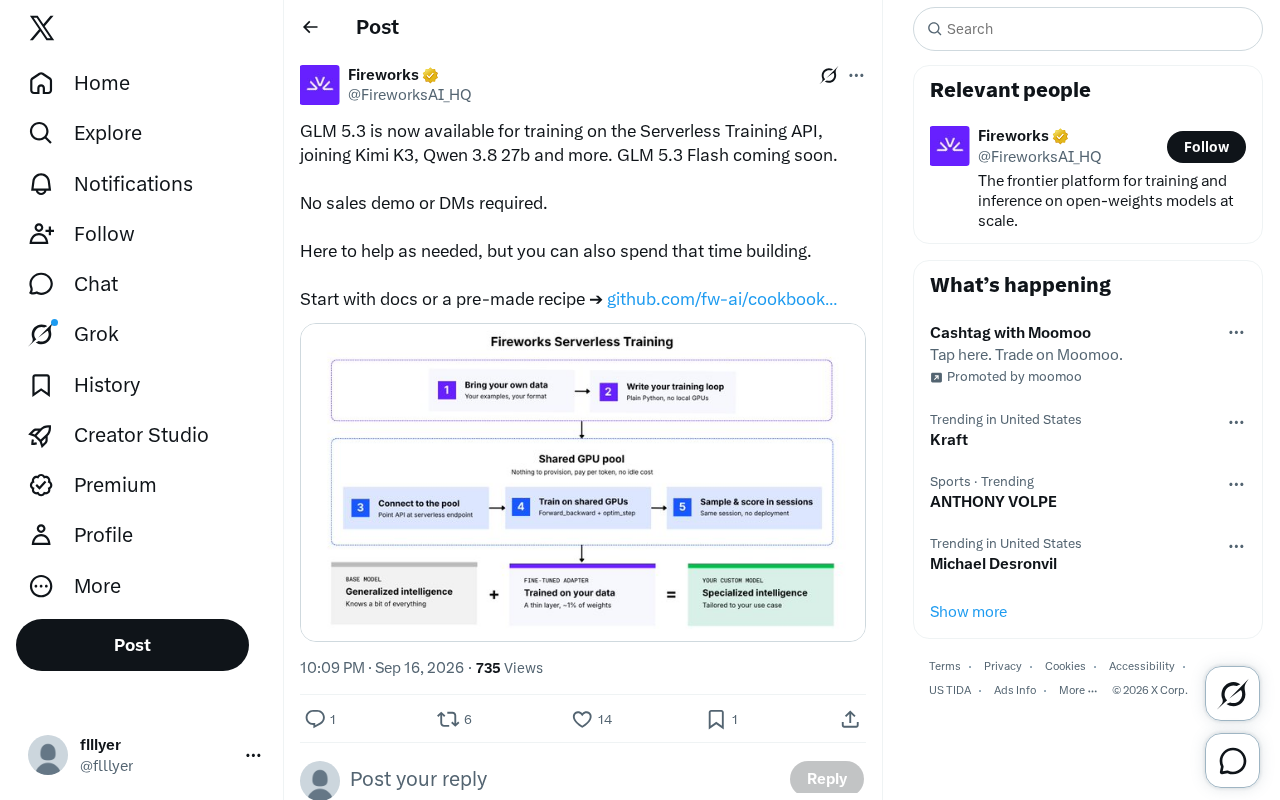
GLM 5.3 Now Available on Serverless Training API — No Sales Process Required
GLM 5.3 is now available on Serverless Training API alongside Kimi K3 and Qwen 3.8 27b. No sales process needed — start fine-tuning directly via docs or pre-made recipes.