NVIDIA AI Chips Found Inside Russian Missiles: The Fatal Blind Spot in Export Controls
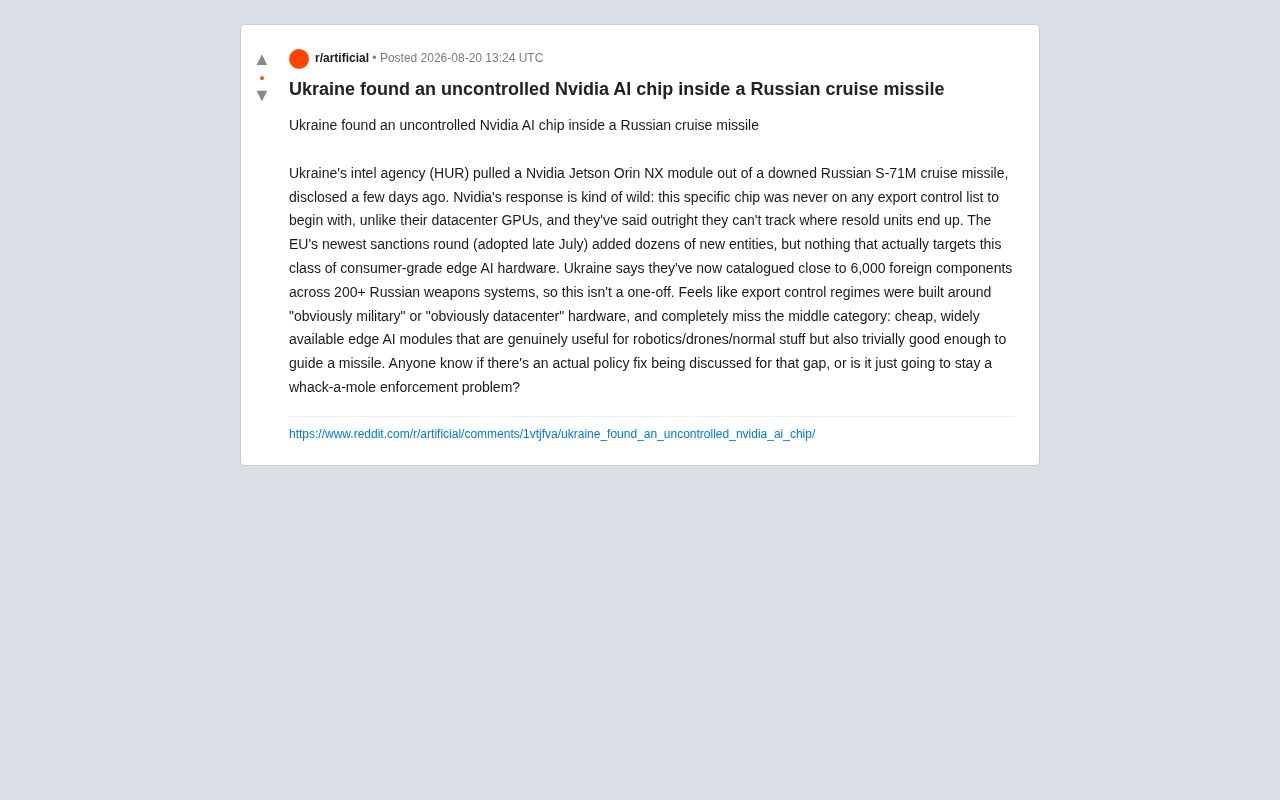
NVIDIA edge AI chip found in Russian missile exposes massive gaps in dual-use export controls.
Ukraine recovered an NVIDIA Jetson Orin NX edge AI module from a downed Russian cruise missile, revealing that consumer-grade AI chips—never listed on any export control list—are being integrated into precision-guided weapons. With nearly 6,000 foreign components found across 200+ Russian weapon systems, the discovery exposes systemic failures in export control frameworks that were designed for a binary military/civilian world and cannot keep pace with rapidly proliferating dual-use AI hardware.
An AI Module Extracted from Missile Wreckage
Ukraine's intelligence agency (HUR) recently disclosed a discovery that has drawn widespread attention: inside a downed Russian S-71M cruise missile, investigators recovered an NVIDIA Jetson Orin NX edge AI computing module. This palm-sized chip—originally designed for consumer and industrial applications like robotics, drones, and machine vision—was found embedded in the core of a precision-guided weapon.
To appreciate the significance of this finding, it helps to understand what the Jetson Orin NX actually is. NVIDIA's Jetson series is an embedded platform designed specifically for edge AI computing—"edge computing" refers to deploying AI inference tasks on terminal devices close to the data source, rather than transmitting data back to remote servers for processing. The Jetson Orin NX features an Ampere-architecture GPU and Arm Cortex-A78AE CPU, delivering up to 100 TOPS (Tera Operations Per Second) of AI inference performance at just 10 to 25 watts of power consumption. This combination of high compute power, low energy draw, and compact form factor makes it ideal for autonomous driving prototypes, industrial quality inspection systems, and smart security cameras. However, these very same characteristics—the ability to perform real-time image recognition and target classification within a tight physical envelope—also make it a natural fit for the computational demands of missile guidance systems.
Even more telling was NVIDIA's official response. The company explicitly stated that the Jetson Orin NX has never been listed on any export control list—a stark contrast to its high-end data center GPUs (such as the heavily restricted A100 and H100 series). The A100 and H100 are subject to stringent restrictions by the U.S. Bureau of Industry and Security (BIS) because their massive parallel computing capabilities can directly support large-scale AI model training and supercomputing applications, making them strategic technology assets. The Jetson Orin NX, positioned for inference rather than training and orders of magnitude lower in compute, has simply never entered the regulatory radar. At the same time, NVIDIA acknowledged that once a product passes through secondary resale, the company has no way to track its ultimate destination. In other words, from both legal and technical standpoints, this chip's journey onto the battlefield falls squarely into an uncomfortable "gray zone."
The Role of AI in Cruise Missile Guidance Systems
To understand why an edge AI module would be valuable in a cruise missile, it helps to review the evolution of modern missile guidance technology. Traditional cruise missiles rely on Inertial Navigation Systems (INS) combined with Terrain Contour Matching (TERCOM) and Digital Scene Matching Area Correlation (DSMAC) to achieve precision strikes. Inertial navigation uses gyroscopes and accelerometers to estimate position, but errors accumulate over time; terrain matching compares radar altitude profiles along the flight path against pre-stored maps to periodically correct the trajectory. However, these traditional methods are heavily dependent on pre-programmed route data and become vulnerable in contested environments with electronic jamming or GPS denial.
With an AI vision module onboard, a missile gains an entirely new capability: real-time target recognition and autonomous decision-making. Equipped with deep learning models such as convolutional neural networks (CNNs), the Jetson Orin NX can use electro-optical sensors during the terminal phase to classify and locate ground targets in real time, enabling precision guidance even when GPS signals are jammed. This represents a qualitative leap from "flying to preset coordinates" to "seeing and understanding the target"—and the hardware needed to make this leap is nothing more than a commercially available module costing a few hundred dollars.
A Systemic Gap: The Warning of 6,000 Foreign Components
According to Ukrainian sources, they have cataloged nearly 6,000 foreign-manufactured components across more than 200 Russian weapon systems. This means the appearance of the Jetson Orin NX is no isolated incident, but rather reveals a massive, structural supply chain infiltration problem.
The context behind this number deserves closer examination. Since the comprehensive Western sanctions against Russia in 2022, multiple independent investigative bodies—including the UK's Royal United Services Institute (RUSI) and Ukraine's independent anti-corruption commission—have been tracking foreign components in Russian weapons. They found everything from Texas Instruments microcontrollers and STMicroelectronics op-amp chips to Murata capacitors, sourced from the U.S., EU, Japan, South Korea, Taiwan, and other economies. Most of these components are transshipped through Central Asian countries (such as Kazakhstan and Kyrgyzstan), the Caucasus region (Georgia, Armenia), and nodes like Turkey and the UAE, forming a complex "sanctions evasion network."
Why the Existing Control Framework Fails
The root of the problem lies in the fact that current export control frameworks are largely built on a binary classification logic:
- "Obviously military items": such as weapon parts and military radar components, subject to strict controls;
- "Obviously data center/high-performance computing hardware": such as NVIDIA's flagship AI training GPUs, restricted due to national security concerns.
The current cornerstone of international export controls is the Wassenaar Arrangement—a multilateral export control mechanism comprising 42 member states, successor to the Cold War-era Coordinating Committee for Multilateral Export Controls (COCOM) that targeted the Soviet bloc. The Wassenaar Arrangement maintains a "List of Dual-Use Goods and Technologies" specifying items requiring export license review. However, this list has a long update cycle—typically revised annually—far too slow to keep pace with AI hardware iteration. More critically, the Wassenaar Arrangement itself lacks legal binding force—it is a "notification mechanism" rather than a "veto mechanism," meaning member states can independently decide whether to approve a given export. Even if a category of chips is added to the list, enforcement rigor varies widely across countries.
U.S. export controls are primarily implemented through the Export Administration Regulations (EAR) and the Commerce Control List (CCL), managed by the Bureau of Industry and Security (BIS). In October 2022 and October 2023, BIS tightened AI chip export controls to China twice, with restriction logic primarily drawn around two parameters: "interconnect bandwidth" and "compute density." But these parameters mainly target data center-class GPUs and provide virtually no coverage of edge inference chips.
Yet it is precisely the middle ground between these two categories that has been completely overlooked—cheap, mass-produced, widely circulated edge AI modules. These products are indeed primarily used for legitimate commercial purposes like autonomous driving prototypes, warehouse robots, and security cameras, but their compute power and inference capabilities are also more than sufficient for missile target recognition and guidance.
A module costing a few hundred dollars, easily purchased from e-commerce platforms or distributors, serves as both a development tool for drone hobbyists and a potential "brain" for cruise missiles. This extreme ambiguity of dual-use technology is the biggest blind spot in the current regulatory system.
Historical Lessons in Dual-Use Technology Proliferation
The challenge of dual-use technology proliferation is hardly new to the AI era. During the Cold War, Toshiba sold precision CNC machine tools to the Soviet Union, enabling the Soviets to dramatically reduce submarine propeller noise and seriously undermining NATO's anti-submarine capabilities—this was the infamous "Toshiba Incident" of 1987, which directly led to tightened CNC machine tool export controls across multiple countries. In the 2000s, Iran's nuclear program was found to extensively use Siemens industrial control systems (SCADA)—equipment designed for factory automation that was repurposed to drive uranium enrichment centrifuges. A more recent example involves commercial drones: consumer-grade drones from DJI and others, originally targeting the aerial photography and agriculture markets, have been widely modified into reconnaissance and bombing platforms on battlefields in Syria, Libya, and Ukraine.
These precedents reveal a recurring pattern: whenever a class of civilian technology crosses the "good enough" threshold for military applications, it inevitably gets absorbed into the war machine. What makes edge AI computing modules unique is the unprecedented speed and breadth at which they cross this threshold—Moore's Law-like growth in compute means that today's consumer-grade products often exceed military-grade performance levels from just a few years ago.
Why Sanctions Tools Can't Plug the Leak
You may not have noticed, but the EU's latest round of sanctions added dozens of restricted entities—yet from publicly available information, no specific provisions target consumer-grade edge AI hardware. This exposes a structural lag in sanctions tools when confronting new forms of technology proliferation:
- Entity list models primarily target specific companies or individuals, but intermediaries in the resale chain can constantly reinvent themselves under new fronts;
- Product category controls struggle to cover general-purpose chips with legitimate uses and massive markets;
- End-user tracking is rendered virtually meaningless in the face of multi-layered distribution and cross-border reselling.
Notably, the global semiconductor distribution system is itself an extraordinarily complex multi-tier network. A chip leaving the manufacturer (such as NVIDIA) typically passes through authorized distributors (global electronic component distribution giants like Arrow and Avnet), regional agents, and local dealers before reaching the end user. At each handoff point, information about the product's ultimate use can be diluted or lost entirely. Moreover, the semiconductor industry harbors a vast "grey market"—unauthorized channel chip trading estimated to be worth billions of dollars. In this market, excess inventory, chips from canceled orders, and even refurbished and counterfeit products circulate freely, making origin tracing nearly impossible.
The result is that enforcement devolves into a classic game of "whack-a-mole": block one channel, and goods flow in through another.
Three Possible Paths for Policy Remediation
Facing this gap, industry and policy circles are discussing several possible responses:
1. Expanding Controls Based on Compute Thresholds
One approach is to define control scope not by product model alone, but by compute/inference performance thresholds. Any edge AI module exceeding a certain TOPS threshold, regardless of market positioning, could be subject to stricter export review.
TOPS is one of the core metrics for measuring AI chip inference performance, standing for Tera Operations Per Second. It primarily measures the speed at which a chip executes low-precision (e.g., INT8 or INT4) matrix operations—the core computation type for neural network inference. For reference, the Jetson Orin NX delivers up to 100 TOPS of INT8 inference performance, while NVIDIA's data center H100 GPU can reach nearly 4,000 TOPS. The issue is that 100 TOPS of inference capability is already more than sufficient for real-time target detection at missile flight speeds—an optimized YOLOv8 object detection model can easily achieve hundreds of frames per second of inference at this compute level.
If TOPS is used as the threshold for controls, the critical challenge lies in where to set the line. Set it too low (say 20 TOPS), and it sweeps in vast numbers of chips used in smartphones, smart home devices, and industrial IoT, severely disrupting the global consumer electronics and industrial automation supply chain while creating enormous economic costs and enforcement burdens. Set it too high (say 200 TOPS), and it's effectively meaningless. Even more challenging, as chip manufacturing processes continue to advance, edge AI chip compute is doubling year over year—today's control threshold could be breached by entry-level products within two to three years, forcing policymakers into a perpetual lowering of the red line—itself a kind of regulatory "arms race."
2. Strengthening Supply Chain Traceability
Requiring manufacturers and distributors to establish more comprehensive end-user traceability mechanisms, potentially introducing technical measures like chip "serial number tracking." This is not merely theoretical—in the pharmaceutical and defense industries, mature serialization tracking systems already exist: every drug package or military component carries a unique identifier that is scanned and recorded at each stage of the supply chain. Applying a similar framework to semiconductor distribution could theoretically enable full chain-of-custody tracking from wafer fab to end device.
However, the scale and complexity of the semiconductor industry far exceeds that of pharmaceuticals. Hundreds of billions of chips ship globally each year, and NVIDIA's Jetson series alone has cumulative shipments exceeding one million units. Building a complete record from factory to end user for every single chip requires not only massive infrastructure investment but also faces legal barriers to cross-border data sharing—different countries have varying sovereignty requirements for commercial data. As NVIDIA noted, tracking secondary resales is technically extremely difficult and prohibitively expensive.
3. Introducing KYC Obligations into Chip Distribution
Borrowing the financial industry's anti-money-laundering "Know Your Customer" (KYC) concept and applying it to chip distribution, requiring dealers to proactively report and conduct due diligence on abnormally large bulk purchases and suspicious destinations.
KYC (Know Your Customer) mechanisms have been practiced in the financial sector for decades. Banks and payment institutions must verify customer identities, assess risk levels, and flag and report anomalous transaction patterns (such as sudden large cross-border transfers) during account opening and transactions. Transplanting this logic to chip distribution would mean that when a trading company registered in a Central Asian country suddenly places bulk orders for edge AI modules, the distributor would be obligated to inquire about the end use and end customer identity, and report suspicious transactions to export control authorities when necessary. The U.S. BIS has actually been promoting a similar "red flag indicators" system, requiring exporters to remain vigilant for several suspicious signals—such as customers refusing to provide end-user information, shipping addresses inconsistent with declared use, or customers willing to pay significantly above market price. But extending these obligations from large exporters to the small and medium distributors and e-commerce platform sellers scattered around the globe would cause enforcement difficulty to scale exponentially.
Conclusion: The Technology Proliferation Challenge as Military-Civilian Boundaries Dissolve
This NVIDIA chip extracted from a missile is fundamentally a signal: as AI compute becomes this cheap, ubiquitous, and powerful, the boundary between "military" and "civilian" is rapidly dissolving. Traditional export control systems were born in an era when hardware use cases were clearly distinguishable. Today, a module used to assemble a robot and one that guides a missile may be the exact same product.
This dissolution extends beyond the hardware layer. On the software side, the widespread availability of open-source AI models (such as Meta's LLaMA series and Stability AI's Stable Diffusion) means that even if hardware is controlled, pre-trained object detection and image segmentation models can be freely obtained and deployed on any compatible hardware. The asymmetry between hardware controls and open-source software creates an inherent ceiling for hardware-only interdiction strategies. Meanwhile, alternative computing platforms like FPGAs (Field-Programmable Gate Arrays) and ASICs (Application-Specific Integrated Circuits) are also rapidly advancing—once a class of GPUs is controlled, demand may shift to these alternatives, further increasing regulatory complexity.
In the short term, this will likely remain a war of attrition at the enforcement level. But in the long run, how to plug this gap in the middle ground without stifling legitimate technological innovation and commercial trade will be a profound challenge for regulators and chip giants alike. This is not just about geopolitical competition—it concerns the future compliance logic and global supply chain security of the entire AI hardware industry.
Related articles

One Coding Prompt Burned 70% of My Quota? An AI Coding Assistant Flash Model Disaster
A developer's single prompt consumed 70% of their AI coding assistant quota. This article analyzes token billing, context window inflation, and practical strategies to control AI coding costs.
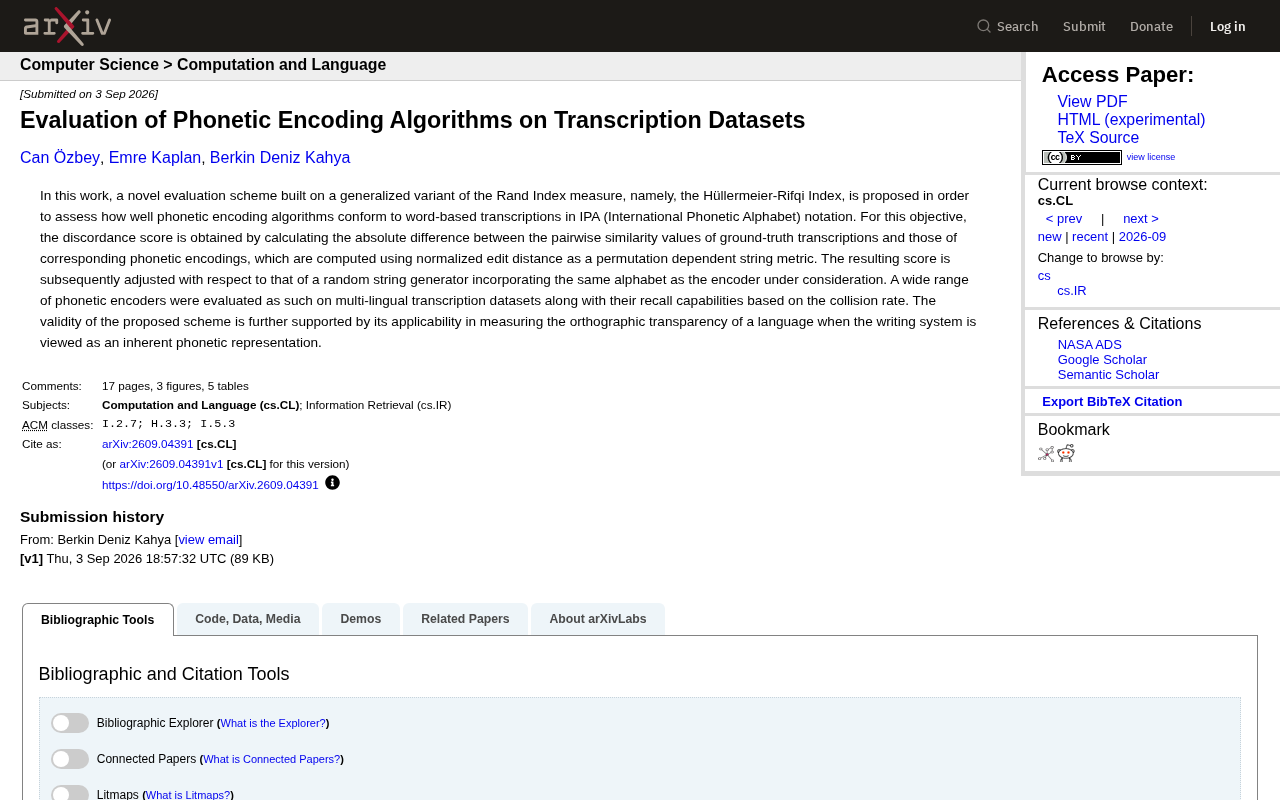
A New Framework for Evaluating Phonetic Encoding Algorithms: Rand Index, Discordance Scores, and Orthographic Transparency Quantification
An in-depth analysis of a new phonetic encoding evaluation framework based on the generalized Rand index, covering the Hüllermeier-Rifqi index, normalized edit distance, random baseline correction, and orthographic transparency quantification.
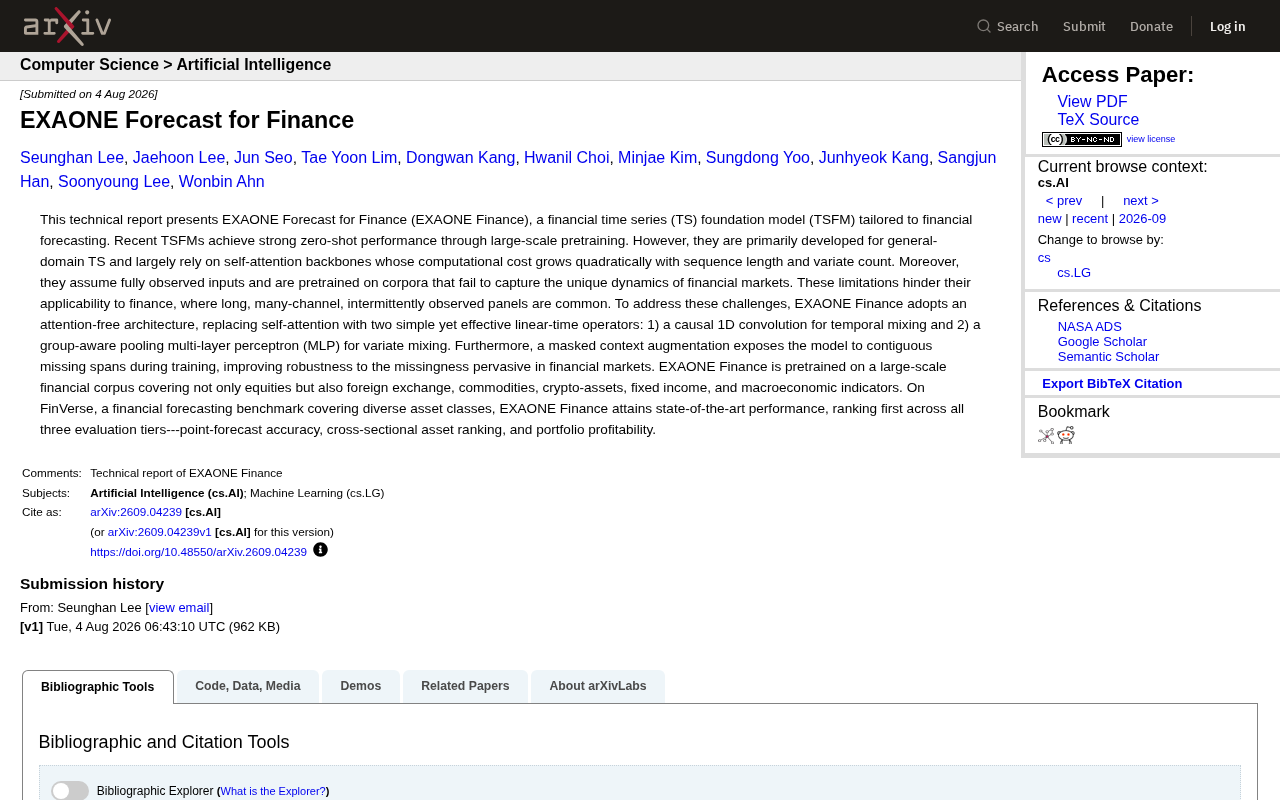
EXAONE Finance: A Deep Dive into the Time Series Foundation Model Built for Finance
Deep analysis of LG AI Research's EXAONE Finance model: how its attention-free architecture, masked context augmentation, and multi-asset financial corpus solve efficiency, missing data, and domain adaptation challenges to achieve SOTA on the FinVerse benchmark.