NVIDIA and Hugging Face Deepen Partnership: New Opportunities for the Open-Source AI Ecosystem

NVIDIA and Hugging Face deepen collaboration to accelerate open-source AI development and deployment.
NVIDIA and Hugging Face have announced a deepened partnership to advance the open-source AI ecosystem. The collaboration focuses on optimizing model inference with tools like TensorRT-LLM, streamlining development toolchains, and expanding into edge computing and vertical industries. While the partnership benefits developers with faster, more affordable AI, the community should also push for cross-platform compatibility to avoid single-vendor lock-in.
Recently, NVIDIA and Hugging Face announced a deepened partnership, sparking widespread discussion in the AI open-source community. As the leader in the GPU space and the world's largest open-source model platform respectively, their collaboration is seen as a pivotal move to advance the open-source AI ecosystem.
The Strategic Value of the Open-Source Model Ecosystem
Open-source models have become a core driver of AI innovation. Compared to closed-source commercial models, open-source models offer significant advantages: high transparency, strong customizability, and community-driven rapid iteration. The current AI large model landscape has split into two camps — the closed-source camp, represented by OpenAI's GPT series, Anthropic's Claude, and Google's Gemini, delivers services through paid API access; the open-source camp, represented by Meta's Llama series, Mistral, Qwen, DeepSeek, and others, allows users to freely download, modify, and deploy models. Notably, open-source models made remarkable progress in 2024, with some matching closed-source models on certain benchmarks. Their core value lies in controllability — enterprises can fine-tune models to their specific needs, control data flows, avoid vendor lock-in, and predict and manage long-term operational costs.
Hugging Face hosts hundreds of thousands of models and datasets on its platform, making it the go-to resource library for AI developers. Founded in 2016, the company originally started as a chatbot company before pivoting to become an open-source AI community platform. Its core product, the Transformers library, provides a unified API for loading, training, and deploying various pretrained models, dramatically lowering the barrier to AI development. To date, the Hub hosts over 1 million models and more than 250,000 datasets, spanning nearly every AI subdomain including natural language processing, computer vision, audio processing, and multimodal AI. The platform also offers Spaces (online app deployment), Inference API (cloud-based inference services), AutoTrain (automated training tools), and more. Major open-source models like Meta's Llama, Google's Gemma, and Mistral all use Hugging Face as their primary distribution channel, making it the "GitHub" of the open-source AI world.
NVIDIA plays a crucial role in this ecosystem. Its GPU hardware and CUDA software stack are the industry standard for training and deploying large language models. CUDA (Compute Unified Device Architecture) is a parallel computing platform and programming model introduced by NVIDIA in 2006, enabling developers to harness the GPU's massively parallel architecture for general-purpose computing. Around CUDA, NVIDIA has built a comprehensive software ecosystem including cuDNN (deep neural network acceleration library), NCCL (multi-GPU communication library), and cuBLAS (linear algebra acceleration library). After nearly two decades of development, this system has become deeply embedded in mainstream deep learning frameworks like PyTorch and TensorFlow, forming a critical moat for NVIDIA in the AI hardware market. Through its partnership with Hugging Face, NVIDIA not only solidifies its hardware dominance in the open-source space but also expands its market influence by optimizing inference performance and lowering deployment barriers.
Technical Synergies
This collaboration will produce substantive impact across multiple dimensions:
Performance Optimization Upgrades
NVIDIA will deeply optimize popular models on the Hugging Face platform, leveraging tools like TensorRT-LLM to significantly boost inference speed and reduce operational costs. TensorRT-LLM is NVIDIA's open-source library specifically designed for large language model inference optimization. Built on top of the TensorRT inference engine, it integrates several core acceleration technologies for the Transformer architecture: KV Cache optimization (reducing redundant computation in the attention mechanism), quantization compression (reducing precision from FP16/FP32 to INT8/INT4 to lower memory usage), In-flight Batching (dynamic batching that allows requests of different lengths to share GPU resources), and Tensor Parallelism (tensor parallel computation across multiple GPUs). When these techniques are combined, inference speed can improve by several times while significantly reducing per-inference hardware costs. This is particularly meaningful for small and medium-sized enterprises and individual developers, enabling large models that previously required high-end GPU clusters to run efficiently on more affordable hardware configurations, making advanced AI capabilities far more accessible.
Development Toolchain Improvements
Both parties will release more out-of-the-box solutions that simplify the entire workflow from model selection and fine-tuning to deployment. End-to-end experience optimization will substantially lower the barrier to AI application development and accelerate technology adoption.
Ecosystem Expansion
NVIDIA's enterprise resources and Hugging Face's developer community create a complementary advantage, poised to spark innovative breakthroughs in areas such as edge computing and vertical industry solutions. Edge computing — a computing paradigm that processes data and performs AI inference near the data source — offers critical advantages in AI applications: low latency (millisecond-level response), data privacy protection (data stays local), and bandwidth savings (avoiding massive raw data uploads). NVIDIA has already launched its Jetson series of embedded computing platforms in this space, covering scenarios from industrial inspection and autonomous driving to smart retail. Deploying quantized and optimized open-source models from Hugging Face to edge devices is becoming an important direction for industrial implementation, particularly in healthcare, finance, manufacturing, and other industries with strict data compliance requirements, where localized edge deployment is often the only viable option.
Tangible Benefits for the Open-Source Community
From a community perspective, this partnership sends a positive signal: industry giants are willing to embrace open source rather than betting solely on closed-source approaches. This attitude helps foster a healthy competitive landscape — where open-source and closed-source models each leverage their strengths and drive mutual progress rather than adversarial competition.
For developers, the partnership means better tools, faster inference, and lower costs. Hugging Face models with deep NVIDIA optimization will see significantly improved practical utility. This is especially attractive for enterprises that require local deployment and prioritize data privacy, where optimized open-source models will become a highly compelling choice.
However, vigilance is also warranted. A healthy open-source ecosystem requires diverse participants, and over-reliance on a single hardware vendor could introduce potential risks. Currently, AMD's ROCm ecosystem and Intel's oneAPI are gradually building competitive alternatives to CUDA, while Apple Silicon based on the MLX framework is also showing promise in specific scenarios. The community should continue to push for cross-platform compatibility, ensuring open-source models can run efficiently across different hardware environments and preventing ecosystem lock-in by any single vendor.
New Directions for Industry Development
As large model technology enters the application deployment phase, synergy between infrastructure and model ecosystems becomes increasingly critical. The deepened partnership between NVIDIA and Hugging Face is fundamentally about building more robust AI development and deployment infrastructure. This serves not only both companies' business objectives but will also benefit the entire open-source community.
We can expect to see more scenario-optimized open-source models, more powerful inference engines, and a more complete developer tooling ecosystem. A thriving open-source AI ecosystem will drive artificial intelligence technology to empower industries more broadly and deeply, ensuring that the benefits of AI truly reach everyone.
Key Takeaways
Related articles
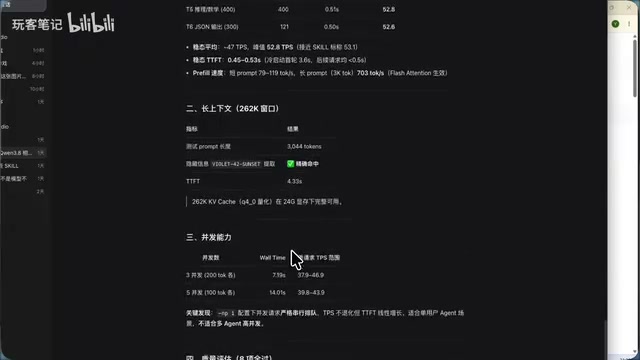
7900XTX Local Deployment of Qwen3 in Practice: 53 TPS Inference Speed Optimization Guide
Complete guide to deploying Qwen3 27B model on AMD RX 7900XTX 24GB: achieve 53 TPS inference through KV Cache Q4 quantization, 262K ultra-long context, and MTP speculative sampling, with installation tutorial and quantization precision comparison.
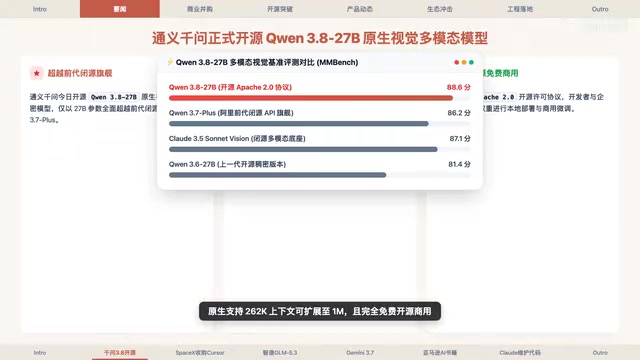
AI Daily Briefing: Alibaba Open-Sources Qwen3.8 Vision Flagship, Zhipu's GLM-5.3 Tops Coding Benchmarks, SpaceX Acquires Cursor
Alibaba open-sources Qwen3.8-27B vision model surpassing its closed-source predecessor; Zhipu GLM-5.3 tops open-source coding with 50% gains; SpaceX acquires Cursor; Google Gemini 3.7 Flash debuts.
The Boundaries of LangGraph: When Does an Agent Become a Distributed Application?
Explore the capability boundaries of Agent orchestration frameworks like LangGraph, and learn when AI Agent systems cross the line from workflow orchestration into distributed application architecture.