NVIDIA Astra and the Isaac Toolchain: Can One Person Build a Robot?

NVIDIA's Astra model and Isaac toolchain lower the barrier to robotics development, but hardware dependence and sim-to-real remain constraints.
NVIDIA showcased a robotics development toolchain centered on GPT-6 Astra: developers describe assets, environments, and tasks in prompts, and Astra automatically builds simulation training worlds and tunes physics parameters to narrow the sim-to-real gap. Skills are trained via Isaac Lab and Newton, then evaluated at scale with Isaac Lab Arena—all running locally on a DGX Station. A full-stack reference robot, Agile One SN, is built on Isaac Groot and Jetson Thor. Tools mainly replace repetitive simulation setup and parameter tuning; task design, safety validation, and sim-to-real edge cases still require human judgment, and a complete experience depends on significant hardware investment.
NVIDIA recently showcased a new robotics development toolchain centered on a model called GPT-6 Astra, alongside components including Isaac Lab, Newton, and Isaac Lab Arena. The company claims it lets developers use simple prompts and data to build robot training worlds, train skills, and run large-scale evaluations. The official video also introduced Agile One SN, a full-stack reference robot built on Isaac Groot and powered by Jetson Thor. Does this combination mean the barrier to robotics development has been dramatically lowered? This article breaks it down from two angles: the technical pipeline and the practical impact.
From Prompts to Simulation Worlds: What Astra Does
In traditional robotics development, building simulation environments is one of the most time-consuming steps. Developers have to manually model assets, configure physics parameters, and write task logic—work that often requires a specialized team and weeks or even months of effort. NVIDIA's approach is to make Astra a "tool caller": developers describe assets, environments, and tasks in prompts, and Astra invokes NVIDIA Open Libraries and models as tools to automatically build training worlds.
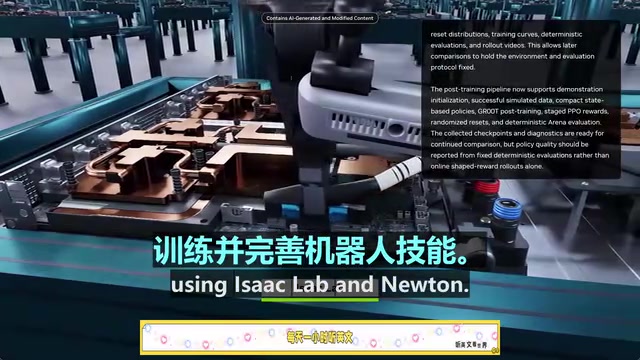
A more critical step is physics tuning. The gap between simulation and the real world (the sim-to-real gap) is a long-standing challenge in robot training. Astra replays real-world motion data and adjusts physics parameters accordingly to bring the simulation closer to real conditions. If this step can be automated to a sufficient degree, it could indeed eliminate a great deal of manual parameter tuning.
The sim-to-real gap is a core challenge in robot learning: policies trained in physics simulators often degrade significantly when deployed on real robots. Causes include simplified modeling of contact, friction, and compliance by physics engines; the absence of sensor noise and latency; and edge cases in the real world that are hard to enumerate. Common approaches to closing the gap include domain randomization (randomizing physics parameters and visual appearance during training to force policies to learn robustness), system identification (estimating simulation parameters from real data), and fine-tuning on real data. Astra's replay of real motion data to adjust physics parameters is essentially an automated attempt at system identification and parameter calibration, and its effectiveness depends on the coverage of the replay data and the reliability of the parameter search.
Training, Evaluation, and a Local Iteration Loop
After building the simulation world, Astra uses Isaac Lab and Newton to train and refine robot skills, then runs large-scale evaluation through Isaac Lab Arena. These three stages form a "train—refine—evaluate" loop.
One detail worth noting is where the whole process runs: all tools run locally on an NVIDIA DGX Station. The point of local deployment is iteration speed—developers don't have to queue for cloud resources, and can see results immediately after modifying prompts or adjusting parameters. In a field like robotics that requires repeated trial and error, iteration efficiency often directly determines project progress.
The official video emphasizes that this is just the training pipeline for a single skill. Developers are training robots to learn tasks across various scenarios—homes, hospitals, stores, factories—and the learned skills are then transferred from simulation to the real world.
Isaac Lab is NVIDIA's robot learning framework built on Omniverse, providing GPU-accelerated parallel simulation environments that can run thousands of robot instances simultaneously to speed up reinforcement learning training. Newton is a physics engine developed by NVIDIA in collaboration with DeepMind, Disney Research, and others, aimed at differentiable simulation and high-fidelity contact modeling, intended to address the shortcomings of traditional physics engines in rigid-body and soft-body interaction. Isaac Lab Arena is used for large-scale policy evaluation and benchmarking, letting developers measure success rates, robustness, and failure modes across thousands of parallel environments. The division of labor is clear: Lab handles training infrastructure, Newton handles physical realism, and Arena handles batch evaluation—together forming a pipeline from skill learning to performance validation.
Agile One SN: A Reference Starting Point for Developers
To lower the difficulty of getting started on the hardware side, NVIDIA introduced Agile One SN, a full-stack reference robot built on Isaac Groot and powered by Jetson Thor. A "reference design" means developers don't have to design a hardware platform from scratch—they can train and deploy new skills directly on this base.
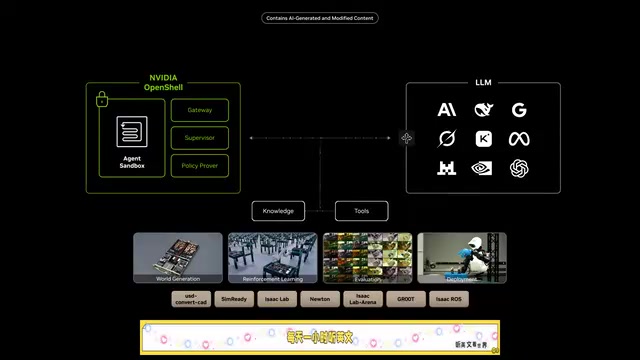
The core message in the video is: work that used to require a team of experts can now be done by any developer with Astra and the NVIDIA Isaac tools. This claim is clearly promotional, but the trend it points to deserves serious attention—the bottleneck in robotics development is shifting from "engineering implementation capability" to "task definition capability." Developers need to figure out what they want the robot to do and in what environment, while the underlying simulation setup and training pipeline are encapsulated by the toolchain.
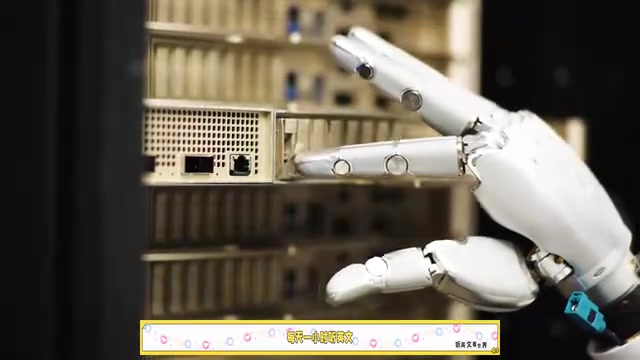
Isaac Groot is NVIDIA's reference platform and model collection for humanoid robot development, offering pre-trained locomotion control and manipulation policies that developers can fine-tune rather than training whole-body control from scratch. Jetson Thor is NVIDIA's edge computing platform designed specifically for robots, emphasizing local execution of multimodal models and real-time control loops on the robot itself to reduce dependence on the cloud. Full-stack reference robot means that the hardware form factor, compute unit, system software, and model stack are packaged into a baseline that can run out of the box, shifting developers' focus from "making the robot move" to "defining what task it should accomplish." The value of such reference designs lies in compressing integration cycles, but it also means developers are somewhat locked into a specific hardware and software ecosystem.
The Other Side of Lower Barriers: Who Is Affected
The claim that "one person can do it all" can easily cause anxiety, but it's important to distinguish between different levels of work. What gets replaced by tools is mainly repetitive simulation environment setup, parameter tuning, and training pipeline orchestration—work that used to consume a large portion of junior engineers' time. Task design, scenario understanding, safety validation, and hardware integration still require human judgment. Especially in the sim-to-real transfer process, edge cases that simulation cannot cover still have to be handled with engineering experience.
Another practical constraint is the toolchain's hardware dependence. DGX Station for local execution and Jetson Thor for powering the reference robot mean that a complete experience requires considerable upfront investment. How much small and mid-sized teams and independent developers can benefit depends on the availability and cost of this hardware.
NVIDIA's intent is obvious: turn robotics development into a workflow akin to software development, and bind developers to its ecosystem through the toolchain. For developers, the real opportunity isn't about whether tools will replace them—it's about whether they can use the lower barrier to quickly validate ideas and focus their energy on the parts the tools don't yet cover.
One-line Summary
NVIDIA's Astra model and Isaac toolchain lower the barrier to robotics development, but hardware dependence and sim-to-real remain constraints.
Paragraph Summary
NVIDIA showcased a robotics development toolchain centered on GPT-6 Astra: developers describe assets, environments, and tasks in prompts, and Astra calls NVIDIA models and libraries to automatically build simulation training worlds and replay real motion data to tune physics parameters and narrow the sim-to-real gap. Skills are then trained and refined through Isaac Lab and Newton, followed by large-scale evaluation via Isaac Lab Arena—with the entire loop running locally on a DGX Station for iteration speed. On the hardware side, NVIDIA introduced Agile One SN, a full-stack reference robot built on Isaac Groot and Jetson Thor. The article argues that what gets replaced by tools is mainly repetitive simulation setup and parameter tuning, while task design, safety validation, and handling sim-to-real edge cases still require human judgment—and a complete experience depends on significant hardware investment.
Related articles
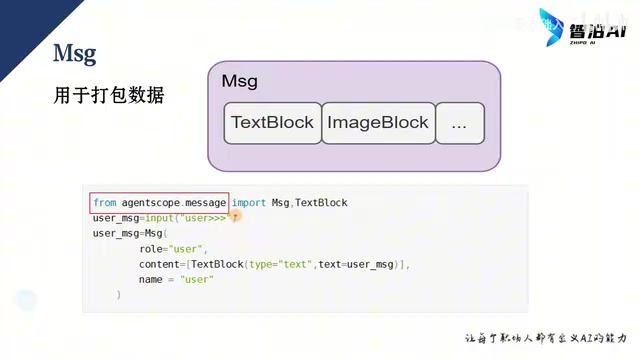
AgentScope 2.0 Step-by-Step Tutorial: Building Enterprise-Grade Multi-Agent Systems from Scratch
A detailed guide to Alibaba's AgentScope 2.0 multi-agent framework based on a Bilibili tutorial: Message core design, model and Agent configuration, Event streaming output, plus two runnable conversational Agent examples for beginners in enterprise agent development.
How Anthropic Decoupled the Brain and Hands of Claude Agents
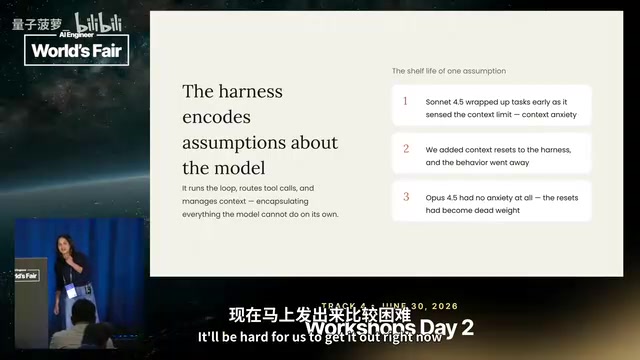
At AI Engineer, Anthropic reviewed Claude Managed Agents' evolution: from a single-container "pet" architecture to a session log, harness brain, and sandbox hands fully decoupled, cutting first-token latency ~90% and keeping credentials out of the sandbox to resist prompt injection.

748-Episode AI Agent Development Course on Bilibili: A Complete Guide from Beginner to Enterprise-Level Practice
Breaking down the 748-episode AI Agent development course on Bilibili: Fundamentals covers LLM principles and API calls; Advanced covers RAG, Tool Use, memory management, and multi-agent collaboration; Practical covers intelligent customer service, office automation, and more—plus learning paths and pitfalls to avoid.