Nvidia Bets on Indian AI Startup Simplismart: Running Models with Fewer GPUs
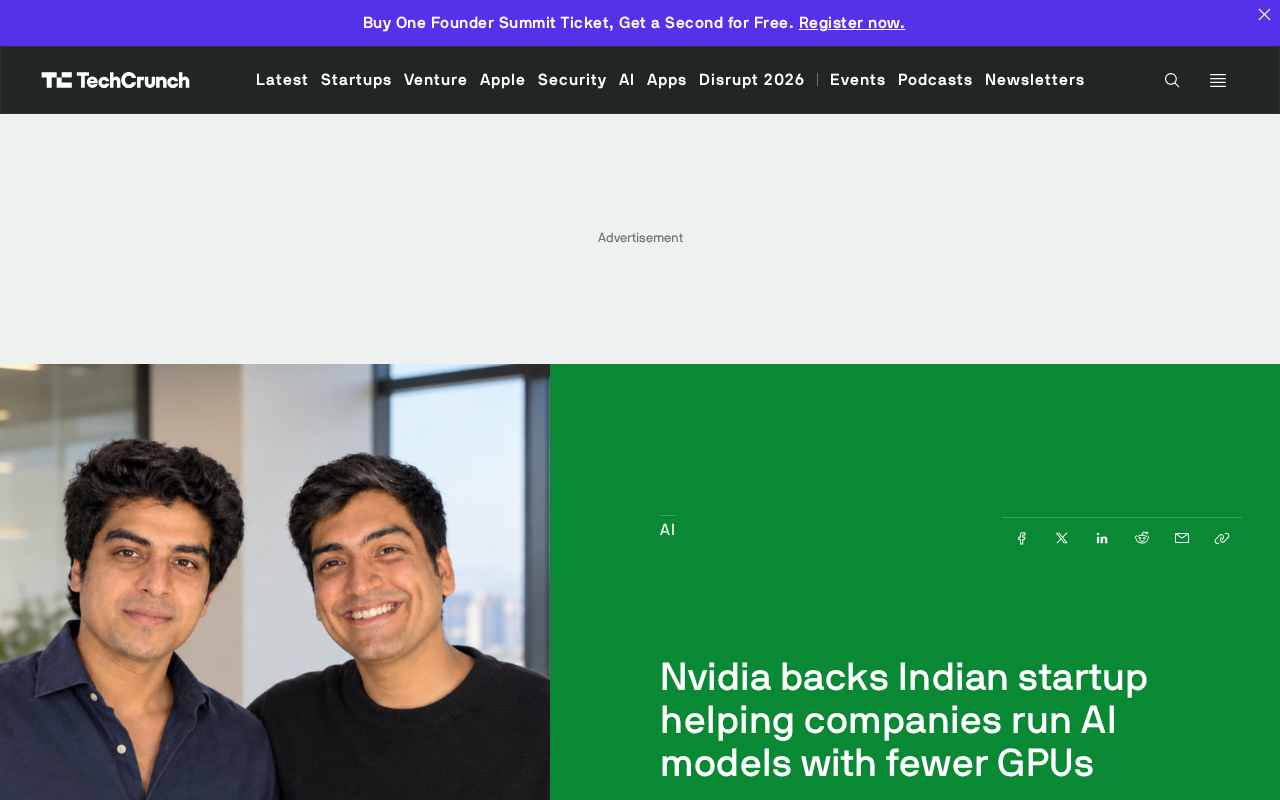
Nvidia invests in Indian startup Simplismart, betting on the inference optimization track of running AI models with fewer GPUs.
Nvidia recently invested in Indian startup Simplismart, which focuses on helping enterprises deploy and run AI models with fewer GPUs. The article notes that inference costs are recurring expenses growing linearly with business volume, and software-layer optimization (quantization, scheduling, memory reuse, batching) can unlock existing compute without additional hardware. Simplismart's annualized revenue run rate grew 14x in six months, with the US market contributing over half of revenue, illustrating the Indian AI go-global path of local R&D and overseas revenue. Nvidia's logic for investing in efficiency tools is to lower the AI adoption barrier and expand overall GPU demand. However, the report does not disclose investment amount, valuation, or technical details; customer concentration and geographic dependence are risks to watch.
Title
Nvidia Bets on Indian AI Startup Simplismart: Running Models with Fewer GPUs
Meta Description
Nvidia invests in Indian AI startup Simplismart, which helps enterprises run AI models with fewer GPUs. Annualized revenue run rate grew 14x in six months, with the US market contributing over half of revenue.
Article Content
Nvidia's investment portfolio has once again extended into the AI inference optimization space. According to an RSS source, the GPU giant recently invested in Indian startup Simplismart, which focuses on helping enterprises run AI models with fewer GPUs. With GPU compute still in tight supply and inference costs becoming a key bottleneck for enterprises deploying AI, the direction of this investment is quite clear.
A Strategic Investment Pointing to Inference Efficiency
Simplismart's core value proposition is straightforward: enabling enterprises to deploy and run AI models with fewer GPUs without sacrificing performance. This direction may seem at odds with Nvidia's own hardware business, but it actually aligns with its ecosystem logic—improved compute efficiency lowers the barrier to AI adoption, which in turn expands overall GPU demand.
The report mentions that Simplismart's customer base covers enterprises that need to run AI models at scale, and its business model revolves around software-layer optimization rather than selling hardware directly. Nvidia's choice to invest rather than compete suggests it prefers to bring efficiency optimization tools into its own ecosystem rather than letting third-party software become a black box.
The Signal from Revenue Growth
According to Simplismart, its annualized revenue run rate grew 14x in six months. This multiple is quite rare among B2B software startups, indicating that market demand for "running models at lower cost" is real and urgent.
More noteworthy is the revenue structure: the US market contributes more than half of Simplismart's revenue. This means that although the company is rooted in India, its commercialization focus has landed in the US enterprise market, which has stronger purchasing power and higher AI deployment density. For an Indian startup, this "local R&D, overseas revenue" path is becoming increasingly common, and it also explains why Nvidia is willing to enter at this stage.
Rapid revenue growth itself also constitutes a risk indicator: if the 14x growth is built on a small number of large customers, its sustainability needs to be observed. The report does not disclose customer concentration, which is a gap that cannot be avoided when assessing its long-term value.
Annualized Revenue Run Rate is a commonly used metric for measuring the growth rate of SaaS and subscription-based B2B companies: take the recurring revenue of a given month or quarter and multiply by 12 to annualize it. It reflects "current speed" rather than realized annual revenue, so it is especially common for startups in high-growth phases, but it can also amplify short-term fluctuations—if the base is very small, the persuasive power of a multiple increase needs to be judged alongside absolute amounts and customer structure. This is also the methodological background for the report's note that "the 14x growth requires observation of customer concentration."
Why "Fewer GPUs" Is a Good Business
When enterprises deploy AI models, inference costs often erode budgets more persistently than training costs. Training is a one-time investment, while inference is recurring expenditure that grows linearly with business volume. Simplismart targets precisely this area of continuous bleeding.
The room for software-layer optimization comes from multiple aspects: model quantization, inference scheduling, memory reuse, batching strategies, and more. These efforts do not change model capabilities but can directly affect unit inference costs. For enterprises that have already committed budgets to GPU procurement, such optimization is equivalent to unlocking existing compute without additional hardware investment.
Nvidia's interest in such companies is not hard to understand. Improved inference efficiency accelerates AI applications from pilots to scale, and scale ultimately translates into more GPU orders. In the short term, it helps customers save money; in the long term, it makes the pie bigger.
Model Quantization is one of the most frequently mentioned techniques in software-layer inference optimization. Its basic idea is to use lower-precision data types (such as reducing from FP32 to FP16, INT8, or even INT4) to represent model weights and activations, thereby reducing memory usage and computation. Since inference is usually less sensitive to numerical precision than training, quantization can often significantly improve throughput and reduce unit inference costs while keeping accuracy loss controllable. This is also one of the technical foundations that makes "no hardware change, software-only" solutions like Simplismart viable.
Batching strategies and inference scheduling reduce costs from another dimension. If a single inference processes only one request, the GPU's parallel compute capacity is often underutilized; combining multiple requests into a batch for unified computation can amortize the fixed overhead of each inference. Techniques such as dynamic batching and continuous batching adjust batch size in real time according to request arrival patterns, balancing latency and throughput. Memory reuse reduces repeated allocation by sharing intermediate results and caches, further squeezing output efficiency from existing GPUs.
A Sample of Indian AI Startups Going Global
Simplismart's path offers a lens through which to observe India's AI startup ecosystem: the technical team is local, revenue comes from the US, and capital comes from global industry players like Nvidia. This combination bypasses the reality of limited willingness to pay for AI among Indian domestic enterprises and sells products directly to the market with the strongest demand.
This also brings a hidden problem: when revenue is highly dependent on a single overseas market, geopolitical policy, exchange rates, and customer budget cycles can all amplify operational volatility. The report does not state whether Simplismart is advancing geographic diversification of customers, which will be a key variable in its next stage.
Several Issues Worth Watching
The report does not disclose the investment amount or valuation, so it is impossible to judge the scale of the deal or Nvidia's stake. The report also does not provide details on Simplismart's specific technical approach, the types of models it supports, or the quantifiable effects of "fewer GPUs."
What is certain is that AI inference optimization has moved from a technical topic to a capital topic. As long as GPU supply remains an industry bottleneck, any software-layer innovation that can improve output efficiency per unit of compute will attract industry capital. After receiving Nvidia's backing, Simplismart's real test is whether it can convert early revenue growth into sustainable customer retention.
One-line Summary
Nvidia invests in Indian startup Simplismart, betting on the inference optimization track of running AI models with fewer GPUs.
Paragraph Summary
Nvidia recently invested in Indian startup Simplismart, which focuses on helping enterprises deploy and run AI models with fewer GPUs. The article points out that inference costs are recurring expenses that grow linearly with business volume, and software-layer optimization (quantization, scheduling, memory reuse, batching, etc.) can unlock existing compute without additional hardware investment. Simplismart's annualized revenue run rate grew 14x in six months, with the US market contributing more than half of revenue, reflecting the Indian AI go-global path of "local R&D, overseas revenue." Nvidia's logic for investing in efficiency tools is to lower the barrier to AI adoption and expand overall GPU demand. However, the report does not disclose the investment amount, valuation, or technical details, and customer concentration and geographic dependence are risks to watch.
Related articles

Should Humanoid Robots Build Cars? Sterling Anderson's Skepticism and the General AI Path
As GM unveils its AI-driven car manufacturing roadmap, Sterling Anderson questions whether humanoid robots should build cars. This article analyzes both views, breaks down the software and hardware paths for AI in car manufacturing, and explores the real-world challenges of humanoid robots in automotive manufacturing.
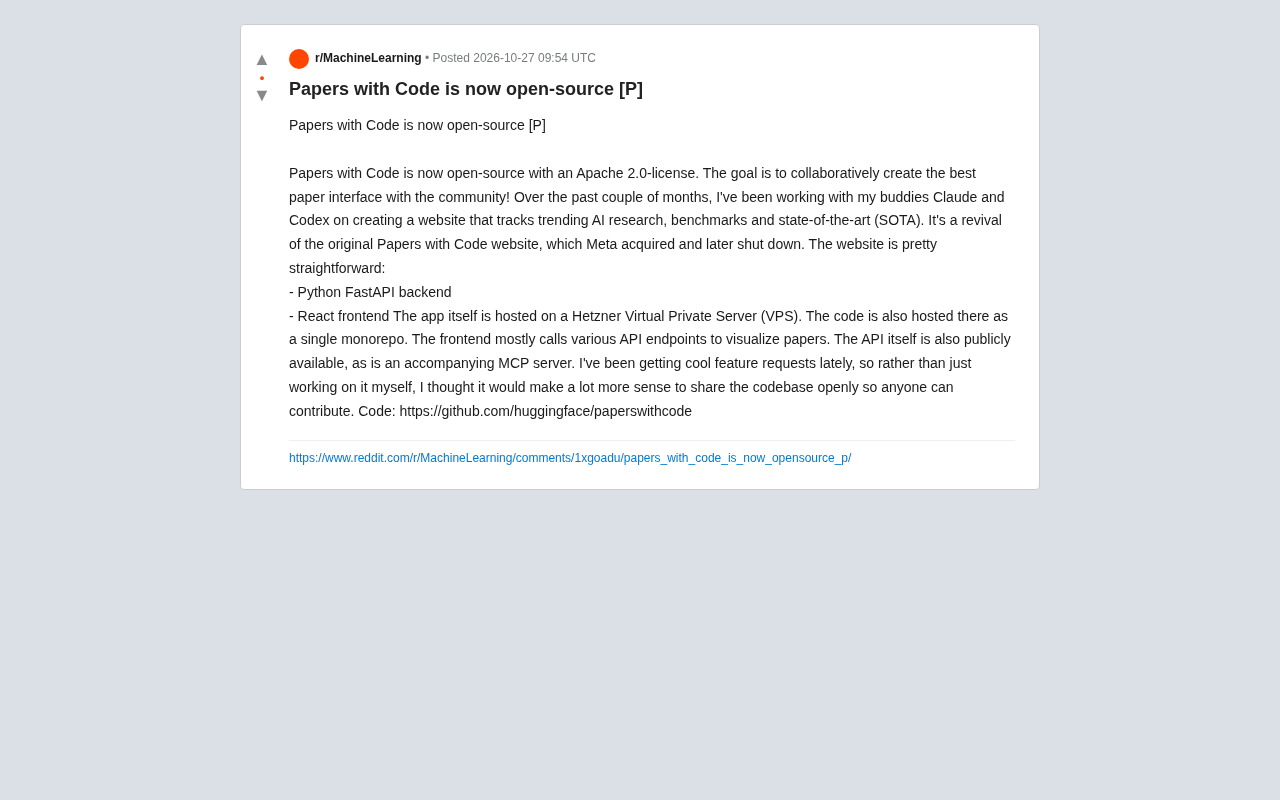
Papers with Code Open-Source Revival: A New Hub for AI Research Under the Apache 2.0 License
Papers with Code is revived as open source under the Apache 2.0 license, built with FastAPI and React, offering a public API and MCP server to foster community collaboration on an AI research paper tracking platform.

After Screen Cracks, Claude Helps Windows Fit the Usable Area
A Reddit user shares how they used Claude to adjust window layouts and avoid the damaged area after their screen cracked. This article analyzes the potential and limits of LLMs as system configuration assistants, and explores AI's practical use in working around hardware failures.