Should Humanoid Robots Build Cars? Sterling Anderson's Skepticism and the General AI Path
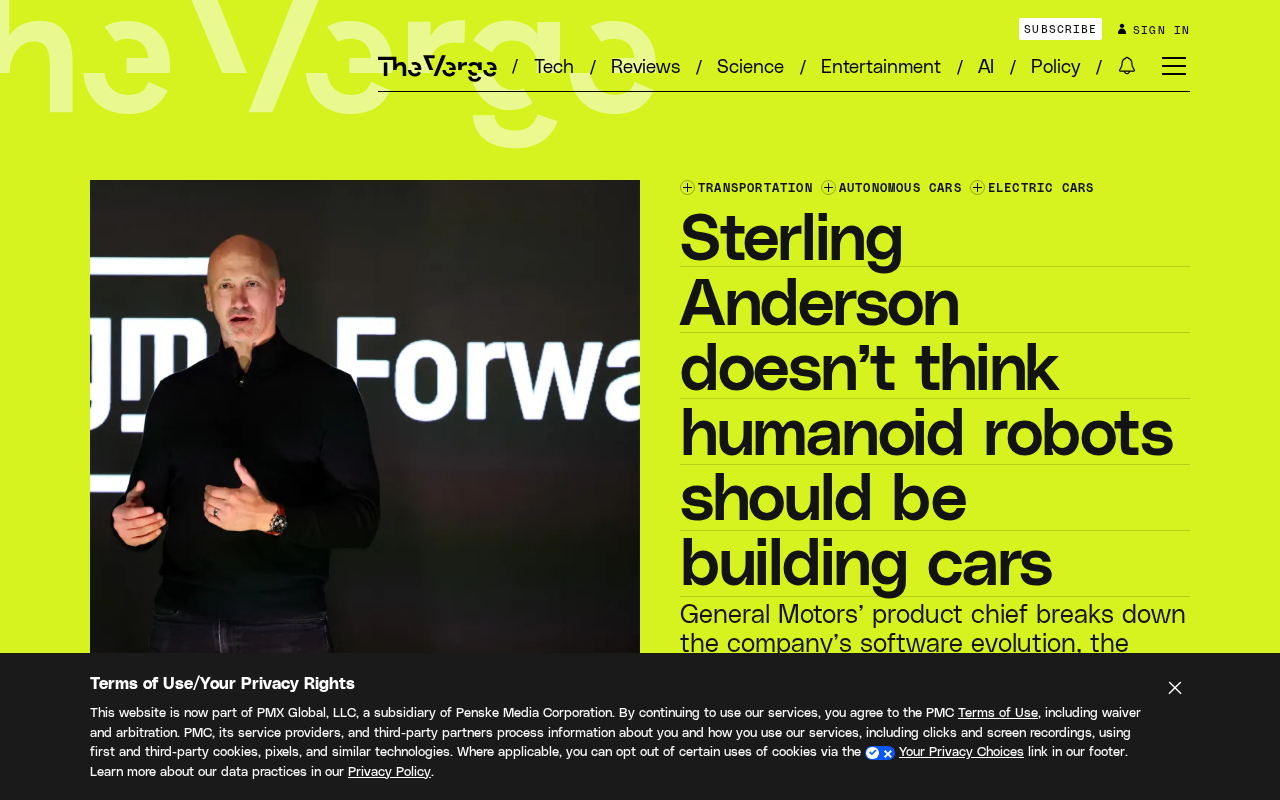
GM unveils AI car manufacturing roadmap as former Aurora co-founder questions humanoid robots' suitability for building cars.
GM unveiled in New York a technology roadmap centered on AI-driven vehicle development, advanced batteries, high-compute onboard computing, and autonomous driving. Sterling Anderson, former Aurora co-founder, argued that humanoid robots are not suited to car-building tasks, believing they fall short of dedicated robotic arms in repetitive, high-load, high-precision assembly scenarios, and face real obstacles in cost, maintenance, and safety certification. The controversy reflects two paths for AI entering the automotive industry: software algorithm-driven and hardware form innovation. The article notes that AI's industrial value does not depend on robot form, humanoid robots need more refined deployment scenarios, and automakers' technology narratives still require engineering validation.
When GM Talks Up AI Car Manufacturing, Someone Pushes Back
At a glitzy event in New York last week, General Motors (GM) unveiled a new technology roadmap centered on AI-driven vehicle development, advanced battery technology, high-compute onboard computers, and autonomous driving. Some of it wasn't new: the automaker had already publicly disclosed that it was developing hands-off, eyes-off driving automation and had been prototyping new battery chemistries.
However, according to a TechCrunch report, Sterling Anderson — former co-founder of Aurora and currently at an autonomous driving company — raised a sharp point: humanoid robots should not be used to build cars. This statement directly collides with the vision GM painted of AI permeating every aspect of automotive manufacturing.
GM's AI Roadmap: Familiar and Novel Side by Side
GM's newly announced technology roadmap spans multiple layers. In vehicle development, AI is positioned as a core tool to accelerate design, simulation, and testing; on batteries, the company continues prototype validation of new chemistries aimed at improving energy density and safety; its onboard computing platform emphasizes high compute to support more complex intelligent features; and on autonomous driving, GM reiterated its hands-off, eyes-off driving automation path.
That said, the roadmap did not detail the role of humanoid robots. This also set the stage for the ensuing controversy.
Sterling Anderson's Skepticism: Humanoid Robots Aren't the Optimal Solution for Car Manufacturing
Sterling Anderson's view takes direct aim at a current manufacturing craze — bringing humanoid robots onto automotive production lines. According to TechCrunch, Anderson argues that humanoid robots are not suited to car-building tasks.
The underlying logic of this skepticism is worth unpacking. Car manufacturing is a highly structured, takt-driven process, where each workstation has clear spatial constraints, load requirements, and precision standards. The bipedal locomotion and human-like arms of humanoid robots may seem flexible in generality, but in repetitive, high-load, high-precision assembly scenarios, their efficiency and stability often fall short of dedicated robotic arms. More critically, the cost, maintenance complexity, and safety certification difficulty of humanoid robots are all real obstacles in a mass-production environment.
Anderson's position is not a rejection of robotics technology itself, but a question about the rationality of the "humanoid" form in specific industrial scenarios. This does not contradict GM's narrative of AI as the core driving force of car manufacturing — AI can optimize processes, but it doesn't necessarily need to be realized in the form of humanoid robots.
Dedicated robotic arms (such as six-axis industrial robots) and collaborative robots are the mainstream automation equipment on current automotive production lines. They perform tasks such as welding, painting, and material handling at fixed takt times, with repeat positioning accuracy reaching sub-millimeter levels, and they are structurally simple with mature maintenance. In contrast, humanoid robots require bipedal balance, multi-joint coordination, and complex perception; under the same payload they tend to be heavier, consume more energy, and lack ready-made standards for safety certification. Workstation spaces on automotive final assembly lines are usually designed to human scale, but takt requirements are extremely high, and dedicated equipment has an advantage in output per unit time. Therefore, the key to judging whether humanoid robots are applicable lies in whether the workstation is highly structured, rather than simply comparing morphological flexibility.
Behind the Controversy: Two Paths for AI in Car Manufacturing
GM's roadmap and Anderson's skepticism actually reflect two different paths for AI entering the automotive industry.
One path is software and algorithm-driven: using AI to accelerate vehicle design, battery materials discovery, and autonomous driving algorithm iteration. This is the direction GM is explicitly investing in, and it is also the consensus among most automakers and tech companies today.
The other path is hardware form innovation: using humanoid robots to replace or assist human workers in assembly, inspection, and other tasks. This path has attracted a large number of startups and capital, but in practical implementation it faces scrutiny over engineering economics.
Anderson's remarks poured cold water on the latter. Note that his view comes from a single source (TechCrunch's report), and no public response from GM or other humanoid robot makers has yet been seen. Therefore, whether humanoid robots are truly unsuitable for car manufacturing remains an open question, depending on specific workstations, cost curves, and technological maturity.
Engineering economics generally refers to whether a technology has an acceptable input-output ratio in a mass-production environment, covering equipment purchase costs, maintenance expenses, downtime losses, yield impact, and safety compliance costs. For automotive manufacturing, takt is measured in seconds, and any workstation's efficiency fluctuation is amplified along the production line. If humanoid robots are to replace human workers on final assembly lines, their per-unit cost must drop to a level competitive with human labor or dedicated machines, while ensuring continuous operation stability and safety redundancy. Humanoid robots are currently still in small-batch validation, with limited cost curve and reliability data, which makes the discussion of "whether they are suitable for car manufacturing" more dependent on specific scenario assumptions than on universal conclusions.
Implications for the Industry
For readers interested in the convergence of AI and manufacturing, this debate offers several angles for thought.
First, the value of AI is not only in form. GM embeds AI across the entire chain of vehicle development, batteries, and autonomous driving, demonstrating that AI's industrial value can exist independently of the discussion of "what robots look like."
Second, the deployment scenarios for humanoid robots need more refined screening. Collaborating with humans on automotive final assembly lines, handling irregular materials, and performing flexible tasks may be more realistic entry points for humanoid robots, rather than fully replacing existing dedicated equipment.
Third, automakers' technology narratives need engineering validation. GM's roadmap contains many known directions, and the real differentiation lies in execution speed and cost control. Anderson's skepticism is essentially a reminder to the industry: don't be dazzled by form innovation; return to the fundamentals of manufacturing efficiency.
Currently, GM has not provided detailed clarification on the positioning of humanoid robots in its manufacturing system. This discussion about "who should build cars" is expected to continue.
One-line Summary
GM unveiled its AI car manufacturing roadmap, while former Aurora co-founder questions whether humanoid robots are suitable for building cars.
Paragraph Summary
GM unveiled in New York a technology roadmap centered on AI-driven vehicle development, advanced batteries, high-compute onboard computing, and autonomous driving. Sterling Anderson, former Aurora co-founder, argued that humanoid robots are not suited to car-building tasks, believing they fall short of dedicated robotic arms in repetitive, high-load, high-precision assembly scenarios, and face real obstacles in cost, maintenance, and safety certification. The controversy reflects two paths for AI entering the automotive industry: software algorithm-driven and hardware form innovation. The article notes that AI's industrial value does not depend on robot form, humanoid robots need more refined deployment scenarios, and automakers' technology narratives still require engineering validation.
Related articles

Nvidia Bets on Indian AI Startup Simplismart: Running Models with Fewer GPUs
Nvidia invests in Indian AI startup Simplismart, which helps enterprises run AI models with fewer GPUs. Annualized revenue run rate grew 14x in six months, with the US market contributing over half of revenue.
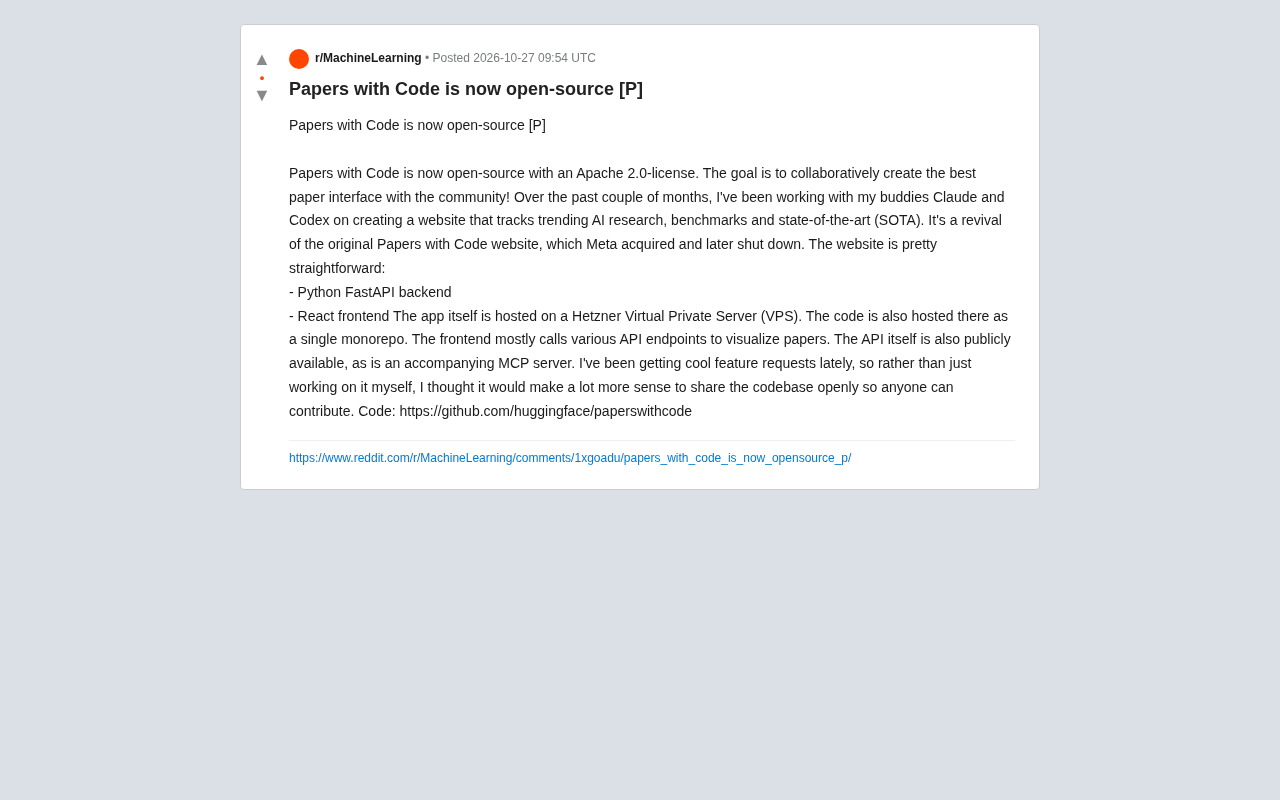
Papers with Code Open-Source Revival: A New Hub for AI Research Under the Apache 2.0 License
Papers with Code is revived as open source under the Apache 2.0 license, built with FastAPI and React, offering a public API and MCP server to foster community collaboration on an AI research paper tracking platform.

After Screen Cracks, Claude Helps Windows Fit the Usable Area
A Reddit user shares how they used Claude to adjust window layouts and avoid the damaged area after their screen cracked. This article analyzes the potential and limits of LLMs as system configuration assistants, and explores AI's practical use in working around hardware failures.