NVIDIA Employees Petition for Jensen Huang's Return: A Stunt or Deep-Seated Anxiety?
NVIDIA employees petition for Jensen Huang's return—a real plea for founder presence and better internal communication.
NVIDIA employees launched a petition for Jensen Huang to "return," though he never left—it's really a collective expression of the founder's fading spiritual presence. The Hacker News post drew 349 points and 266 comments, far exceeding typical corporate news. Rapid expansion has multiplied organizational layers and diluted founder influence—a common high-growth dilemma.
A hot post on Hacker News has sparked widespread discussion in the tech community: NVIDIA employees have launched a petition demanding that Jensen Huang "return." The headline is puzzling at first glance—Jensen Huang never left NVIDIA; he remains the company's CEO and soul figure. So what exactly is this petition asking for?
The Real Context Behind the Petition
According to Wired, the core of this employee petition is not literally "bringing Jensen Huang back," but rather a collective expression of employees' views on the current state of company management. The post on Hacker News received 349 points and 266 comments, with discussion heat far exceeding typical internal corporate news.
The framing itself is worth examining. With a founder-CEO still in place, employees using language like "petition for return" suggests that Huang's presence as a spiritual leader is fading, or that employees want him to engage more directly in day-to-day decision-making and company culture building.
Hacker News is a tech community launched by Y Combinator in 2007, known for its voting-based ranking mechanism (where post scores and comment counts jointly determine visibility). It is a central venue for Silicon Valley and global engineers and entrepreneurs to discuss technology and company developments. A post scoring above 300 points with hundreds of comments typically means it has touched on a shared anxiety among practitioners or a structural industry issue. Therefore, the NVIDIA petition post garnering 349 points and 266 comments is itself a signal: the discussion has spilled over from internal company affairs into a public industry topic, and outside attention to NVIDIA's organizational culture is rising in tandem with its technical stature.
Why This Resonates
NVIDIA currently sits at the center of the AI computing demand explosion. The company is expanding rapidly, organizational layers are multiplying, and the founder's personal influence is being diluted within a vast system—a common dilemma facing many high-growth enterprises.
The Hacker News comment section reflects an interweaving of two sentiments. One is nostalgia for founder culture—Huang's iconic leather jacket and his high-pressure yet vision-driven management style were once an important source of NVIDIA's cohesion. The other is wariness of "big company disease": when a company moves from the flat structure of its startup phase to the bureaucracy of maturity, employees' channels for voice and sense of belonging often decline in parallel.
Founder Myth vs. Organizational Reality
It is worth considering that such petitions are often interpreted externally as heartwarming stories of "employees loving the founder," but the other side is that organizational communication mechanisms may have gaps. If employees need to resort to public petitions to express expectations about management style, it suggests that regular internal feedback channels are not adequately carrying these concerns.
A "founder-CEO" refers to a governance model in which the company's founder serves as top executive long-term—typical examples being Jensen Huang, Zuckerberg, and Musk. Such leaders often build organizational cohesion through personal vision, cultural symbols (such as Huang's iconic leather jacket), and high-intensity management styles, which can significantly reduce communication costs and accelerate decision-making during the startup phase. But the cost is that the organization becomes highly dependent on one individual: once the company expands and management layers increase, the founder's attention is diluted, and the decline in their "sense of presence" may be perceived by employees as cultural erosion. This is why the "founder myth" is repeatedly discussed in academic and management practice—it is both a source of cohesion and a locus of tension in the organizational institutionalization process.
"Big company disease" typically refers to phenomena that emerge after a company expands—redundant hierarchy, slow decision-making, rising cross-departmental coordination costs, and diminishing innovation momentum. Its organizational basis is the sharp expansion of management span as headcount grows. Under a flat startup structure, employees can directly reach decision-makers; after expansion, information must pass through multiple layers, feedback channels lengthen, distortion rates rise, and employees' sense of belonging and willingness to speak up often decline in parallel. Therefore, when employees choose public petitions rather than internal channels to express concerns, it is often read as a signal that regular feedback mechanisms lack carrying capacity—not merely an expression of personal admiration.
Implications for the Tech Industry
NVIDIA's case is not isolated. Driven by the AI wave, many tech companies have experienced rapid headcount expansion, and the management span of founders or core leaders has been rapidly stretched. How to preserve the cultural DNA of the startup phase during expansion is a shared challenge for such companies.
Judging from the act of employee petitioning itself, it conveys at least two signals: employees care deeply about the company's future, and they believe public expression can make a difference. For any company at the forefront of an industry wave, these are organizational assets worth treasuring.
As for whether Jensen Huang himself will respond and in what manner, there is no further information at this time. But this petition has already become an observational sample—between founder charisma and organizational scale, tech companies need to find a new balance point.
One-line Summary
NVIDIA employees petition for Jensen Huang's return—in reality, a plea for the founder's spiritual presence and better internal communication mechanisms.
Paragraph Summary
NVIDIA employees have launched a petition demanding Jensen Huang "return," but Huang never left—the petition is actually a collective expression of employees' sense that the founder's presence as spiritual leader has weakened. The related Hacker News post received 349 points and 266 comments, with heat far exceeding typical internal corporate news. The article analyzes that NVIDIA sits at the center of the AI computing demand explosion, and rapid expansion has led to more organizational layers and diluted founder influence—a common dilemma for high-growth enterprises. Comment section discussions interweave nostalgia for founder culture with wariness of big company disease. The act of petitioning itself also suggests potential gaps in regular internal feedback channels. The article notes that preserving startup-phase cultural DNA during expansion is a shared challenge for tech companies amid the AI wave.
Related articles
US SEC Investigates Nvidia: Possible A…
US SEC Investigates Nvidia: Possible Accounting Issues
The US SEC's investigation into Nvidia focuses on potential accounting issues, not products. The news sparked heated discussion on Hacker News, with the market watching the AI chip giant's financial disclosure quality and regulatory signals.

FBI Crime Database Reportedly Hit by Hackers; Trump Says 'Not Good'
FBI's NCIC reportedly hit by hackers; FBI has launched an investigation and Trump said it's 'not good.' This article covers the incident, NCIC's importance, and law enforcement data security challenges.
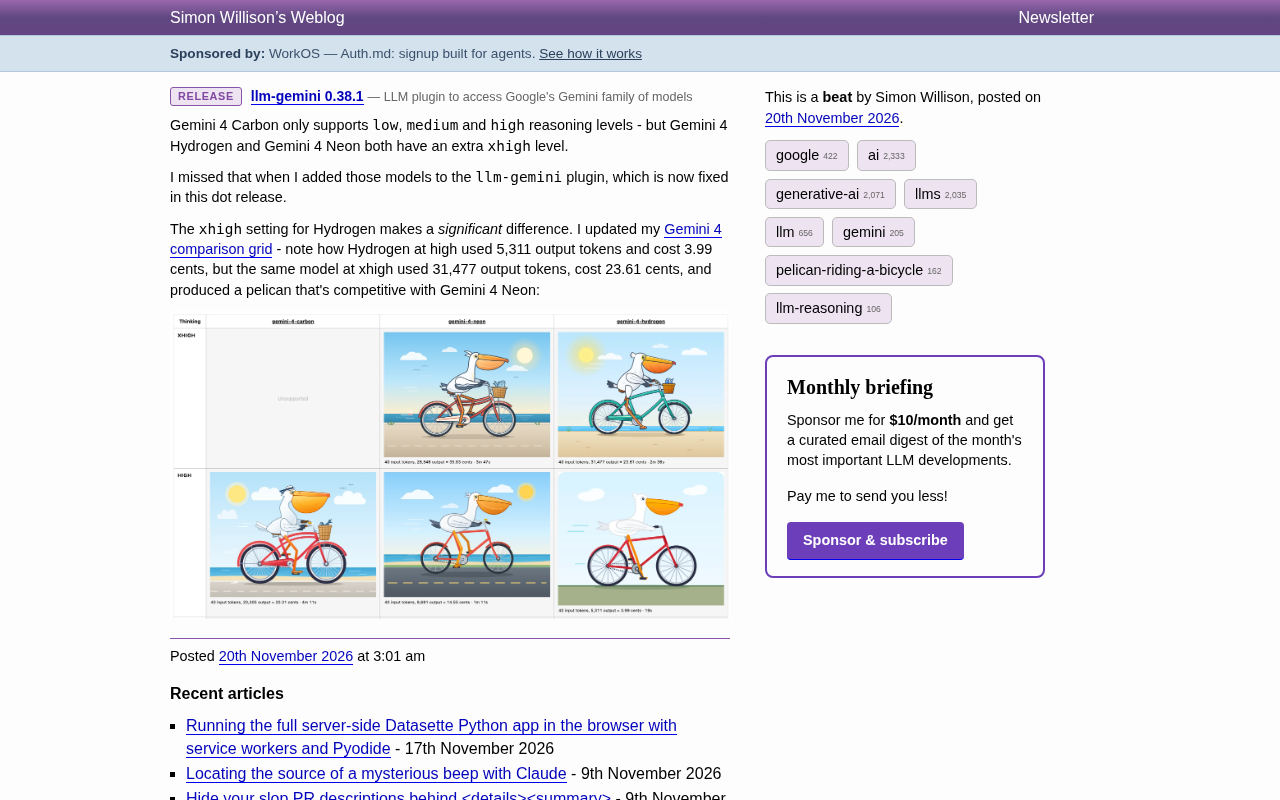
llm-gemini 0.38.1 Fix: Gemini 4 Hydrogen and Neon Gain xhigh Reasoning Level
llm-gemini 0.38.1 fixes the missing xhigh reasoning level for Gemini 4 Hydrogen and Neon. Comparison data shows xhigh sharply raises Hydrogen's output tokens and cost while clearly improving image quality to a level competitive with Neon.